


Can you put a pencil through a bag full of water without spilling a drop? This leakproof bag experiment looks like a magic trick, but it’s actually a fascinating demonstration of polymer science.
With just a plastic bag, water, and a few sharpened pencils, kids can explore how polymers make everyday materials strong, flexible, and useful. This quick chemistry activity is perfect for home, classrooms, science clubs, and STEM programs.
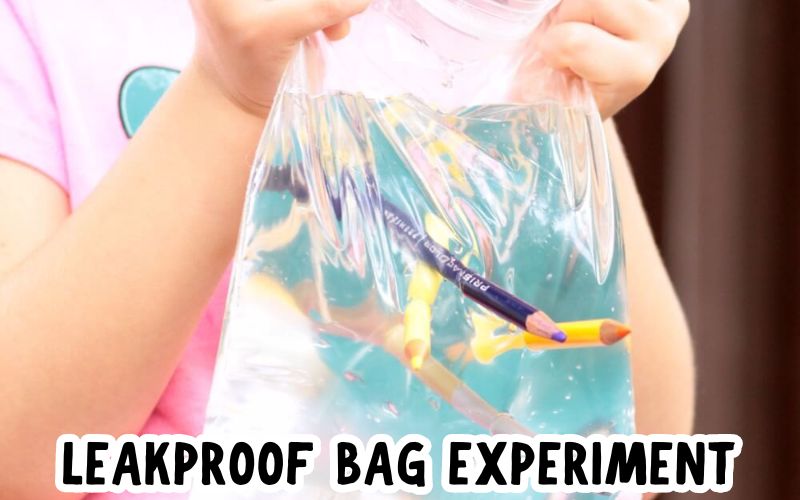
Leakproof Bag Experiment
Field: Chemistry—Polymers & Materials Science
Grades: K–5
Concepts Explored: Polymers, molecular chains, flexible materials, plastic properties, materials science, engineering design
👉 Looking for more hands-on chemistry investigations? Explore our Kitchen Chemistry hub for simple experiments that turn everyday materials into powerful science lessons.
Supplies
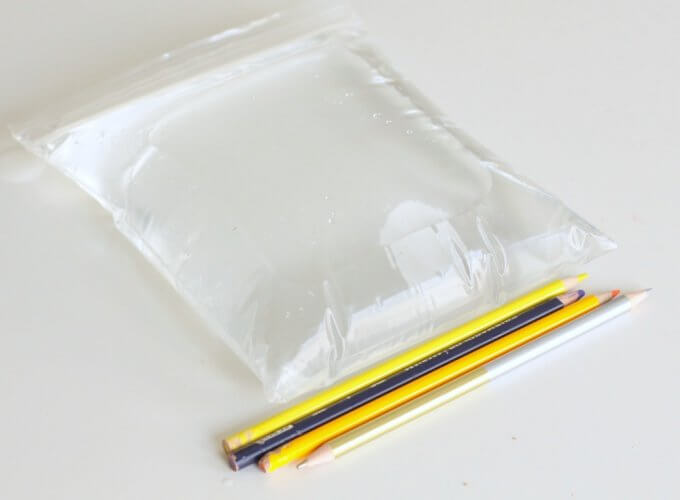
- Zip-top plastic bag
- Water
- Sharpened pencils
Instructions
STEP 1
Fill a zip-top bag about three-quarters full with water and seal it tightly.
STEP 2
Hold the bag over a sink, tub, or outdoor area.
STEP 3
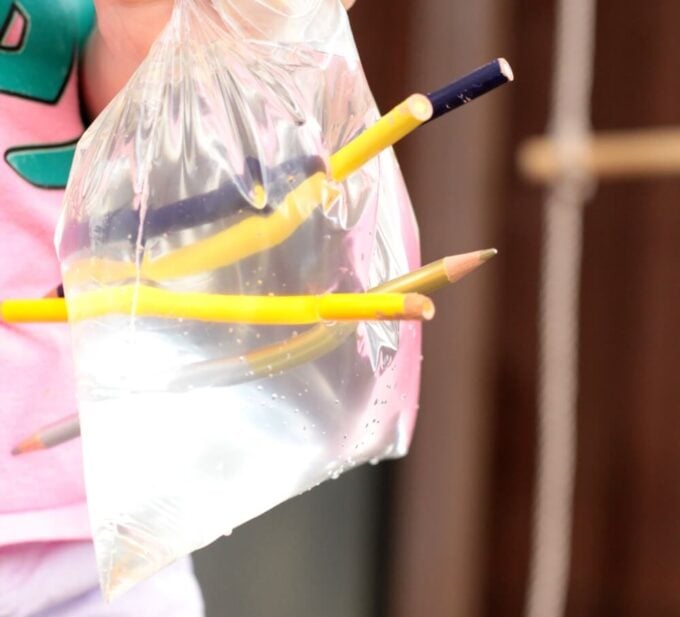
Quickly push a sharpened pencil straight through one side of the bag and out the other side.
STEP 4
Observe what happens. Does the water leak?
STEP 5
Continue inserting pencils one at a time and count how many the bag can hold.
STEP 6
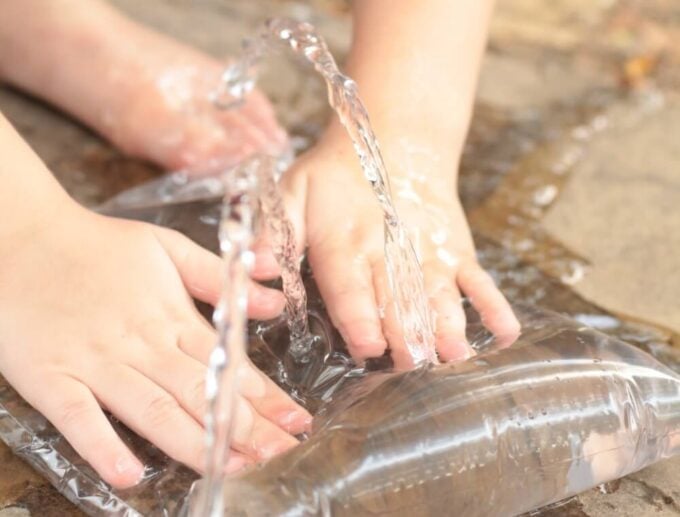
Remove the pencils and observe what happens next.
The Science Behind The Leakproof Bag Experiment
This experiment may look like magic, but it demonstrates an important property of polymers.
The plastic bag is made from polyethylene, a type of polymer. Polymers are materials made from long chains of repeating molecules linked together.
When the sharpened pencil passes through the plastic, it slips between these flexible polymer chains. Instead of breaking apart completely, many of the chains stretch and wrap tightly around the pencil.
Because the polymer chains form a seal around the pencil, very little water can escape. Once the pencil is removed, the opening remains, and the water leaks out.
This combination of flexibility and strength makes polymers useful for food packaging, storage bags, water bottles, containers, and countless everyday products.
👉 Want to learn more? Visit our Polymer Science for Kids guide to discover how materials like slime, balloons, rubber bands, and plastic bags are all connected through polymer chemistry.
Why Polymers Matter
Polymers are everywhere.
You can find polymers in:
- Plastic bags
- Water bottles
- Food containers
- Balloons
- Rubber bands
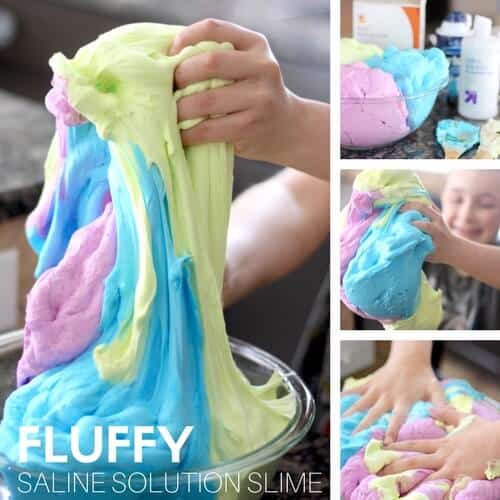
- Slime
- Silicone products
- Synthetic fabrics
Scientists and engineers select different polymers based on their strength, flexibility, durability, and ability to resist water.
🔎 This experiment demonstrates one of the most useful properties of polymers—the ability to bend and stretch without immediately tearing.
Polymer Investigation For Kids
Scientists test materials to learn how they behave under different conditions.
Try investigating:
- Does bag thickness affect the results?
- Do different brands of bags work the same way?
- How many pencils can each bag hold?
- Does pencil size matter?
- Does the amount of water affect success?
Record:
- Predictions
- Number of pencils inserted
- Observations
- Results
- Conclusions
Then compare your data and determine which bag performed best.
Free Polymer Science Labs Guide
Ready to explore polymers through hands-on science?
Grab our FREE Polymer Science Labs Guide packed with simple investigations that help kids discover how polymers stretch, bend, bounce, absorb water, and change shape.
Inside you’ll find:
✔ Polymer Science Labs activity guide
✔ 5-Day Polymer Science Lab Plan
✔ Polymer Hunt activity
✔ Polymer Investigation Lab
✔ Observation and recording prompts
From slime science and plastic milk to gummy bear growth and bioplastics, these activities make chemistry and materials science easy to explore at home or in the classroom.
Explore More Polymer Science
If your kids enjoyed this experiment, continue exploring polymers with these hands-on activities:
- Plastic Milk Experiment
- Homemade Bouncy Balls
- Guar Gum Slime
- Gummy Bear Growth Lab
- Bioplastic Experiment
👉 For a complete introduction to polymers, visit our Polymer Science for Kids hub.
Leakproof Bag FAQ
Can you really put a pencil through a bag of water without leaking? Yes. The flexible polymer chains in the plastic bag stretch around the pencil and create a temporary seal.
Why doesn’t the water leak out? The polyethylene polymer chains press tightly against the pencil, helping prevent water from escaping.
What type of plastic is used in the bag? Most zip-top storage bags are made from polyethylene, a common polymer used in packaging.
Can you use pens instead of pencils? Sharpened pencils work best because their pointed tips slide between the polymer chains more easily.
What happens when you remove the pencils? The seal is broken and the water begins leaking from the holes.
Is this a chemistry experiment? Yes. This activity explores polymers, a major topic in chemistry and materials science.
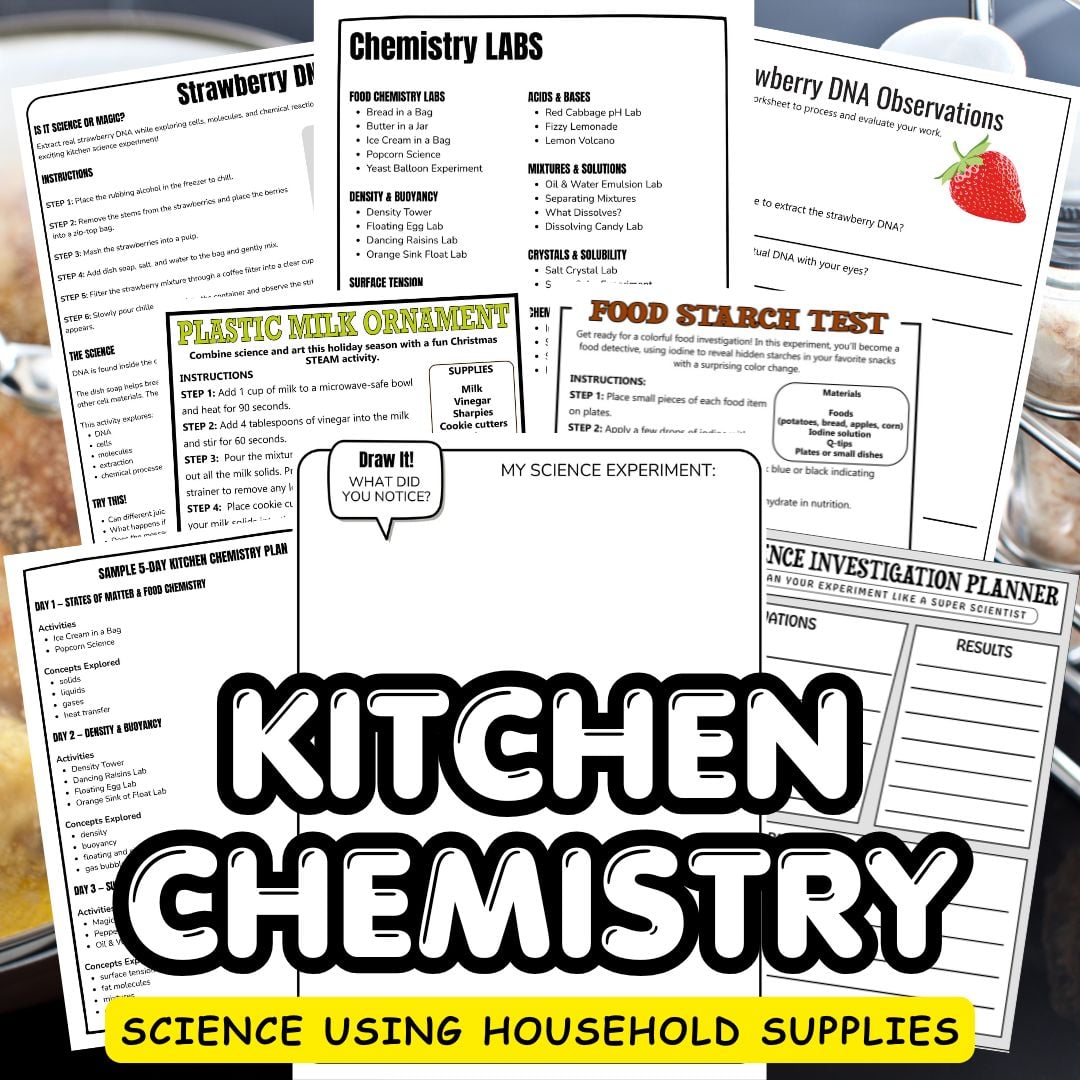
Explore More Kitchen Chemistry
Continue the fun with our Kitchen Chemistry Pack featuring printable experiments, reusable investigation pages, science explanations, and easy hands-on activities using everyday kitchen supplies.
Perfect for home or classroom science with activities focused on:
reactions, mixtures, crystals, surface tension, polymers, and color-changing chemistry.

Do you have the information for your labs in a printable format?
Hi Cindy, you can check our store front for many investigation lab packs! https://little-bins-for-little-hands.myshopify.com/