This Leprechaun Escape STEM Challenge is perfect for classrooms, homeschool, or a fun weekend activity. Get ready for hands-on problem-solving, physics exploration, and plenty of St. Patrick’s Day fun!

Zip Line STEM Challenge
Looking for a fun and engaging St. Patrick’s Day STEM activity? Challenge young engineers with this Leprechaun Zip Line STEM Challenge! This hands-on activity encourages kids to test designs, problem-solve, and explore key STEM concepts—all while celebrating the fun of St. Patrick’s Day. Can they build a super fast zip line to help the Leprechaun escape safely?
🔎 Explore all of our St. Patricks Day Activities for kids here.
Recommended Grade Level: This activity is ideal for elementary-aged students (Grades 1-5) but can be adapted for older or younger learners with material modifications and additional challenges.
Leprechaun Escape Challenge
📖 Legend has it that leprechauns are tricky little creatures who love to cause mischief—but sometimes, they get caught! One clever leprechaun needs your help to escape from a trap and make a daring getaway. But there’s a twist—he can’t just run away. He needs to zip through the air on a special zip line!
Can you create a zip line carrier that allows the leprechaun to safely escape down the string while testing different speeds, materials, and designs?
💡Grab our Pot of Gold Tower STEM Challenge and the Leprechaun Trap Challenge.
Materials Needed:
- String (nylon, cotton, or fishing line)
- Straws (cut in half to slide along the string)
- Paper clips (to attach the leprechaun or weight)
- Tape (to secure materials)
- Printable leprechaun, Small cup or LEGO figure (to act as the leprechaun)
- Additional optional materials: pipe cleaners, rubber bands, balloons
The Engineering Design Process
🔎 Learn more about the Engineering Design Process here and grab a free printable guide.
Encourage kids to follow these key steps as they build their zip lines:
- Ask: How can we design a zip line carrier that moves quickly or slowly?
- Imagine: Brainstorm different zip line designs.
- Plan: Choose materials and discuss possible improvements before building.
- Create: Construct the zip line carrier using the materials provided.
- Test: Place the carrier at the top and release it—watch how it moves!
- Improve: Adjust the design to increase or decrease speed.
Leprechaun STEM Challenge Instructions
1. Set Up the Zip Line
- Tie one end of the string to a high point (chair, door handle, or desk).
- Tie the other end to a lower point, creating a downward slope.
2. Design the Carrier
- Use a straw as the main sliding piece.
- Attach a cup, LEGO figure, or paperclip “leprechaun” to the straw with tape or string.
3. Test the Zip Line
- Place the carrier at the top and release it.
- Observe how fast or slow it moves.
4. Modify and Improve
- Experiment with different materials or angles to make the zip line faster or slower.
- Test different types of string (smooth vs. rough) to observe how friction affects speed.
🔎 Check out our great Turkey Escape STEM Challenge for a similar setup and ideas.

STEM Challenge Variations
- Speed Test: Which design gets the leprechaun to safety the fastest?
- Slowest Escape: Can you make a zip line that slows the leprechaun down?
- Weight Test: Does adding more weight (coins, marbles) change the speed?
- Material Test: Try different string materials (yarn, fishing line, ribbon) and compare results.
Optional Constraints
To increase the challenge, consider these constraints:
- Time Limit: Build and test the zip line in 10-15 minutes.
- Material Limit: Use only 5 materials to create the carrier.
- Distance Challenge: Make the zip line travel a minimum of 3 feet.
STEM Concepts Explored
🔎 Explore various engineering activities here, including structural, mechanical, and electrical projects.
Forces & Motion: The speed of the zip line is influenced by weight, angle, and materials. Real-world connection: Understanding these forces helps engineers design safe and thrilling roller coasters and high-speed transit systems.
Gravity: The force pulling the carrier downward. Real-world connection: Ziplines in amusement parks and adventure courses rely on gravity to move people from one point to another safely and smoothly.
Friction: The resistance between materials that slows movement. Real-world connection: Engineers reduce friction on zip lines by using smooth pulleys and cables, just like you might test different strings for speed.
Simple Machines: The straw acts like a pulley system on the inclined string. Real-world connection: Pulleys are used in cranes, elevators, and even ski lifts to help transport people and objects efficiently.
STEM Reflection Questions
👉 Free printable list of STEM reflection questions here.
- What happened when you changed the angle of the zip line?
- How did friction affect the leprechaun’s movement?
- What changes made your zip line faster or slower?
- If you could redesign your zip line, what would you do differently?
More St Patrick’s Day STEM Activities
Looking for more ways to add STEM fun to your St. Patrick’s Day celebrations? Try these lucky-themed science experiments:
🔎 You can find all our St Patricks Day Science and STEM Activities here.
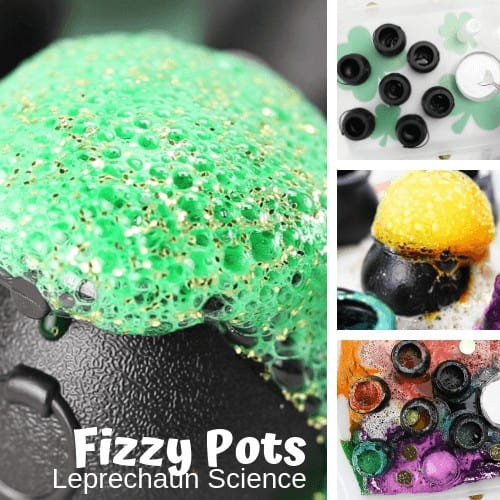
- Fizzy Baking Soda and Vinegar Pots – Mix baking soda and vinegar in small pots for a bubbling leprechaun cauldron effect.
- Leprechaun Toothpaste – Create an awesome foamy chemical reaction with a St Patrick’s Day theme.
- Lucky Magic Milk Experiment – Add food coloring to milk, touch with dish soap, and watch swirling colors form.
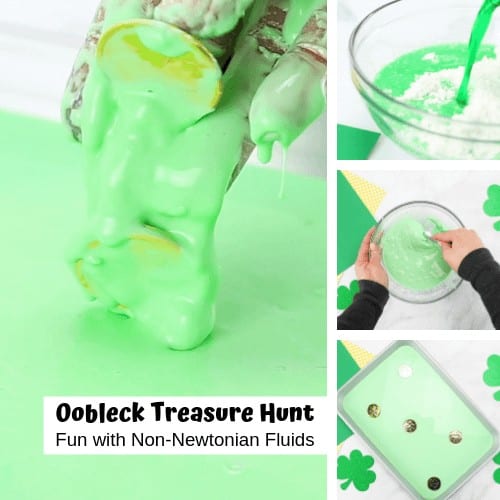
- Oobleck Treasure Hunt – Hide coins in green Oobleck (cornstarch and water) for a fun sensory treasure hunt.
- Homemade St. Patrick’s Day Slime – Make stretchy green and gold slime using glue, baking soda, and saline solution for a festive sensory activity.
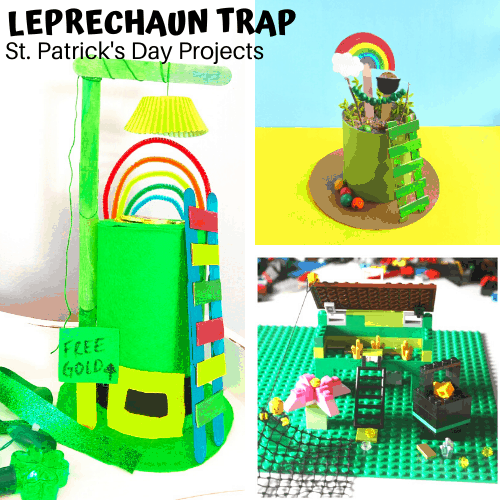
- Leprechaun Trap STEM Challenge – Design and build a creative trap using household materials to try and catch a mischievous leprechaun.
- Pot of Gold Tower STEM Challenge – Build the tallest and strongest tower to hold a pot of gold.



Printable St Patrick’s Day STEM Pack
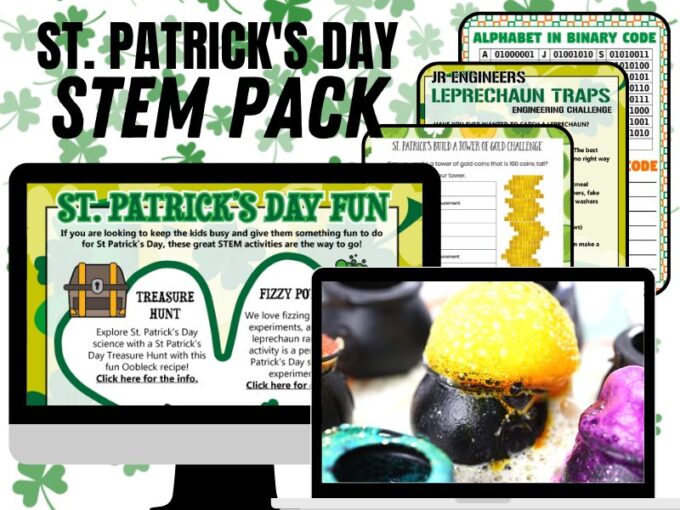
Get ready to catch a Leprechaun, explore fizzy pots, and dig for gold coin oobleck all while exploring simple science and engineering design process with the St Patrick’s Day STEM Pack!