
Create your own parachute and explore how gravity and air resistance work together! This hands-on parachute science project is perfect for elementary and middle school students and a great way to explore physics concepts like gravity, drag, and terminal velocity.

Parachute Science Experiment for Kids
Field of Science: Physics
Best For: Grades 2–6
Concepts Explored: Gravity, Air Resistance (Drag), Terminal Velocity
A parachute works by slowing down a falling object. When a parachute is released, it creates air resistance or drag. This force pushes against gravity, allowing the object to fall more slowly. Parachutes are used in real life for skydiving, space capsule recovery, cargo drops, and rescue operations!
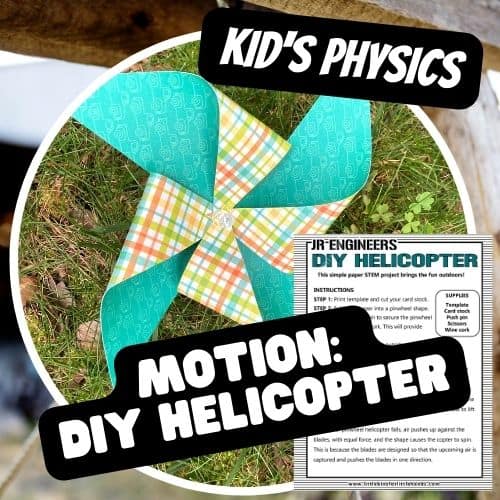
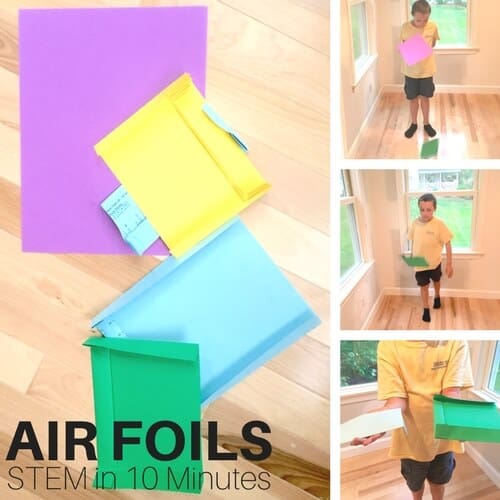
👉 You can also explore air resistance with paper helicopters or air foils!
NGSS Alignment (Simplified)
- What are you trying to figure out? How does the design of a parachute affect how it falls?
- What will you do to investigate? Build and test a parachute made from everyday materials.
- How will you make sense of what you find? Measure and compare drop times with different designs.
Plus, it pairs perfectly with our Engineering Design Process printable pack.
Supplies Needed
- Lightweight plastic or fabric (plastic bag, coffee filter, or tablecloth)
- 4 equal pieces of string or thread (about 40 cm each)
- Small weight (washer, clay, or mini figure)
- Scissors
- Tape or glue
- Ruler or measuring tape
- Stopwatch
- Notebook or our free science journal pages (see below)
How To Make a Parachute
🎥 Watch the full setup in our video below!
STEP 1. Cut a square (30 cm x 30 cm) or circle (30 cm diameter) from your lightweight material. This will be your parachute canopy.
STEP 2. Cut four strings, each about 40 cm long. Tape or glue one end of each string to the four corners (or evenly spaced edges) of the canopy.
STEP 3. Choose a small object for the weight. Make sure it’s light enough for the parachute to slow its fall.
💡 Try this twist: Use your parachute for an Egg Drop Challenge!
STEP 4. Tie the free ends of the strings to your weight. Make sure all strings are the same length so the weight hangs evenly.

STEP 5. Head to a safe testing area, like a stairwell, balcony, or playground. Hold the canopy and drop your parachute. Use a stopwatch to measure the time it takes to hit the ground.
STEP 6. Repeat your test at least 3 times. Record your data in a notebook or journal. Try dropping it from different heights or changing designs to compare results.

How Does a Parachute Work?
Parachutes slow down falling objects by increasing air resistance. Gravity pulls the object down, but the large canopy catches air and creates drag, a force that works in the opposite direction. As drag increases, the falling object slows down. Eventually, gravity and air resistance balance out, and the object falls at a steady terminal velocity.
Quick Vocabulary
- Gravity: A force that pulls objects toward Earth.
- Air Resistance (Drag): A force that slows down objects moving through air.
- Terminal Velocity: The fastest speed an object can fall when gravity and air resistance are balanced.
- Parachute: A device used to slow down falling objects by creating drag.
- Canopy: The top part of the parachute that catches air.
Grab the free printable instructions for the parachute science project here.

Real-World Uses of Parachutes
Parachutes are used in many fields, including:
- Skydiving – Safe descent from planes.
- Military – Delivering troops and supplies.
- Space Missions – Slowing re-entry capsules.
- Rescue Operations – Dropping aid into remote areas.
- Cargo Delivery – Air-dropping food or supplies during emergencies.
Extend the Activity
Turn this simple project into a full science experiment!
- Test materials: Try fabric, paper, or plastic.
- Change shapes: Compare squares, circles, and triangles.
- Vary weights: Add different loads to your parachute.
- Set design goals: Longest air time, most stable flight, or softest landing.
📌 Use the scientific method or the engineering design process to plan and improve your parachute!
Make It a Science Project
To turn your parachute activity into a science fair project:
- Ask a question: Which parachute design falls the slowest?
- Make a hypothesis: A larger canopy will increase drag and fall slower.
- Test and record: Change one variable at a time.
- Analyze: Graph your drop times or success rate.
- Share: Use our printable science fair board templates!
🔎 Take a look at our [Easy Science Fair Planning Pack] for tips, layouts, and more!
Related Physics Experiments
Check out these related physics experiments…
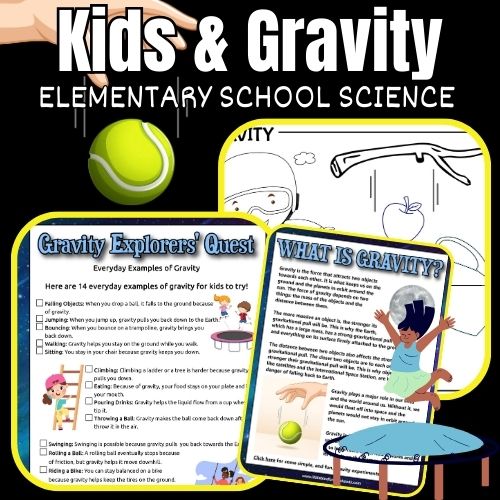
- Gravity Experiments
- Egg Drop Project
- Paper Plane Designs
- Paper Helicopter
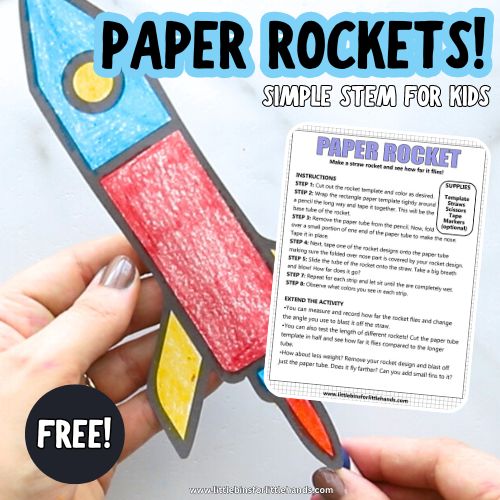
- Make A Paper Rocket
- Test a wind tunnel
- LEGO Parachute


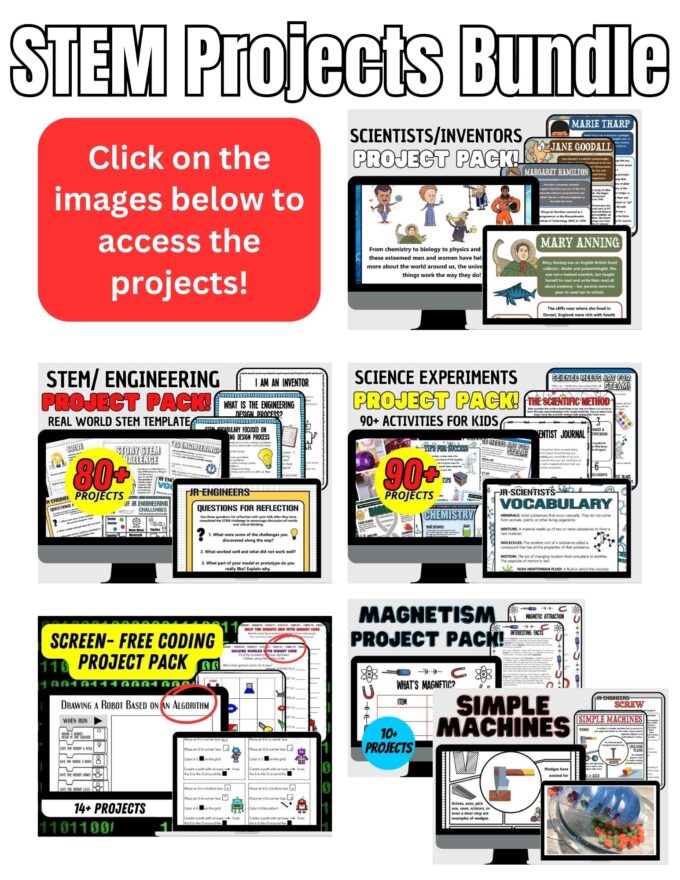
Try the STEM Project Bundle!
Do you love hands-on science or STEM, like this parachute experiment? The STEM Project Bundle offers a full year of exciting STEM learning with activities for ages 5–12.
What’s Inside:
- 90+ easy science experiments
- 80+ STEM and engineering challenges
- Famous scientists pack
- Simple machines, magnets, and coding activities
- Bonus: Real-World STEM Challenge Template!
Perfect for home or classroom use—print and go!
👉 [Grab the STEM Project Bundle here] and make STEM a part of your week!