
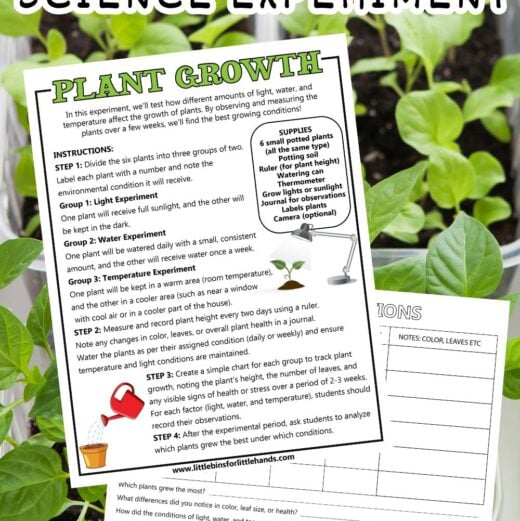
Ever wonder what makes plants grow the best? Try this fantastic plant growth experiment, where you explore how light, water, and temperature affect plant growth. Follow along to see which conditions will help your plants thrive the most!

Fun and Easy Plant Experiment for Students
Plants need certain things to survive and grow: light, water, and the right temperature. Explore how light, water, and temperature changes impact plant growth. This fun activity also teaches important biology concepts like photosynthesis and plant adaptation, along with applying scientific methods.
💡Explore our Biology Projects, including osmosis, capillary action, and plant cells.
Recommended Grade Level: 4-6th Grade
📝 A printable journal page is included to track your plant’s progress and add to a science notebook!
Supplies:
Here’s what you need to get started:
- 6 small potted plants (all the same type)
- Potting soil
- Ruler (for measuring plant height)
- Watering can
- Thermometer
- Grow lights or access to sunlight
- Labels for each plant
- Printable observation journal (included below)
- Camera (optional for photo observations)
How to Set Up: Hands-on Plant Growth Activity
Step 1: Set Up Your Experiment
Divide your six plants into three groups of two and label each plant with a number. Each group will test different conditions: light, water, or temperature.
- Group 1: Light Experiment: Place one plant in a sunny spot and the other in a dark room.
- Group 2: Water Experiment: Water one plant daily and the other once a week.
- Group 3: Temperature Experiment: Put one plant in a warm spot (room temperature) and the other in a cooler place.
Step 2: Make Observations
Measure each plant’s height every two days with a ruler and record your findings. Pay attention to the color, size, and health of the leaves. Write these observations in your journal.
Step 3: Create a Growth Chart
Using the printable observation sheet below, chart each plant’s growth, including the plant’s height, the number of leaves, and any visible signs of health or stress. Compare how the plants in each condition grow over time.
Step 4: Analyze the Results
After two to three weeks, review your data. Which plants grew the most? Which conditions seemed to help the plants grow best? Encourage students to reflect on how light, water, and temperature affected plant health.
Applying the Scientific Method
The scientific method helps students explore how light, water, and temperature affect plants. Here’s an example:
- Ask a Question: How does light, water, or temperature affect plant growth?
- Research: Learn about plant needs, like photosynthesis and proper hydration.
- Hypothesis: Make a prediction. Example: “If a plant gets more sunlight, it will grow taller.”
- Experiment: Follow the steps, changing only one variable (light, water, or temperature) while keeping the rest constant.
- Record Data: Track plant height and health in the journal every few days.
- Analyze: Look at the results. Did the plants with more sunlight grow more? Did temperature affect growth?
- Conclusion: Was the hypothesis correct? What did you learn?
💡 Learn more about the scientific method [here].
Free Printable Plant Growth Observation Chart
Use this printable chart to track your plant growth during the experiment. It helps organize your observations and makes comparing each plant’s progress easy.

The Science Behind Plant Growth
Light:
Light is crucial for photosynthesis, the process by which plants make food. In this experiment, you’ll see that plants in full sunlight grow better than those kept in darkness. This is because, without light, the plant can’t perform photosynthesis, leading to slower growth and poor health.
Water:
Water is necessary for transporting nutrients throughout the plant. When a plant doesn’t get enough water, it may wilt or not grow as quickly. By comparing a plant watered daily to one watered weekly, you’ll notice the differences in growth and vitality.
Temperature
Plants also grow best within a certain temperature range. Warmer temperatures can speed up a plant’s metabolism and growth, while cooler temperatures may slow it down. This experiment allows you to observe how plants in warm versus cool environments develop over time.
The Role of Photosynthesis
Plants use light, water, and carbon dioxide to make food essential for growth. In the light experiment, plants kept in the dark won’t be able to photosynthesize effectively, so their growth will be slower or stunted. The experiment shows how important sunlight is for plant health and survival.
💡Learn more about photosynthesis and grab a free project!
Extend The Learning
- Plant Growth Journal: Use a journal to track and draw pictures of your plants as they grow. Add the measurements and observations from your experiment.
- Design the Perfect Plant Habitat: Based on your findings, design the ideal habitat for a plant. Use what you learned about light, water, and temperature to create a diorama or drawing of the best conditions for plant growth.
- Photosynthesis Discussion: After the experiment, research more about photosynthesis and how different factors, like light quality, affect how well plants can produce food.
- Time-lapse Photography: Take pictures of your plants every few days and turn them into a time-lapse video to see how they grow over time. It’s a fun way to capture the experiment!
- Research Plant Adaptations: Look up how different plants adapt to their environments. Cacti survive with very little water, while rainforest plants grow in shady, wet conditions. How do they manage?
More Plant Activities
💡Investigate our complete collection of Plant Science Activities [here].
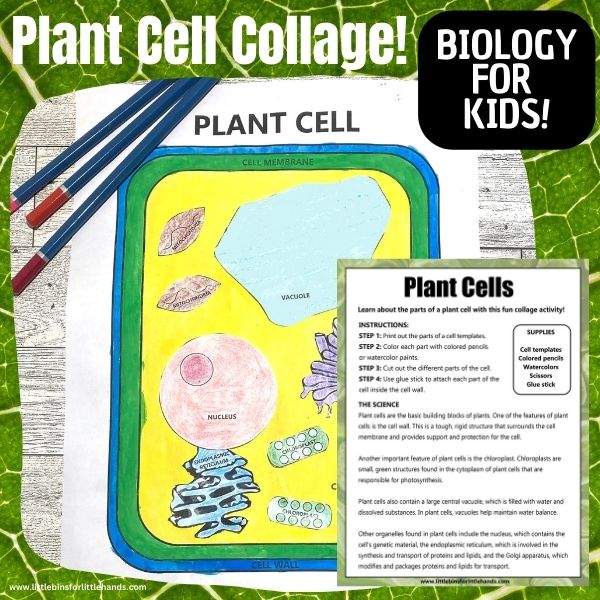
- Plant Cell Collage
- 3D Plant Cell Diorama
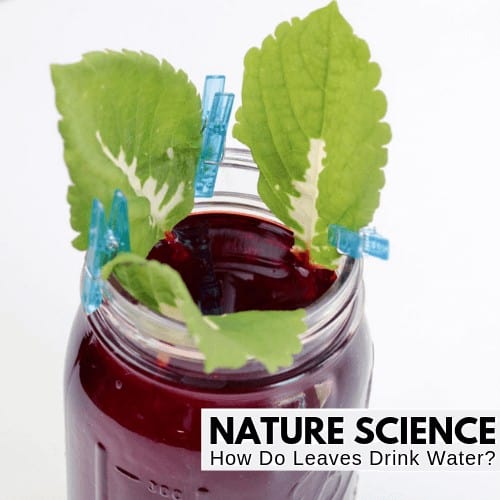
- How Do Leaves Drink
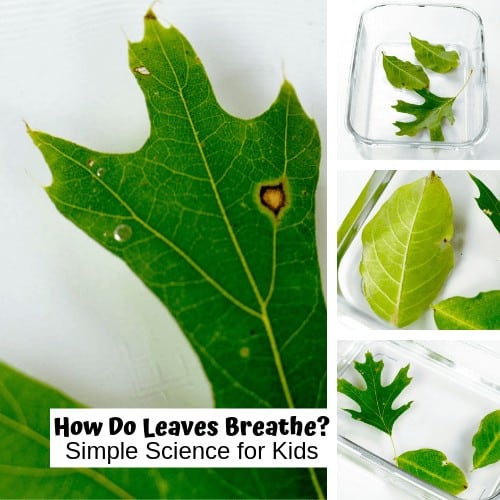
- How Do Plants Breathe?
- Transpiration Experiment
- Why Do Leaves Change Color?
- Seed Germination
- Flower Dissection Lab
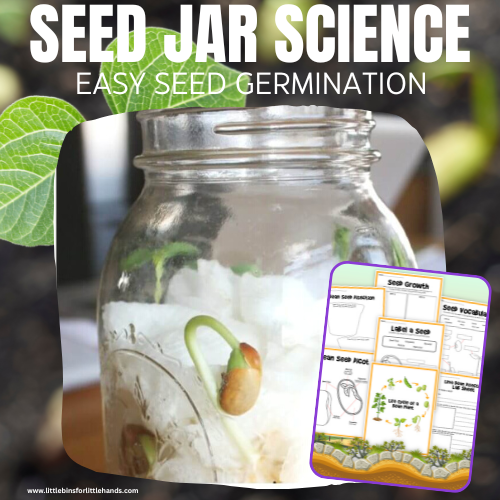
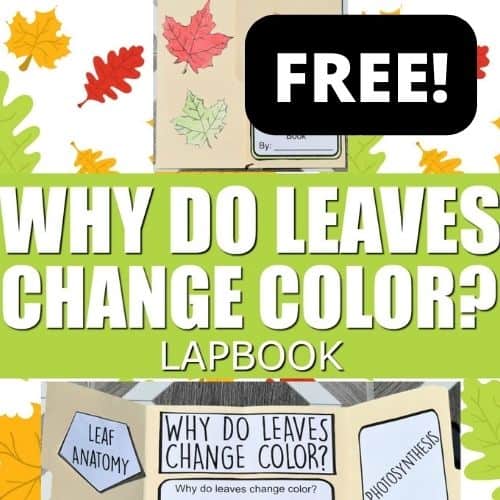

Printable Plant Project Pack
Explore 20+ Plant Activities for Kids! 🌱 Looking for fun and educational plant-themed activities? This comprehensive Plant Activity Pack is perfect for early elementary school grades, providing hands-on learning experiences that fit any skill level! Whether it’s for fall or spring science lessons, these activities are ideal for classroom and at-home learning.