
Who’s ready to become a potion master? This isn’t just pretend—it’s real science in disguise. Learn what to mix together to create awesome science potions as a way to introduce chemistry and reactions!

What to Mix Together for Potions
Potion-making isn’t just for wizards—it’s for curious young scientists, too! Mixing potions is a fun and exciting way to explore chemistry. You can create bubbling brews, colorful mixtures, and even fizzing eruptions at home or in the classroom.
Not only will you feel like a real scientist (or wizard!), but you’ll also learn what happens when different ingredients combine. Let’s dive into some potion-mixing magic together!
Grade Level: Preschool- 2nd Grade (Honestly, all kids love it!)
Supplies:
You don’t need a spellbook for the three simple science potions —just a few simple supplies you might already have at home. Here’s what you’ll need:
- Baking soda
- Vinegar
- Food coloring
- Glitter (optional, but it makes potions extra magical!)
- Dish soap
- Water
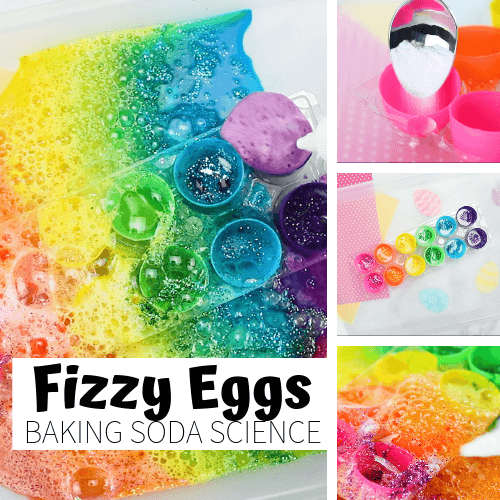
- Small cups or bowls (plastic Easter eggs or black cauldrons)
- Spoons for stirring
- Measuring spoons
- Droppers or pipettes (optional but fun!)
How to Make Your Science Potions:
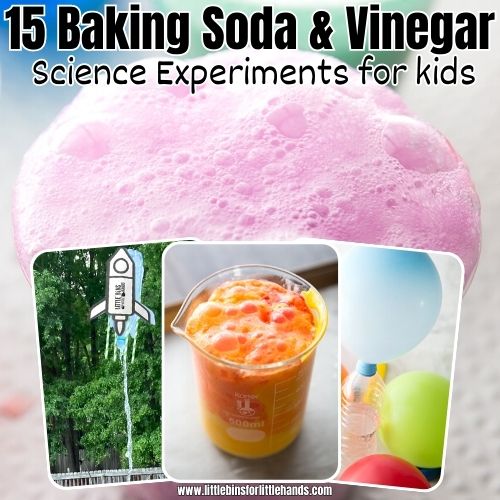
💡 Explore all of our Baking Soda and Vinegar experiments [here].
1. Fizzing Rainbow Potion
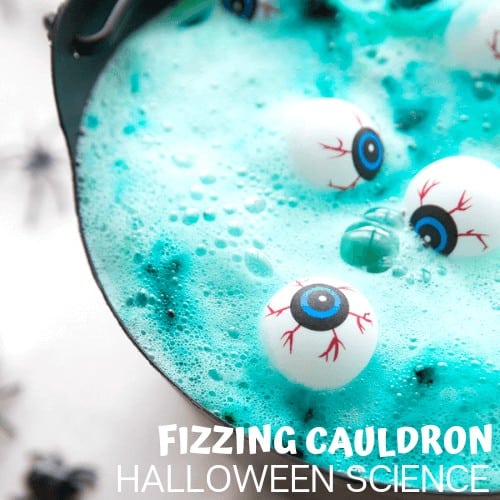
- Fill a small bowl or cup halfway with baking soda.
- Add a few drops of food coloring (any color you like!).
- Pour in a little dish soap for extra bubbles.
- Now, it’s time for the magic! Use a dropper or carefully pour vinegar onto the mixture.
- Watch as your potion fizzes and bubbles up in a colorful explosion! You just made a fizzing potion—science style!
2. Bubbling Wizard’s Brew
- Add a small amount of dish soap and a few drops of food coloring to a cup or bowl.
- Slowly add baking soda and give it a gentle stir.
- Pour in some vinegar and step back—your potion will bubble and grow like a wizard’s brew!
3. Magic Color-Changing Potion
- Fill one bowl with water and another with vinegar.
- Add a few drops of different food coloring to each liquid.
- In a third container, mix a spoonful of baking soda with water.
- Slowly pour the colored vinegar into the baking soda mixture and watch the colors change and fizz!

Potion Science Information
What’s going on inside these bubbling brews? When you mix baking soda (a base) with vinegar (an acid), they react together to create carbon dioxide gas. This gas forms bubbles, making your potion fizz and foam!
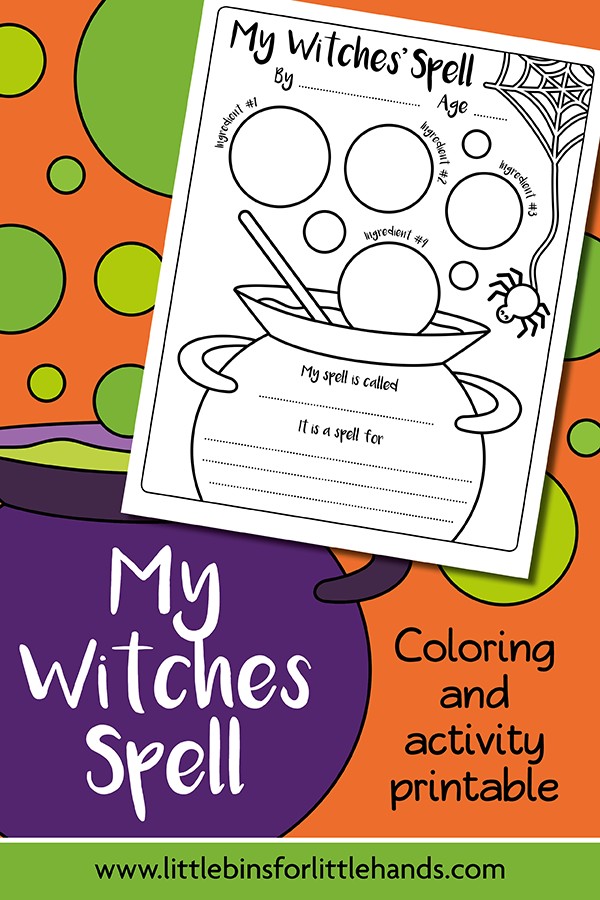
Dish soap adds even more bubbles, making your experiment a bubbling brew. Food coloring adds a magical twist, letting you create rainbow potions. Create your own fun potion below this free printable.
More Awesome Science Potions
These activities expand on the same hands-on, exploratory fun of potion-making while teaching various science concepts! Click on each title below to learn how to perform each science experiment.
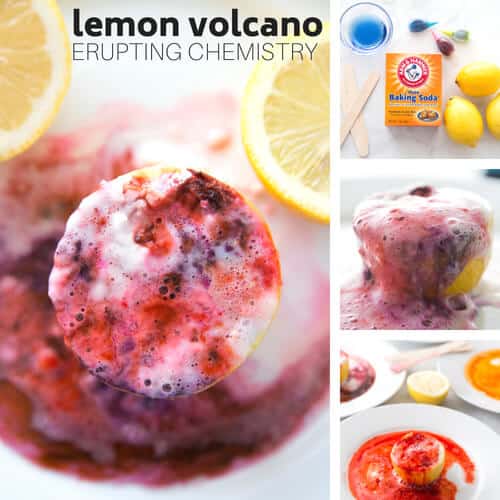
Fizzy Lemon Volcano
- Description: Turn a lemon into a volcano! Cut a lemon in half, poke it with a fork to release some juice, add a little baking soda, and watch it fizz.
- Science Concept: An acid-base reaction (lemon juice and baking soda) creates a fizzing reaction, similar to the potions’ activity.
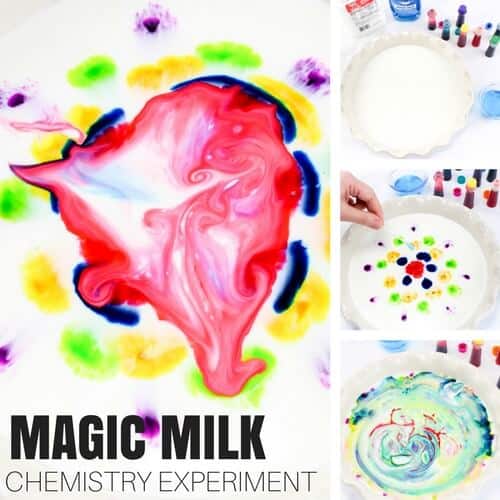
Color-Changing Milk Magic
- Description: Pour milk into a dish and add drops of food coloring. Then, dip a cotton swab into dish soap and touch the milk’s surface. Watch the colors swirl and mix like magic!
- Science Concept: Surface tension and how dish soap interacts with fat molecules in the milk.
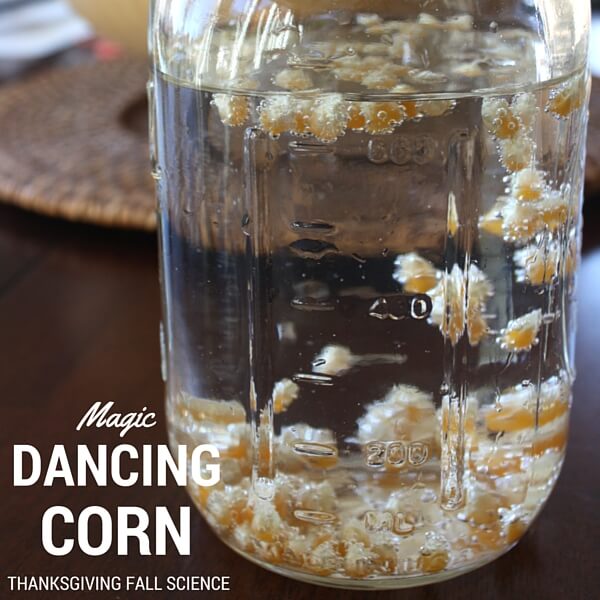
Dancing Corn Potion
- Description: Drop dried corn kernels into a glass of baking soda/vinegar mixture and watch as they “dance” up and down in the bubbles.
- Science Concept: Gas bubbles attach to the rough surface of the corn, causing them to rise and fall, demonstrating buoyancy.
- Alternative: Try Dancing Raisins with carbonated soda and watch the raisins dance.
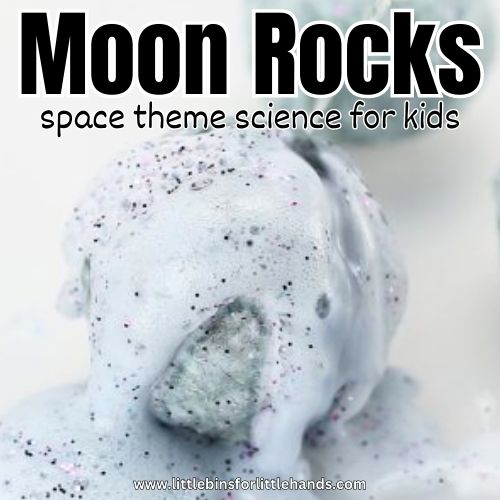
Magic Snow Potion: Moon Rocks
- Description: Mix baking soda with water until it becomes moldable, then add vinegar to watch it fizz and dissolve.
- Science Concept: The combination of an acid (vinegar) and a base (baking soda) causes a chemical reaction, producing carbon dioxide bubbles.
Glow-in-the-Dark Potion
- Description: Mix tonic water (which contains quinine) with baking soda and vinegar. Then, turn off the lights and shine a blacklight to make the mixture glow!
- Science Concept: Fluorescence under UV light combined with a classic acid-base reaction.
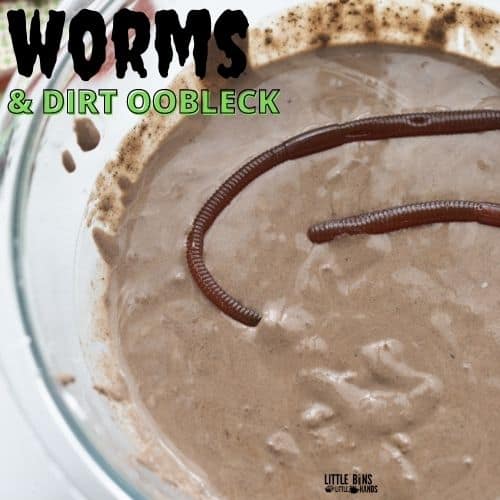
Oobleck Potion (Non-Newtonian Fluid)
- Description: Mix cornstarch with water to create a substance that behaves like both a liquid and a solid. Add some food coloring to make it magical. Add fake worms for a creepy crawly potion.
- Science Concept: Non-Newtonian fluids, which change viscosity under pressure.
Ice Cream in a Bag Potion
- Description: Combine milk, sugar, and vanilla in a small bag. Place that bag inside a larger one filled with ice and salt. Shake the bags, and you’ll have ice cream in a few minutes!
- Science Concept: How freezing and melting work and how salt lowers the freezing point of ice.
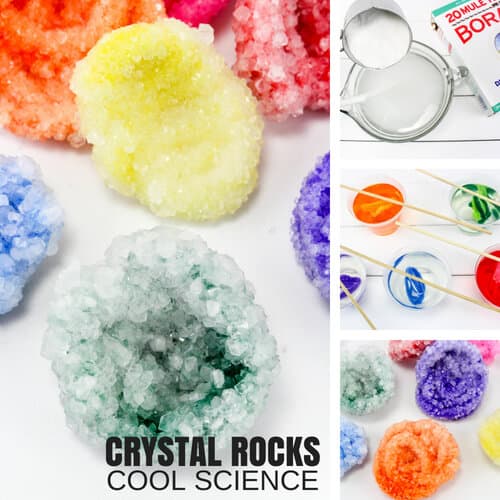
Crystal Growing Potion
- Description: Dissolve sugar or salt in hot water, then let the water evaporate to form crystals over time. Add food coloring to make them colorful.
- Science Concept: Crystallization and how solutions form and solidify as the water evaporates.
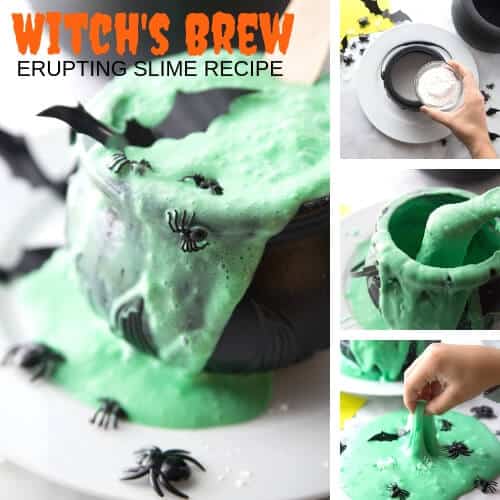
Bubbling Slime Potion
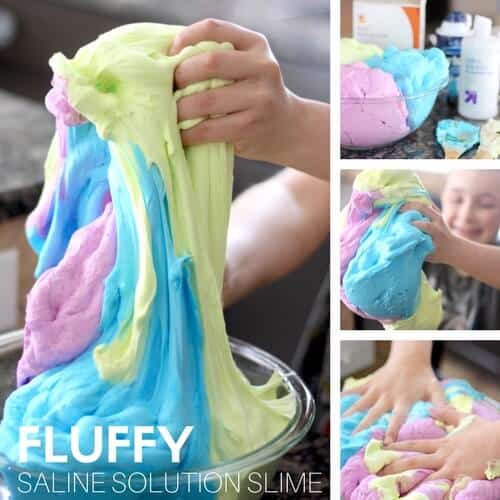
- Description: Mix glue, water, vinegar, baking soda, and saline solution to create slime! Add glitter or glow-in-the-dark powder for extra magic.
- Science Concept: Polymers and how they can be stretched and formed into new shapes.
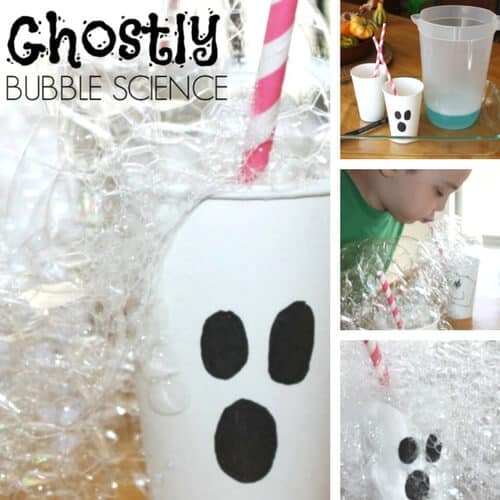
Bubble Potion
- Description: Mix water, dish soap, and a bit of glycerin to create a potion for giant bubbles. Experiment with different amounts of each ingredient to create the biggest bubbles.
- Science Concept: Surface tension and how bubbles form in different solutions.
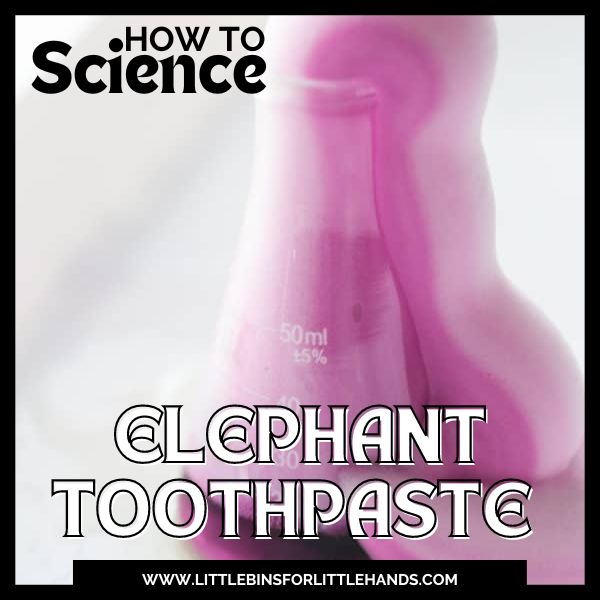
Elephant Toothpaste Potion
- Description: Mix hydrogen peroxide, dish soap, and food coloring in a bottle. Then, add yeast mixed with warm water to create a foamy eruption that looks like giant toothpaste!
- Science Concept: The rapid decomposition of hydrogen peroxide (a chemical reaction) releases oxygen, which gets trapped in the soap, creating foam. The yeast acts as a catalyst to speed up the reaction.
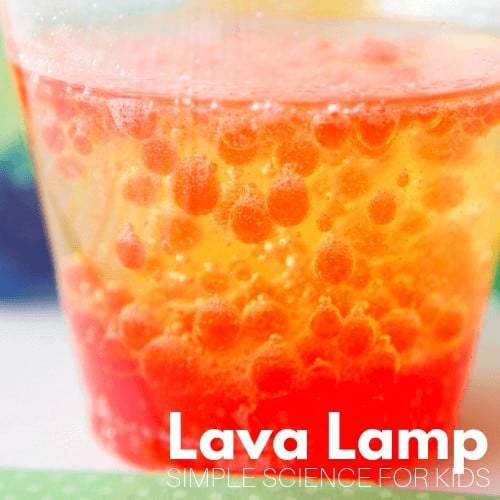
Lava Lamp Potion
Science Concept: Density and polarity—oil and water don’t mix because they have different densities, and the Alka-Seltzer reaction creates gas bubbles that carry the colored water up through the oil before sinking back down.
Description: Fill a bottle with water, add food coloring, and then pour oil on top. Drop in an Alka-Seltzer tablet and watch colorful blobs rise and fall like a lava lamp!
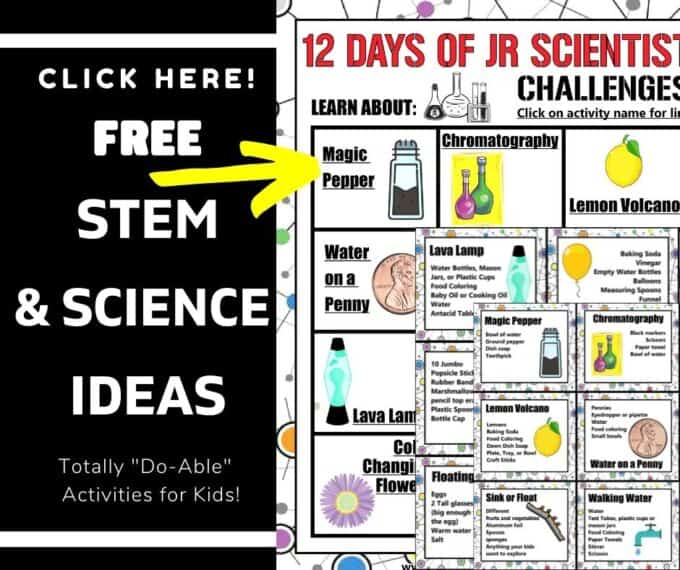
Free printable Junior Scientist pack!
Grab this fantastic free science challenge calendar and get started today! Join the library club for instant access to extra observation pages and hundreds of projects!
Join the Library Club Today!
Support Real Learning with Real Projects! When you join the Library Club Membership, you’re not just getting instant access to our complete library of art and STEM printables—you’re helping us keep hands-on, high-quality learning alive. Thoughtfully created resources made by real people who care about inspiring kids through creativity, curiosity, and connection.


One Comment
Comments are closed.