
This rainbow density column is one of the most popular spring science experiments! Perfect for a classroom or at home, this experiment lets kids create a rainbow using simple liquids layered carefully inside a mason jar or see-through container.

Rainbow Density
Field of Science: Physical Science (how liquids behave)
Grade Level: K-5
Concepts Explored: Density, mass vs. volume, and the properties of liquids.
💡More fun ways to explore density are here.
Every liquid has a unique density—meaning how much mass is packed into a given volume. Heavier liquids with many molecules, like honey, will settle at the bottom of your jar. While lighter liquids, like rubbing alcohol, will float near the top.
Supplies Needed:
- 1/2 cup Honey
- 1/2 cup Light corn syrup (color it red)
- 1/2 cup Dish soap (blue)
- 1/2 cup Water (color it green)
- 1/2 cup Vegetable oil
- 1/2 cup Rubbing alcohol (color it yellow)
- Clear lamp oil (optional for an extra layer)
- Food coloring in assorted colors
- Clear glass jar (large enough to hold all of the liquid
- Baster or pipette
How to Make a Rainbow Density Jar
💡 Since this experiment is a density tower, you won’t hit every single color precisely as in a real rainbow, but here’s how to match a rainbow color spectrum while considering liquid densities:
STEP 1: Pour honey into the bottom of your jar. The color of your honey will represent the deep orange layer.

STEP 2: Mix light corn syrup with a drop of red food coloring to create a vivid red liquid. Then, gently pour it over the honey.

STEP 3: Slowly pour blue dish soap (Dawn works well) onto the red corn syrup layer to act as your blue layer.

STEP 4: Mix water with green food coloring and drip the green water SLOWLY onto the dish soap using a pipette or turkey baster.
STEP 5: Pour olive oil or vegetable oil along the inside of the jar to create the yellow layer. Oils are naturally yellow-tinted.
STEP 6: Mix rubbing alcohol with purple food coloring (or mix red and blue) to create a purple layer. Gently add this layer to the top using a dropper.

STEP 7: Optional: You can add lamp oil for a lighter color effect at the very top. It can look clear or slightly yellow to represent a subtle violet layer.

Density Jar Science Info:
Density tells us how much “stuff” (or matter) is packed into a certain amount of space (called volume). Scientists measure density by dividing mass (how heavy something is) by its volume (how much space it takes up). The formula is:
Density = mass ÷ volume
For example:
- Water has a density of about 1 gram per milliliter (1 g/mL).
- Honey is denser because it packs more mass into every milliliter, which is why it sinks to the bottom of the jar.
Like most oils, olive oil is less dense than water because it has less matter in the same amount of space (this is why oil floats on water).
Rubbing alcohol is even less dense and will float on top of both water and oil, making it perfect for the top layer in most density jar experiments.
Why does the order matter?
When you carefully pour liquids in the correct order, starting with the heaviest (densest) at the bottom and working up to the lightest (least dense) at the top, you create distinct lines or colorful layers. But if you try the reverse order, the liquids will start to mix, and the beautiful rainbow effect will disappear!
💡Why don’t oil and water mix? Read more here.
Related Rainbow and Color Activities:
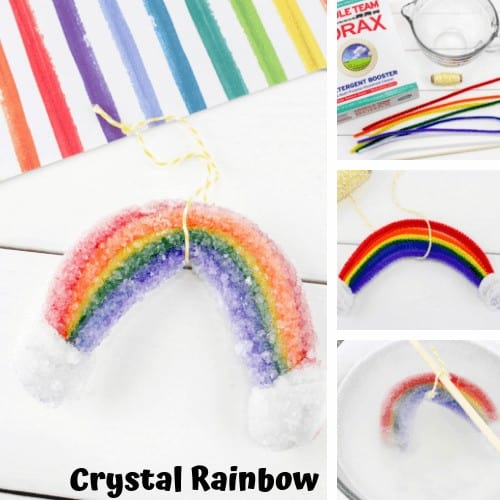
- Walking Rainbow Experiment
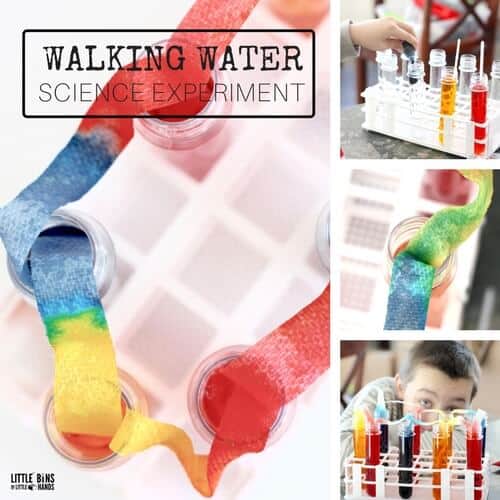
- Walking Water Experiment (Capillary Action)
- Sugar Water Density Challenge
- Color Mixing for Kids STEAM
- Build a Rainbow Bridge STEM Challenge
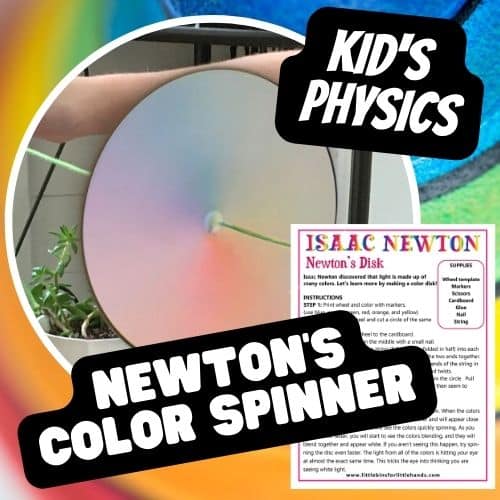
- Newton’s Color Spinner
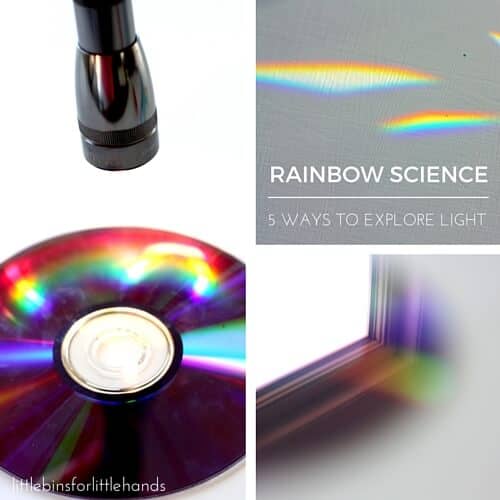
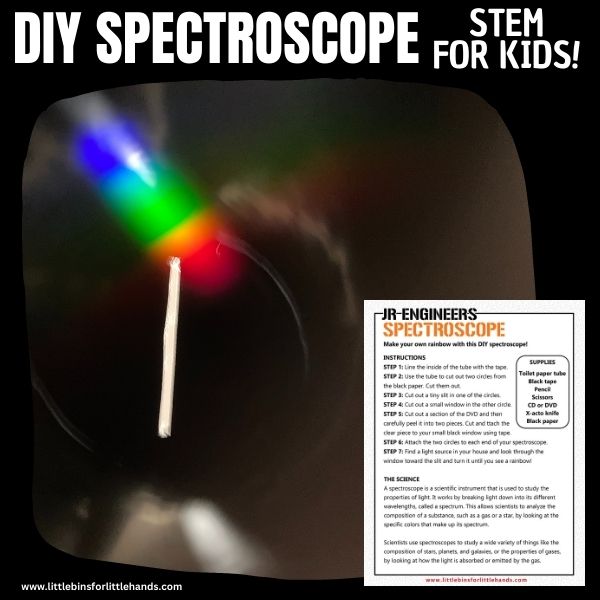
- DIY Spectroscope