

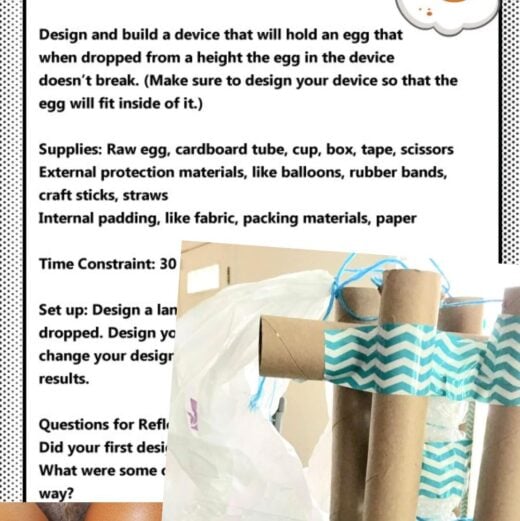
Can you design a container that protects an egg when it is dropped from a height? The classic egg drop challenge is one of the best STEM activities for helping kids think like engineers while exploring forces, motion, and the engineering design process.
Whether you’re completing an egg drop challenge at home, in the classroom, or for a science fair project, kids will plan, build, test, and improve their own egg drop designs using everyday materials.
💡 Grab the free Engineering Challenge Pack to sketch ideas, record test results, and improve your design as you build.
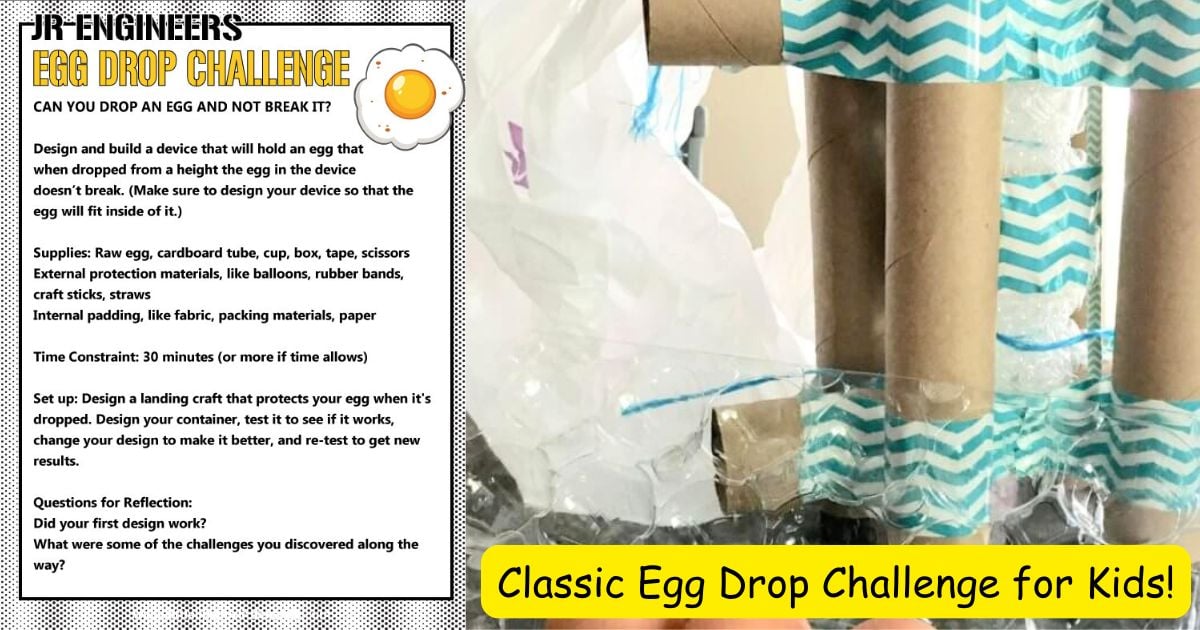
What Is the Egg Drop Challenge?
Learn how to build a successful egg drop challenge with simple materials. This classic STEM activity, for elementary and middle school, teaches kids about gravity, air resistance, forces, and engineering as they design, test, and improve their own egg drop projects.
The goal is simple: Design a container that keeps an egg from breaking when it is dropped from a chosen height.
There isn’t one “correct” design. Instead, engineers test different ideas, observe what happens, and make improvements after each drop.
This challenge encourages kids to:
- Think creatively
- Solve problems
- Test different materials
- Learn from failure
- Improve their designs through multiple trials
That’s exactly how real engineers work.
👉 Looking for more design challenges? Browse our collection of engineering projects for kids, including bridges, towers, boats, vehicles, and paper engineering activities.
Egg Drop Challenge Materials
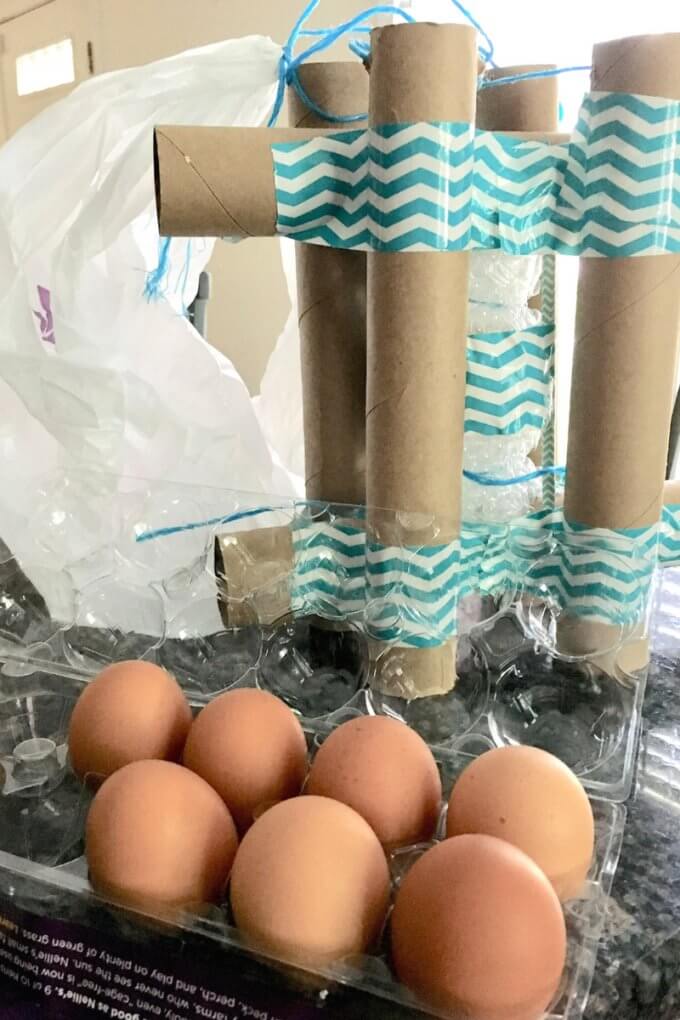
You only need a few basic supplies to get started. Check out a picture of our egg drop model below.
Required
- Raw eggs (or plastic eggs for younger kids)
- Tape
- Scissors
- Measuring tape
- Drop location
Building Materials
Choose from materials you already have.
- Cardboard
- Paper cups
- Paper tubes
- Paper straws
- Bubble wrap
- Packing paper
- Cotton balls
- Sponges
- Foam
- Rubber bands
- String
- Fabric scraps
- Plastic bags
- Small boxes
- Recyclable containers
How To Do the Egg Drop Challenge
- Decide how high the eggs will be dropped.
- Give each person or group the same selection of materials.
- Sketch a design before building.
- Build a container to protect the egg.
- Place the egg inside.
- Drop the design.
- Observe what happened.
- Improve the design and test again.
Challenge Idea: Increase the drop height after each successful test.
The Physics Behind a Successful Egg Drop
A successful egg drop design isn’t about using the most materials. It’s about understanding how forces work during a collision. ⭐️ Check out how we used these concepts in our egg drop above.
Explore More Physics
Want to dig deeper into the science behind an egg drop?
- Gravity Activities – Explore why objects fall toward Earth.
- Newton’s Laws for Kids – See how forces change the motion of objects.
- Potential and Kinetic Energy – Investigate how stored energy changes as an object falls.
- Air Resistance Activities – Explore how parachutes and other designs slow falling objects.
Best Egg Drop Design Ideas
There isn’t one perfect design. The best egg drop containers usually combine several engineering ideas.
- Parachute Design: Attach a lightweight parachute to slow the egg before it reaches the ground.
- Suspended Egg Design: Use rubber bands or string to suspend the egg inside a container so it doesn’t hit the sides during impact.
- Straw Cage: Build a protective frame from paper or plastic straws that can bend and absorb energy.
- Bubble Wrap Cradle: Wrap the egg in several layers of bubble wrap before placing it inside a small box or cup.
- Paper Cup Suspension: Nest paper cups together with soft padding between them to cushion the landing.
- Cardboard Crumple Zone: Build a lightweight frame from folded cardboard that is designed to crush during impact.
- Foam Cushion: Use sponge pieces or foam to create a soft cradle around the egg.
- Combination Design: Many successful designs combine several ideas, such as a parachute, suspended egg, and crumple zone.
Free Egg Drop Challenge Printable Pack
Make your egg drop challenge even easier with our free printable pack!
Inside you’ll find:
- ✔️ Egg Drop Challenge instructions
- ✔️ Engineering Design Process worksheets
- ✔️ Improve Your Design reflection page
These reusable STEM worksheets help kids plan, build, test, and improve their egg drop designs while practicing real engineering thinking.
👉 Enter your email below to grab the free Egg Drop Challenge Printable Pack!
Easy Egg Drop for Younger Kids
Younger kids can explore the same engineering concepts with a simplified version of the challenge.
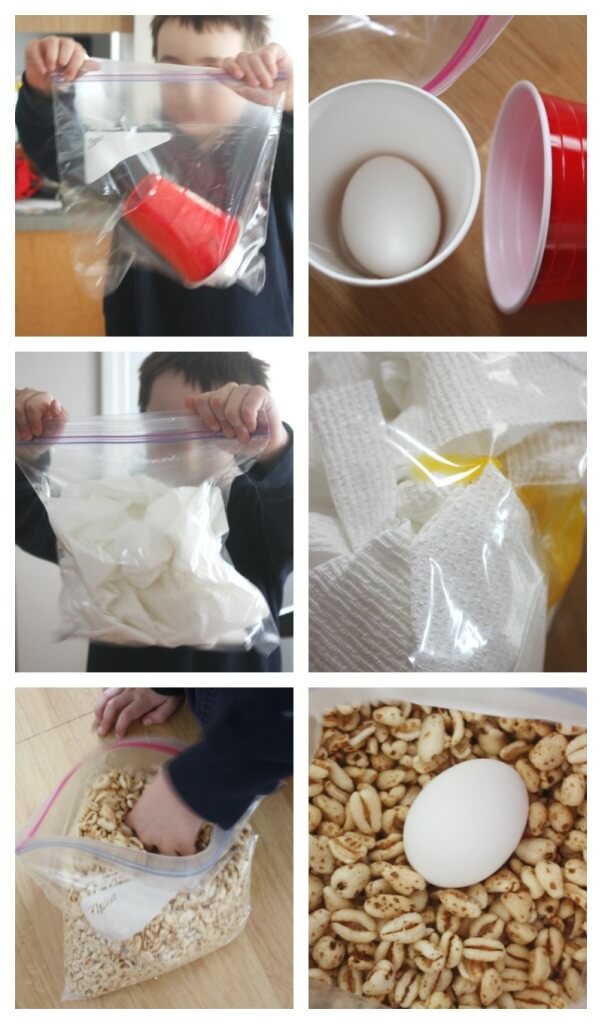
Place one egg inside a zip-top bag with different cushioning materials and compare which materials protect the egg best.
Ideas to test include:
- Crumpled paper
- Cotton balls
- Bubble wrap
- Sponge pieces
- Packing paper
- Dry cereal
- Empty bag (control)
Ask kids to predict which material will work before dropping each bag.
Think Like an Engineer
Encourage kids to improve their design after every test.
Ask:
- Which materials absorbed the impact?
- Did the egg move inside the container?
- Would a parachute help?
- How could you make the design lighter?
- What would you change before testing again?
Failure is an important part of engineering. Every broken egg teaches you something about improving the next design.
👉 Learn more about how to use the Engineering Design Process here.
Extend the Challenge
Change one variable at a time to compare results.
- Test different materials.
- Change the drop height.
- Add a weight limit.
- Compare parachute sizes.
- Build different container shapes.
- Test one design against another.
Encourage students to collect data and explain why they think one design performed better than another.
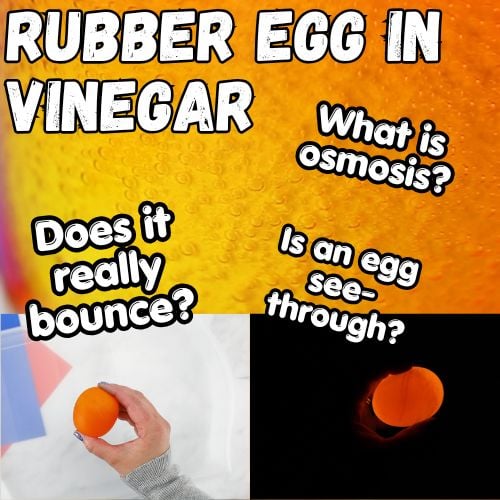
👉 Try another egg investigation, such as a Rubber Egg Experiment or Floating Egg Experiment, and compare the different scientific concepts you observe.
Frequently Asked Questions
What is the best material for an egg drop challenge? Soft, lightweight materials that absorb impact, such as bubble wrap, foam, paper, cardboard, and sponges, often work well.
What is the best egg drop design? The most successful designs usually combine cushioning, a lightweight structure, and a way to slow the egg before it lands.
Does a parachute help an egg drop? Yes. A parachute increases air resistance, slowing the egg’s descent and reducing the force of impact.
How high should you drop the egg? Start with a low height and gradually increase it as designs improve. This allows students to redesign and test their containers safely.
Can I use a plastic egg instead of a real egg? Yes. Plastic eggs work well for practicing the engineering process, although they won’t demonstrate how fragile a real eggshell is.
Want more hands-on STEM ideas that actually work?
Our Classic STEM & Engineering Projects Pack includes 50+ favorite experiments and engineering challenges with printable journal pages, instructions, and easy-to-find supplies. Perfect for classrooms, homeschool, and curious kids who love to build and test ideas.
More STEM Challenges
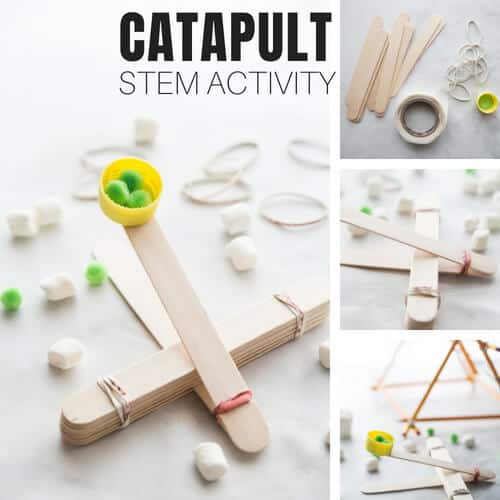
If your kids enjoyed the egg drop challenge, try these engineering favorites next.




you worry too much about what people will think
do your experiments and be happy
who cares if you wasted a couple eggs.
it was good clean fun with your kids.
Did any of the bags burst open? I’m interesting in leading this for a library program and need to figure out where we should drop the bags.
There was no catastrophic bag opening. I would suggest making sure the air is out of the bag first. You could also drop it into a plastic bin. Also go with quality zip top bags if you are worried. Have fun with it!
coolreally handy