

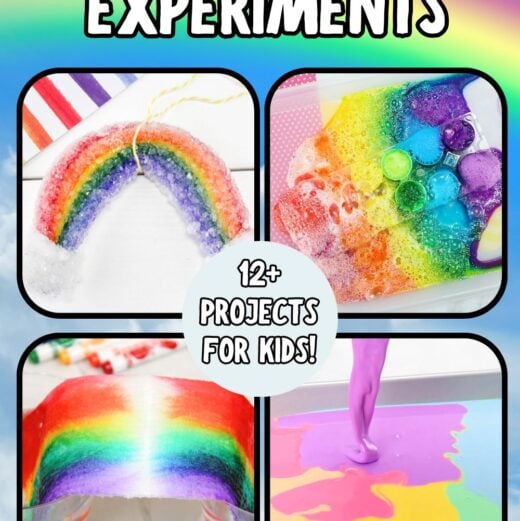
Looking for fun rainbow science experiments for kids? A simple rainbow experiment is a great way to explore science because it combines color, light, chemistry, and physics in hands-on activities.
In this collection, you’ll find easy rainbow experiments and rainbow STEM activities that work well at home, in the classroom, or for science fair projects. Many use simple materials like food coloring, water, candy, paper towels, and household liquids.
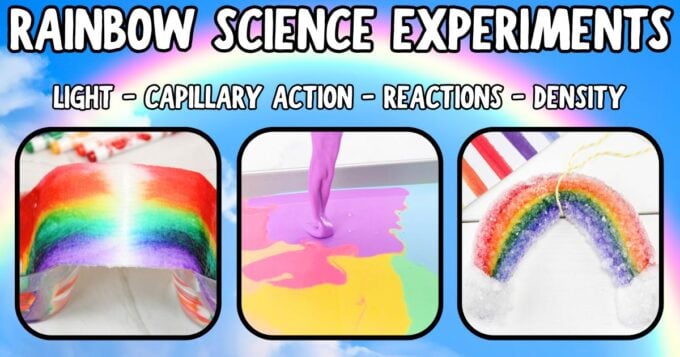
These colorful experiments help kids explore real science concepts including light refraction, density, capillary action, polymers, non-Newtonian fluids, and chemical reactions.
How Rainbows Form
A rainbow forms when sunlight passes through tiny water droplets in the atmosphere.
When light enters the droplet, it bends (this is called refraction) and spreads into different colors. The light then reflects inside the droplet before leaving it again. This process separates white light into the visible spectrum of colors.
The colors of a rainbow appear in this order:
• Violet
• Indigo
• Blue
• Green
• Yellow
• Orange
• Red
You can usually see a rainbow when:
• The sun is behind you
• Rain or mist is in front of you
Many of the experiments below recreate these same science concepts using simple materials.
Rainbow Science Experiments
Explore the colorful activities below to learn how rainbows connect to physics, chemistry, and STEM concepts.
Light and Rainbow Optics Experiments
qThese activities explore how light bends and separates into different colors. You can explore more light experiments and a free guide here.
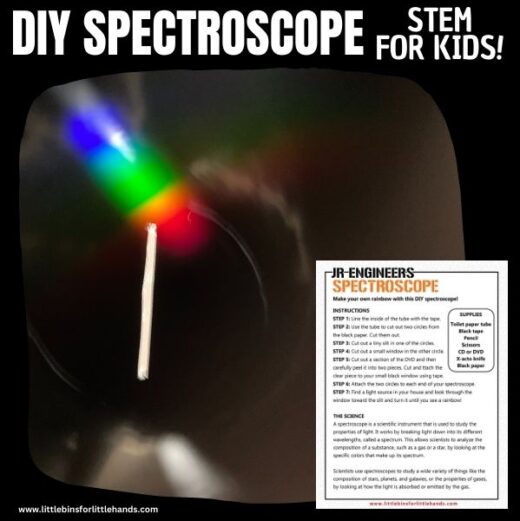
DIY Spectroscope
Build a simple spectroscope to observe how white light splits into different wavelengths of color. A spectroscope works similarly to a prism by separating light into a rainbow spectrum.
This activity is a great introduction to light waves and optics.
👉 See the full DIY Spectroscope Experiment
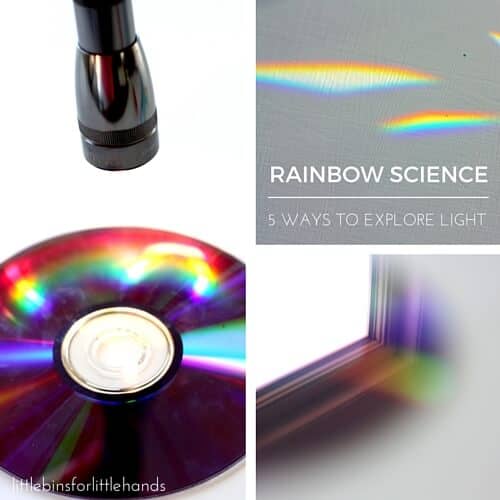
Make a Rainbow with Light
Use a prism, CD, or glass of water to split white light into rainbow colors. This experiment demonstrates refraction and the visible spectrum.
Concepts explored:
• Light refraction
• Visible light spectrum
• Optics
👉 Try it! Make a rainbow with light
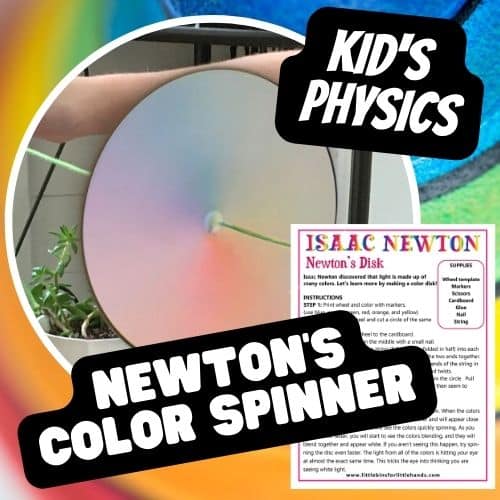
Newton’s Color Spinner
Make a Newton’s color spinner to explore how the colors of the rainbow combine to form white light. When the spinner spins quickly, the colored sections blend together and appear nearly white to the human eye.
This happens because the colors mix together faster than our eyes can distinguish them.
Concepts explored:
• Color mixing
• Light spectrum
• Human perception of color
👉 See the Newton’s Color Spinner Experiment
Rainbow Density Experiments
Density experiments create beautiful rainbow layers by stacking liquids that have different densities.
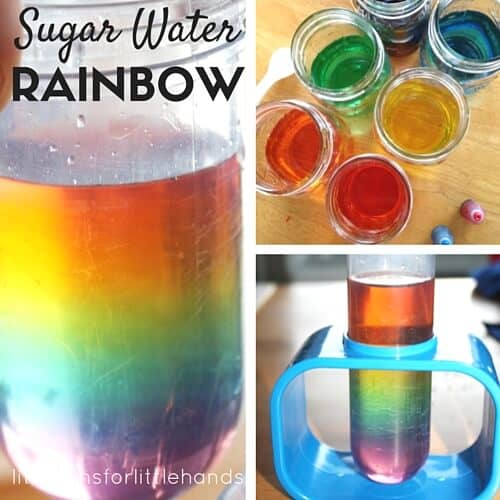
Sugar Water Density Rainbow
Create a colorful density tower using sugar, water, and food coloring. By changing the sugar concentration, you can create liquids that stack on top of each other without mixing.
Concepts explored:
• Density
• Liquid layering
• Solutions
👉 See the Rainbow Density Tower Experiment
Liquid Density Rainbow
This rainbow density experiment uses common household liquids such as honey, oil, and water. Each liquid has a different density, allowing the layers to stack and form a rainbow effect.
Concepts explored:
• Density of liquids
• Molecular structure
• Liquid layering
👉 Make a liquid density rainbow

Capillary Action Rainbow Experiments
These experiments demonstrate how water moves through materials using capillary action.
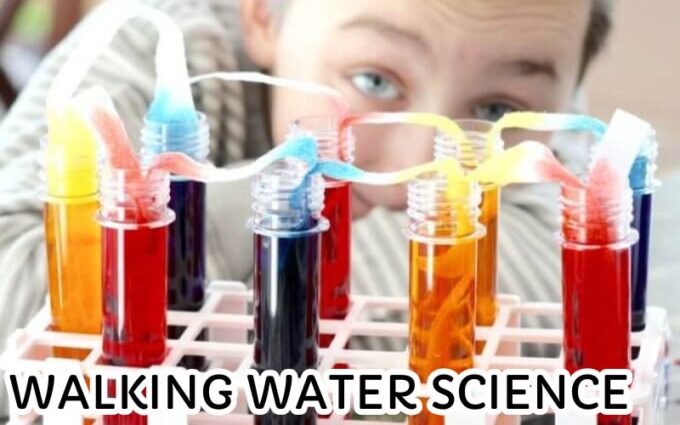
Walking Water Rainbow Experiment
The walking water experiment is a favorite rainbow science activity. Colored water travels through paper towels and mixes to create new colors.
Concepts explored:
• Capillary action
• Water movement
• Color mixing
👉 See the Walking Water Rainbow Experiment
Grow a Rainbow
Use markers and paper towels to watch water spread and create a growing rainbow pattern.
Concepts explored:
• Absorption
• Capillary action
• Color diffusion
👉 Try a grow a rainbow experiment

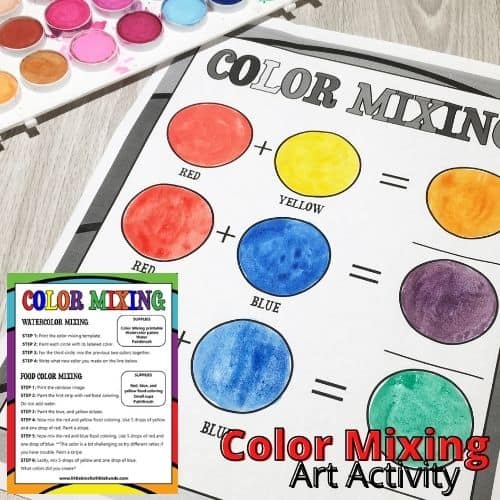
Color Mixing Rainbow
Explore how primary colors combine to create the colors of the rainbow with this simple color mixing activity. Kids experiment with red, yellow, and blue to discover how new colors form.
Concepts explored:
• Primary and secondary colors (paint a rainbow with the free template)
• Color mixing
• Observation and experimentation
👉 Try a color mixing experiment for kids
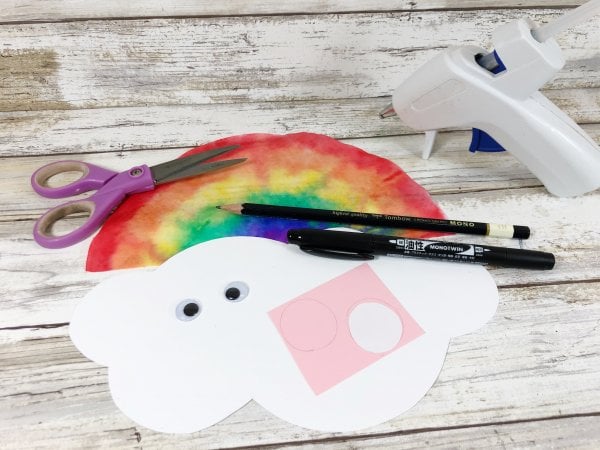
Coffee Filter Rainbow STEAM Project
Decorate a coffee filter with markers and add water to watch the colors spread and blend. This project combines art and science while demonstrating water absorption.
Concepts explored:
• Diffusion
• Capillary action
• Color blending
👉 See the coffee filter rainbow
Rainbow Chemistry Experiments
These colorful activities explore chemistry reactions and dissolving processes. You can find our complete chemistry for kids guide here.
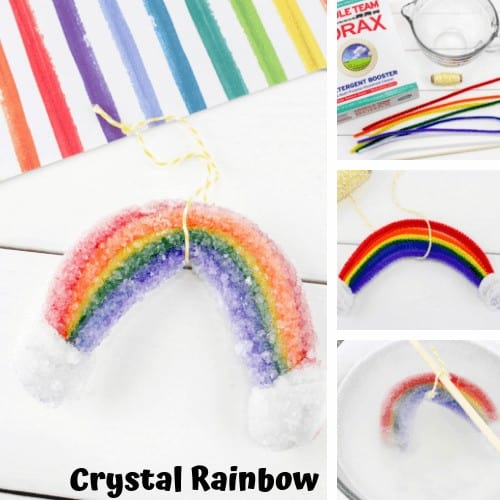
Rainbow Crystal Experiment
Grow colorful borax crystals using pipe cleaners shaped into a rainbow. As the solution cools, dissolved minerals attach to the pipe cleaner and form beautiful crystal structures.
Concepts explored:
• Crystal formation
• Chemical solutions
• Evaporation
👉 See the Rainbow Crystal Experiment
Rainbow Skittles Experiment
Add warm water to a circle of Skittles candy and watch the colors dissolve and spread toward the center.
Concepts explored:
• Dissolving
• Diffusion
• Sugar chemistry
👉 See the Rainbow Skittles Experiment

Erupting Rainbow Science Experiment
Create a colorful baking soda and vinegar reaction using multiple colors to produce a rainbow fizzing reaction.
Concepts explored:
• Chemical reactions
• Acids and bases
• Gas production

Rainbow Slime Experiment
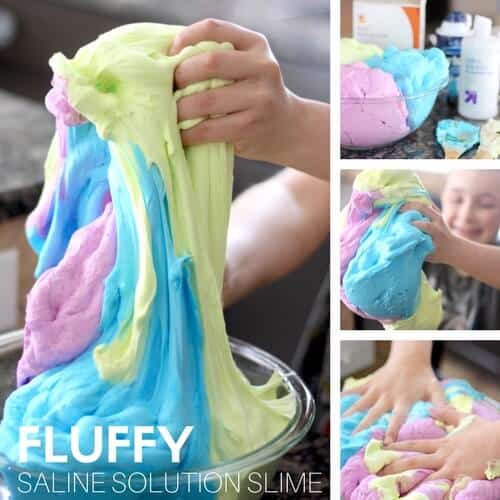
Make colorful rainbow slime while exploring polymer chemistry. When glue is combined with a slime activator, the molecules link together to form long chains called polymers, creating the stretchy, gooey texture we recognize as slime.
To create a rainbow effect, divide your slime into several portions and color each one with food coloring before layering or twisting them together.
Concepts explored:
• Polymer chemistry
• Chemical reactions
• States of matter (solid vs liquid properties)
👉 See the Rainbow Slime Recipe

Rainbow Physics Experiments
Rainbow Oobleck Experiment
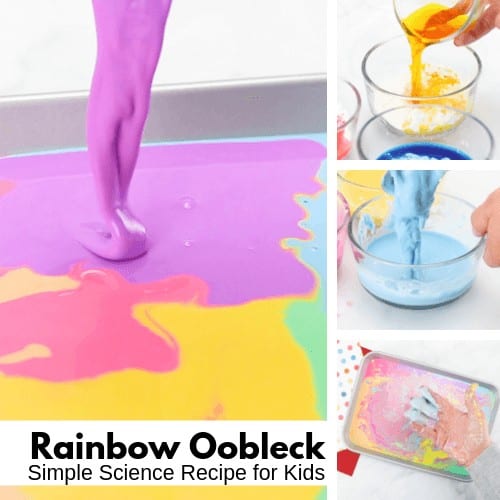
Rainbow oobleck is a fun way to explore non-Newtonian fluids. Oobleck behaves like both a liquid and a solid depending on how it is handled.
Press on the mixture and it feels solid. Let it sit in your hand and it flows like a liquid.
Concepts explored:
• Non-Newtonian fluids
• States of matter
• Pressure and force
👉 See the Rainbow Oobleck Experiment
Rainbow STEM Activities
These activities combine science concepts with engineering and creativity.
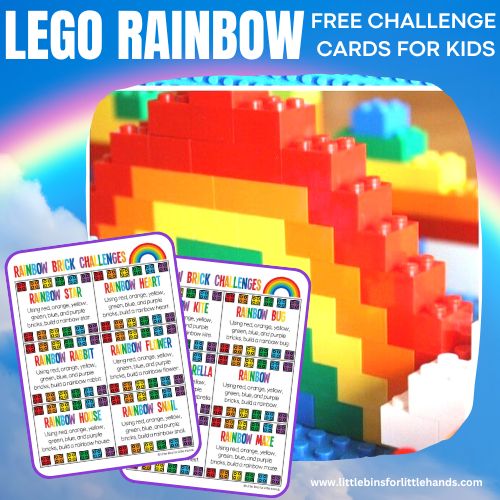
LEGO Rainbow STEM Challenge
Build a rainbow using LEGO bricks while exploring symmetry, patterns, and design. Kids can experiment with color order and structural stability.
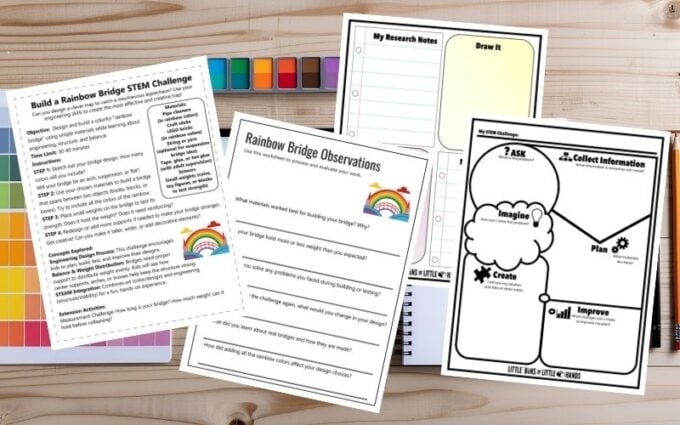
Rainbow Bridge STEM Challenge
Design and build a rainbow bridge using simple materials such as paper, straws, or craft sticks. Test how much weight the bridge can support.
Concepts explored:
• Engineering design
• Structural strength
• Problem solving
Turn a Rainbow Experiment into a Science Project
Many of these activities can become a rainbow science fair project.
Try testing questions like:
• Which liquid creates the most stable rainbow density tower?
• Does paper towel thickness affect the walking water speed?
• Does water temperature change how fast Skittles colors dissolve?
Steps for a science project:
- Ask a question
- Form a hypothesis
- Test different variables
- Record observations
- Analyze results
👉 See our Science Fair Project Guide
Printable Rainbow STEM Activities
Want ready-to-use rainbow activities?
Download our Rainbow STEM Guide and Challenge Cards to get started with easy science experiments and engineering challenges.
Frequently Asked Questions
What is the easiest rainbow science experiment for kids?
One of the easiest rainbow science experiments is the walking water rainbow experiment. It only requires cups, food coloring, water, and paper towels, and clearly demonstrates capillary action as water moves between the cups.
What science concepts do rainbow experiments teach?
Rainbow experiments help kids explore several science concepts including light refraction, density, capillary action, diffusion, and chemical reactions. These activities make complex science ideas easier to understand through colorful hands-on demonstrations.
Why do rainbows have seven colors?
The colors of a rainbow appear when white sunlight is separated into different wavelengths. The visible spectrum is traditionally described as seven colors: violet, indigo, blue, green, yellow, orange, and red.
What is a rainbow science fair project idea?
A simple rainbow science fair project could test how different sugar concentrations affect the layers in a rainbow density tower, or how paper towel thickness affects the speed of the walking water rainbow experiment.


I love using your projects with my grandson. I am now faced with distance learning for my students. I am a STEM teacher at an elementary school. A lot of your project lend themselves easily to distance learning. What is your position on using some of your projects in my Google Classroom? Please advise. Thank you.