
Color Science Experiments for Kids
Color is everywhere! From rainbows and prisms to color-changing chemistry and chromatography, these easy color science experiments help kids explore how color is created, mixed, reflected, absorbed, and even changed through chemical reactions.
Whether you’re teaching preschoolers about primary colors or helping older students investigate light and pigments, these hands-on activities make science colorful and fun.
- Best For: Preschool, Kindergarten, Elementary
- Explore: Light • Color Mixing • Chemistry • Capillary Action • Physics • STEAM
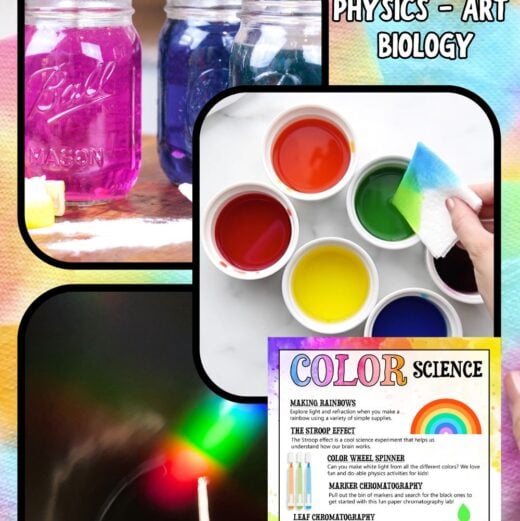
💡 Grab our FREE Color Science Journal with 16 colorful science activities and printable observation pages to guide your investigations.
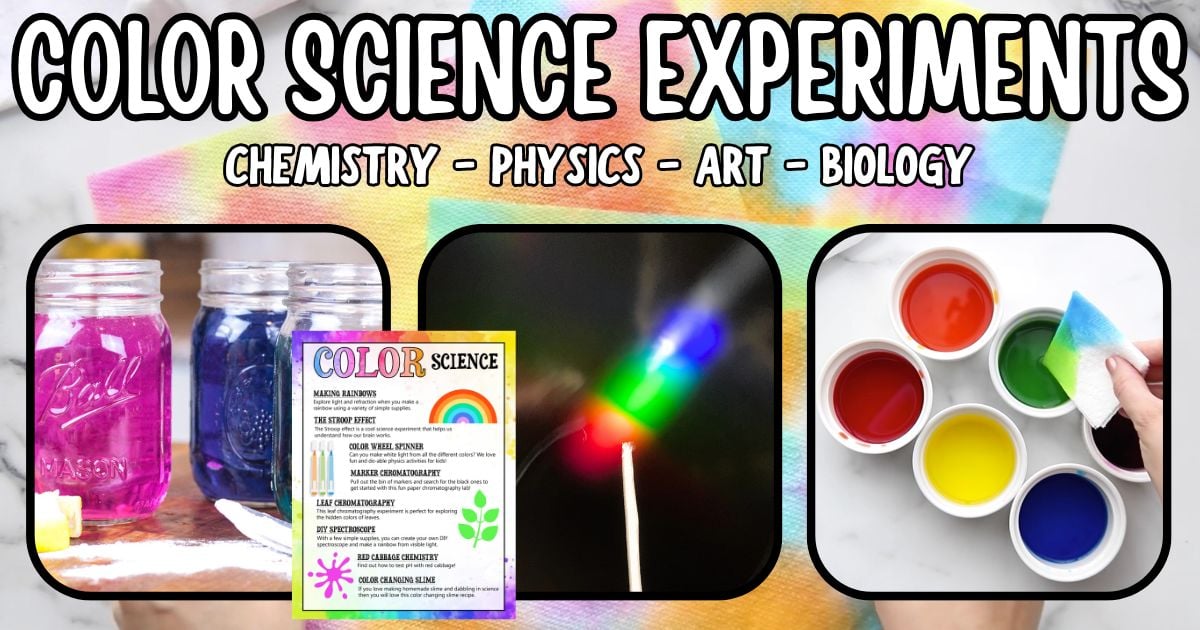
What Is Color Science?
Color science explores why we see different colors and how they behave.
Kids can investigate questions like:
- Why is the sky blue?
- How do rainbows form?
- Why do leaves change color?
- What happens when colors mix?
- Why do some chemicals change color?
- Why does black get hotter than white?
These activities introduce important science concepts through simple, hands-on experiments.
Color Science Activities
Light and Rainbows
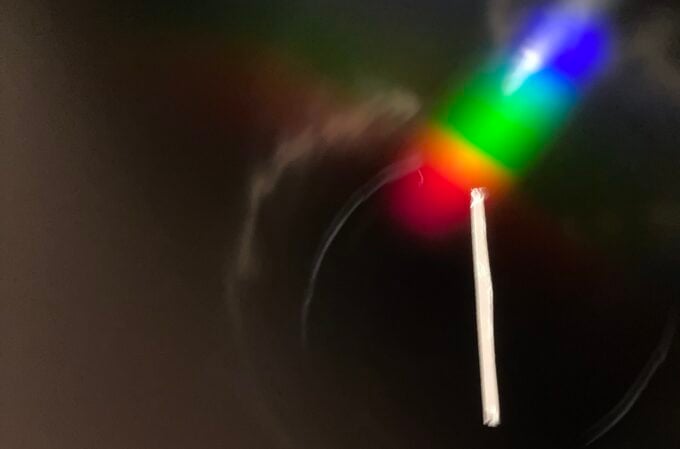
Discover how white light separates into the colors of the rainbow.
Making Rainbows
Explore five simple ways to make rainbows using everyday materials while learning about reflection and refraction.
DIY Spectroscope
Build a simple spectroscope and observe the visible spectrum of light.
Newton’s Color Wheel Spinner
See how spinning the colors of the rainbow creates the appearance of white light.
👉 Learn more about Light Science Experiments here
Color Mixing
Learn how new colors are created.
Color Mixing Art
Mix primary colors to create secondary and tertiary colors through hands-on art.
👉 Explore more color mixing activities here.
Capillary Action
Discover how water moves through tiny spaces.
Color Changing Flowers
Watch white flowers absorb colored water through their stems.
Color Changing Celery
Observe colored water traveling through celery stalks.
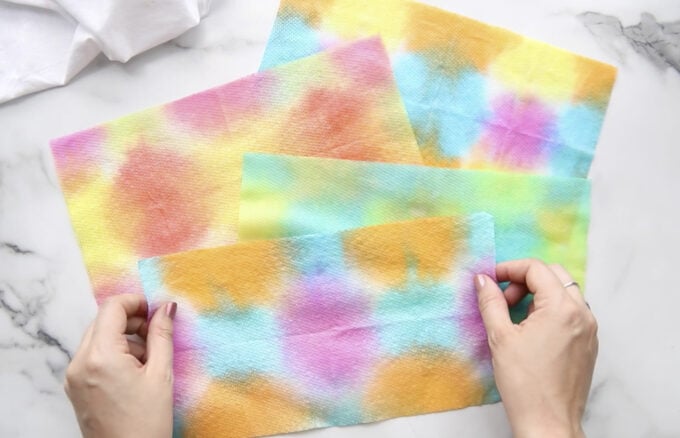
Paper Towel Tie Dye
Create colorful designs while learning how paper towel fibers move water.
Walking Water Experiment
Watch colored water “walk” from one cup to another through paper towels.
Paper Towel Rainbow
Create a colorful rainbow while learning how water travels through absorbent fibers.
👉 Learn more about Capillary Action here.
Pigments and Hidden Colors
Discover the colors hiding in everyday objects.
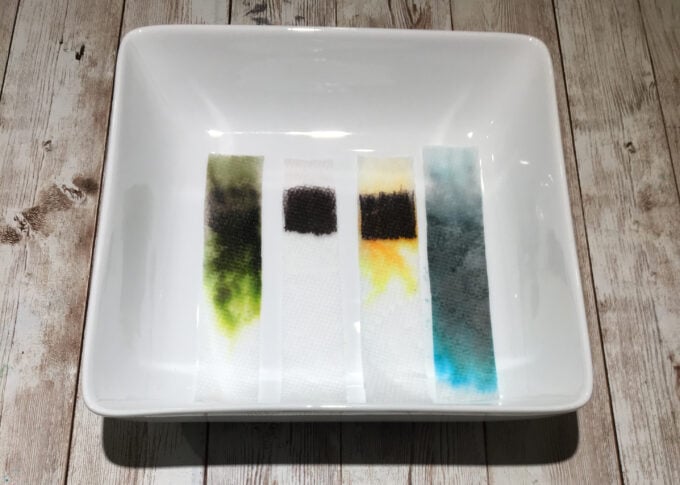
Marker Chromatography
Separate black marker ink into all of its hidden colors.
Leaf Chromatography
Reveal the pigments inside leaves and learn why leaves change color in the fall.
Coffee Filter Flowers
Combine chromatography and art to make colorful flowers.
Why do leaves change color in the fall?
Leaves contain several pigments, including green chlorophyll, yellow xanthophylls, and orange carotenoids. As chlorophyll breaks down in autumn, the other pigments become visible.
Color-Changing Chemistry
Watch chemistry create dramatic color changes.
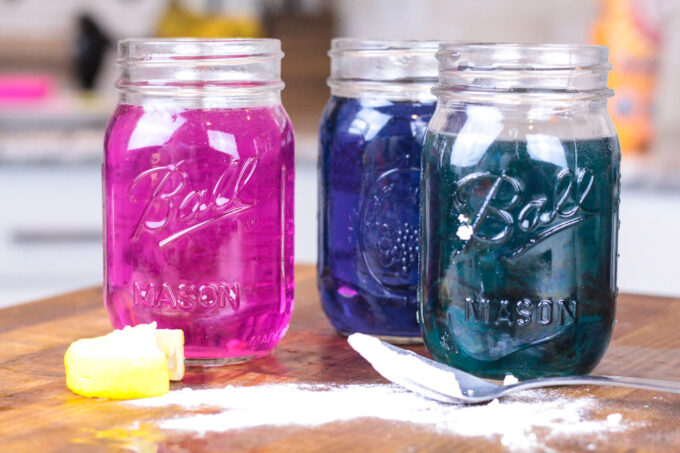
Red Cabbage pH Indicator
Use cabbage juice to test acids and bases with colorful results.
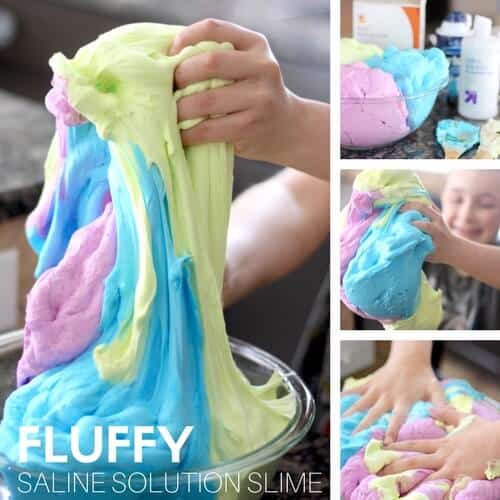
Color-Changing Slime
Thermochromic activity activates this unique slime.
Magic Milk
Food coloring helps reveal a fascinating chemical reaction.
Baking Soda and Vinegar Reactions
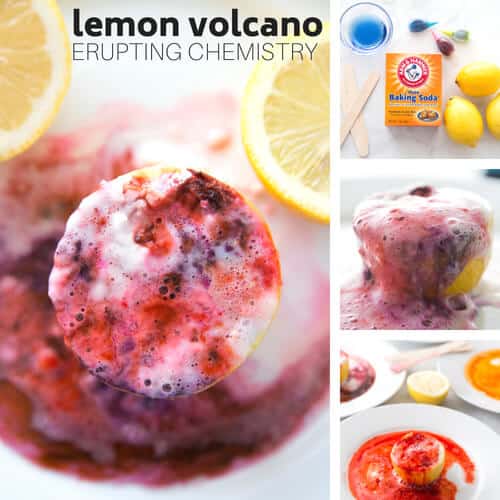
Food coloring makes this classic bubbling reaction even more exciting.
👉 Explore more Kitchen Chemistry Experiments here
Color in Everyday Science
Investigate how color affects the world around us.
Color and Heat
Do darker colors really get hotter?
Color Taste Experiment
Does color change the way we experience flavor?
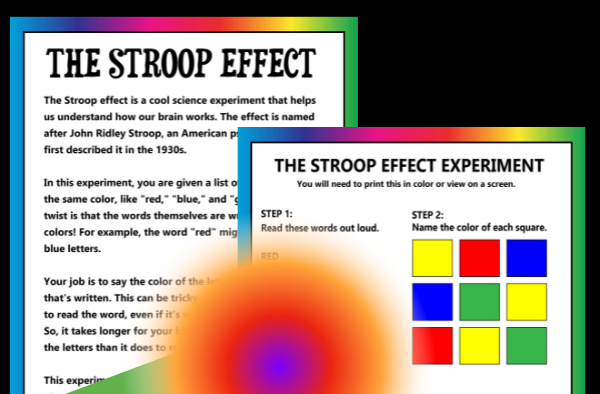
The Stroop Effect
Challenge your brain with this classic psychology experiment! Discover how your brain processes words and colors differently—and why naming the ink color is harder than you might expect.
Density Rainbow
Create colorful layers while exploring liquid density.
Skittles Experiment
Observe how candy coatings dissolve and spread in water.
Water Drop Painting
Explore surface tension while creating colorful artwork.
Explore Colors Indoors and Outdoors
Color Scavenger Hunt
Search indoors or outdoors for objects matching every color of the rainbow. Download the color scavenger hunt game here.
The Science Behind Color
Most of these activities explore one of five major science concepts:
- Light: White light contains every color of the rainbow. Prisms and water droplets separate those colors through refraction.
- Pigments: Plants, markers, paints, and food coloring all contain pigments that produce different colors.
- Capillary Action: Water moves through tiny spaces in plants and paper towels, carrying color along with it.
- Chemical Reactions: Some experiments change color because molecules are rearranged during a chemical reaction.
- Perception: Our eyes and brains work together to interpret color, as shown in activities like the Stroop Effect.
Think Like a Scientist
Before beginning each experiment, encourage kids to ask:
- What do I think will happen?
- Why do I think that?
- What changed?
- What stayed the same?
- What did I observe?
- What questions do I still have?
👉 Recording observations is a great way to build science skills. You can learn more about the scientific method for kids here.
Free Color Science Journal
Keep the learning going!
Download our FREE Color Science Journal, packed with 16 colorful science activities plus printable journal pages where kids can ask questions, make predictions, record observations, and write conclusions like real scientists.
Frequently Asked Questions
What is color science?
Color science explores how we see color and how it behaves. Kids can investigate light, pigments, color mixing, capillary action, and chemical reactions through simple hands-on activities.
What are the best color science experiments for kids?
Some favorites include walking water, marker chromatography, paper towel tie dye, magic milk, color-changing flowers, rainbow density jars, and the red cabbage pH indicator experiment.
What causes colors to mix?
Colors can mix in different ways depending on the activity. Paint and food coloring combine to create new colors, while light mixes differently through prisms and color wheels.
What is capillary action?
Capillary action is the movement of water through tiny spaces without the help of gravity. It allows plants to move water from their roots to their leaves and is demonstrated in activities like walking water, paper towel rainbows, and color-changing flowers.
How do rainbows form?
Rainbows form when sunlight passes through water droplets in the air. The light bends, or refracts, separating into the visible colors of the spectrum.
What age are these color science experiments best for?
Many of these activities are suitable for preschool and kindergarten with adult help, while elementary students can explore the science concepts more deeply by making predictions, recording observations, and explaining their results.
Can these activities be used in the classroom?
Yes! Most use inexpensive household supplies and work well for science centers, STEM lessons, homeschool, or whole-class demonstrations.
Printable Elementary Science!
Want to do meaningful science — but not start a full unit yet? This starter lab provides quick, hands-on investigations across multiple science topics, allowing students to explore how science works before diving deeper into any one subject.
Perfect for regularly trying science without extensive planning. Grades: K–5.