

Learn to color rice with food coloring for quick and easy sensory play! Colored rice is one of our favorite sensory bin fillers and is so simple to make. With our easy recipe, you can learn how to dye rice in vibrant colors and have it ready to use the same day. Perfect for any sensory play theme!
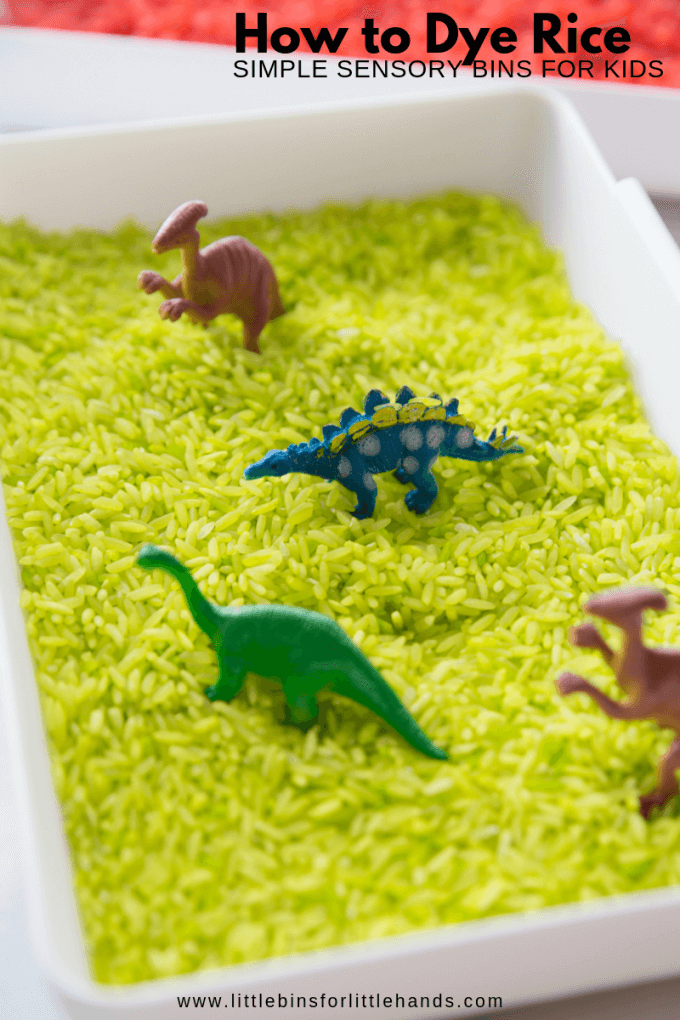
How To Dye Rice
Our simple how-to-dye rice recipe makes beautiful colors for any sensory play theme, including rainbow rice. Check out our list of favorite sensory bins for great ways to use your colored sensory rice!
💡Learn how to make the Best Sensory Bins for Kids here. Sensory bin play benefits toddlers, preschoolers, and beyond. Note: If you can not use food items in your setting, check our list of non-food sensory bin fillers for more options.
Ingredients for dyed rice:
- White rice (uncooked, one cup per color)
- White vinegar (alternative recipe with rubbing alcohol below)
- Food Coloring
- Ziplock Bags or sealed containers
- Parchment Paper (to spread rice on to dry)
- Measuring Spoon
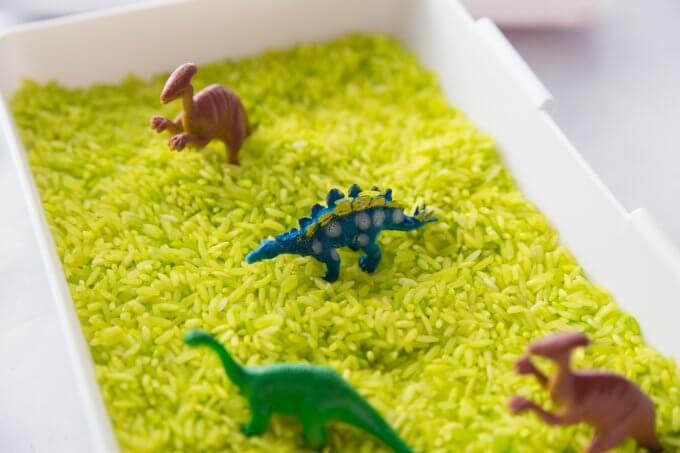
- Fun sensory bin items like mini dinosaurs, unicorns, and ocean animals.
- Scoops, bowls, funnels, and small cups for dumping and filling
💡 Note: You will want to make more than one batch of dyed rice for the best sensory play experience. Grab a 20lb bag of rice the next time you head to the store!
Instructions for How to Dye Rice:
Watch the Video:
STEP 1: Measure 1 Cup of rice and pour it into a container or ziptop bag.
💡 Make a larger quantity of colored rice by just adjusting the measurements. You can also mix different colors in separate containers and mix them for rainbow rice!
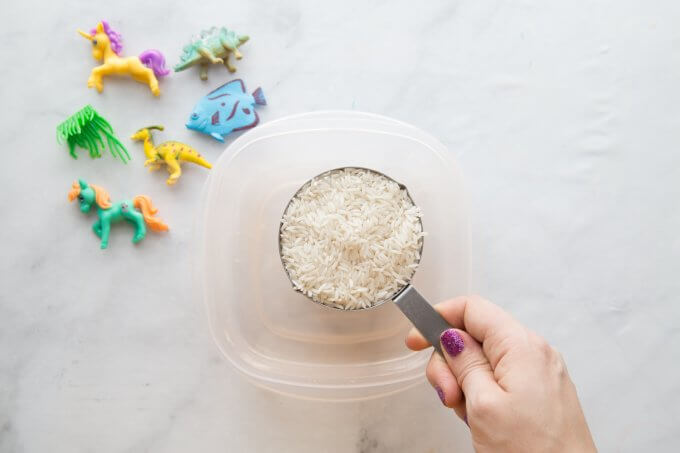
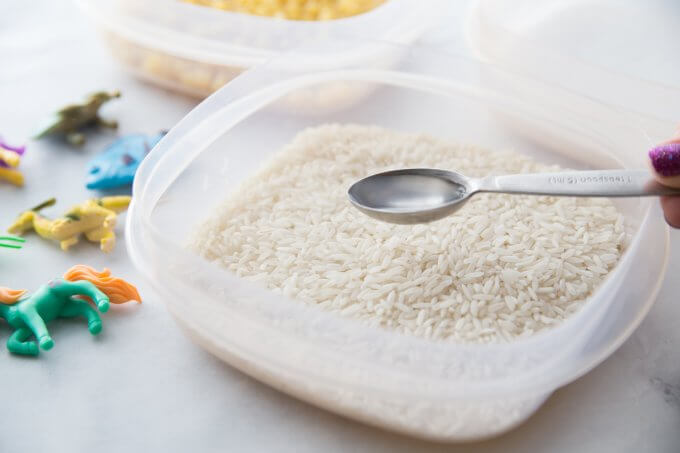
STEP 2: Next add 1 Teaspoon of white vinegar.
💡 Don’t want to use vinegar? You could add lemon juice instead of vinegar for a fun lemon scented rice sensory bin. Or see our recipe with rubbing alcohol below.
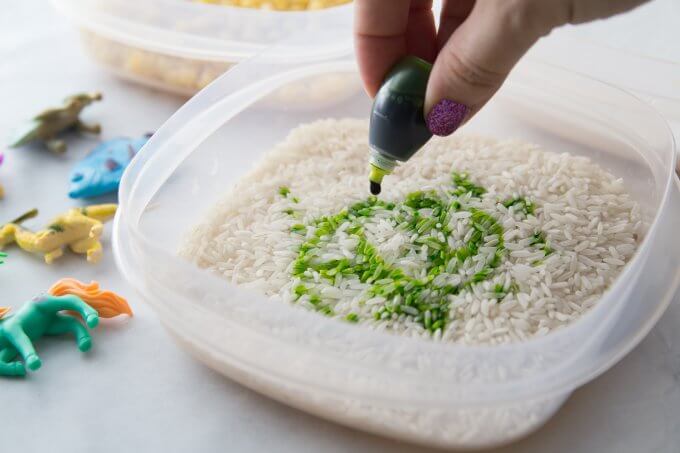
STEP 3: Now add as much food coloring as desired (deeper color= more food coloring).
You can make several shades of the same color for a fun effect!
STEP 4: Cover the container or seal the ziploc bag and SHAKE the rice vigorously for a minute or two. Check to see if the rice is evenly coated with the food coloring!
STEP 5: Spread the colored rice in an even layer on parchment paper, a paper towel, or a tray to dry.
STEP 6: Once dry, you can transfer the colored rice to a bin for sensory play.
💡 What will you add? Sea creatures, dinosaurs, unicorns, and mini-figures all add to any sensory play activity. Bowls, scoops, funnels, and cups are perfect for dumping and filling.
Alternative Dyed Rice: Rubbing Alcohol
💡 Note: The rubbing alcohol evaporates during the drying process, but if you’re concerned about lingering fumes, use vinegar instead or let the rice air out longer before using.
- Portion the Rice: Pour the rice into separate bags or containers based on the colors you want.
- Add Food Coloring: Add a few drops of food coloring to each bag/container. The more drops you add, the more vibrant the color will be.
- Add Rubbing Alcohol: Add one teaspoon of rubbing alcohol to each bag. It helps to distribute the color and dries faster.
- Mix: Seal the bag and shake or knead it until the rice is evenly coated with color.
- Dry the Rice: Spread the colored rice on a lined baking sheet or tray and let it dry completely. This usually takes about 30 minutes to an hour.
Tips For Easy Colored Rice Every Time
Fun Things To Do With Colored Rice
- Enjoy the smell of Lemon Scented Rice
- A beautiful bin of pink and red rice for Valentine’s Day
- Candy cane-themed rice bin for Christmas!
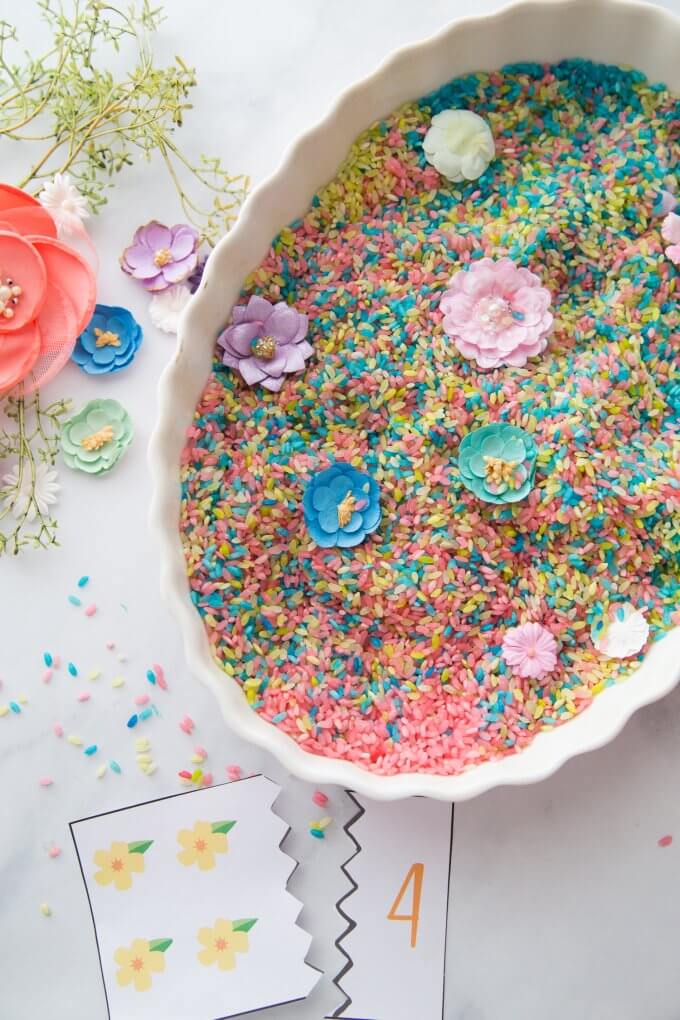
- Bursts of color and flowers with this fun spring sensory bin.👇
- Make rainbow rice by mixing individual colors!
More dyed sensory play materials:
- How To Dye Beans
- How to Dye Pasta
- How To Dye Salt
- How To Color Cooked Spaghetti
- How To Dye Chickpeas
- How To Dye Coconut
Why Use Sensory Bins?
Are sensory bins worth it? Yes, they are worth it. The more basic you keep the sensory bin, the better off you are. Remember, you create a tactile experience for your kids, not a Pinterest image. While we have fantastic pictures of sensory bins, they only stay that way for a minute!
Sensory bins are awesome hands-on tools for children to learn about their world and senses! Sensory play may calm a child, focus a child, and engage a child. Read about the many benefits below.
💡 Make sure to read all about sensory bins here and see favorite themes.
Here’s what children can learn from sensory bins:
- Practical Life Skills ~ Sensory bins let a child explore, discover and create play using practical life skills (dumping, filling, scooping) and learn valuable play skills.
- Play Skills {emotional development} ~ For both social play and independent play, sensory bins allow children to play cooperatively or side by side. My son has had many positive experiences with other children over a bin of rice!
- Language Development ~ Sensory bins increase language development by experiencing all there is to see and do with their hands, which leads to great conversations and opportunities to model language.
- Understanding 5 Senses ~ Many sensory play bins include a few senses! The five senses are touch, sight, sound, taste, and smell. Children can experience several at a time with a sensory bin.

More Helpful Ideas For Sensory Bins
Sensory play is an amazing tool for young children. It’s the perfect hands-on play for early learning. Sensory bins are so versatile and easy to use and create. Check out the resources below for more on sensory bins and play!
- Sensory Bin Ideas and Themes
- How To Make A Sensory Bin
- Best Sensory Bin Fillers
- Non Food Sensory Bin Fillers
- Rice Sensory Bin Ideas
- How To Clean Up A Sensory Bin In A Snap
- Sensory Play Recipes You Can Use
Printable Preschool Themes Bundle
Get ready to explore this year with our Preschool STEM Bundle, with 22+ themes! This is an ” I can explore” series!
What’s Included:
Each unit contains approximately 15 activities, with instructions and templates as needed. Hands-on activities are provided to keep it fun and exciting. This includes sensory bins, experiments, games, and more! Easy supplies keep it low cost, and book suggestions add to the learning time.

Where do you get your small white bins from? They look like the perfect size for one kid
Do you have a cheap source for buying all that rice?
Usually, grocery stores will have giant bags for around $10. You can also try a Costco type warehouse store!
Thank you!! This was just what I needed!
Thanks for this post. I was working to compile my “Ultimate Guide to Sensory Tables” and needed to find a link to a good description of how to dye rice and yours was perfect.