
Enjoy fun Easter sensory play for young kids! Sensory play is essential to early childhood development, and it’s so much fun to make sensory play with different themes, seasons, and holidays. We had tons of fun with our Easter sensory activities, and we hope you do too! We also have fun Easter science activities to try!
How to Make Easter Sensory Bins
Here are a few quick tips to assemble a DIY Easter sensory bin using what’s around you! Grab a bin, and let’s get started.
See our complete guide on how to make sensory bins here.
STEP 1: Choose a filler! There’s such a variety of fillers you can use for Easter, from plastic or paper grass to dyed rice to kinetic sand to pompoms or dried beans and lentils!
STEP 2: Add fun items! Visit your local craft store or dollar store for reusable items to add to a sensory bin, such as plastic eggs, little fluffy chicks, wooden or styrofoam eggs, mini erasers, small scoops, themed cups, etc! Just add a few things not to crowd the bin!
STEP 3: Add fine motor play! Tongs, scoops, and small cups or pails are must-haves for sensory bins. Kids can fill and dump, sort, and so much more as part of their play.
Watch the video: This is our spring rice sensory bin with free math printable!
Free Printable Easter Sensory Play Guide
Grab the free Easter sensory play guide and use the quick links to access directions and supplies!
10 Easter Sensory Activities
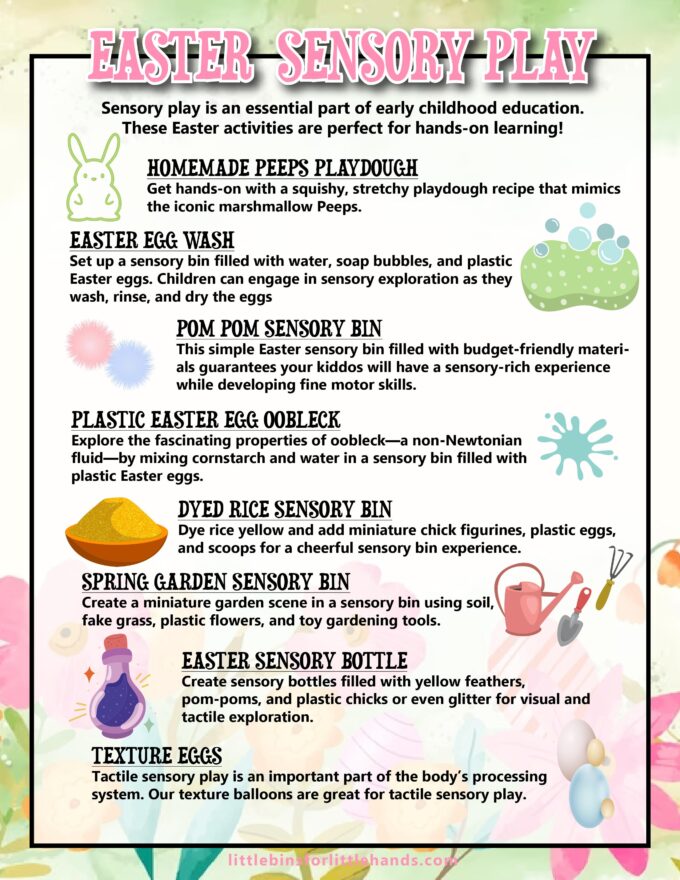
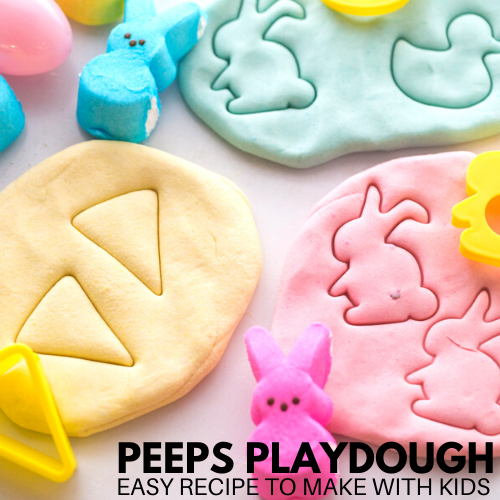
Homemade Peeps Playdough: Get hands-on with a squishy, stretchy playdough recipe that mimics the iconic marshmallow Peeps. Children can shape and mold their own Easter creations, fostering creativity and fine motor skills.
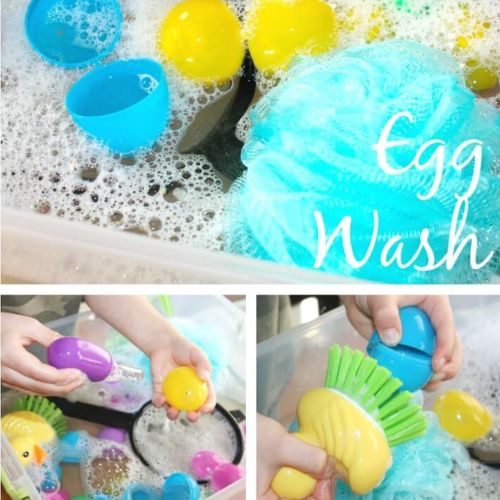
Plastic Easter Egg Wash: Set up a sensory bin filled with water, soap bubbles, and plastic Easter eggs. Children can engage in sensory exploration as they wash, rinse, and dry the eggs, promoting sensory integration and practical life skills. Make homemade soap foam!
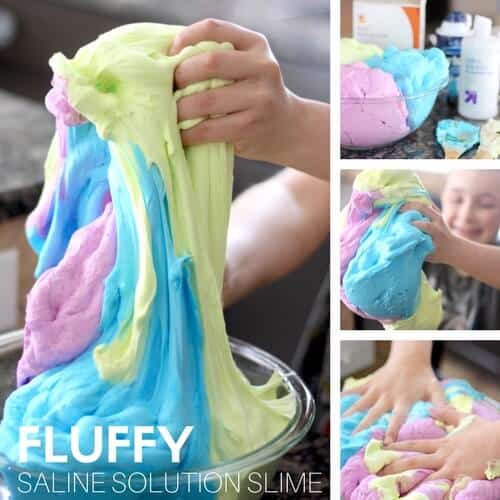
Easter Slime: Whip up a batch of colorful slime using glue, borax, and Easter-themed glitter. Slime provides a mesmerizing sensory experience, offering tactile exploration and scientific discovery opportunities.
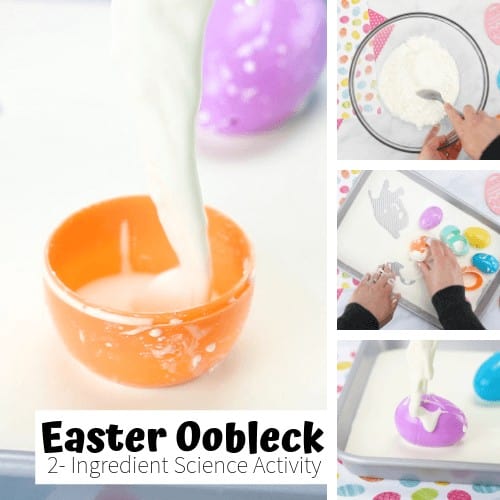
Plastic Easter Egg Oobleck: Explore the fascinating properties of oobleck—a non-Newtonian fluid—by mixing cornstarch and water in a sensory bin filled with plastic Easter eggs. Kids can experiment with the unique texture and observe its fluid and solid-like behavior.
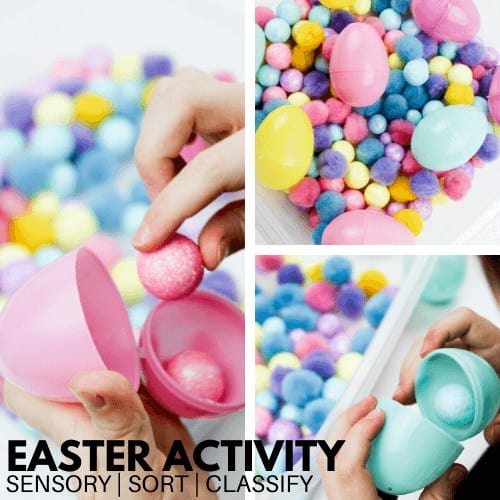
Pompom Easter Sensory Bin: Fill a sensory bin with pastel-colored pompoms and plastic eggs. Add tongs and/or scoops for fine motor development. Kids can engage in sensory play by scooping, pouring, and sorting the pompoms while developing hand-eye coordination and spatial awareness.
Tip: This is also a simple science lesson in classification! Classifying items involves sorting objects or concepts into groups or categories based on their shared characteristics or properties.
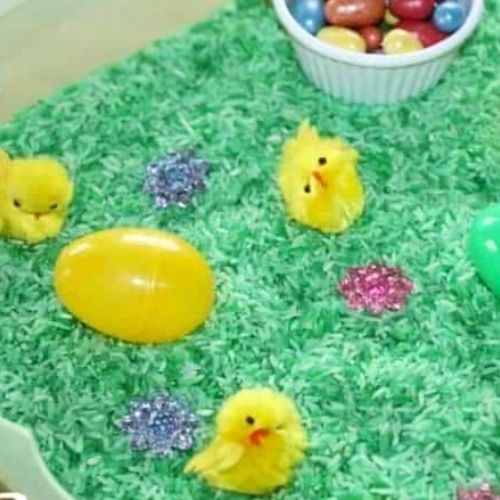
Dyed Rice Easter Sensory Bin: Dye rice yellow and add miniature chick figurines, plastic eggs, and scoops for a cheerful sensory bin experience. Kids can enjoy the sensory delight of running their fingers through the colorful rice while engaging in imaginative play.
TIP: Follow our step-by-step instructions to color rice or pasta here, and add Easter-themed items from the dollar store!
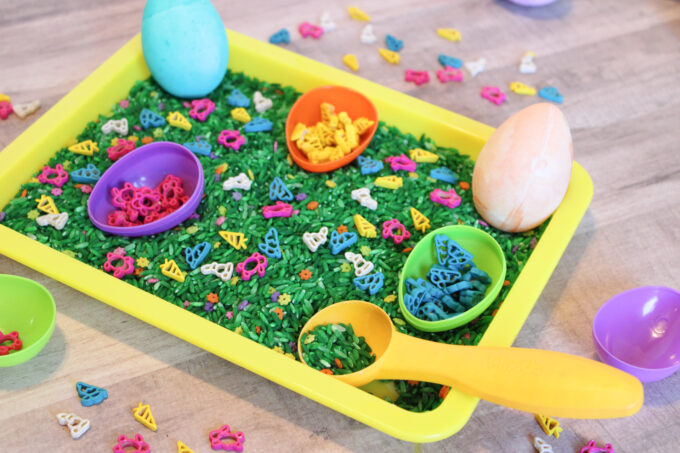
Dyed Bunny Pasta Sensory Bin: Dye pasta pastel colors and incorporate plastic Easter eggs for a tactile sensory experience. Kids can explore different textures and shapes while practicing fine motor skills with small scoops.
Tip: Use a combination of dyed rice and pasta or just pasta! Look for bunny-shaped pasta!
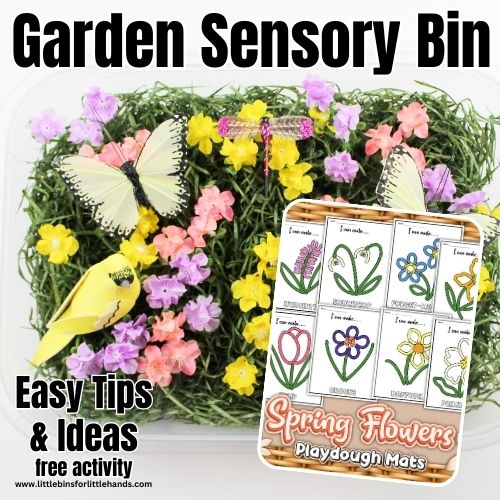
Spring Garden Sensory Bin: Create a miniature garden scene in a sensory bin using soil, fake grass, plastic flowers, and toy gardening tools. Children can dig, plant, and pretend to nurture their own little garden, fostering a connection to nature and stimulating imaginative play.
Tip: Turn it into a carrot garden for Easter bunnies! Look for carrot themed items at the dollar or craft store.
Texture Easter Eggs: These texture eggs are easy and fun to make with simple fillings like rice and flour!
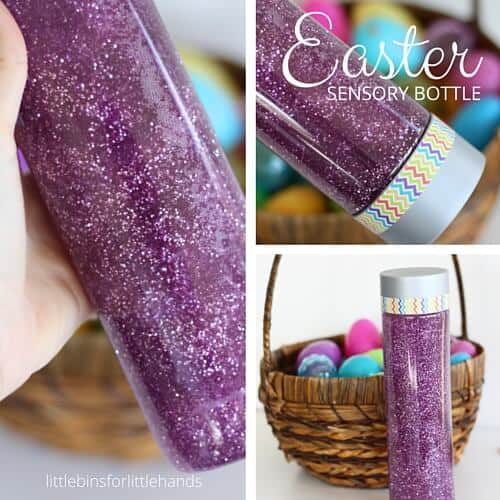
Easter Sensory Bottle: Create sensory bottles filled with yellow feathers, pom-poms, and plastic chicks for visual and tactile exploration. You can also make a mesmerizing Easter Sensory Bottle with glitter!