
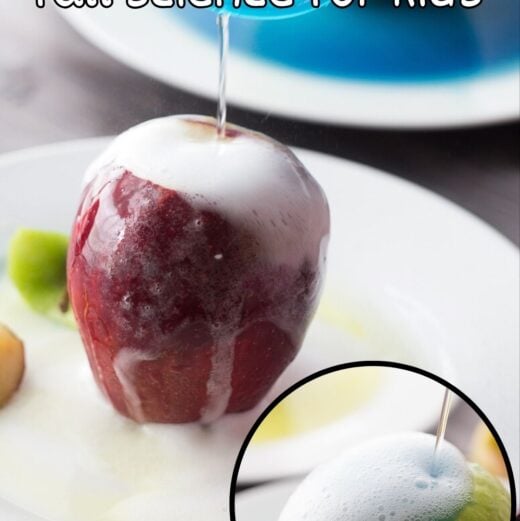
Make an apple erupt with this easy apple volcano experiment! With baking soda and vinegar, kids can explore a fizzy chemical reaction using a real apple and a few simple supplies.
This hands-on fall science activity is easy to set up for the classroom or at home and gives kids a fun way to observe a chemical reaction in action.
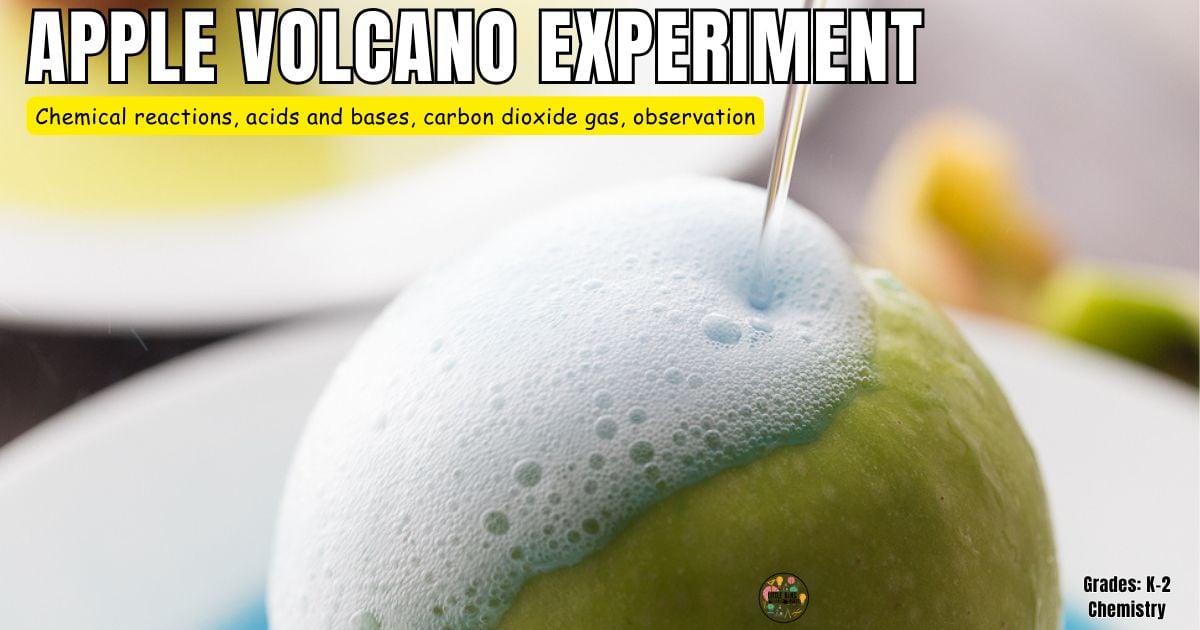
Field: Chemistry
Grades: PreK–2
Concepts: Chemical reactions, acids and bases, carbon dioxide gas, observation
Apple Volcano Experiment
The apple works as the container for a classic baking soda and vinegar reaction.
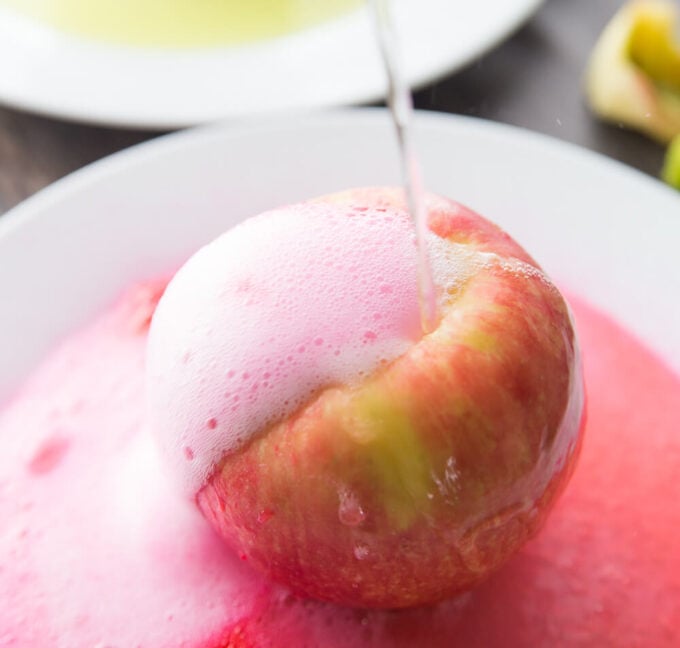
When baking soda and vinegar mix, they react and produce carbon dioxide gas. The gas forms bubbles that create the fizzy eruption overflowing from the apple.
Supplies
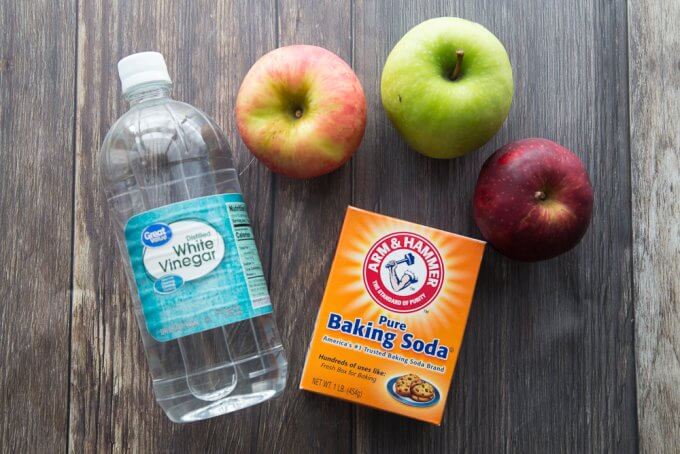
- Apple
- Baking soda
- Vinegar
- Shallow dish, tray, or pie plate
- Spoon
- Knife for adult use
- Optional: food coloring
- Optional: dish soap
- Optional: eyedropper or turkey baster
Safety Note: An adult should cut the opening in the apple.
How to Make an Apple Volcano
1. Prepare the apple.
Place the apple on a tray or shallow dish to catch the overflow.
Have an adult cut a small opening in the top of the apple. Scoop out enough of the center to make a small cavity without cutting all the way through.
2. Add baking soda.
Spoon a few tablespoons of baking soda into the apple.
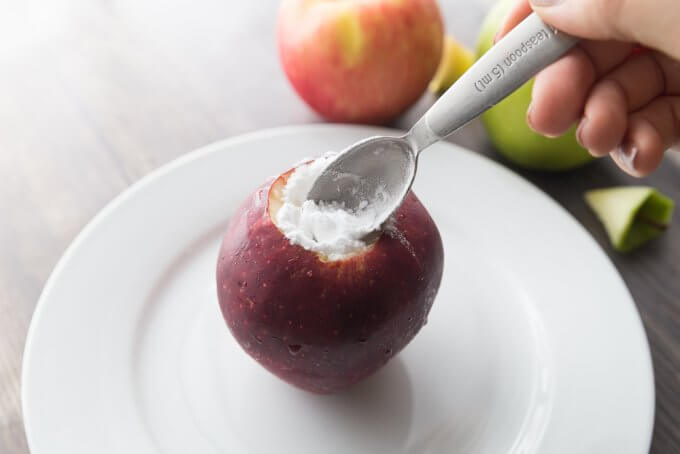
3. Add optional extras.
Add a few drops of food coloring for a colorful eruption.
For extra foam, add a small squirt of dish soap.
4. Add vinegar.
Pour vinegar into the apple and watch what happens!
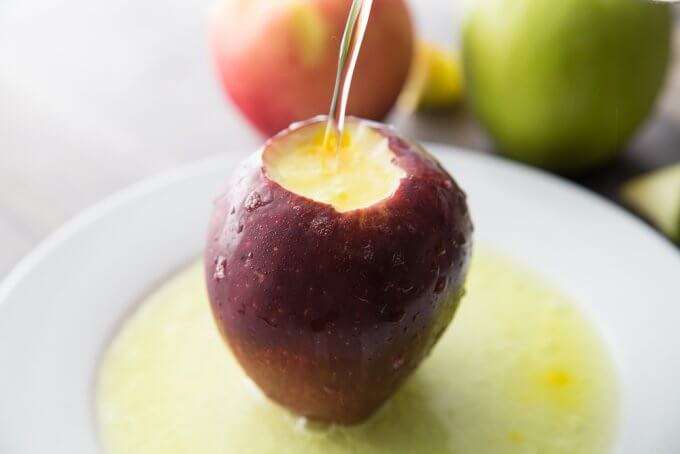
You can pour directly from a small cup for a bigger eruption or use an eyedropper or turkey baster to add the vinegar more slowly.
Using different tools is also an easy way for younger kids to practice squeezing, transferring liquids, and making careful observations.
The Science Behind an Apple Volcano
Baking soda and vinegar react when mixed.
Baking soda is a base, and vinegar contains an acid called acetic acid. When the two substances combine, a chemical reaction takes place, and carbon dioxide gas is produced.
Those carbon dioxide bubbles are what you see fizzing and bubbling out of the apple.
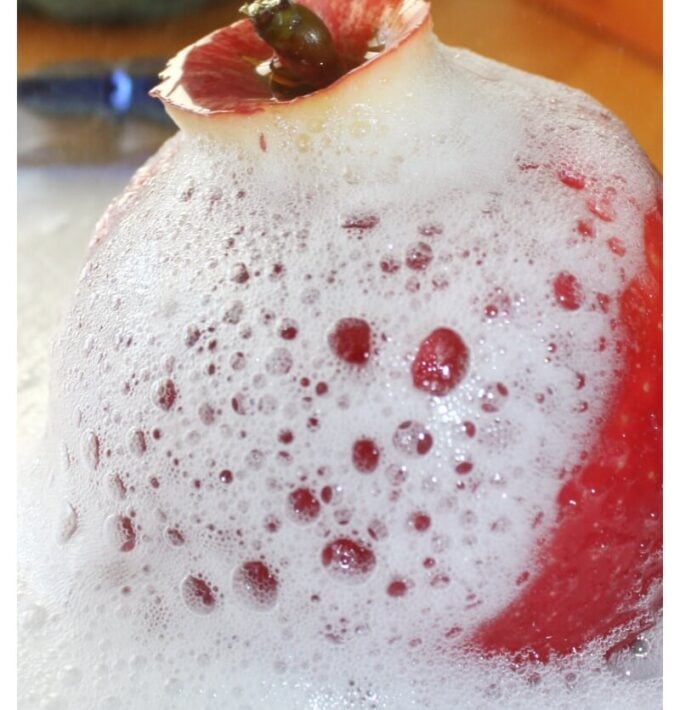
Dish soap is not needed for the reaction. However, if you add it, the soap traps some of the gas bubbles and creates a thicker, foamier eruption.
👉 Learn more about baking soda and vinegar experiments.
Turn It Into an Experiment
Instead of making the apple volcano only once, change one thing and compare what happens.
Try testing:
- Vinegar vs. apple cider vinegar
- Vinegar vs. lemon juice
- With dish soap vs. without dish soap
- More baking soda vs. less baking soda
- Pouring vinegar vs. using an eyedropper
Ask kids to predict which setup will create the biggest or longest-lasting eruption.
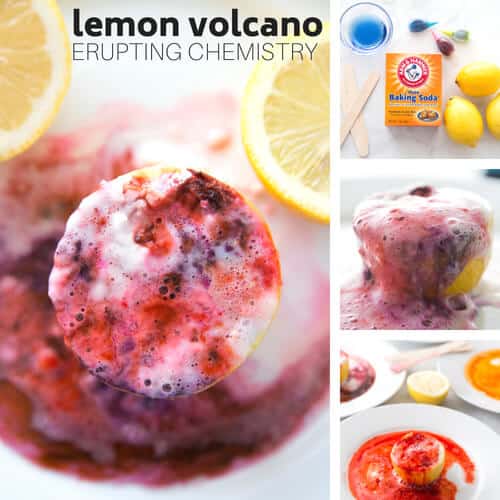
👉 For a similar citrus experiment, try our Lemon Volcano.
Guiding Questions
- What do you predict will happen when the vinegar reaches the baking soda?
- What do you notice first?
- Where are the bubbles coming from?
- What happens if you add more vinegar?
- Does dish soap change the eruption?
- What could you change and test next?
- How would you describe the reaction?
Use the Scientific Method
Older kids can turn the apple volcano into a simple investigation.
- Question: What happens when baking soda and vinegar mix inside an apple?
- Prediction: What do you think the reaction will look like?
- Experiment: Combine the ingredients and observe the eruption.
- Observe: Record what you see, hear, and notice.
- Conclusion: What happened, and how did the results compare with your prediction?
👉 Learn more about the scientific method for kids.
Free Apple Science & STEM Starter Guide
Want more ways to explore apples?
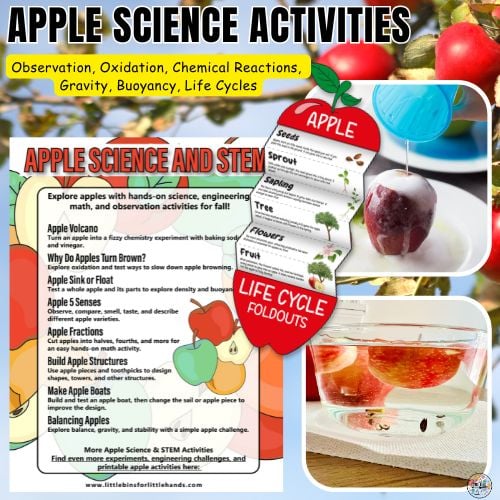
Grab our free Apple Science & STEM Starter Guide with hands-on science ideas, engineering challenges, and printable investigation pages.
Printable Apple Science and STEM Pack
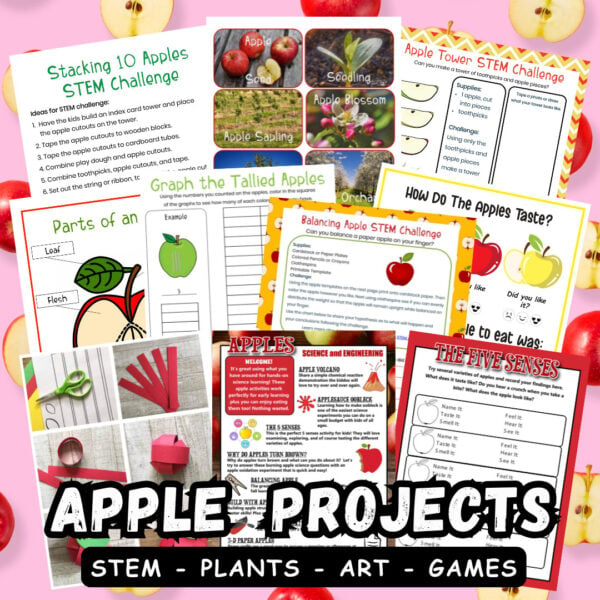
Want more apple activities in one place? The Apple Science and STEM Pack includes more than 125 pages of apple-themed projects and printables for Kindergarten through elementary.
Inside, you’ll find apple science activities, STEM challenges, life cycle resources, observation pages, and additional printable activities for fall learning.
More to Explore
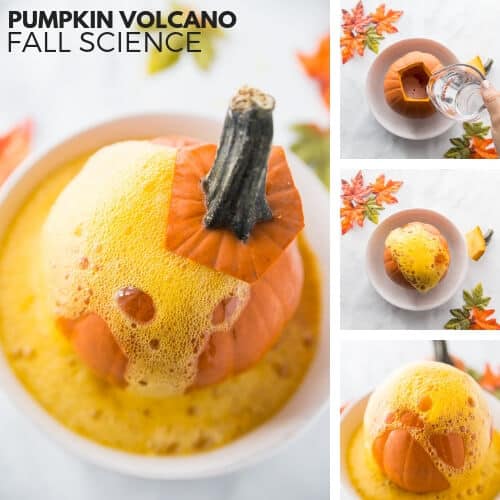
Apple Science Experiments | Apple STEM Activities | Chemical Reactions | Fall Science Activities | Baking Soda and Vinegar Experiments | Pumpkin Volcano

Thank you for blogging this. I’ve been a long time reader of your blog.
Awesome! Glad to hear that. We always have something new and fun to share.
Thank you for these great ideas! I used them in our STEM Collaboratory today with Kindergarten and they went wonderfully well! The kids had fun and showed great grit, brainstorming, testing, and perseverance!
Love to hear that! Make sure you try it with mini pumpkins too!
This is so cool. We did this five or more times. My three year old was very impressed.
Science is fun!!!
Loved this. I used a red pepper and it worked really well. “V” for volcano, vegetable, and vinegar!
I did this experiment with my daughter’s pre-k class this morning and it was a hit!!! That being said, I did something different; we used two different types of apples, a red delicious and a granny smith. Did the green apple react differently? You betcha! The difference was only a slight one but there was more bubbly from the green apple. Why? We are thinking the difference is due to the different acidic levels/tartness in the apples. =)