
Did you know that fizzing, bubbling, color-changing science experiments are all examples of chemistry in action? Any time substances interact to form something new, you’re observing a chemical reaction.
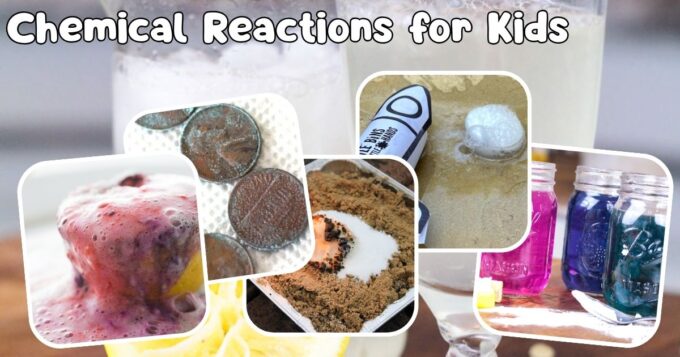
Below you’ll find a thoughtfully organized collection of easy chemical reaction experiments for kids that can be done at home or in the classroom using common household ingredients. These hands-on chemistry activities are simple to set up, visually engaging, and appropriate for a wide range of ages—from preschool through upper elementary and beyond.
What Is a Chemical Reaction?
A chemical reaction happens when two or more substances react together to form a new substance with different properties. This type of change is called a chemical change and is usually irreversible.
Chemical reactions are one part of chemistry, the branch of science that studies matter, how substances interact, and how materials change.
You may observe a chemical reaction when:
- Gas is produced (bubbles or fizzing)
- A color change occurs
- Heat is released or absorbed
- A new solid forms
- The material changes permanently
🔎 Everyday examples of chemical reactions include cooking food, baking bread, rust forming on metal, or milk turning sour.

Chemical Change vs. Physical Change
Not all dramatic reactions are chemical reactions. A physical change alters the form of a substance without creating something new.
For example, the classic Mentos and Diet Coke experiment creates an exciting eruption, but it is a physical reaction, not a chemical one. The experiments below, however, are all examples of true chemical reactions where new substances are formed.
👉 Learn more about physical change vs. chemical change.
Can You Do Chemical Reaction Experiments at Home?
Yes! Many chemical reactions can be safely explored at home or in the classroom using simple supplies like baking soda, vinegar, yeast, sugar, lemons, hydrogen peroxide, and Alka-Seltzer tablets.
You can even create a DIY science kit using inexpensive grocery or dollar store items. Keep everything in a plastic bin so you’re always ready for hands-on chemistry.
👉 See our list of must-have science supplies and tips for setting up a home science lab.
These experiments work well across multiple age groups and can be adapted with more or less adult supervision depending on your learners.
Easy Chemical Reaction Experiments Using Household Ingredients
To make it easier to find the right activity, the experiments below are grouped by type of chemical reaction.
Acid–Base Chemical Reactions
These reactions occur when an acid and a base react, often producing carbon dioxide gas.

- Balloon Chemical Reaction Experiment
Inflate a balloon using a baking soda and vinegar reaction. - Bottle Rocket Experiment
Use chemical reactions to launch a plastic bottle rocket. - Popping Bag Experiment
Trap carbon dioxide gas inside a sealed bag until pressure causes it to burst. - Volcano Experiment
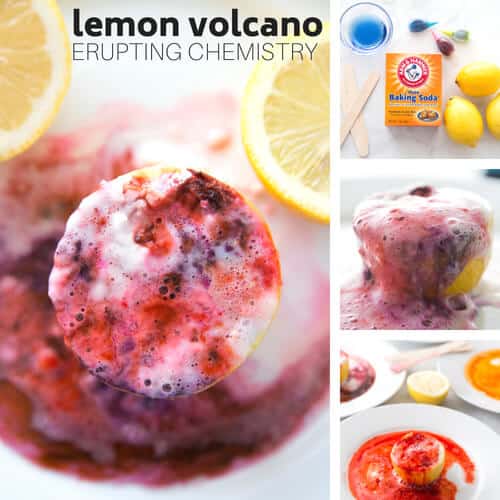
A classic demonstration of acid–base reactions using baking soda and vinegar. (Explore themed volcano variations in our volcano experiments hub, including the lemon volcano.)
Gas-Producing Chemical Reactions (Fizz, Foam, and Pressure)
These reactions release gas as a main reaction product.
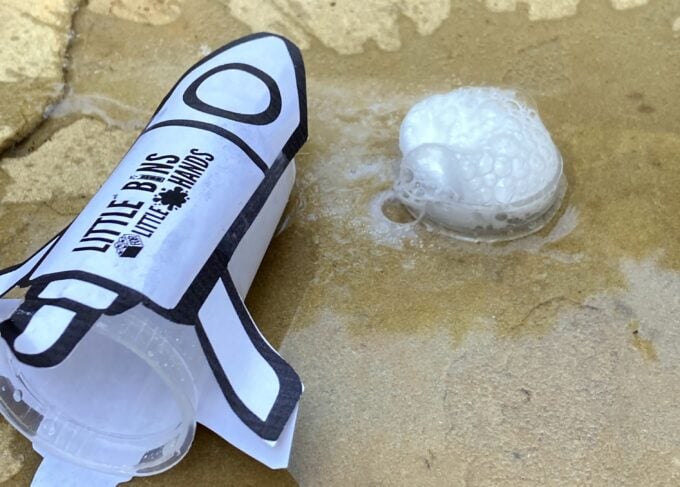
- Alka-Seltzer Boat Experiment
Explore chemistry and physics as gas propulsion moves a mini boat. - Alka-Seltzer Rocket
Launch a container using the pressure created by a chemical reaction. - Alka-Seltzer Reaction Rate Experiment
Test how water temperature affects reaction speed. - Elephant Toothpaste
A dramatic exothermic reaction using hydrogen peroxide and yeast that produces foam and heat. - Yeast and Sugar Fermentation
Observe how yeast reacts with sugar to produce carbon dioxide gas.
Color-Changing Chemical Reactions
These reactions are especially engaging and help kids visually identify chemical change.
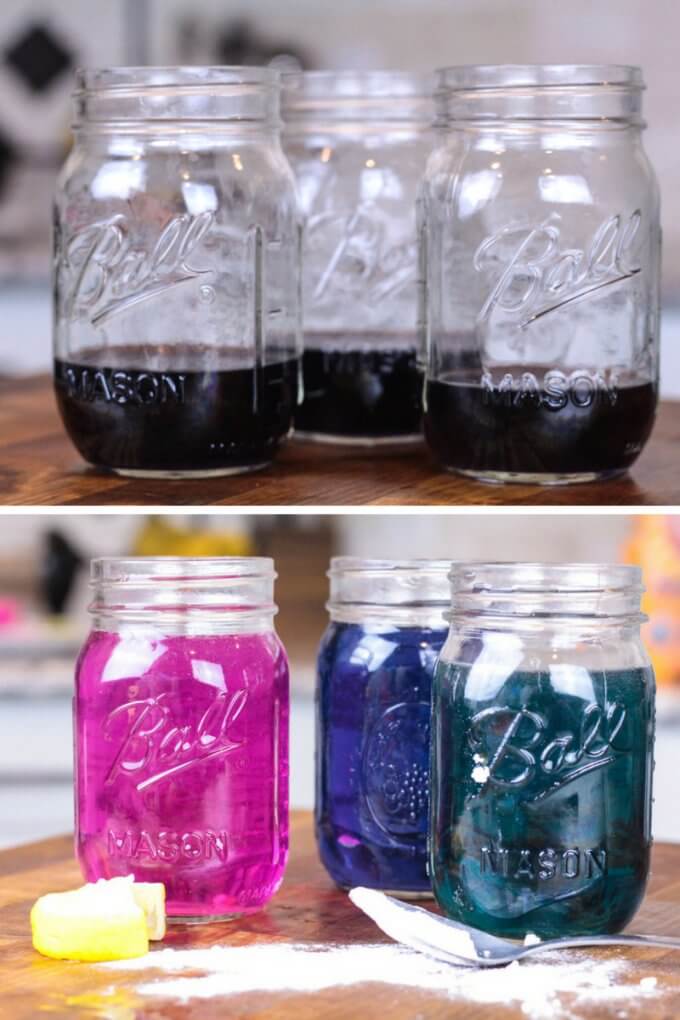
- Red Cabbage pH Indicator
Use red cabbage juice to test acids and bases and observe color changes caused by chemical reactions. - Iodine Starch Test
Discover which foods contain starch when iodine changes color after reacting. - Invisible Ink
Write secret messages that appear through a chemical reaction. - Apple Browning Experiment
Learn how oxygen triggers a chemical reaction that causes apples to turn brown. - Green Pennies Experiment
Observe chemical reactions that cause copper to change color over time.
Chemical Reactions That Create New Materials
These experiments demonstrate chemical transformations that result in the formation of new materials.

- Milk and Vinegar Plastic (Casein Bioplastic)
Heat milk and add vinegar to trigger a chemical reaction that forms a plastic-like material. - Cornstarch Bioplastic
Create a biodegradable plastic using cornstarch, water, and heat to explore polymer formation. - Bread in a Bag
A chemical reaction you can eat! Observe how ingredients change during baking. - Bath Bomb Science
The ingredients combine to form a solid object with new properties. This new material is designed to react when it comes into contact with water, releasing gas and breaking apart.
Oxidation & Combustion Chemical Reactions
These reactions involve oxygen, heat, or energy and should be done with adult supervision.
- Rusting Metal Experiment (Coming Soon)
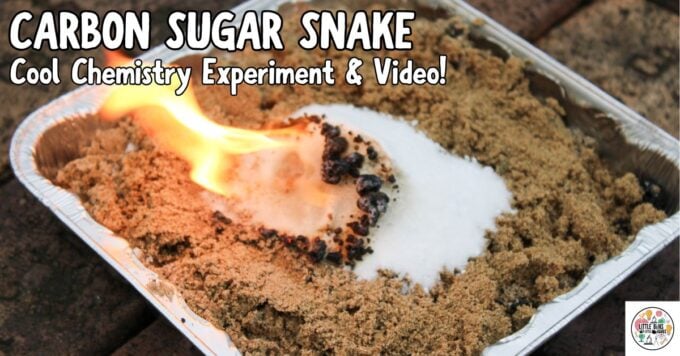
Observe how iron reacts with oxygen to form rust, an irreversible chemical change. - Carbon Sugar Snake Experiment
Watch a combustion reaction as sugar decomposes when heated. - Potato Battery Experiment
Learn how chemical reactions can produce electrical energy.
Chemical Reaction Experiments by Age Group
Many chemistry experiments can be adapted for different ages.
Preschool–Kindergarten
- Focus on visual reactions
- Emphasize cause and effect
- Adult-led exploration
Grades 1–3
- Introduce observation and comparison
- Discuss bubbles, color change, and gas
- Begin simple recording
Grades 4–6
- Apply the scientific method
- Explore variables and reaction rates
- Collect data and draw conclusions
Many of these chemical reaction experiments can be adapted for different ages by adjusting the level of adult support, discussion, and data collection.
Frequently Asked Questions About Chemical Reaction Experiments for Kids
What is a chemical reaction for kids?
A chemical reaction happens when two or more substances mix together and form something new. Kids often notice chemical reactions when they see bubbles, color changes, heat, or a new solid forming. These changes are usually permanent and cannot be easily reversed.
Can chemical reaction experiments be done at home?
Yes. Many chemical reaction experiments for kids can be safely done at home or in the classroom using simple household supplies like baking soda, vinegar, yeast, sugar, lemons, and Alka-Seltzer tablets. With appropriate adult supervision, these activities provide a safe way to explore chemistry.
Are chemical reaction experiments safe for kids?
Most chemical reaction experiments designed for kids are safe when they use common household materials and include adult supervision. Always follow instructions, avoid tasting ingredients, and use basic safety gear like goggles when appropriate.
What age is appropriate for chemical reaction experiments?
Chemical reaction experiments can be adapted for many ages. Preschoolers benefit from visual reactions like fizzing and color changes, while older elementary students can explore reaction rates, variables, and data collection. The level of supervision and discussion should match the child’s age and experience.
What are common signs that a chemical reaction is happening?
Common signs include bubbling or fizzing from gas formation, color changes, heat being released or absorbed, a new solid forming, or a permanent change in texture or smell.
Are baking soda and vinegar experiments real chemistry?
Yes. Baking soda and vinegar reactions are real chemical reactions. When mixed, they produce carbon dioxide gas, water, and a new compound, making them a simple but effective example of acid–base chemistry.
What is the difference between a chemical change and a physical change?
A chemical change creates a new substance and is usually irreversible, such as rust forming or milk turning into plastic. A physical change only alters how something looks or moves, like ice melting or soda foaming without forming a new substance.
Can these experiments be used for science fair projects?
Many chemical reaction experiments can be expanded into science fair projects by changing one variable, recording results, and drawing conclusions. Reaction rate, temperature, and material comparison experiments work especially well.
Chemistry Learning Resources for Kids
Support hands-on chemistry learning with these additional resources:
- Scientific Method for Kids
- Science Vocabulary for Kids
- Science Tools for Kids
- Printable Science Projects
- Science Lab Safety Rules
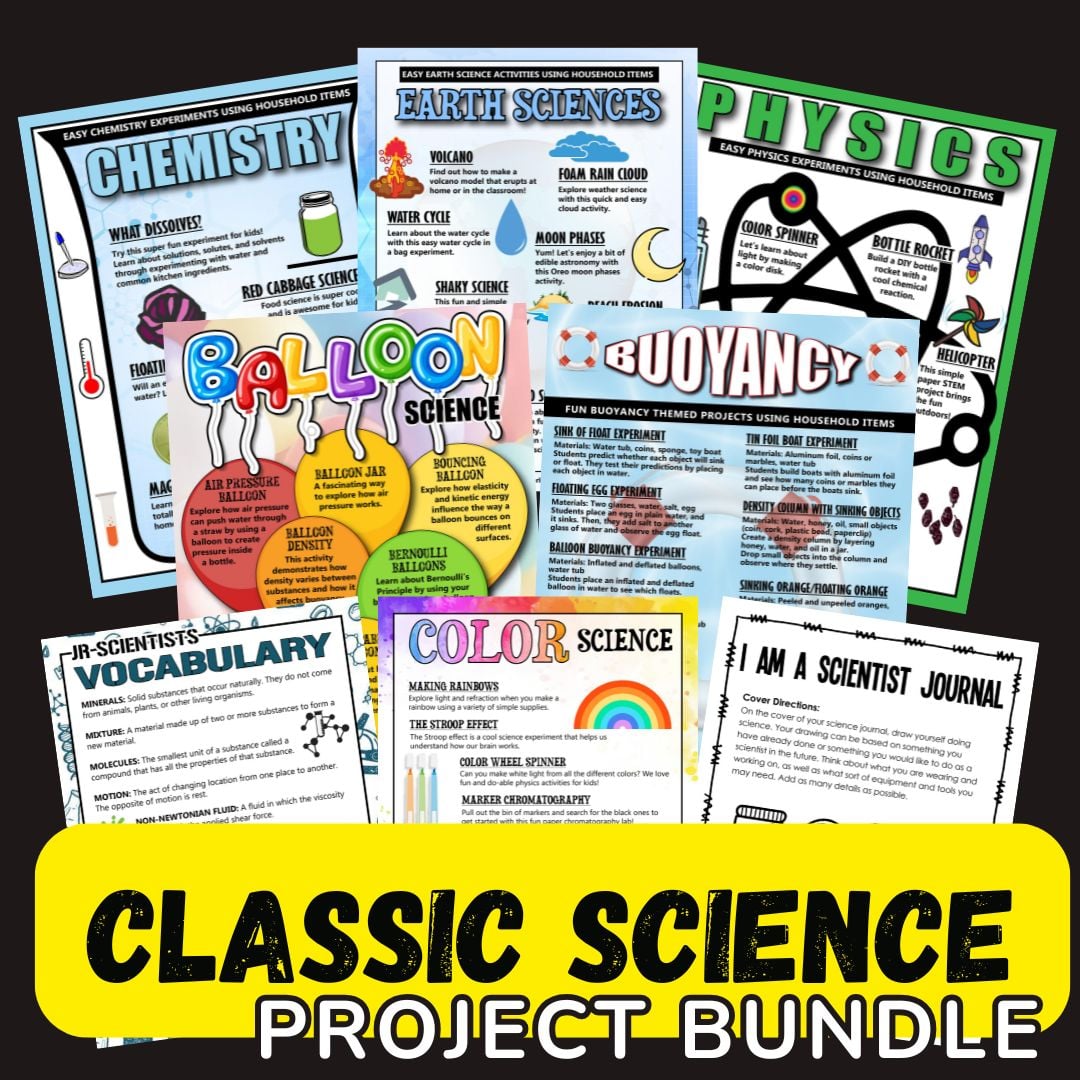
Printable Elementary Science!
Want to do meaningful science — but not start a full unit yet? This starter lab provides quick, hands-on investigations across multiple science topics, allowing students to explore how science works before diving deeper into any one subject.
Perfect for regularly trying science without extensive planning. Grades: K–5.

5 Comments
Comments are closed.