
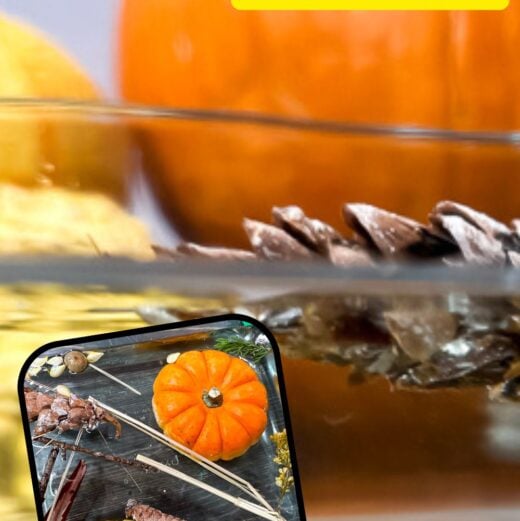
Why do some objects float while others sink? This simple fall sink or float experiment uses seasonal materials to explore buoyancy and density in a fun way. Using pumpkins, pinecones, and other autumn objects, kids will make predictions, observe results, and learn scientific concepts that relate directly to the world around them.

STEM Sink or Float Activity with Fall Materials
This activity teaches two essential scientific principles: buoyancy and density. Objects float if they are less dense than water. For example, pumpkins contain air pockets that make them buoyant despite their size. Acorns and other denser objects sink.
Shape also influences buoyancy—objects that spread weight evenly or trap air inside (like leaves) are more likely to float. As kids test various materials, they will explore how these factors work together in real-life scenarios.
💡 Explore our original sink or float experiment for interesting items to test!
Grade Recommendation: This activity is ideal for Preschool through 2nd grade.
Supplies:
- Transparent bowl or deep tray filled halfway with water
- A selection of fall-themed items:
- Pinecone
- Small pumpkin
- Acorns
- Sticks
- Pumpkin seeds
- Leaves
- Hay
- Optional: Printable worksheet for recording predictions and observations (below)

Preparation:
- Fill the bowl or tray with water.
- Collect the fall items to be tested.
- Set up the workspace, either for independent or small-group work.
- Print the optional worksheet to guide predictions and recording.
Discussion Questions
- Why do you think the pumpkin floated even though it was heavy?
- Did anything surprise you about the results?
- What would happen if you filled the bowl with more water or used different materials?
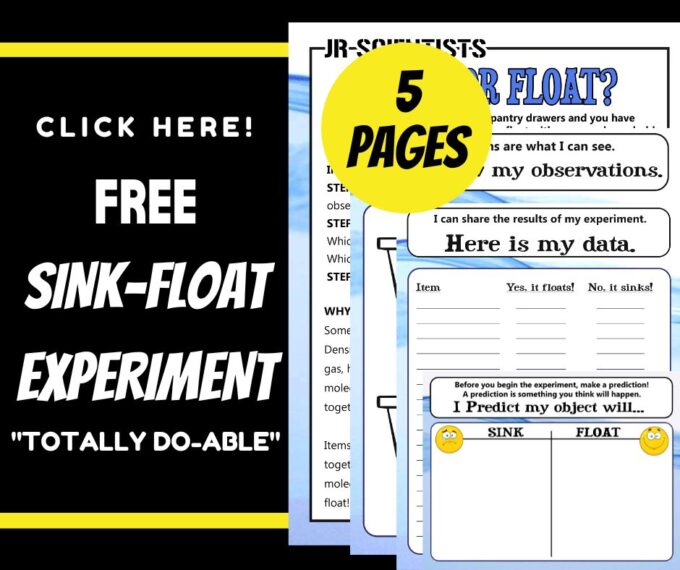
How To Teach Sink or Float Science To Young Kids
Ask students to predict which items will sink and which will float. Use the worksheet to mark predictions.
Place each item in the water and observe what happens. Encourage children to observe—some items may float initially but sink over time.
Record the results by drawing pictures or writing observations on the worksheet. This helps children process their findings and engage with the scientific method.
💡 Find more fantastic Fall Science Experiments, including temperature change and fall density columns.

Fall Sink or Float Science
- Density: Objects like pumpkins float because they contain air inside, reducing their overall density.
- Buoyancy: Items that experience an upward force from the water greater than their weight will float. Pinecones may float at first but could sink as they absorb water.
- Shape and Air Pockets: Leaves float because they spread across the surface, but if they absorb water, they may eventually sink.
💡 Explore more easy to set up examples of density and buoyancy!

Extension Activities
- Nature Walk: Encourage students to collect their objects during a nature walk, such as leaves, acorns, or sticks. This connects learning to their everyday environment and increases engagement with the activity. Use our printable nature hunt checklist [here].
- Saltwater Experiment: Repeat the activity with saltwater to show how increased water density affects buoyancy.
- Graphing Results: Create a simple bar graph to visualize how many items sank versus floated, introducing students to data representation.
- Pumpkin Investigation: Explore the inside of a pumpkin to see what makes it float.
Printable Fall STEM Projects Pack
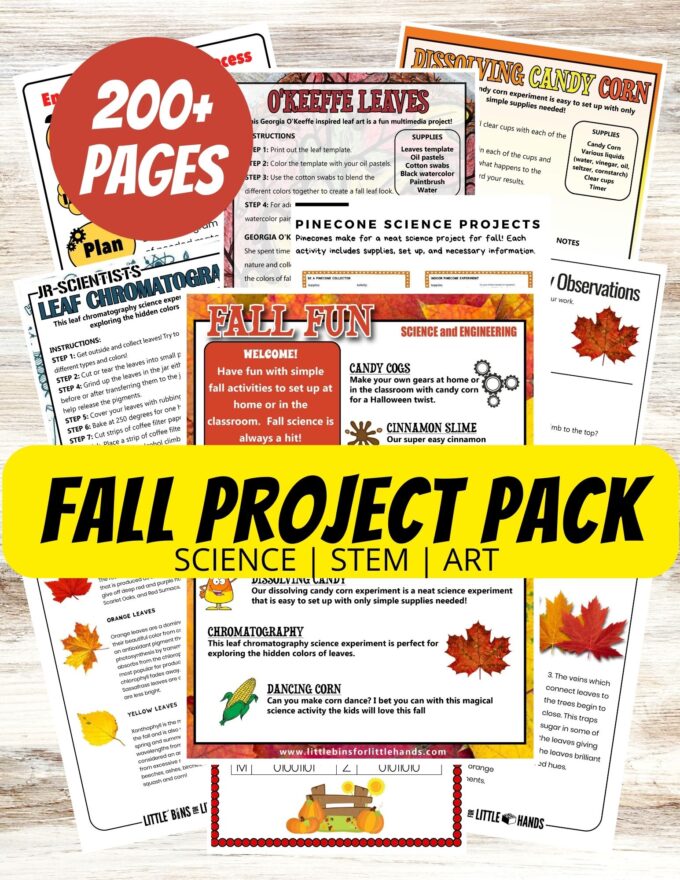
This 200+ page fall theme pack complements both the apple and pumpkin packs. There are no overlaps!
What’s Included:
- 20+ Fall theme science and STEM activities with printable sheets, instructions, journal pages, and useful information all using easy-to-source materials perfect for limited time needs. Includes a fall theme engineering pack with fun, problem-based challenges for kids to solve
- Leaf-themed science activities include parts of a leaf, leaf coloring pages, leaf rubbing sheets, leaf graphing, information on why leaves change colors, and a lap book! You can also go on a leaf scavenger hunt.
- Pinecone Pullout Pack: includes pinecone life cycle information, science investigations, and more.
- Fall Screen Free Code Pack includes an introduction to binary code, algorithms, puzzles, and more
- Fall Art/STEAM Projects
- Bonus Fall fun pack includes games and activities to round out your fall theme activities, such as brain breaks, Would You Rather cards, mystery math pictures, and more