
What does Buoyancy mean? Buoyancy is a fascinating concept that explains why some things float while others sink. These fun, hands-on buoyancy examples make it easy for kids to explore buoyancy and see how science works in real life! Add these to your simple science experiments.

What is Buoyancy?
Buoyancy is the force that makes objects float in water or other fluids. When an object is placed in water, two forces act on it:
- Gravity pulls the object down.
- Buoyant Force pushes the object up.
If the buoyant force is greater than the force of gravity, the object floats. If gravity is stronger, the object sinks. Buoyancy depends on an object’s density—how much mass it has for its size—and whether it can trap air (like a boat or life jacket). These experiments explore how different objects interact with water and other liquids to either float or sink.
Buoyancy Examples for Kids
Click on the buoyancy examples and experiments below to learn more about the setup and science information behind each hands-on science activity.
💡Look for free printables for the different activities, and grab the free Buoyancy Science Guide and journal pages below.
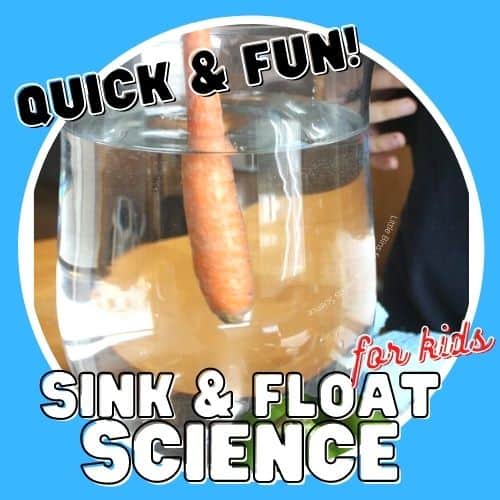
1. Sink or Float Experiment
Materials: Water tub, coins, sponge, toy boat, cork
Students predict whether each object will sink or float. They test their predictions by placing each object in water. Fantastic, free printable guide included.
Learning: Introduces density and how materials affect buoyancy.
2. Tinfoil Boat Challenge
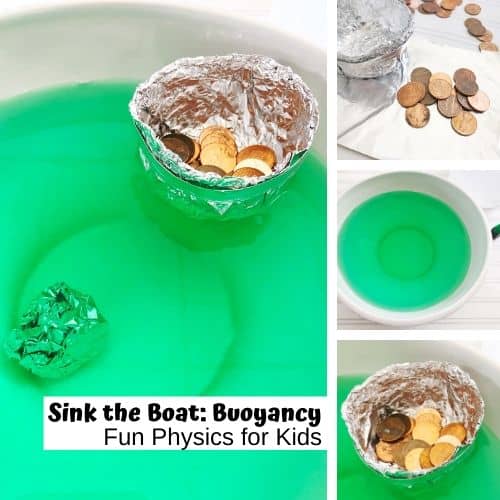
Materials: Aluminum foil, coins or marbles, water tub
Students build boats with aluminum foil and see how many coins or marbles they can place before the boats sink.
Learning: Teaches how surface area impacts buoyancy and introduces engineering.
3. Floating Egg Experiment
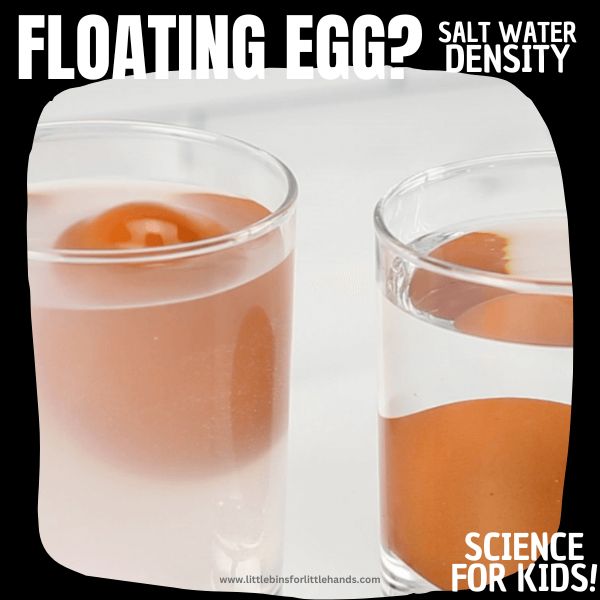
Materials: Two glasses, water, salt, egg
Students place an egg in plain water, and it sinks. Then, they add salt to another glass of water and observe the egg float.
Learning: Demonstrates how changing water density (with salt) affects buoyancy.
4. Lego Raft Design
Materials: Legos, small figurines, water tub
Kids build rafts from Legos and test how well they float with a figurine on top. Also, try our straw boat STEM challenge.
Learning: Explores weight distribution and buoyancy through design challenges.
5. Balloon Buoyancy Experiment
Materials: Inflated and deflated balloons, water tub
Students place an inflated and deflated balloon in water to see which floats.
Learning: Demonstrates that air trapped inside an object increases buoyancy.
6. Sinking Orange vs. Floating Orange
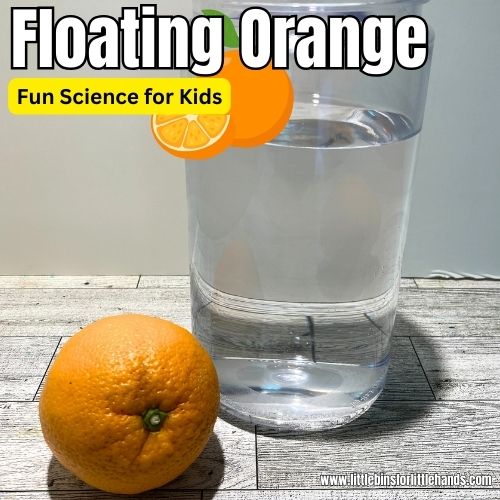
Materials: Peeled and unpeeled oranges, water tub
Students place both a peeled and unpeeled orange in water to compare results.
Learning: Shows how air pockets (in the peel) impact buoyancy.
7. Clay Submarine Experiment
Materials: Modeling clay, water tub
Students mold clay into different shapes to see which floats and which sinks.
Learning: Explores how shape, not just material, influences buoyancy.
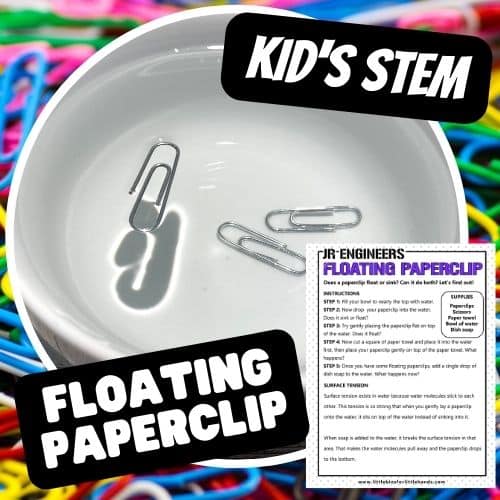
8. Floating Paper Clip Trick
Materials: Paper clip, tissue paper, water tub
Float a paper clip on a tissue and let the tissue sink. Due to surface tension, the paperclip will remain on the surface.
Learning: Teaches how surface tension interacts with buoyancy.
9. Soda Can Buoyancy Test
Materials: Regular and diet soda cans, water tub
Place both soda cans in water. Due to differences in density, the diet soda floats, but the regular soda sinks.
Learning: Introduces how liquid content and density affect buoyancy.
10. Cartesian Diver Experiment
Materials: Plastic bottle, eye dropper, water
Fill a plastic bottle with water and place an eye dropper inside. Squeeze the bottle to make the dropper sink and release it to make it float.
Learning: Demonstrates how pressure changes affect buoyancy.

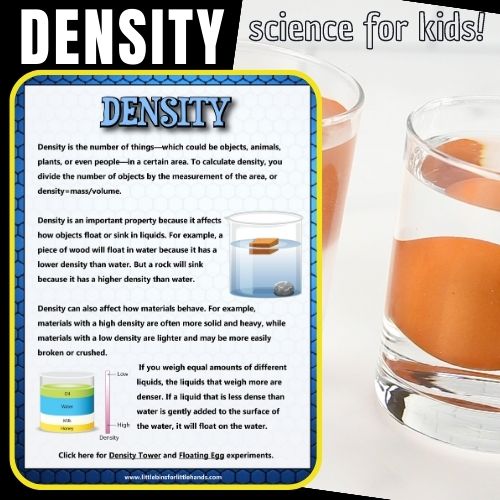
11. Density Column with Sinking Objects
Materials: Water, honey, oil, small objects (coi;n, cork, plastic bead, paperclip)
- Create a density column by layering honey, water, and oil in a jar.
- Drop small objects into the column and observe where they settle. Some will float on oil, while others sink through the layers.
Learning: Teaches how different densities affect buoyancy and shows that objects behave differently in liquids of varying densities.


Extension Activities
Make a Life Jacket for a Toy Figure:
Challenge students to build a life jacket from sponge pieces for a toy figure. Test whether it keeps the toy afloat.
Learning: Shows how life jackets work by increasing buoyancy.
Compare Liquids and Buoyancy:
Use oil, water, and syrup to see how objects behave in different liquids. Do some objects float better in one liquid than another?
Learning: Explores the relationship between buoyancy and fluid density.
Water Temperature and Buoyancy Experiment:
Try placing objects in cold and warm water to see if water temperature affects buoyancy.
Learning: Investigates the role of temperature in water density and buoyancy.
Density Activities
💡 Explore more density experiments for kids here
- Hot and Cold Water Experiment
- Floating and Sinking Oil and Water Activity
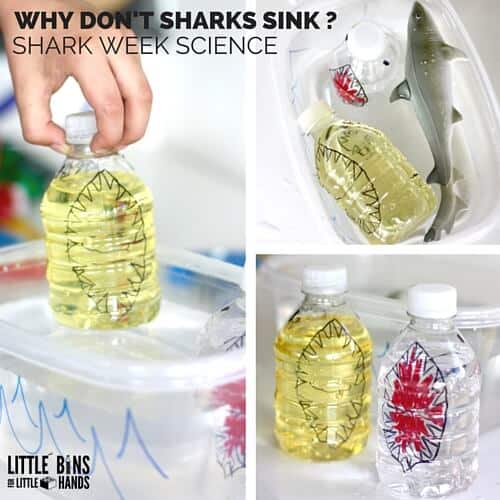
- How Do Sharks Float?
- Saltwater Density Experiment




Helpful Science Resources
Here are a few resources that will help you introduce science more effectively to your kids or students and feel confident presenting materials. You’ll find helpful free printables throughout.
- Printable Science Project Pack 👇
- Best Science Practices (as it relates to the scientific method)
- Science Vocabulary
- All About Scientists
- Free Science Worksheets
- DIY Science Kits
- Science Tools for Kids
- Scientific Method for Kids
- Citizen Science Guide
- Join us in the Club