
What happens when hot and cold water meet? This easy and colorful hot and cold water science experiment reveals how temperature affects the density of water, giving kids a fun way to see science in action!

Hot and Cold Water Density Experiment
In this experiment, we explore the concept of density by comparing how hot and cold water behave when mixed.
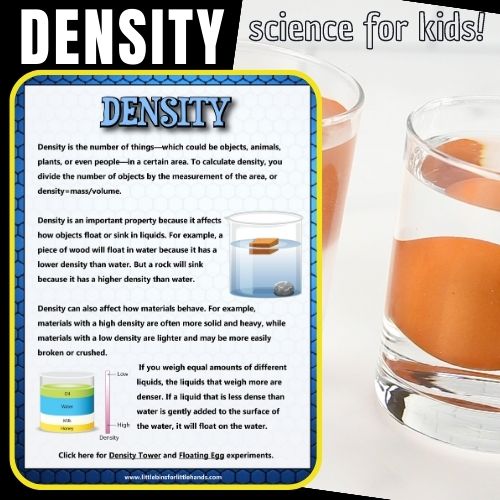
Density measures how tightly packed molecules are in a substance. Observe how the density of water changes with temperature, using vibrant colors! Let’s explore how cold water molecules and hot water molecules interact in this fun science experiment.
Grade Level Recommendation: 3rd Grade and above.
Supplies:
💡Find printable instructions and an observation sheet for this experiment in the CLUB.
- 2 clear glass jars or cups (baby food jars work well)
- Food coloring (red and blue work best)
- Warm (not boiling)
- Cold water
- 2 index cards or pieces of stiff paper
Hot vs Cold Water Mixing Instructions
Ask: Is cold water denser than hot water? (leading to cold water sinking and hot water rising)
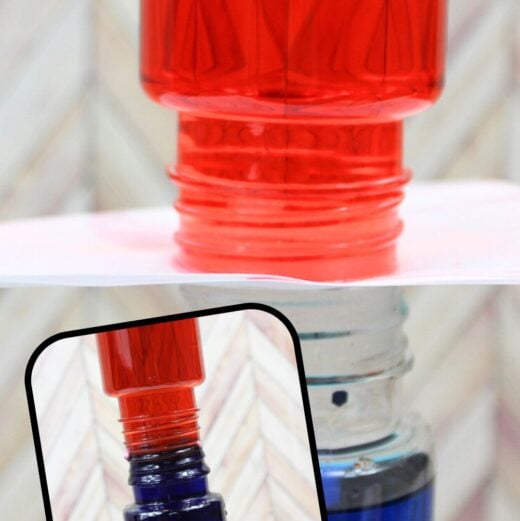
Prepare the Water: Fill one jar with cold water and add a few drops of blue food coloring. Fill the second jar with warm water and add a few drops of red food coloring.
💡 For this science experiment, it’s important to have the same volume or cold water and the same volume of hot water. Learn more about variables here.
Invert the Hot Water Jar: Place an index card on top of the hot water jar, ensuring it’s tightly sealed with no gaps.
Stack the Jars: Carefully invert the hot water jar and place it on top of the cold water jar.
Remove the Card: Slowly pull out the index card so the jars are directly connected.

Hot and Cold Water Density Experiment Explanation
In this experiment you would have noticed that the red hot water stays on top of the cold blue water because hot water is less dense than cold water. When reversed (cold water on top), the colors mix quickly to make purple water as the denser cold water sinks. This is because hot water rises and cold water sinks!
Density is a property that explains how tightly molecules are packed in a substance. In cold water, the water molecules are closer together, making them denser. When water is heated, the water molecules move apart and bounce around, decreasing their density. There are fewer molecules in hot water and it weighs a bit less than the same volume of cold water.
In this experiment, the warmer (less dense) water stays on top of the colder (denser) water. However, the denser cold water sinks if you put cold water on top of hot water, causing the two to mix rapidly. This experiment demonstrates how the temperature of a substance can affect its movement and interactions.
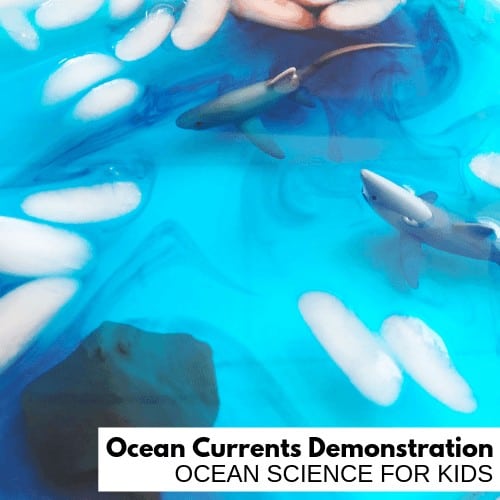
This is also why ocean currents and weather patterns occur—cold, dense water sinks while warmer water rises!
💡 Try our Ocean Current Activity to demonstrate this.

Extension Activities:
- Temperature in Nature: Research how temperature changes from day to night.
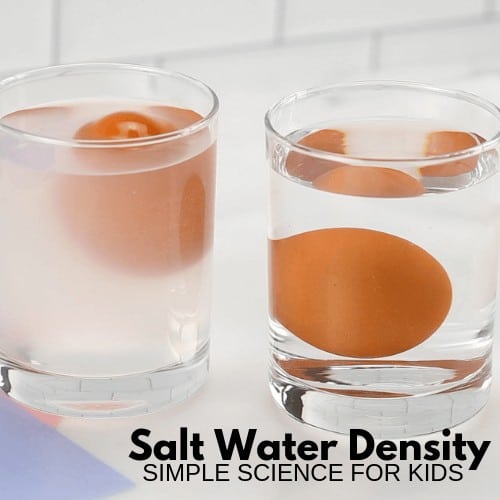
- Salt and Water Density: Add salt to the cold water to see if it becomes denser.
- States of Matter: Explore experiments that involve matter and its properties, including how changes in temperature affect substances.


Related Experiments To Explore Density
Here are some fun density experiments:
- Oil and Water Science: Try activities that show how oil and water don’t mix because of their different densities.
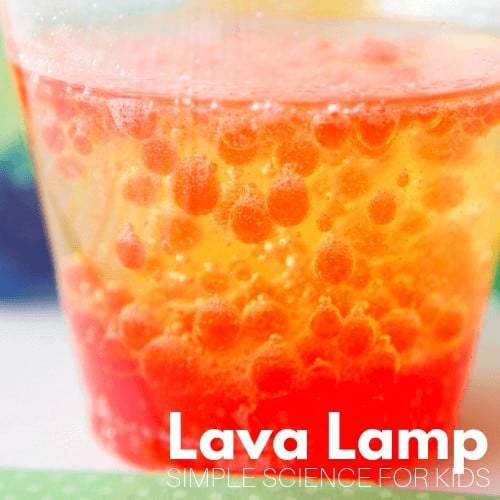
- Lava Lamp Science Experiment: Discover how density and temperature changes cause bubbles to rise and fall, just like a lava lamp!
- Liquid Density Tower: Layer or mix different liquids to observe how liquids with different densities either float or sink.


Helpful Science Resources
Here are a few resources that will help you introduce science more effectively to your kids or students and feel confident presenting materials. You’ll find helpful free printables throughout.
- Best Science Practices (as it relates to the scientific method)
- Science Vocabulary
- All About Scientists
- Free Science Worksheets
- DIY Science Kits
- Science Tools for Kids
- Scientific Method for Kids
- Citizen Science Guide
- Join us in the Club
- Printable Science Project Pack 👇