

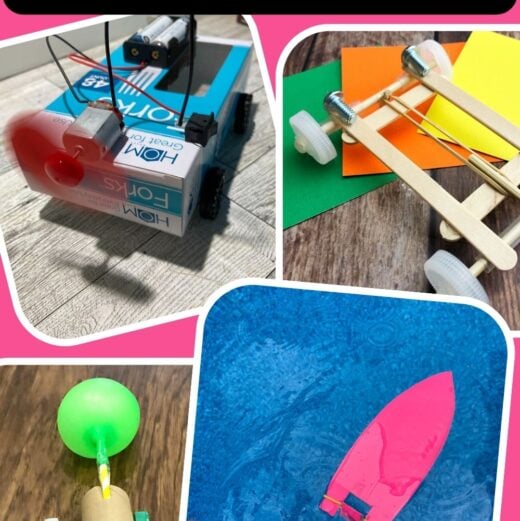
Looking for STEM challenges that move?
These self-propelled vehicle projects help kids explore force and motion through hands-on engineering. Build balloon-powered cars, rubber band racers, paddle boats, hovercrafts, and more while discovering how forces and energy create movement.
Whether you’re teaching a force and motion unit, exploring engineering design, or looking for engaging STEM activities, these projects are easy to set up and packed with opportunities for learning through play.
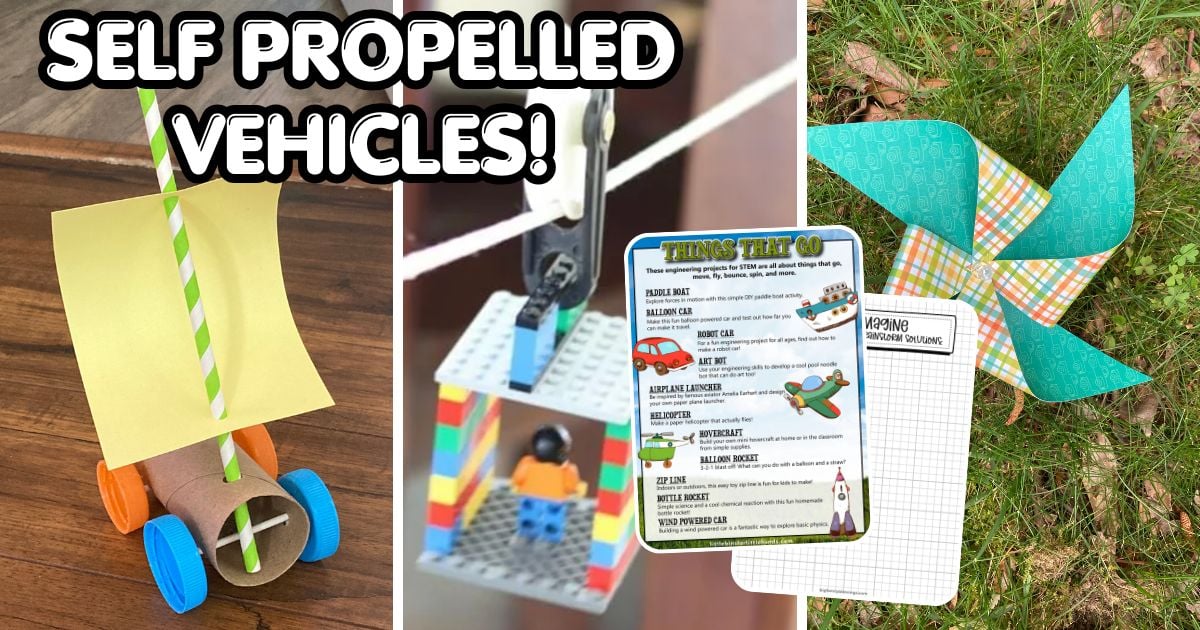
STEM Concepts Explored
- Science Topics: Force and Motion, Potential and Kinetic Energy, Engineering Design
- Grade Level: K–6
- Concepts Explored: Force and Motion, Pushes and Pulls, Potential and Kinetic Energy, Energy Transfer, Friction and Resistance, Gravity, Air Pressure, Engineering Design Process, Problem Solving
What Is a Self-Propelled Vehicle?
A self-propelled vehicle moves using its own source of energy rather than being pushed by hand.
Some vehicles use air pressure, while others rely on stored energy, wind, gravity, magnets, or motors to create movement.
These projects give kids a hands-on way to investigate how things move while exploring important science and engineering concepts.
Get Your Free Things That Go STEM Guide
Grab the Things That Go Guide also includes my favorite ideas plus Engineering Design Process journal pages to help kids plan, build, test, and improve their creations.
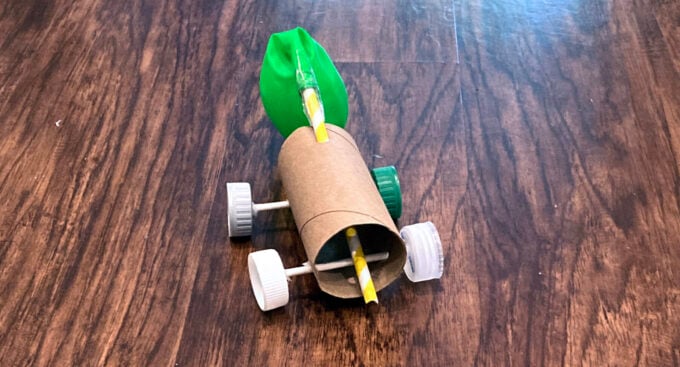
Balloon-Powered Vehicles
Balloon-powered vehicles are a fun introduction to force and motion. As air escapes from the balloon, it creates a force that pushes the vehicle forward.
Try These Activities
Kids can compare balloon sizes, vehicle designs, and distances traveled while exploring propulsion and energy transfer.
Rubber Band-Powered Vehicles
Rubber bands store potential energy. When released, that stored energy changes into kinetic energy and creates motion.
Try These Activities
These activities are a fantastic way to explore energy through hands-on engineering.
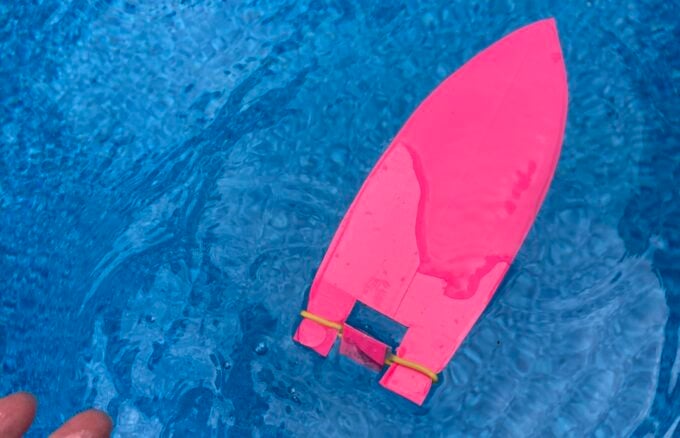
Wind and Air-Powered Vehicles
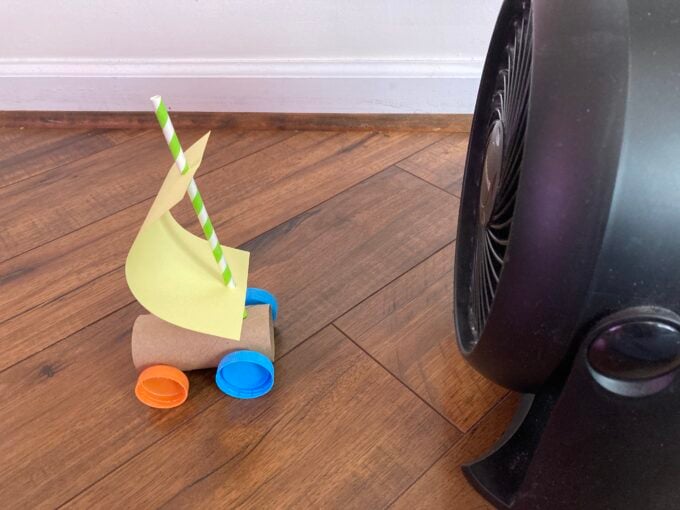
Can you use moving air to make something travel farther? These activities encourage kids to experiment with sails, lift, drag, and air resistance.
Try These Activities
Challenge kids to redesign their vehicles and compare results.
Gravity-Powered Motion
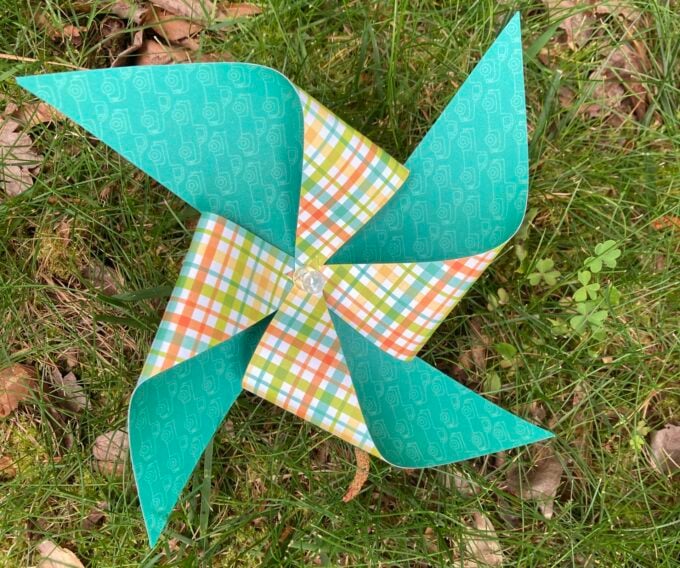
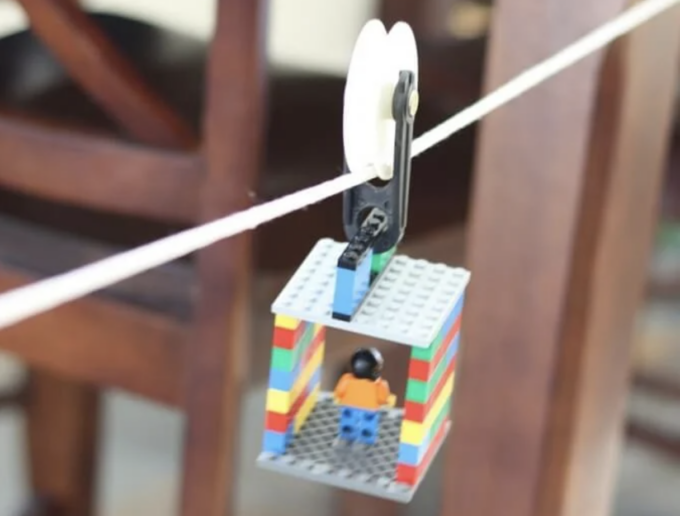
Gravity is one of the easiest forces for kids to observe. These activities use ramps and zip lines to investigate how gravity affects motion.
Try These Activities
Ask:
- Which design travels the farthest?
- Which design travels the fastest?
- What changes improve performance?
Magnet and Robot Vehicles
Not all vehicles rely on air or stored energy. These projects introduce magnets, motors, and robotics.
Try These Activities
Kids can explore different ways to create motion while developing engineering skills.
What Makes Things Move?
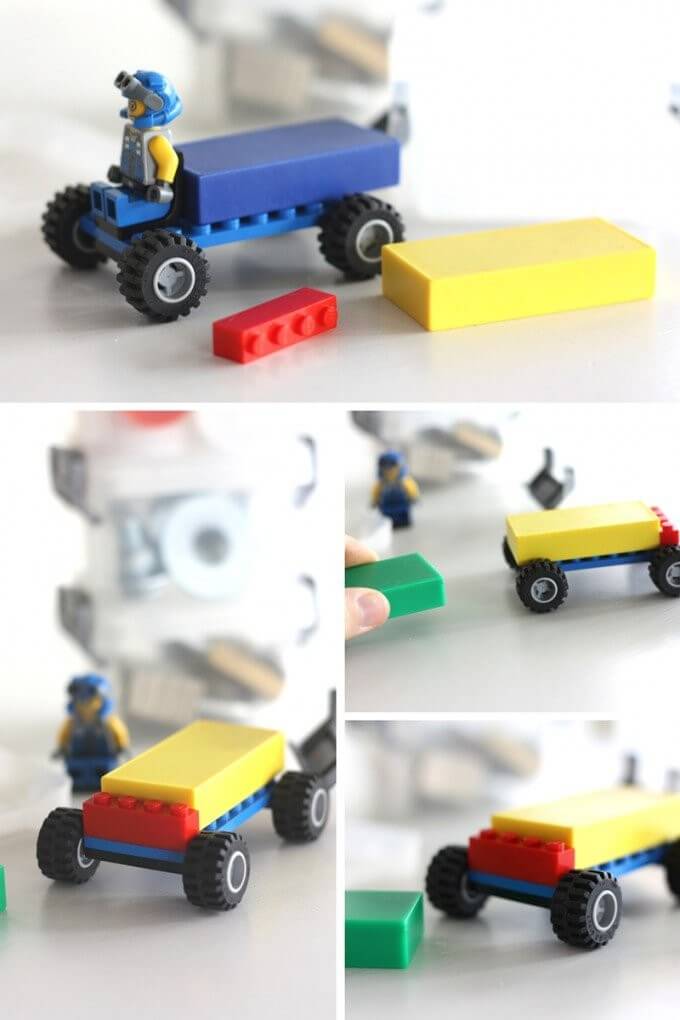
Every self-propelled vehicle uses a force to create motion.
Air Pressure: Balloon cars and balloon rockets move when escaping air pushes the vehicle forward.
Stored Energy: Rubber band vehicles use stored potential energy that changes into kinetic energy when released.
Wind: Wind-powered vehicles use moving air to create motion.
Gravity: Ramp cars and zip lines rely on gravity to move.
Magnets and Motors: Robot cars and magnet-powered vehicles use magnetic forces or electrical energy.
🔎 Understanding how these forces work helps kids build stronger designs and make better predictions.
Challenge Questions
Use these questions with any of the projects above:
- What force makes the vehicle move?
- Where does the vehicle get its energy?
- How can you make it travel farther?
- How can you make it move faster?
- What happens when you change one part of the design?
- What would you improve if you tested it again?
Think Like an Engineer
Use the Engineering Design Process with any of these STEM challenges.
- Ask – What problem are you trying to solve?
- Imagine – Brainstorm ideas.
- Plan – Draw your design.
- Create – Build it.
- Test – Does it work?
- Improve – Make changes and try again.
- Every test is a chance to learn something new.
Explore Force and Motion
Many self-propelled vehicles rely on pushes, pulls, friction, gravity, and other forces to create movement.
Continue learning with:
- Force and Motion Activities for Kids
- Force and Motion Worksheets (K-2)
- Push and Pull Activities
- Friction Experiments
- Move It! Investigation Labs
Explore Potential and Kinetic Energy
Many of these projects also demonstrate how stored energy becomes motion.
Continue exploring energy with:
- Potential and Kinetic Energy Activities for Kids
- Marble Roller Coaster
- Domino Chain Reaction
- Popsicle Stick Chain Reaction
- Marble Momentum Investigation
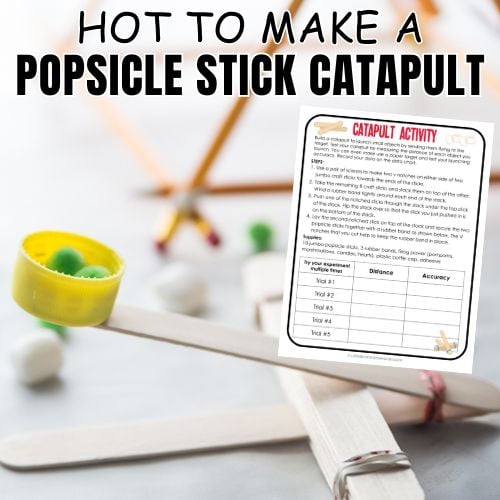
- Catapult Challenge
More Engineering Activities for Kids
Looking for even more STEM challenges and projects?
- Engineering Activities for Kids
- Outdoor STEM Activities
- LEGO STEM Challenges
- Simple Machine Projects
- Quick STEM Challenges for Kids
FAQ
What is a self-propelled vehicle?
A self-propelled vehicle moves using its own source of energy rather than being pushed by hand. Balloon-powered cars, rubber band cars, wind-powered vehicles, and robot cars are all examples.
What science concepts do self-propelled vehicles teach?
These projects explore force and motion, energy transfer, potential and kinetic energy, friction, gravity, air pressure, and engineering design.
What age are these STEM projects best for?
Most of these activities work well for ages 5–12 and can be adapted for younger or older learners.
Are self-propelled vehicles good STEM challenges?
Yes! Kids can test different designs, compare results, solve problems, and improve their vehicles through hands-on engineering.
What is the easiest self-propelled vehicle to make?
Balloon-powered cars and balloon rockets are usually the easiest projects for beginners because they require only a few simple materials.
What is the best LEGO vehicle project for beginners?
The LEGO Car Ramp Challenge, LEGO Balloon Car, and LEGO Rubber Band Car are all excellent beginner-friendly LEGO STEM activities.
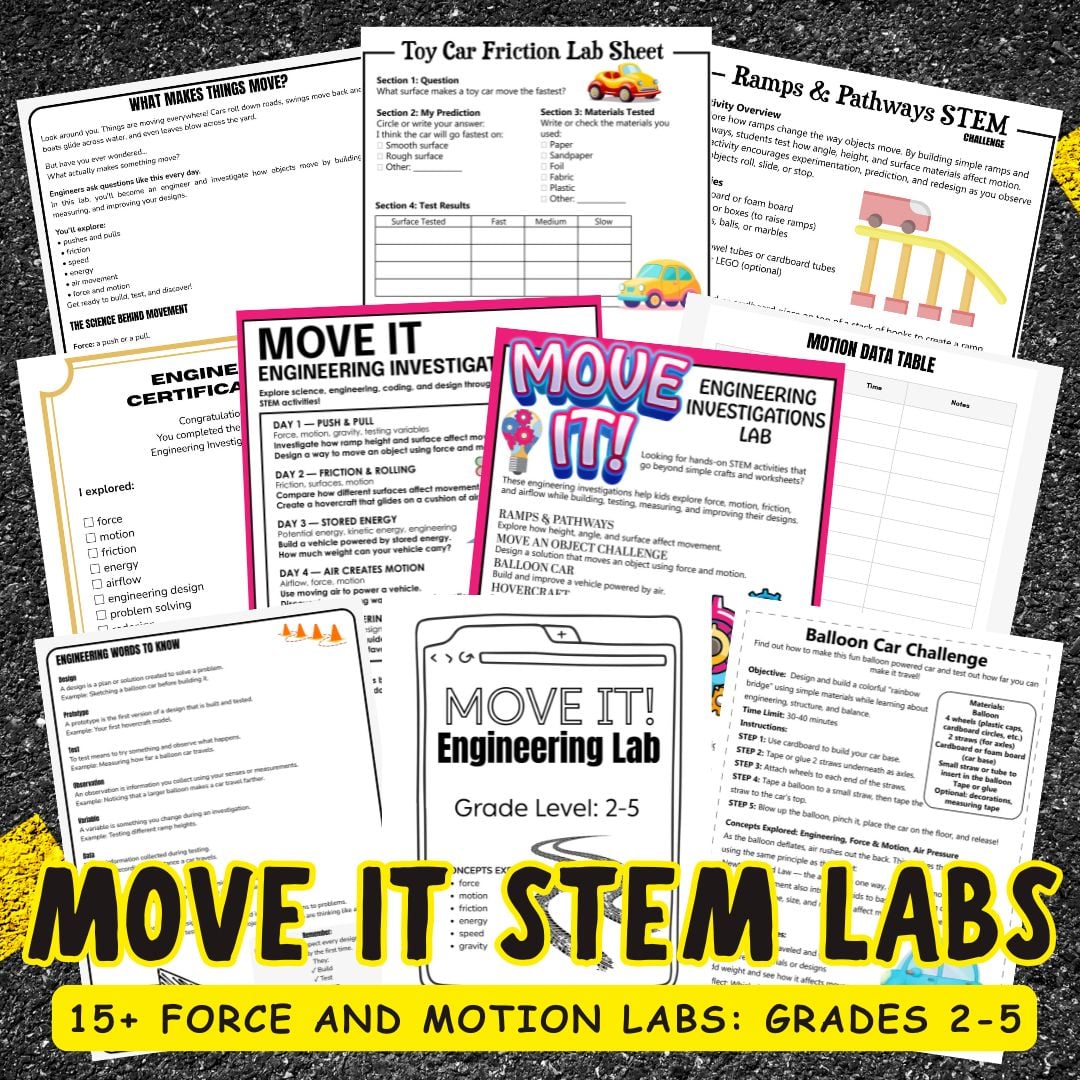
Move It! Engineering Investigations Lab
Help kids explore force, motion, friction, airflow, and energy through hands-on engineering challenges that encourage them to build, test, measure, and improve designs.
✔ Engineering investigations that go beyond worksheets
✔ 5-day STEM plan included
✔ Engineering notebook and planning pages
✔ Build, test, redesign, and improve challenges
✔ Grades 2–5
👉 Get the Complete Lab




Awesome post! 🙂 Thanks for sharing some of my ideas!