

Christmas Science Experiments for Kids
Explore dissolving, chemical reactions, magnetism, electricity, and motion with these Christmas science experiments for kids! Use candy canes, ice, ornaments, and everyday supplies for hands-on holiday investigations at home or school.
Field: Science
Grades: Preschool–6, depending on the activity
Concepts: Material properties, dissolving, chemical reactions, crystals, forces, and circuits
Easy Christmas Science Experiments
Start with familiar materials and a simple question. Encourage children to predict what will happen, observe closely, and describe their results.
Dissolving Candy Canes
Compare how quickly matching candy canes dissolve in different temperatures of water. Keep the candy cane size and water amount the same so you can test temperature.
Explore: Dissolving and temperature.
Ask: Which candy cane dissolves faster? What happens to the stripes and water?
👉 Try the Dissolving Candy Canes Experiment.

Magnetic Christmas Ornaments
Predict which ornaments and everyday objects a magnet will attract, then test and sort them. Choose sturdy, unbreakable objects and use magnets under adult supervision.
Explore: Magnetism and material properties.
Ask: Are all metal objects attracted to your magnet?
👉 Try Magnetic Christmas Ornaments.
Santa’s Frozen Hands Ice Experiment
Investigate ways to melt holiday-themed ice. Compare similar ice pieces and change one condition at a time, following the methods in the activity.
Explore: Melting and changes of state.
Ask: What helps the ice melt faster? How can you compare the results?
👉 Try Santa’s Frozen Hands Ice Experiment.
Christmas Skittles Experiment
Arrange Christmas-colored candies on a plate, add water, and watch the sugar and coloring dissolve and spread into patterns.
Explore: Dissolving and how the dissolved color moves.
Ask: Where does the color appear first? What changes when you rearrange the candies?
👉 Try the Christmas Skittles Experiment.

Santa’s Magic Milk
Add food coloring to milk, then touch the surface with a cotton swab dipped in dish soap. The coloring makes movement visible as the soap changes surface tension and interacts with the milk.
Explore: Surface tension and the effects of soap.
Ask: What happens before and after adding soap?
Peppermint Oobleck
Mix cornstarch and water to explore a material that flows when handled gently but resists sudden pressure. Try the peppermint variation for a holiday twist.
Explore: Non-Newtonian fluid behavior.
Ask: What happens when you squeeze the mixture, then relax your hand?
Christmas Chemistry & Materials
Fizzing Christmas Trees
Make baking soda trees and add vinegar to produce a fizzing reaction. The bubbles contain carbon dioxide gas.
Although the trees break apart, they are not melting from heat.
Explore: Chemical reactions and gas formation.
Ask: What happens where the vinegar touches the tree?
👉 Make Fizzing Christmas Trees.

Fizzing Gingerbread Experiment
Investigate how baking powder reacts with liquids. This gingerbread-themed activity connects to the gas bubbles that help baked goods rise.
Explore: Gas-producing reactions.
Ask: Which mixture produces bubbles? How do the results compare?
👉 Try the Fizzing Gingerbread Experiment.
Bioplastic Christmas Ornaments
Make a starch-based material and shape it into ornaments. Observe how the mixture changes during preparation and how its texture changes as it dries. Adults handle the heating step.
Explore: Starch-based materials and drying.
Ask: How does the dried ornament compare with the freshly made mixture?
👉 Make Bioplastic Christmas Ornaments.
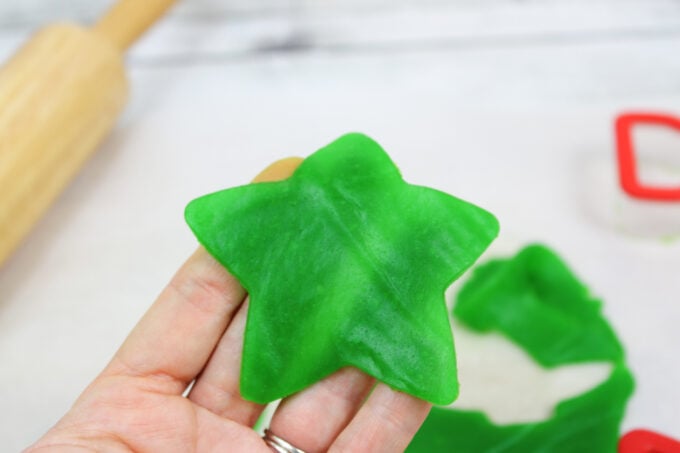
Milk Plastic Ornaments
Add vinegar to warm milk to separate casein protein into curds. Shape the collected material and let it dry to create an ornament.
Compare this project with the starch-based ornaments above to explore two different ways of making materials.
Explore: Proteins, acids, and material properties.
Ask: What changes when vinegar is added? How does the material feel before and after drying?
👉 Make Milk Plastic Ornaments.
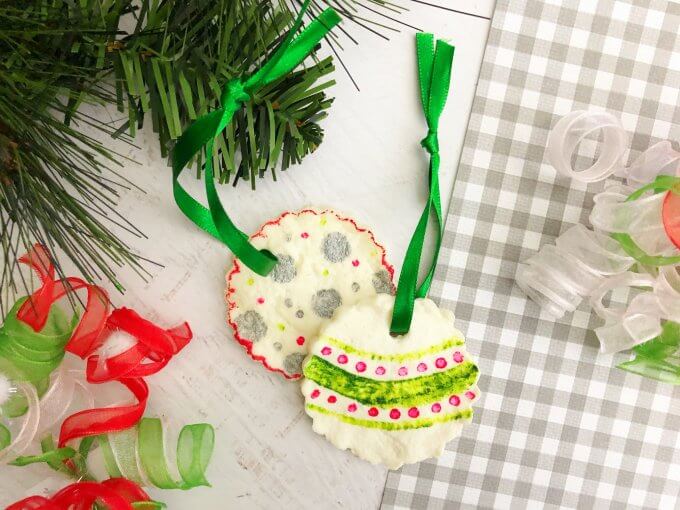
Christmas Slime
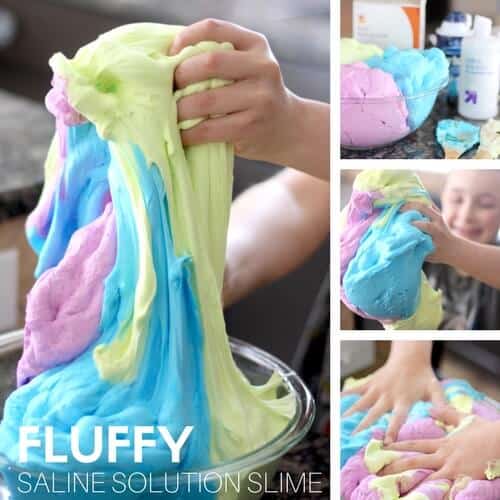
Choose a Christmas slime recipe and investigate its stretchy behavior. Try pulling slowly and quickly, then compare what happens.
Slime is not edible. Follow the recipe’s handling directions and supervise children.
Explore: Polymers and material properties.
Ask: Does slime behave differently when you stretch it slowly?
👉 Explore Christmas Slime Recipes.
Christmas Crystal-Growing Experiments
Salt Crystal Gingerbread Ornaments
Grow salt crystals on a gingerbread-shaped base. Observe the project over several days as water evaporates and crystals form.
Explore: Solutions, evaporation, and crystallization.
Ask: Where do crystals appear first? What changes each day?
👉 Grow Salt Crystal Gingerbread Ornaments.
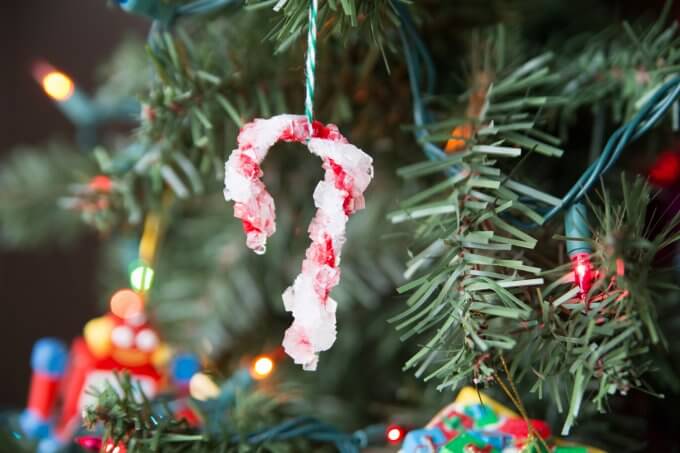
Crystal Candy Canes
Grow crystals on candy-cane-shaped pipe cleaners using the borax solution described in the activity. Adults prepare the hot solution and handle the borax. Finished ornaments are not edible.
Explore: Solutions and crystal growth.
Ask: How does the pipe cleaner change as crystals grow?
💡 Try another shape: Make crystal snowflakes or crystal gingerbread ornaments. Want more decorations to make? Explore our Christmas Science Ornaments collection.
Christmas Electricity, Forces & Motion
Light-Up Christmas Circuit Ornaments
Build a circuit ornament using an LED and battery. Test the connections to find out what is needed for the light to turn on.
This project suits upper elementary children with adult help. Adults should control and secure small batteries.
Explore: Complete circuits and electrical connections.
Ask: What happens when the circuit has a gap?
👉 Make Light-Up Christmas Circuit Ornaments.

Santa’s Balloon Rocket
Attach a paper Santa or sleigh to a balloon rocket and send it along a string. Air escaping from the balloon pushes it in the opposite direction.
Explore: Forces and motion.
Ask: How does changing the amount of air affect the rocket’s journey?
👉 Make Santa’s Balloon Rocket.

Reindeer Straw Rocket
Make a paper reindeer rocket and launch it with a straw. Air pushed through the straw launches the rocket.
Mark where it lands and repeat your test. Keep the launch angle similar when comparing changes, and aim away from people.
Explore: Air pressure, forces, and motion.
Ask: How consistently can your rocket land near the same spot?
👉 Make a Reindeer Straw Rocket.

Christmas Catapult
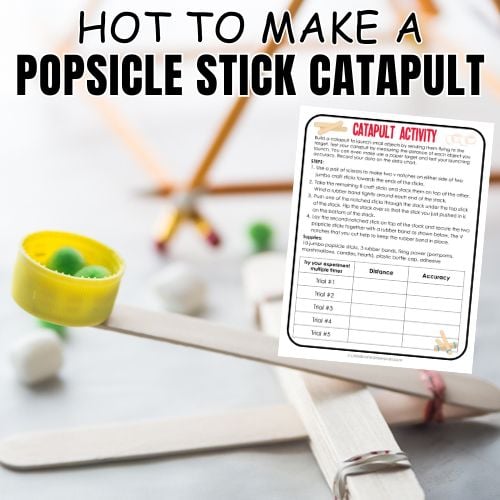
Build a craft-stick catapult and launch soft pom poms toward a target. Change one feature at a time and compare how far they travel.
Explore: Stored energy, forces, and motion.
Ask: How does pulling the launching arm back farther change the launch?

Jumping Tinsel
Use a balloon to explore static electricity and make lightweight tinsel move without touching it.
Keep loose tinsel and balloons away from children who may put them in their mouths.
Explore: Static electricity.
Ask: How close does the balloon need to be for the tinsel to move?
👉 Try the Jumping Tinsel Experiment.
Reindeer Toothpaste
Make a foamy eruption with a festive reindeer twist! Watch as oxygen gas gets trapped in dish soap, creating a growing pile of bubbles.
Explore: Chemical reactions and gases.
Ask: What changes do you notice when you add the yeast mixture?

Erupting Christmas Ornaments
Set open plastic ornaments in a tray and create bubbling eruptions with baking soda and vinegar. Compare what happens when you change the amount of vinegar.
Explore: Chemical reactions and gas production.
Ask: How does changing the amount of vinegar affect the eruption?
👉 Make Erupting Christmas Ornaments.
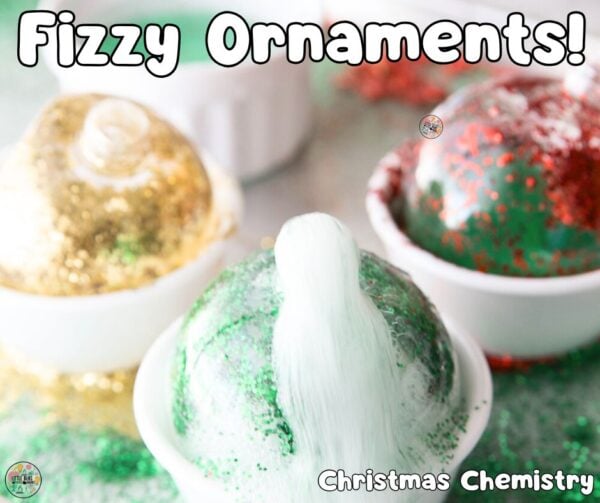
Christmas Five Senses Activity
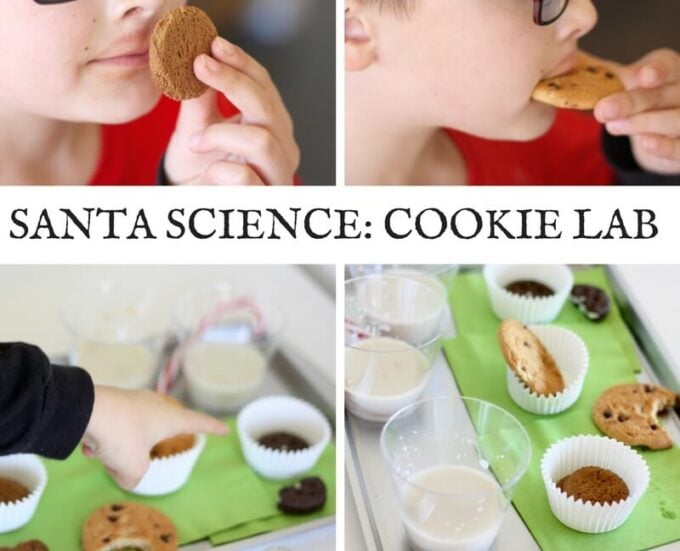
Gather jingle bells, cinnamon sticks, evergreen sprigs, colorful bows, and a familiar holiday treat. Use your senses to explore and describe each item.
Explore: The five senses and observation.
Ask: Which items can you explore with more than one sense?
👉 Christmas 5 Senses Investigation for Kids.
Bending Candy Canes
With adult help, gently warm candy canes and bend them into curves or circles. Compare their flexibility before warming and after cooling.
Explore: Temperature and changes in material properties.
Ask: How does warming a candy cane change how easily it bends?

Hot Cocoa States of Matter
Use a cozy cup of cocoa to explore states of matter. Identify solid marshmallows, liquid cocoa, and water vapor—the gas form of water—then sort and label the printable pictures.
Explore: Solids, liquids, and gases.
Ask: What other solids and liquids can you find around the kitchen?
👉 Explore Hot Cocoa States of Matter.

Christmas Science by Grade Level
Preschool and kindergarten: Start with senses, magnets, dissolving candy canes, or ice. Demonstrate the steps and observe together.
Grades 1–3: Add simple comparisons and recording sheets. Discuss what changed and what stayed the same.
Grades 4–6: Include measurements, repeated trials, materials investigations, and circuits. Ask children to support their explanations with observations.
Frequently Asked Questions
Which Christmas science experiment should we try first?
Dissolving candy canes is a useful starting point because it uses familiar materials and offers a clear comparison.
Do these activities need special equipment?
Many use everyday supplies. Circuit, crystal, and bioplastic projects need additional materials and adult preparation.
Can we make a Christmas science countdown?
Yes. Choose a few investigations to spread across December, allowing extra days for crystal growth and drying.
Get the Christmas STEM Project Pack
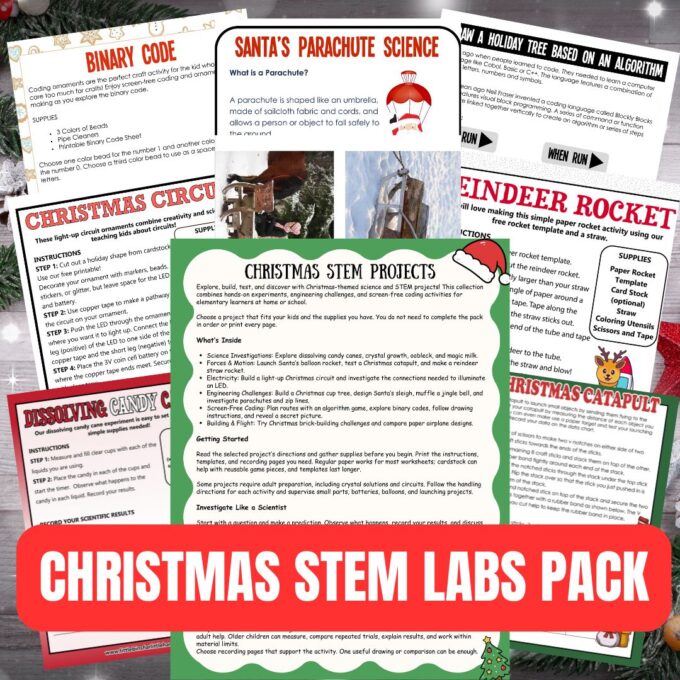
Want a collection of holiday projects with directions and supporting printables? Explore our paid Christmas STEM Project Pack for Christmas-themed science investigations and STEM challenges.
Choose projects for your classroom or home and print the pages you need.
Explore the Christmas STEM Project Pack.
More to Explore
Christmas STEM Activities | Christmas Science Ornaments | Christmas Math Activities | Christmas Art Projects | LEGO Advent Calendar Ideas

Can you use anything in place of the Borax? I work in a elementary autism room and some of our students are very oral. They put their hands in their mouths quite often. I would love to make the crystal ornaments with them.
Check out our salt crystal activities instead. You could make paper candy cane cutouts. These will at least be taste-safe.
https://littlebinsforlittlehands.com/growing-salt-crystal-hearts-valentines-day/
These ideas are so much fun! Now to decide which one to try first! 🙂
Awesome!
Christmas tree slime…just the name alone makes me want to try this one!