
Simple science and a cool chemical reaction with this fun homemade bottle rocket! Kids and adults will have a blast with this easy-to-set-up STEM project. Grab a few simple ingredients from the kitchen for amazing chemistry in action. This is one science demonstration you are going to want to take outside!

How To Make A Bottle Rocket
Looking for more fun things to make? Check out all these fun engineering projects for kids.
Supplies:
- Rocket Template (see below)
- Scissors
- Tape
- Paper straws
- 1 liter plastic bottles
- Wine cork
- Paper towel
- Baking Soda
- Vinegar
- Funnel
Instructions for Baking Soda Rocket:
STEP 1: Print out your rocket template and use scissors to cut out.
STEP 2: Tape four straws to the top of your bottle so it will stand up on its own.

Tape the rocket printable to the bottle.
💡 Note: If you want to design rocket accessories, make sure to keep the nose cone and fins lightweight

STEP 3: Pour a cup of vinegar into the bottle.

STEP 4: Add 2 tablespoons of baking soda into half a paper towel and fold it into a small tube.


STEP 5: Place your rocket on the launch pad (you should take this step outside if possible). Look for a flat surface for a successful launch!
💡 QUICKLY add the paper towel to the bottle and seal with the cork. Flip the bottle over and stand it up, then stand back!!
Adult supervision is required for this step!


Up, up, and away! How high can you get your bottle rocket to go?


How Does A Bottle Rocket Work?
This chemical reaction occurs because an acid {the vinegar} mixes with a base {baking soda}. When you add baking soda to the vinegar and the two combine a chemical reaction occurs and gas is created. The gas is called carbon dioxide. It is the gas that produces the fizzing eruption.
The water bottle’s narrow opening helps shoot the eruption higher because the gas is easily forced out.
💡 Learn more about acids and bases, and chemical changes.
Newton’s Three Laws of Motion Applied
Demonstrate science in action with cause and effect, force, and motion!
In this bottle rocket experiment, students can learn about Newton’s Three Laws of Motion in a fun and hands-on way!
First, Newton’s First Law says that an object at rest stays at rest unless something pushes or pulls it. The bottle stays still until the reaction between the baking soda and vinegar creates gas, which pushes it.
Next, Newton’s Second Law explains that force equals mass times acceleration (F=ma). The more gas that builds up, the greater the force pushing the bottle rocket up.
Finally, Newton’s Third Law shows that for every action, there is an equal and opposite reaction. As the gas pushes down, the bottle rocket shoots up into the air!
Apply the Scientific Method
To incorporate the scientific method into a bottle rocket project, begin by posing a clear question, such as, “How does the amount of baking soda affect the rocket’s flight distance?”
Next, formulate a hypothesis: “If I increase the amount of baking soda, then the rocket will fly higher.”
Plan and conduct an experiment in which you vary the amount of baking soda and vinegar used while keeping other factors constant.
Collect data on the flight height for each trial. Analyze the results to determine if they support your hypothesis.
Finally, conclude whether your hypothesis was correct and reflect on what you learned from the experiment.
Note: The use of the best Science and Engineering Practices is also relevant to the topic of using the scientific method. Read more here and see if it fits your science planning needs.
Learn More Here…
More Fun Exploding Experiments
Why not try one of these fun and easy science experiments below!
Similar to our bottle rocket above, make a rocket with alka seltzer tablets.
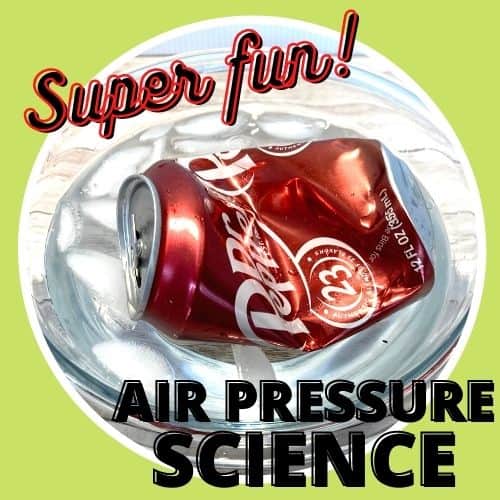
Crush a soda can with this air pressure can experiment.
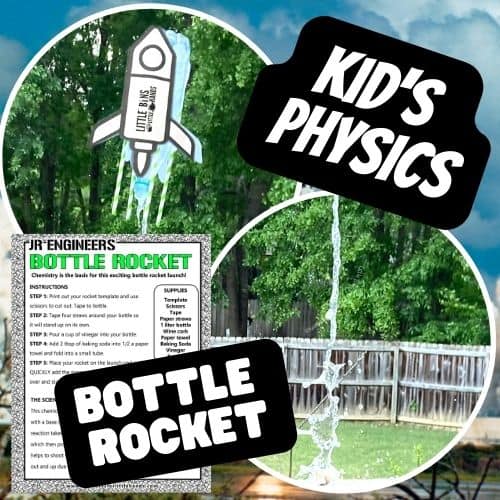
Create a thrilling rocket launch with a soda bottle, water and air pressure.
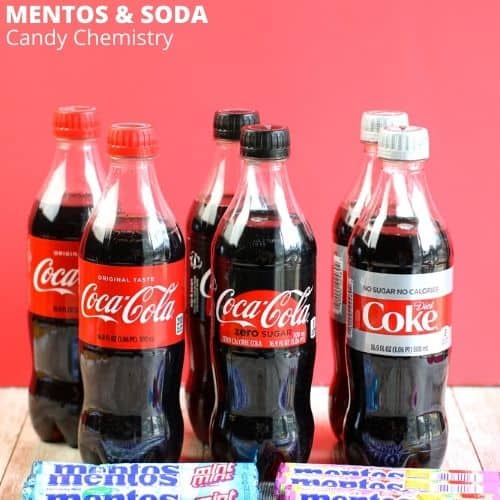
Watch what happens when you add mentos to soda.
This has to be the best baking soda and vinegar reaction!


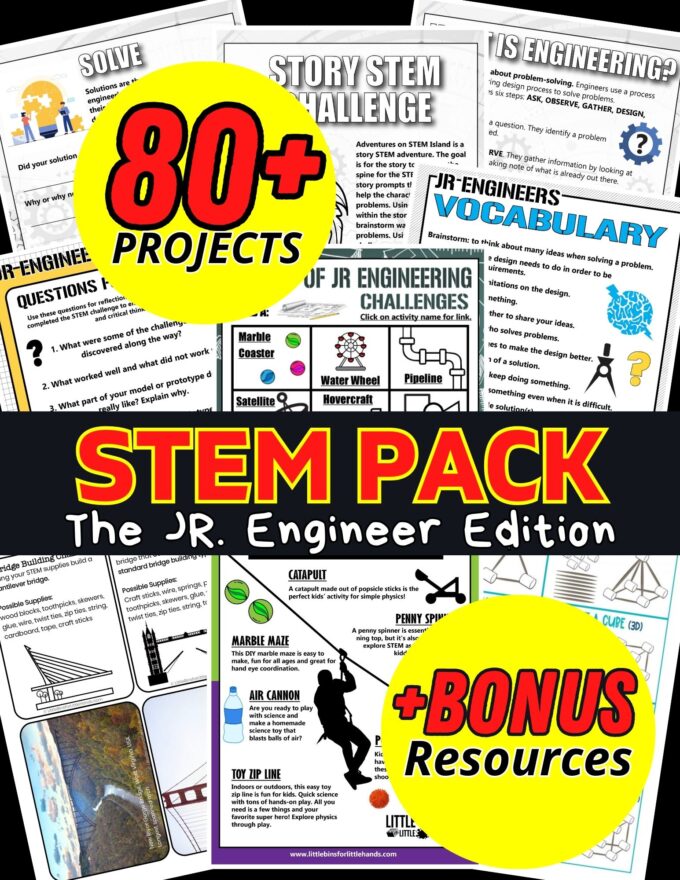
Printable STEM Pack for Kids
80+ Doable Engineering Projects in one convenient pack!
- Full instructions with sample images
- Activity-specific instruction sheets
- Data Collection Sheets
- Questions for Reflection
- Architecture Building Cards: Try the tallest tower challenge
- Bridge Building Cards: Explore different types of bridges to build your own.
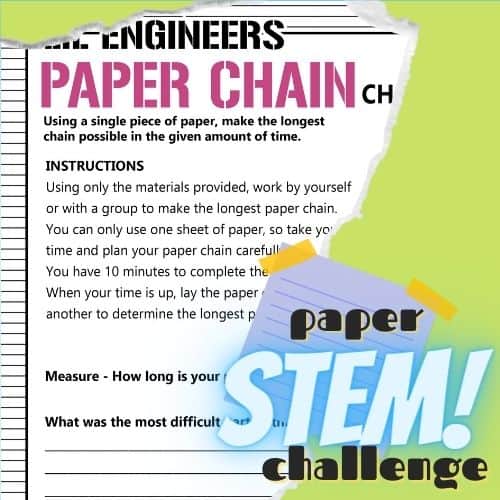
- Paper Chain STEM Challenge: Who can make the longest chain? Great icebreaker or quick challenge!
- 3 Little Pigs Architectural Pack: Design a house that won’t blow away!
- Great marshmallow challenge: A classic challenge kids love!
- Real-world STEM challenge lesson but don’t know where to start? Our easy-to-follow template shows the steps!
- What’s the difference between a scientist and an engineer?
- Crossword and word search with engineering vocabulary.
- Engineering vocabulary cards
- Design a one-of-a-kind invention and write about it with this 5-page activity!