
Acids and bases are everywhere! From the vinegar in your kitchen to the baking soda in your pantry, these everyday substances help kids discover one of chemistry’s most exciting ideas—how substances react and change.
Below you’ll find a free printable pH scale chart, an easy explanation of acids and bases, and our favorite hands-on acid-base experiments for kids. These simple chemistry activities are perfect for home or the classroom and use easy-to-find household supplies.
- Best for: Grades K–5 (with adult assistance for younger learners)
- Field of Science: Chemistry
Try These Acid and Base Experiments
One of the best ways to understand acids and bases is by watching them react! These easy chemistry activities introduce kids to bubbling, fizzing, color changes, and other exciting chemical reactions.
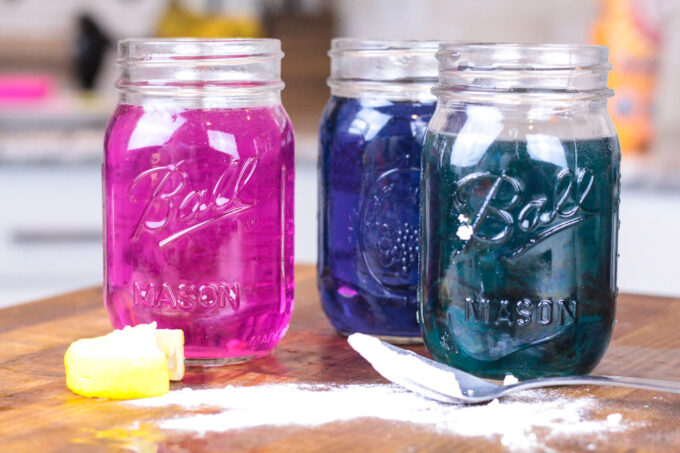
Red Cabbage pH Indicator
Create your own natural pH indicator and test household liquids to determine which are acids, bases, or neutral.
Balloon Chemical Reaction
Inflate a balloon without blowing into it by combining baking soda and vinegar.
Baking Soda Volcano
A classic chemistry experiment that demonstrates an acid-base reaction with an exciting eruption.
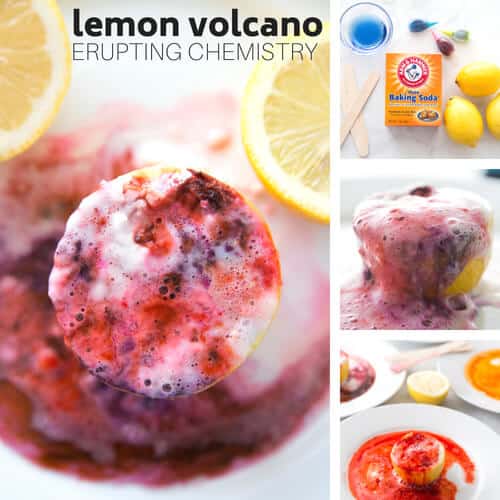
Lemon Volcano
Use fresh lemons instead of vinegar to create a colorful fizzing volcano.

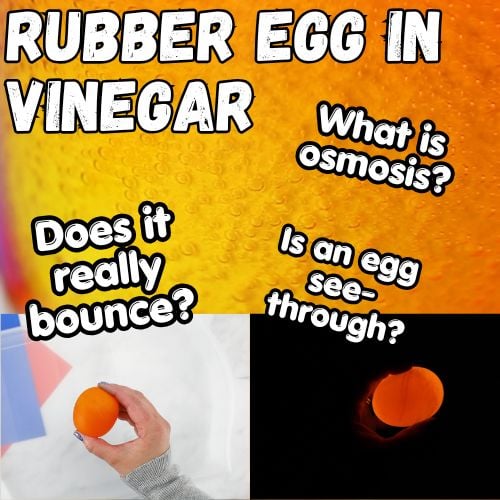
Egg in Vinegar Experiment
Watch an eggshell dissolve as vinegar reacts with the calcium carbonate shell.
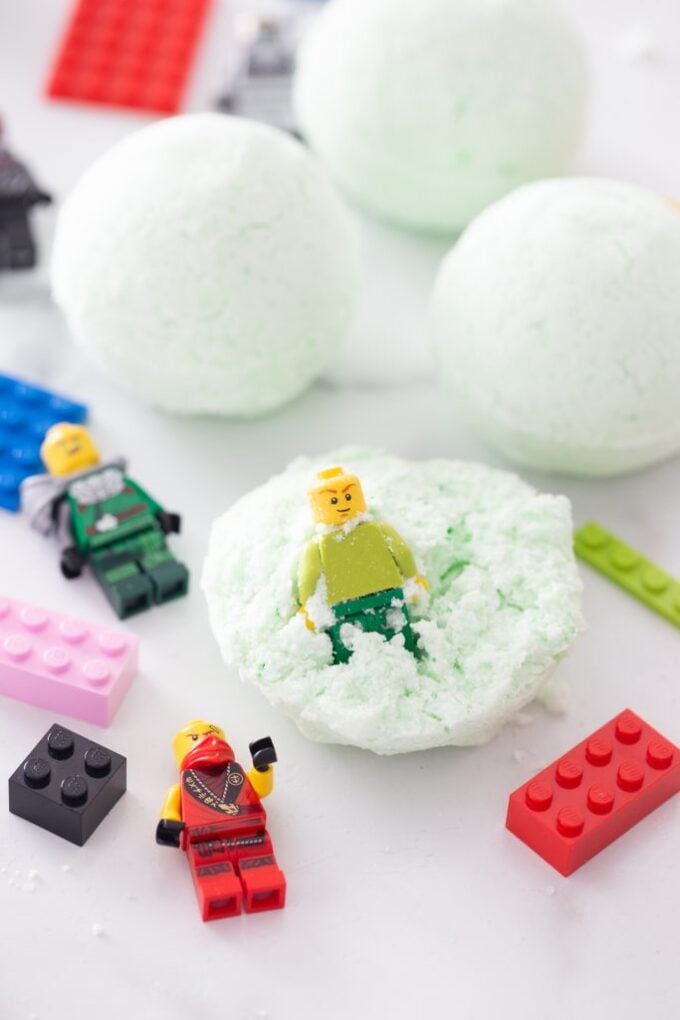
Bath Bomb Science
Discover how citric acid and baking soda react when water is added.
👉 Looking for even more chemistry activities? Explore our complete collection of Chemistry Experiments for Kids.
What Are Acids and Bases?
Acids and bases are two groups of substances that react differently when mixed with other materials.
🔎 Acids have a pH lower than 7. Common examples include:
- Lemon juice
- Vinegar
- Orange juice
- Cranberry juice
🔎 Bases have a pH higher than 7. Common examples include:
- Baking soda
- Soap
- Toothpaste
- Household ammonia
Neutral substances have a pH of 7. Pure water is the best-known example of a neutral substance.
What Is the pH Scale?
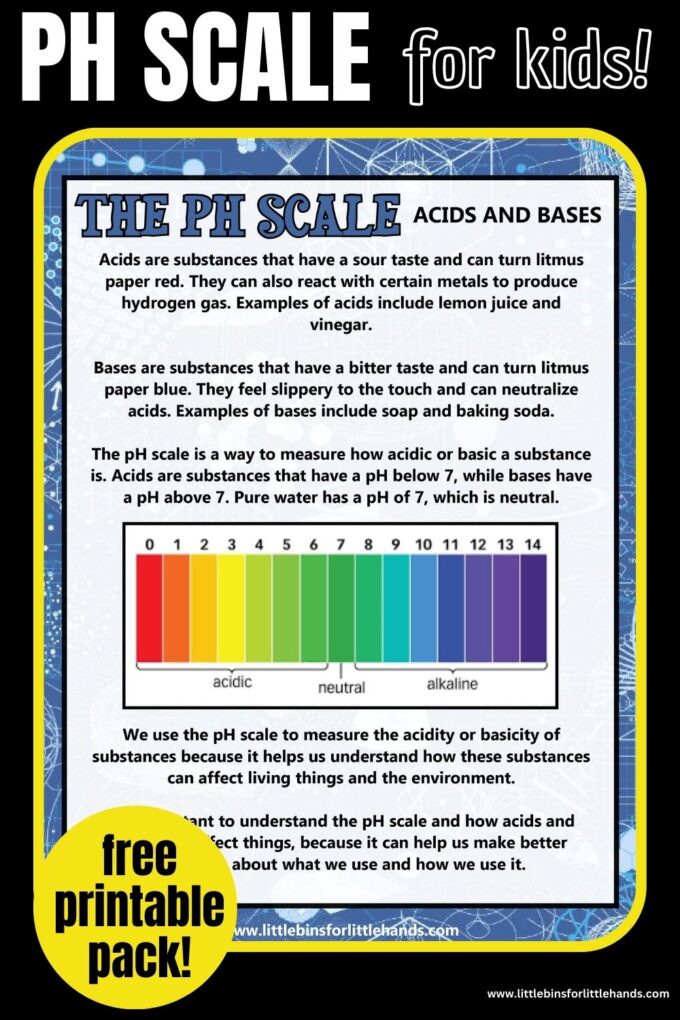
The pH scale is a tool scientists use to measure how acidic or basic a substance is.
The scale ranges from 0 to 14.
- 0–6: Acidic
- 7: Neutral
- 8–14: Basic (alkaline)
The farther a substance is from 7, the stronger its acidity or basicity. Use our printable pH scale chart below as a quick classroom or homeschool reference.
Free Chemistry Printable
Ready to explore more chemistry?
Download our Chemistry Quick Start Guide featuring printable investigation pages, science vocabulary, and simple chemistry activities that help kids think like scientists.
Everyday Examples of Acids and Bases
| Acid | Neutral | Base |
|---|---|---|
| Lemon juice | Water | Baking soda |
| Vinegar | Milk | Soap |
| Orange juice | Salt water | Toothpaste |
| Tomato juice | Ammonia |
Comparing familiar household items helps children connect chemistry concepts to everyday life.
What Happens When Acids and Bases React?
When an acid and a base are combined, a chemical reaction occurs.
One of the easiest examples is vinegar and baking soda.
As the two substances react:
- carbon dioxide gas is produced
- bubbles and fizz appear
- new substances form
- the reaction cannot easily be reversed
Many of our favorite chemistry experiments—including balloons, volcanoes, and bottle rockets—work because of this acid-base reaction.
👉 Want to learn more about why baking soda and vinegar fizz? Visit our Chemical Reactions for Kids guide.
What Kids Learn
Hands-on acid-base experiments help kids:
- identify acids, bases, and neutral substances
- use a pH scale
- recognize evidence of chemical reactions
- make predictions
- record observations
- compare results
- ask scientific questions
These investigations encourage curiosity while introducing important chemistry vocabulary and scientific thinking.
How to Test pH at Home
Testing pH is easier than you might think.
One of our favorite activities uses red cabbage to create a natural pH indicator. The cabbage juice changes color depending on whether the liquid is acidic, neutral, or basic.
Kids love comparing the colors of common household liquids while learning how scientists measure pH.
👉 Try our Red Cabbage Indicator experiment.
Frequently Asked Questions
What is an acid? An acid is a substance with a pH below 7. Common household acids include vinegar, lemon juice, and many fruit juices.
What is a base? A base is a substance with a pH above 7. Baking soda, soap, toothpaste, and household ammonia are common examples.
What does pH mean? pH measures how acidic or basic a substance is using a scale from 0 to 14.
Is baking soda an acid or a base? Baking soda is a mild base. When mixed with an acid like vinegar, it produces carbon dioxide gas, creating the familiar fizzing reaction.
Why do baking soda and vinegar fizz? The bubbling is carbon dioxide gas produced during a chemical reaction between an acid and a base.
Can kids safely test pH at home? Yes! Many simple pH investigations use common kitchen ingredients such as vinegar, baking soda, lemon juice, and red cabbage. Adult supervision is recommended whenever experimenting with household materials.
Explore More Kitchen Chemistry
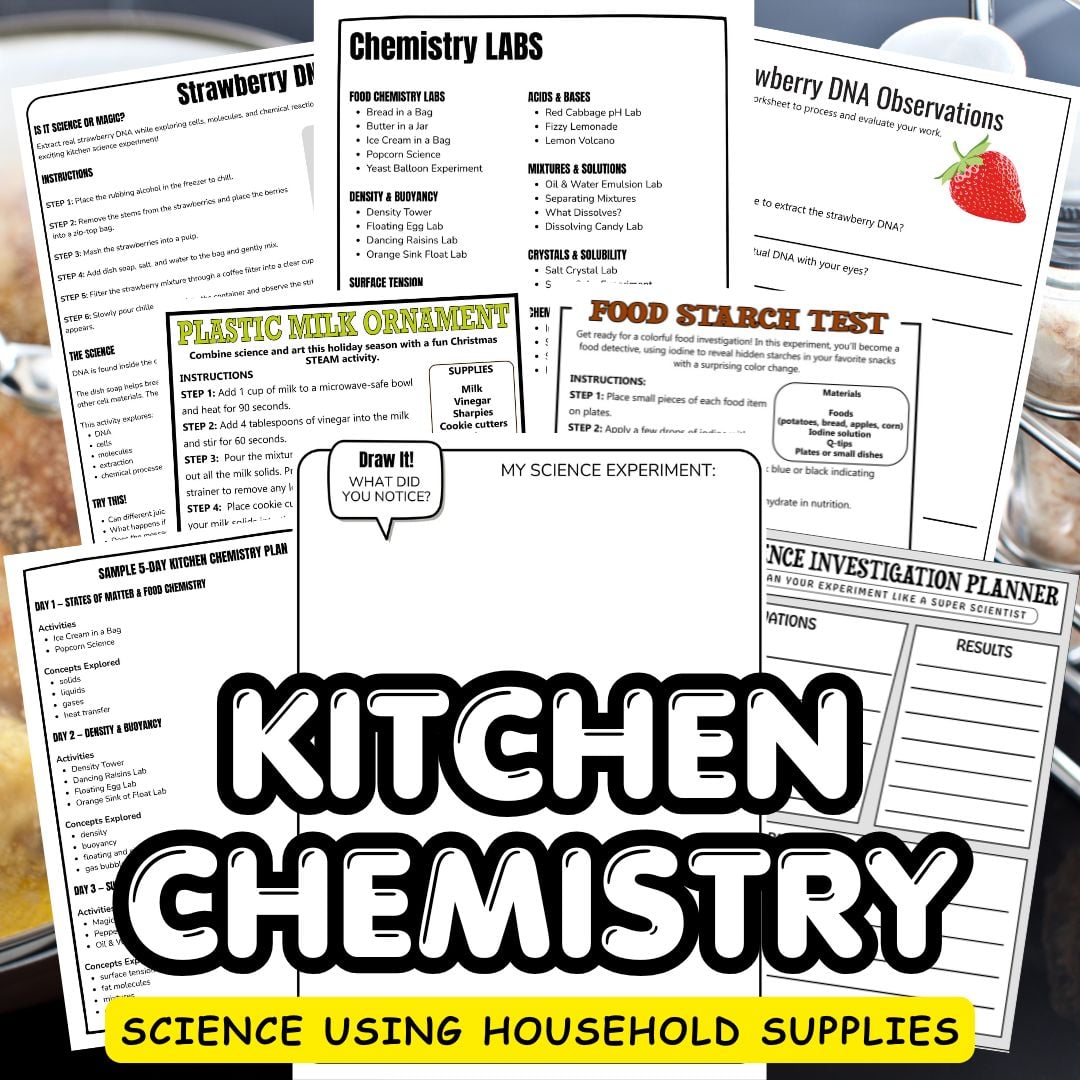
Continue the fun with our Kitchen Chemistry Pack featuring printable experiments, reusable investigation pages, science explanations, and easy hands-on activities using everyday kitchen supplies.
Perfect for home or classroom science with activities focused on:
reactions, mixtures, crystals, surface tension, polymers, and color-changing chemistry.
More Chemistry Activities for Kids
Continue exploring chemistry with these favorite resources: