

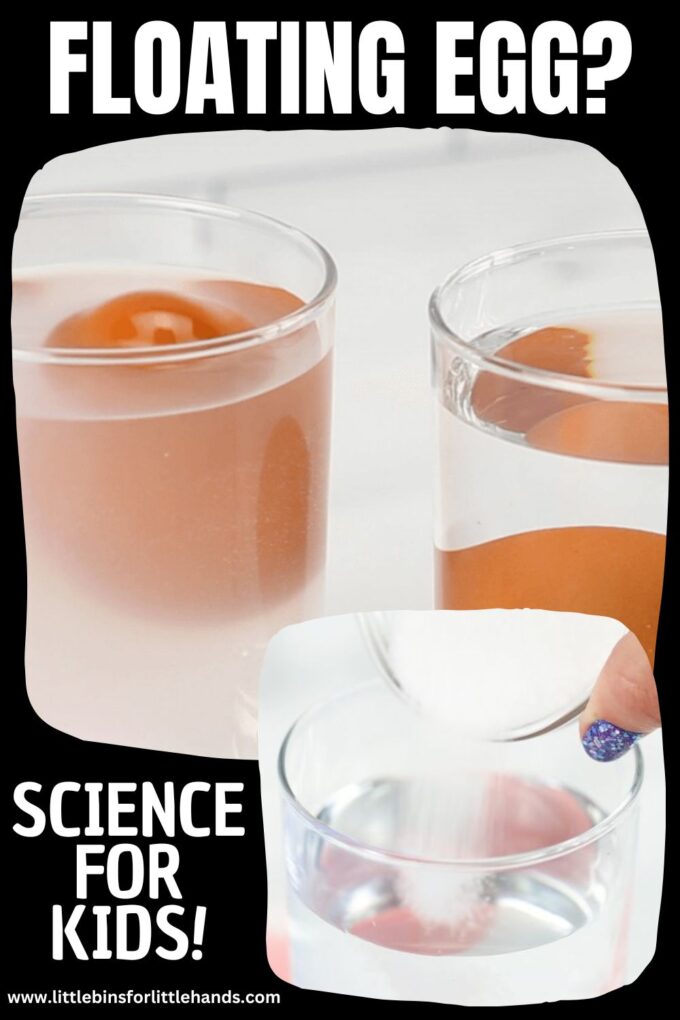
Can you make a fresh egg float in water? Will an egg float or sink in salt water? What is density? What is buoyancy? Answer these questions with this easy floating egg salt water experiment. Check out all our classic science experiments for more great ideas!
Salt Water Density Experiment
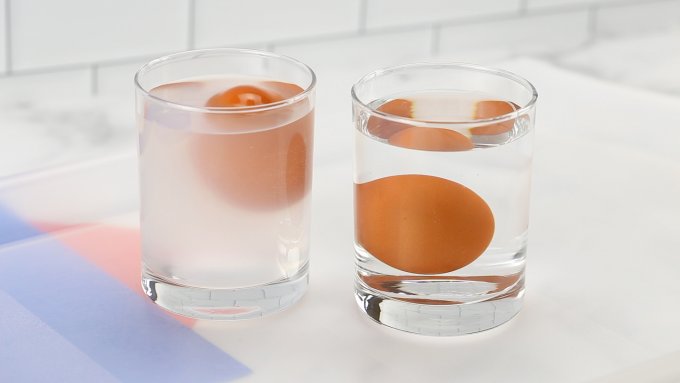
Do eggs sink or float? Depending on their freshness, eggs can either sink or float. A fresh egg sinks to the bottom of a water container.
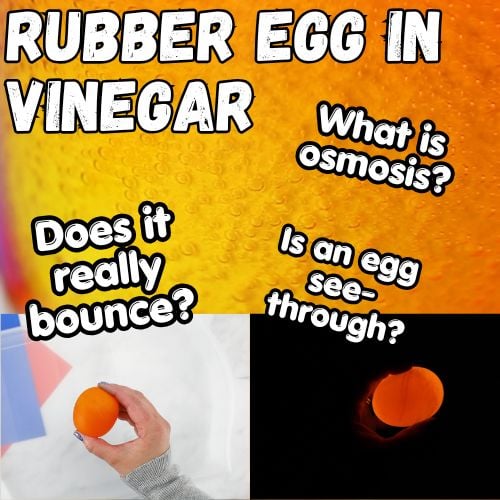
However, eggs have air pockets that grow bigger with age, making them more buoyant. A less fresh egg may still sink but tilt upward, while a very old egg will float due to the larger air pocket inside. If you are curious about the rubber egg experiment in the video, click here.
Recommended Grade Level: 1st-5th Grades
For younger students (grades 1-2), the experiment introduces basic concepts like buoyancy and density in a simple, visual way. They can observe how adding salt changes the water’s properties, making objects that normally sink, like an egg, float.
For older students (grades 3-5), you can dive deeper into scientific explanations, including why salt increases the water’s density and how that affects buoyancy. They can also explore variables such as how much salt is needed to make the egg float or try comparing the results with other liquids.
Supplies:
- 2 Tall glasses big enough to hold an egg
- Warm water (Tap water is fine)
- Table Salt
- Spoon
Floating Egg Experiment Set Up
STEP 1: Start by filling one glass about 2/3 the way full. Ask the kids what will happen if you carefully drop an egg into the glass of water. Now go ahead and do it!
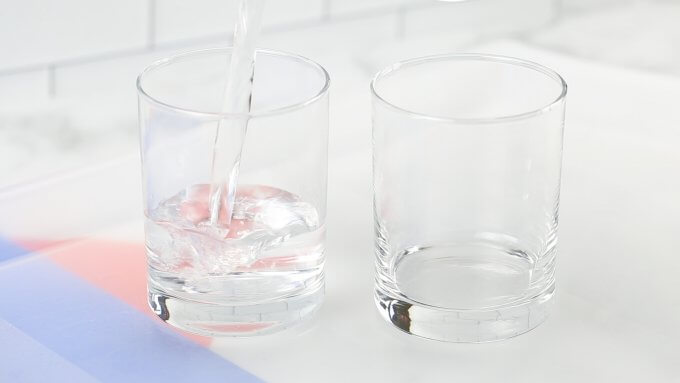
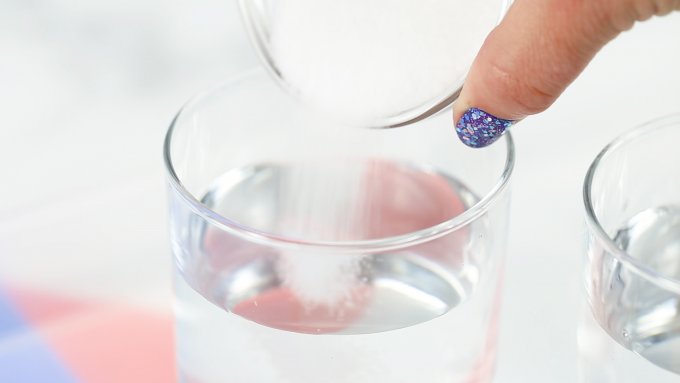
STEP 2: Fill the other glass to the same height with water. Now stir in 3 tablespoons of salt. Mix well to dissolve the salt! Ask the kids what they think will happen this time and demonstrate!
💡 TIP: Now’s a great time to talk about mixtures. By combining salt and water, you are making a mixture, an important science concept (Grab a free printable list of science words)!
A mixture is a material of two or more substances mixed. No chemical reaction occurs, and you can separate the substances in the mixture. You can have a mixture of liquids, solids, or gases.
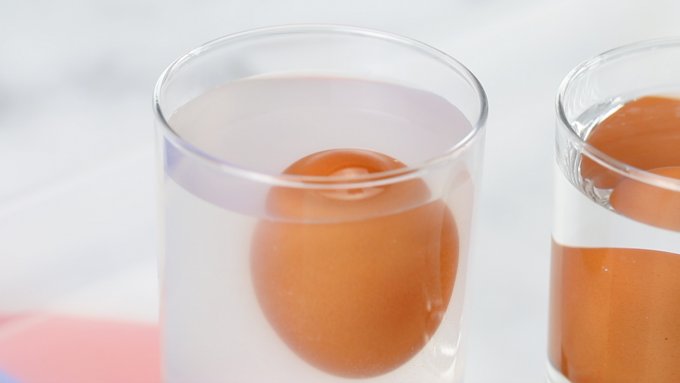
The second egg should float due to the water’s density change! If your egg does not float, did you add enough salt?
Science Information
Kids can easily experiment with different objects from around the room. Small plastic items will work best with the measurements of salt and water provided.
If the item still sinks in the salt water, ask the kids what they think! Should they add more salt? Have each kid contribute an item to the experiment!
This is a great experiment to add to your ocean science lesson plans because the ocean is salty!
So many excellent saltwater density questions:
- Do you float better in salt water?
- What about some of the biggest mammals on earth that float easily in the ocean?
- Does the density of the saltwater play a role?
Why is the ocean salty? The simple answer is that salt comes from the rocks on the land that have been broken down by erosion and are carried by streams to the ocean.
What is Density?
Why do some objects sink while another object floats? An object sinks because it is denser or heavier than water and vice versa. The density of the egg is greater than that of water. Our sink and float experiment is another exciting way to look at items that might surprise you using only water.
Big items that feel light, like a ping pong ball, are less dense than smaller items that feel heavy, like a gold ring. When added to water, objects denser than water sink, and those less dense than water float. Hollow things often float as air is less dense than water. Learn more about what is density.
You can experiment with many objects that sink and float in water, but what happens when you add salt? Can you change whether the object, like the egg, still sinks?
How does salt affect the density of water?
How much salt did you add to the water? Adding salt to water densifies it. As the salt dissolves in the water, it adds mass (more weight to the water). This densifies the water and allows more objects to float on the surface that would sink in fresh water. This is an example of a physical change!
Do objects float better in saltwater or freshwater?
What other items can you find to test? Most items will generally float in this salt water experiment even if they sink in freshwater. Just look at the egg!
Turn It Into A Floating Egg Science Fair Project
Kids can take everything they have learned about using the scientific method, stating a hypothesis, choosing variables, making observations, and analyzing and presenting data.
To turn the floating egg experiment into a science fair project using the scientific method, start by posing a clear question. For example, “How does the salt concentration in water affect an egg’s buoyancy?” Formulate a hypothesis predicting the outcome: “The higher the salt concentration, the more likely the egg will float.”
Design the experiment by preparing several solutions with varying amounts of salt dissolved in water (variables), then placing an egg in each solution and observing whether it floats or sinks.
Collect and record data on the egg’s buoyancy in each solution, noting the specific salt concentrations. Analyze the results to see if they support your hypothesis. Finally, present your findings, discussing how the salt concentration affects the egg’s buoyancy and reflecting on any potential improvements or further questions during the experiment.
More Simple Science Ideas
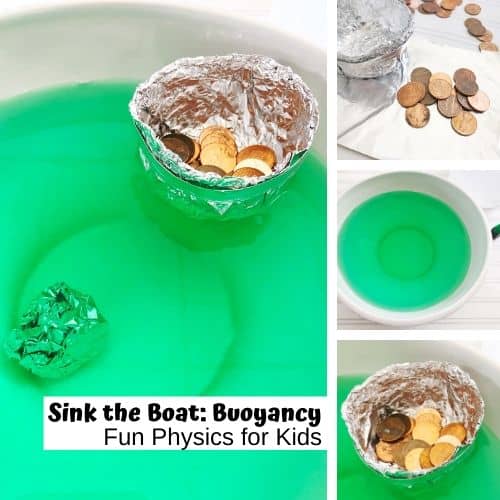
- Sink the Boat Buoyancy Challenge
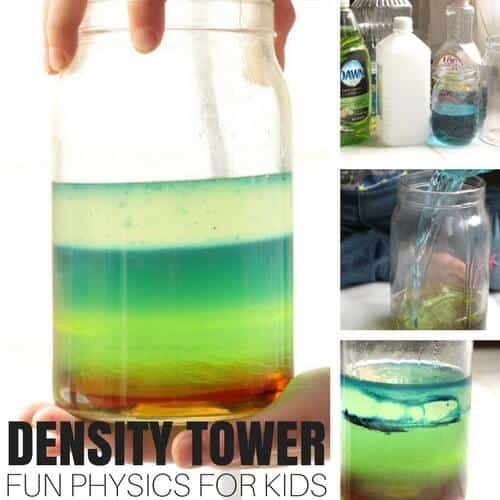
- Hot and Cold Water Density Experiment
- Frost on a Can (not just for winter!)
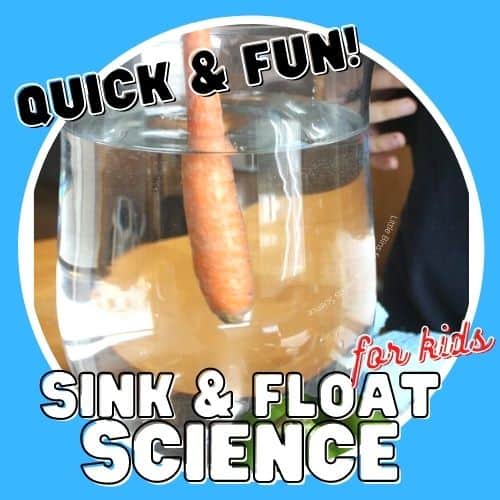
- Sink or Float Experiment
- Do Oranges Sink or Float?
- What Dissolves in Water?
Helpful Science Resources To Get You Started
Here are a few resources that will help you introduce science more effectively to your kiddos or students and feel confident yourself when presenting materials. You’ll find helpful free printables throughout.
- Best Science Practices (as it relates to the scientific method)
- Science Vocabulary
- 8 Science Books for Kids
- All About Scientists
- Free Science Worksheets
- Science Supplies List
- Science Tools for Kids
- Scientific Method for Kids
- Easy Science Fair Projects
- Citizen Science Guide
- Join us in the Club
Printable Science Projects For Kids
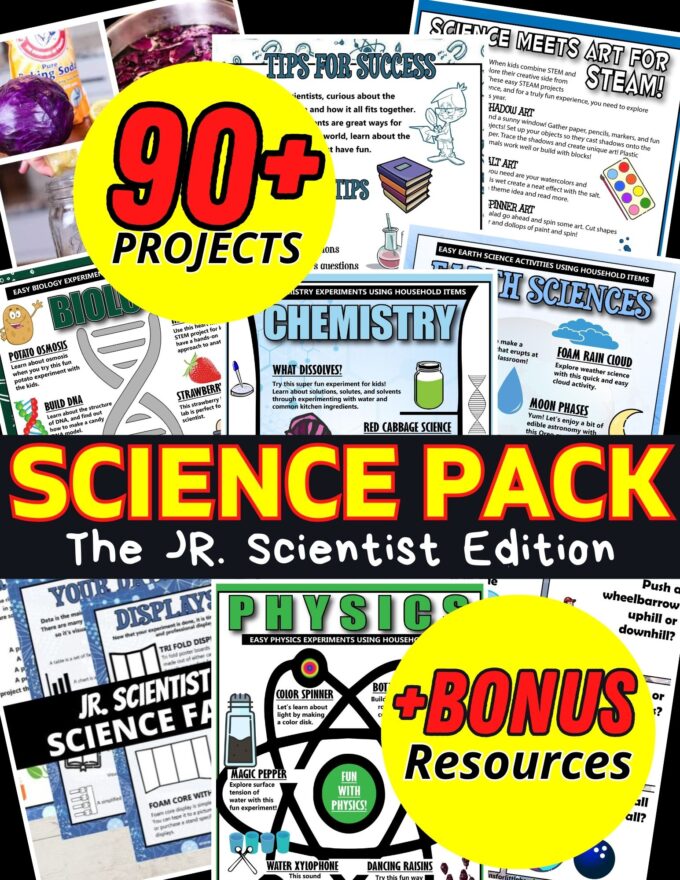
If you’re looking to grab all of our printable science projects in one convenient place plus exclusive worksheets and bonuses like a STEAM Project pack, our Science Project Pack is what you need! Over 300+ Pages!
- 90+ classic science activities with journal pages, supply lists, set up and process, and science information. NEW! Activity-specific observation pages!
- Best science practices posters and our original science method process folders for extra alternatives!
- Be a Collector activities pack introduces kids to the world of making collections through the eyes of a scientist. What will they collect first?
- Know the Words Science vocabulary pack includes flashcards, crosswords, and word searches that illuminate keywords in the experiments!
- My science journal writing prompts explore what it means to be a scientist!!
- Bonus STEAM Project Pack: Art meets science with doable projects!
- Bonus Quick Grab Packs for Biology, Earth Science, Chemistry, and Physics

I like this experiment but it is not about weight it is about density.
Yes, I have been meaning to update it a bit more. Thank you.
Very good post. I absolutely love this site. Continue the good work!
I can see salt water being a big hit around here for experimenting! This looks so fun! Pinning for the future!
Lots of stirring but lots of interesting fun! Thanks for pinning!
I think Liam’s explanation of water density is perfect – smart kid! These projects are a perfect way to *show* kids the difference, instead of just trying to explain it to them (like you said, nearly impossibly for preschoolers!)
Thanks Emma! He’s a smart cookie and likes to see things too understand! Not big on listening a whole bunch just yet 😉
When I click the link to go to your blog from my email, a virus (weird website) keeps popping up. I like your blog. But you may want to check into the virus.
Thanks I will look and see what I can see! Glad you like it!