
How can you fit your body through a single piece of paper? Walking through paper is a neat STEM challenge for various ages and a great icebreaker for a group activity! Learn about perimeter in math, then throw in chemistry with physical properties and changes.
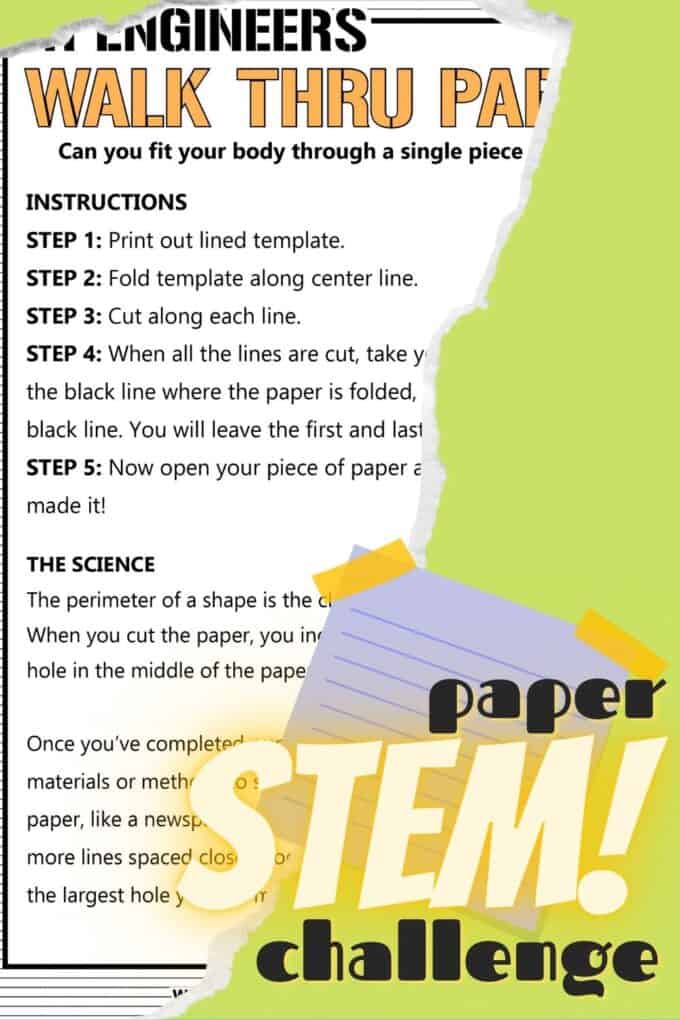
Walk Through Paper STEM Challenge
Have you ever tried to walk through a single sheet of paper? It might sound impossible, but with some careful cutting and a little math, you can make it happen!
💡Plus, make sure to read on about how you can incorporate chemistry concepts into this project with physical properties and physical change.
Step 1: Start with a Discussion
Before diving into the activity, get kids thinking like engineers and problem-solvers:
Predict the outcome – What do they think will happen when we cut the paper in a special way?
Ask: “How could we make a hole big enough to fit through a single piece of paper?”
Brainstorm ideas – Should we fold it? Cut it? Stretch it?
SUPPLIES:
- Printable Paper Cutting Template (below)
- Paper
- Scissors
Step 2: Try the Paper STEM Challenge!
STEP 1: Print out the lined template (below).
💡 Tip: Go ahead and color in a design if you want!
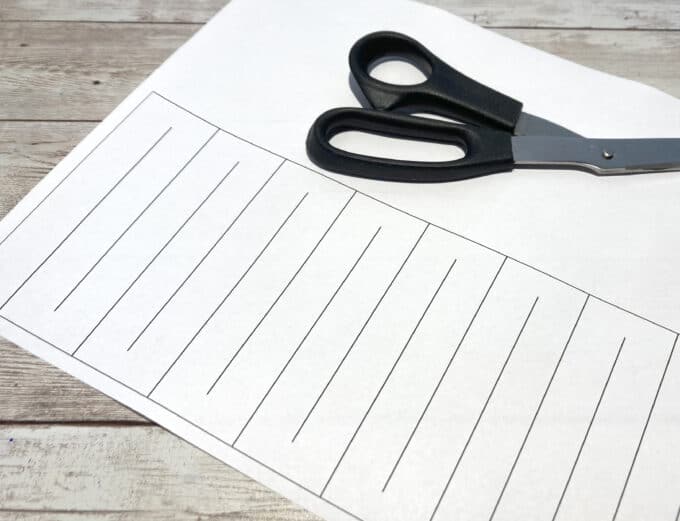
STEP 2: Fold template along center line.
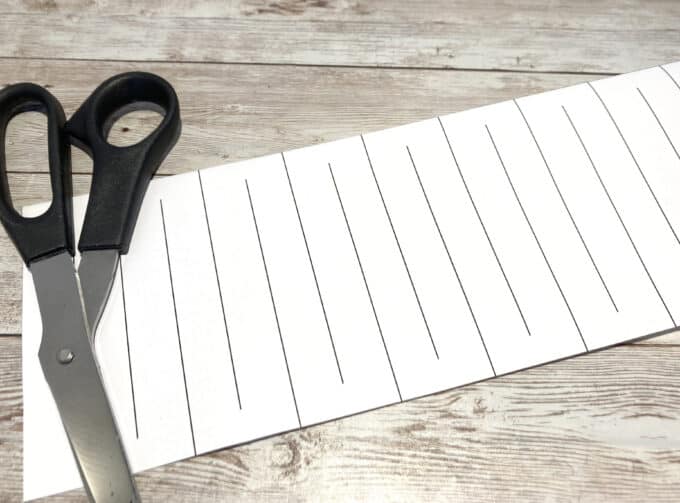
STEP 3: Cut along each line.
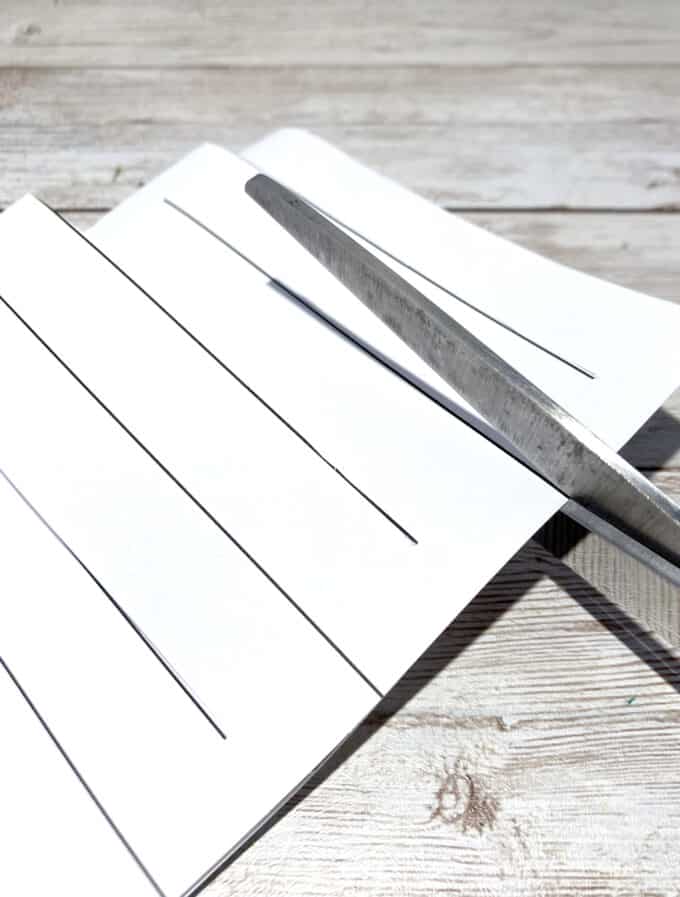

STEP 4: When all the lines are cut, take your scissors and cut along the black line where the paper is folded, but only where you see the black line. This leaves the first and last folded sections in tact.
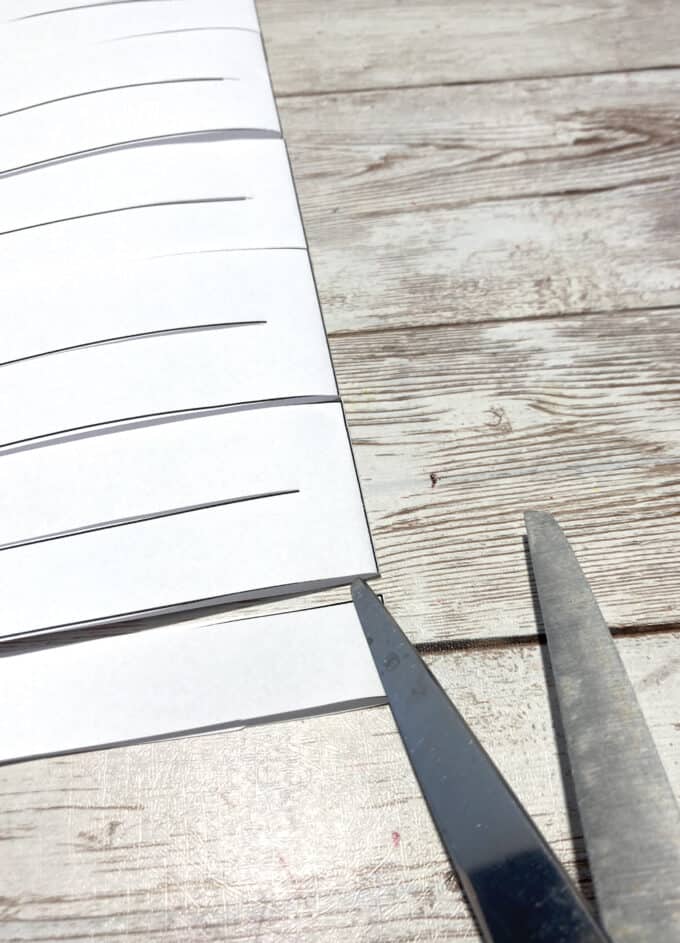

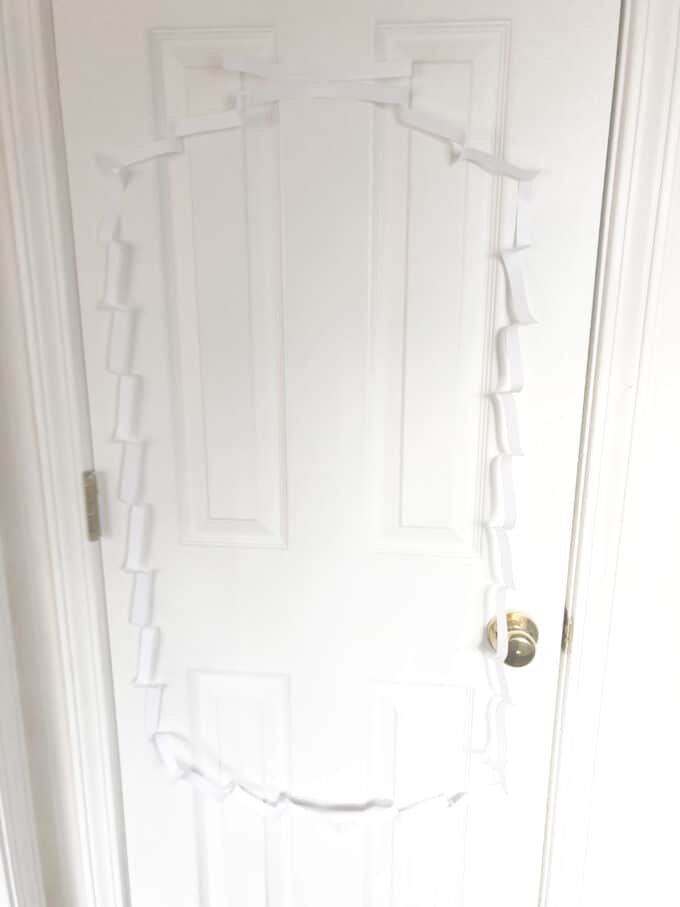
STEP 5: Now open your piece of paper and see how big you have made it! Can you walk through your piece of paper?
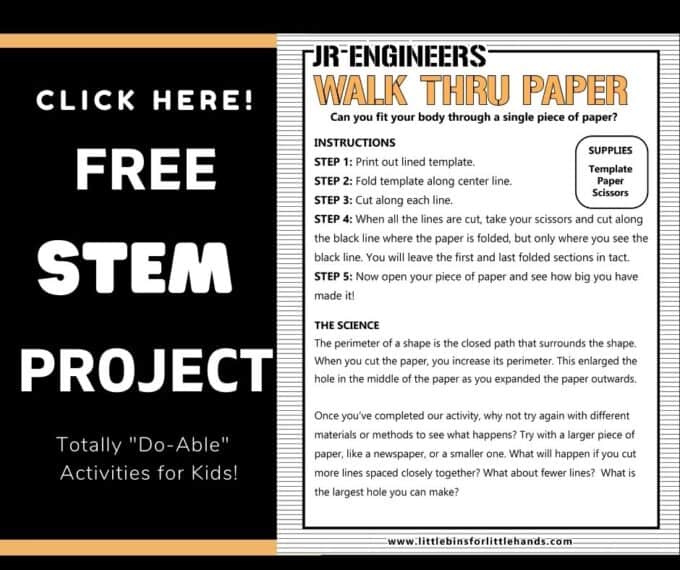
CLICK HERE TO GET YOUR FREE PRINTABLE PAPER STEM CHALLENGE!
How Do You Walk Through Paper?
Did you know you can cut a single piece of paper in just the right way to walk right through it? It might sound impossible, but with a little math and careful cutting, you can expand the perimeter of the paper enough to fit through!
The Math Behind the Trick
The perimeter of a shape is the total distance around its edges. When you cut the paper into a zigzag or looping pattern while keeping it connected, you dramatically increase its perimeter. As a result, the hole in the middle becomes large enough for you to step through—even though you started with a regular piece of paper!
Real-World Connections
This concept is similar to how networks and bridges are built with structural materials that expand their surface area while remaining strong. Engineers use a similar idea in folding structures for space exploration, like how satellites unfold from a compact shape to a much larger size in space!
Explore Physical Properties
Did you know that walking through paper also includes some basic chemistry concepts to explore? Let’s talk about physical properties!
💡Explore our examples of physical changes here or our material properties activities here.
Physical properties in chemistry refer to characteristics or qualities of matter that can be observed or measured without changing the substance’s identity. These properties help us identify and describe different substances. Here are some common examples of the physical properties of paper:
What do you notice about your sheet of paper?
- Color: Paper can come in various colors, such as white, off-white, or colored paper. The color of the paper can be observed and compared.
- Texture: Paper can have different textures, such as smooth, rough, or textured surfaces. Kids can feel the texture of paper by touching it with their hands.
- Flexibility: Paper is flexible and can be easily bent or folded. Kids can experiment with different folding techniques to create origami or other paper crafts.
- Opacity: Depending on its thickness and composition, paper can be transparent, translucent, or opaque. This property can be demonstrated by holding paper against a light source to see if any light passes through.
- Absorbency: Paper can absorb liquids to some extent. Kids can experiment by placing drops of water or other liquids on paper to observe how quickly the liquid is absorbed.
- Strength: Paper can vary in strength, with some types being more durable and tear-resistant than others. Kids can test the strength of different paper types by applying force or attempting to tear them.
- Weight: Paper can have different weights or thicknesses, which can affect its durability and intended use. Kids can compare the weight of different types of paper by holding them in their hands or using a balance scale.
🔎 Look at your paper before cutting it, and note the physical properties. After you cut the paper, observe the changes. You can learn more about physical changes vs. chemical changes in chemistry. Paper is an excellent example of physical change. Look for a paper challenge with a physical change here.
EXTEND THE WALKING THROUGH PAPER CHALLENGE
Once you’ve mastered the classic paper-cutting trick, take it a step further! Experiment with different materials and methods to see how they affect the outcome.
- Try different paper sizes – Use a larger sheet, like newspaper, or challenge yourself with a tiny piece of paper. How does the starting size change the final hole?
- Adjust the number of cuts – What happens if you make more cuts spaced closely together? What about fewer cuts spaced farther apart? Can you predict how the changes will affect the final opening?
- Experiment with different materials – Does tissue paper, cardstock, or aluminum foil work the same way? Which materials are easiest to cut while keeping the paper intact?
- Measure the largest hole you can create – Challenge yourself to see how wide you can expand the paper while keeping it in one piece. Can you fit more than one person through?
Think Like a Scientist!
As you experiment, make predictions and compare your results. Try recording your findings—how do different variables affect the size and strength of the final structure?
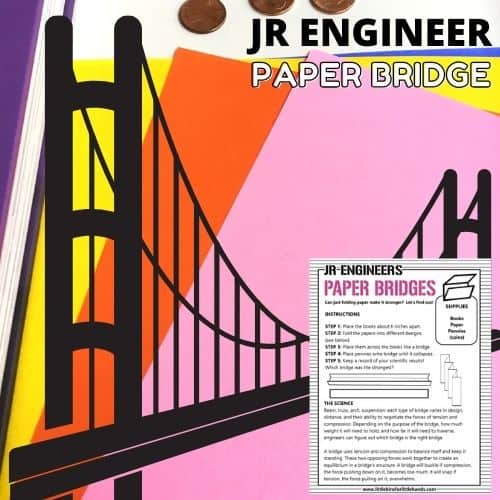
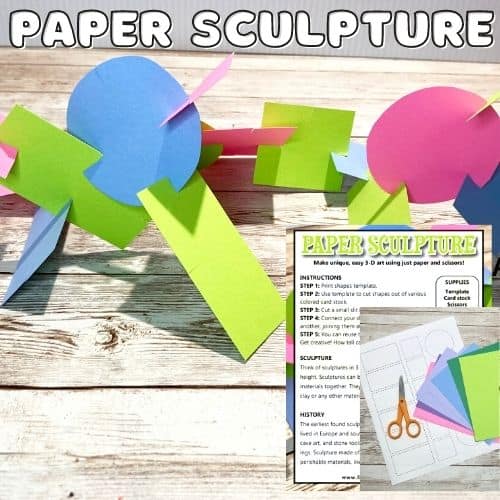
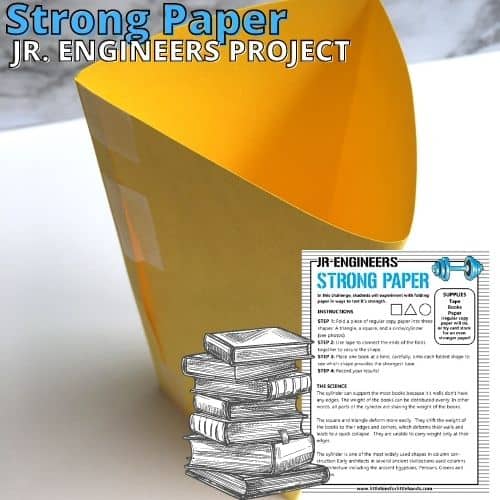
While you are at it, check out these other fun paper STEM challenges…
More Fun STEM Activities to Try
We have 100+ fantastic STEM activities that are all easy to do and affordable! Try our 12 Day Jr. Engineering Challenge.
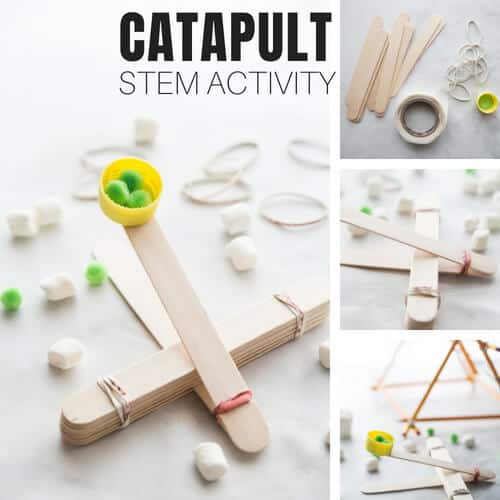
- Catapult STEM Activity
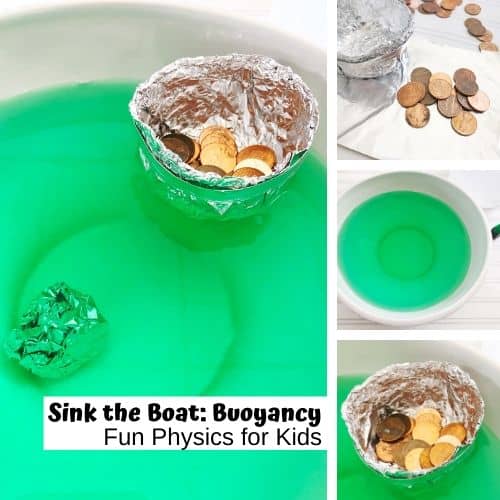
- Penny Boat Challenge
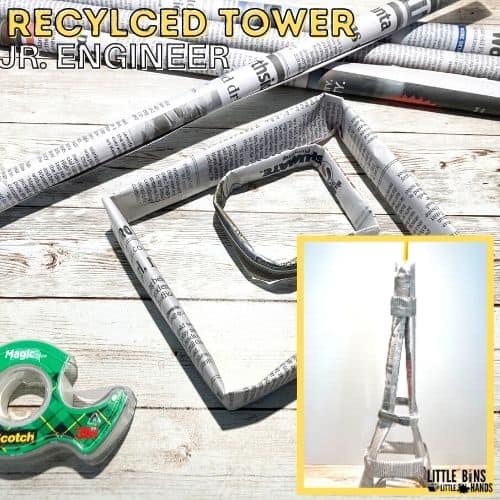
- Eiffel Tower Engineering Project
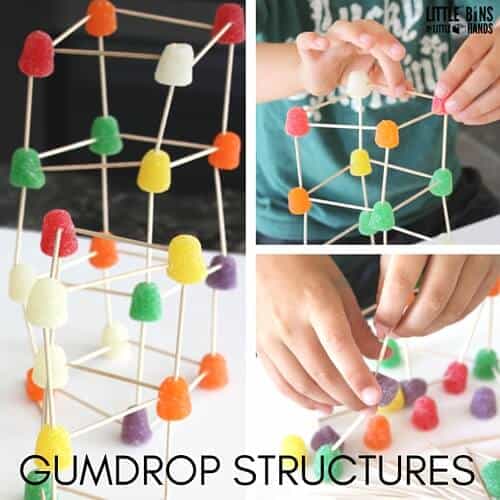
- Gumdrop Structures
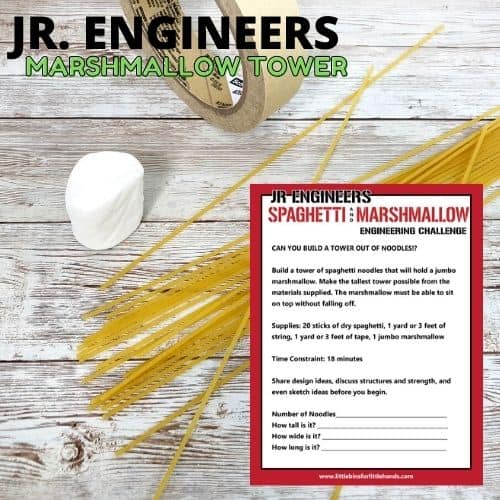
- Spaghetti Tower Challenge
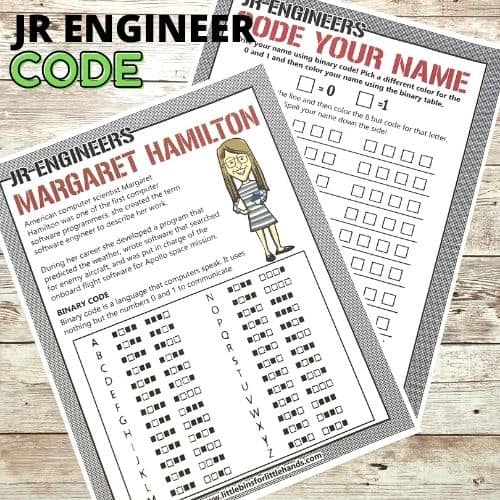
- Code Your Name in Binary
STEM Resources To Get You Started
Here are a few resources that will help you introduce STEM more effectively to your kiddos or students and feel confident yourself when presenting materials. You’ll find helpful free printables throughout.
- Engineering Design Process Explained
- What Is An Engineer?
- Engineering Words
- Real World STEM
- Build A Growth Mindset With STEM
- Questions for Reflection (get them talking about it!)
- BEST STEM Books for Kids
- 14 Engineering Books for Kids
- Jr. Engineer Challenge Calendar (Free)
- Must Have STEM Supplies List
- Join us in the Club
- Printable STEM Activities Pack👇