
Let’s explore how food chains shift in winter, the unique Arctic food chain, and how every organism—from tiny plants to top predators—plays a crucial role in these delicate ecosystems. Explore the winter food chain for fantastic winter science with a free printable project.

Winter Food Chain
Winter transforms ecosystems into challenging environments where energy becomes a precious resource. From snowy forests to the icy Arctic tundra, plants, herbivores, carnivores, omnivores, and decomposers must work together to ensure survival.
Below, explore an arctic food chain and a winter shift in a more typical food chain.
Recommended Grade Level: 3rd–6th-grade science lessons.
What Are Food Chains and Food Webs?
A food chain is a representation showing the flow of energy from producers (plants) to primary consumers (herbivores), then to secondary consumers (carnivores or omnivores), and finally to top predators.
A food web, on the other hand, is a complex network of interconnected food chains showing how different organisms depend on each other in an ecosystem.
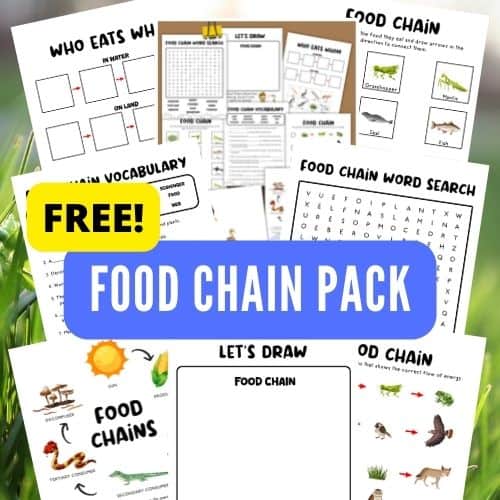
💡Learn more about food chains here and grab another free resource.
Energy Transfer in Winter Food Chains and Webs
- Producers (Plants & Phytoplankton): Use photosynthesis to convert sunlight into energy.
- Primary Consumers (Herbivores & Zooplankton): Eat plants or algae to gain energy.
- Secondary Consumers (Carnivores like foxes and omnivores like ducks): Eat herbivores.
- Top Predators (Polar Bears, Owls, Hawks): Eat smaller predators and herbivores.
- Decomposers (Bacteria): Break down dead plants and animals, returning nutrients to the soil or water.
Key Vocabulary to Explore:
- Prey: Animals hunted by predators.
- Trophic Level: Each step in the energy flow of a food chain.
- Cycles of Matter: Movement of nutrients through living and non-living parts of an ecosystem.
💡Explore the carbon cycle and the nitrogen cycle.

Winter Food Chains and Energy Flow
How Do Winter Ecosystems Work?
Winter brings shorter days, colder temperatures, and snow-covered landscapes. These changes impact all organisms:
- Dormancy: Plants conserve energy by stopping growth.
- Herbivores Adapt: Herbivores like rabbits and mice switch to eating bark, twigs, and seeds.
- Carnivores Adapt: Foxes and hawks hunt smaller prey.
- Hibernation: Some animals, like bears and snakes, hibernate to conserve energy.
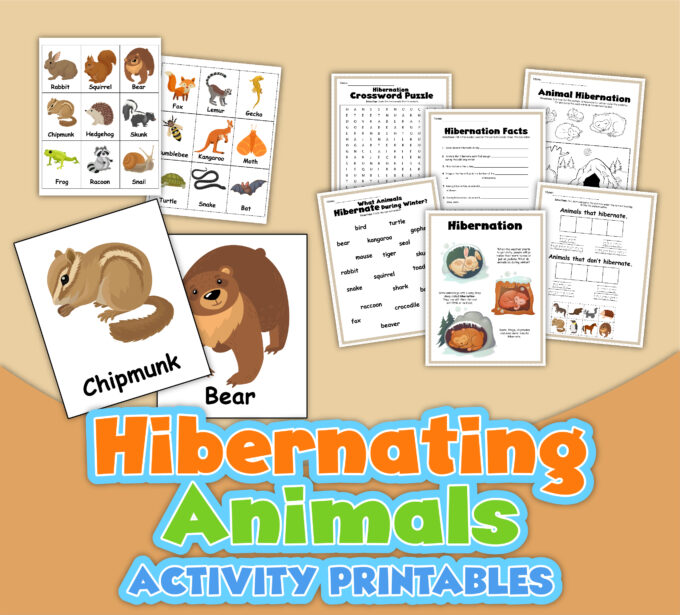
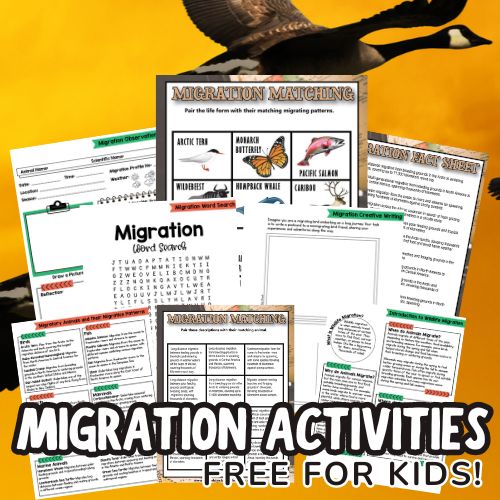
💡 Learn more about animal hibernation and migration here.
Winter Food Chain Example:
🌞 Sun → Tree (Producer) → Rabbit (Primary Consumer) → Fox (Secondary Consumer) → Hawk (Top Predator)
Energy Transfer Insight: Only 10% of energy moves from one trophic level to the next. The rest is used for survival or lost as heat.
Fun Fact: Squirrels and chipmunks store energy-rich food, like seeds and nuts, to prepare for the cold months.
Free Winter Food Chain Printable

Arctic Food Chains and Food Webs
1. Arctic tundra Food Chain:
- Producers: Moss, algae, and lichen.
- Primary Consumers: Lemmings, caribou, and insects.
- Secondary Consumers: Arctic foxes and snowy owls.
- Top Predators: Polar bears and hawks.
Example Food Chain:
🌞 Sun → Algae → Lemming → Arctic Fox → Polar Bear
2. Arctic Marine Food Chain
In Arctic waters:
- Producers: Phytoplankton.
- Primary Consumers: Zooplankton and krill.
- Secondary Consumers: Fish like cod.
- Tertiary Consumers: Seals.
- Top Predators: Whales and polar bears.
Example Food Chain:
🌞 Sun → Phytoplankton → Krill → Cod → Seal → Polar Bear

Arctic Food Web Diagram Example:
A food web diagram shows how Arctic animals interact across multiple trophic levels.
Fun Fact: Seals rely on thick blubber for energy reserves during harsh Arctic winters.
Discussion Question: What happens if one part of the Arctic food web breaks down?
Comparing Winter and Arctic Food Webs
| Winter Ecosystem | Arctic Ecosystem |
|---|---|
| Seasonal energy scarcity | Year-round energy scarcity |
| Deciduous trees lose leaves | Low-growing mosses and lichens dominate |
| Herbivores store food or hibernate | Herbivores stay active year-round |
| Carnivores adapt their diet | Top predators rely heavily on seals and fish |
Key Takeaway: Both systems rely on efficient energy transfer and adaptations for survival.
Decomposers and Nutrients
Decomposers like bacteria and fungi break down dead matter, returning nutrients to the soil and water. This keeps the cycles of matter moving and supports producers like plants and algae.
Key Insight: Without decomposers, ecosystems would run out of essential nutrients!
Example: A dead fish breaks down, nourishing algae and phytoplankton, continuing the cycle.
Hands-On Winter Food Chain Activities for Classrooms
- Winter Food Chain Craft: Draw and label a winter food chain showing the flow of energy.
- Arctic Food Web Puzzle: Arrange Arctic animals into a food web diagram.
- Ecosystem Diorama: Build a mini winter or Arctic ecosystem showing energy transfer.
- Design a Food Chain Challenge: Have students design their own food chain with animals of their choice.
Extension Idea: Research how spiders, frogs, or insects fit into different ecosystems.
Printable Arctic Lesson Pack
Want to explore winter and Arctic ecosystems more? Check out our 75-page Arctic Unit! Includes an Arctic Food Chain printable and animal adaptations, plants, seasons, survival, and more!

More Animal Adaptation Activities
💡 Explore more animal and ecosystem activities here!
- Hibernation Activites
- Migration Activities
- Winter Animal Adaptions Experiment
- Animal Adaptations
- Food Chains
- Build an Animal Shelter
- What Do Plants and Animals Need?