

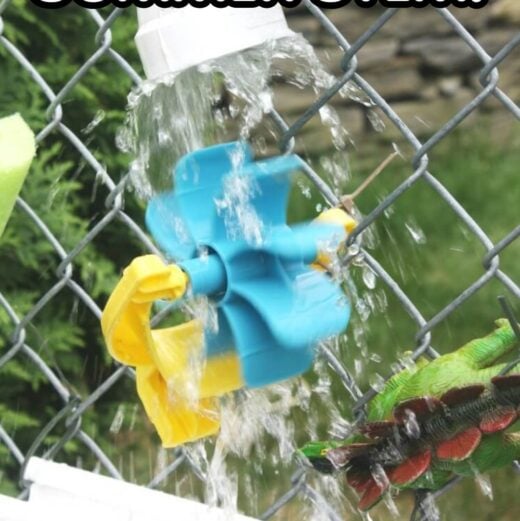
Kick off summer with a homemade water wall that combines outdoor play, engineering, and creativity. This easy DIY water wall uses inexpensive materials like PVC pipe, funnels, rain gutters, and recycled containers to create a hands-on STEM activity kids can build, test, and redesign again and again.
Whether you’re setting up backyard summer fun, a preschool water station, or a summer camp engineering challenge, a water wall is one of the best outdoor STEM activities for kids.
Quick Water Wall Overview
A DIY water wall is an easy outdoor STEM activity that lets kids explore engineering, gravity, and problem-solving through water play. Using funnels, tubing, PVC pipe, pool noodles, and recycled materials, children can build, test, and redesign pathways to discover how water moves from top to bottom.
- Best Ages: Preschool–Elementary
- Skills: Engineering, problem-solving, observation, cause and effect
- Setup Time: 20–30 minutes
Works Great For:
- Backyard play
- Summer camp
- Preschool water stations
- Outdoor STEM activities
- Homeschool science
Grab Your Free Summer STEM Starter Guide
Looking for more easy outdoor STEM activities?
Get our free Summer STEM Starter Guide packed with printable challenges, engineering activities, science investigations, and outdoor learning ideas for kids.
How To Make A Water Wall
Here’s a list of supplies we used to make our DIY water wall. Don’t worry if you don’t have everything listed. Part of the fun is creating your own unique design with materials you already have on hand.
Materials Needed
- Rain gutter pieces
- PVC pipe and connectors
- Plastic tubing
- Zip ties
- Funnels
- Recycled containers
- Pool noodle sections
- Water wheel
- Shovels or scoops
- Large bucket of water
Optional:
- Plastic animals
- Toy dinosaurs
- Small boats
Instructions:
STEP 1: Gather your materials and choose a sturdy vertical surface such as a fence, pallet, baby gate, or deck railing.
STEP 2: Attach funnels, tubing, pipes, and containers using zip ties.
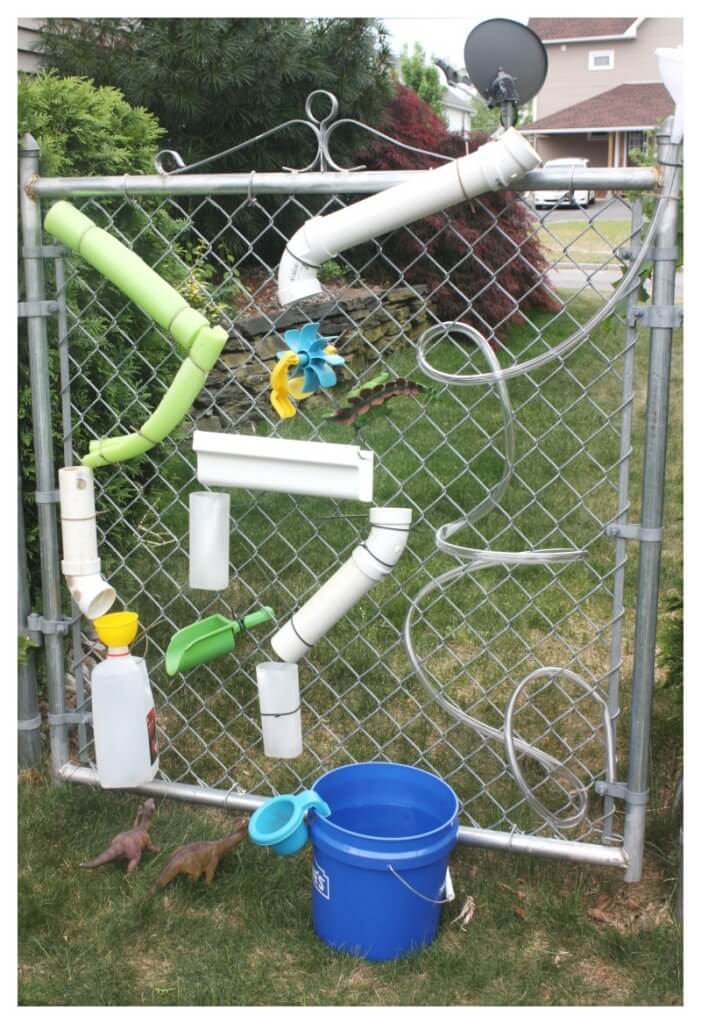
STEP 3: Place a bucket underneath to collect water.
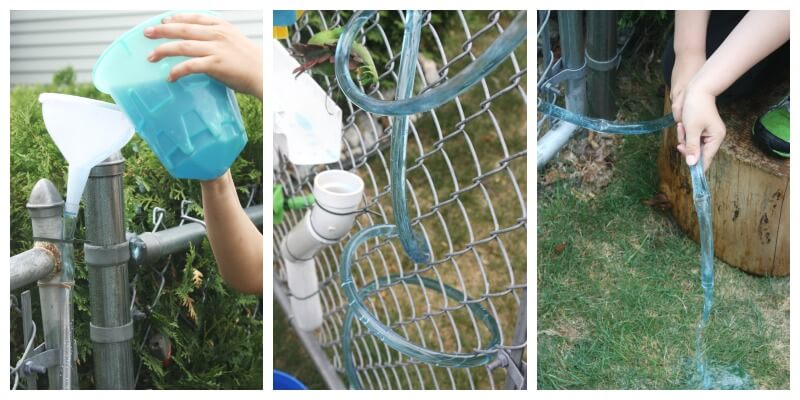
STEP 4: Pour water from the top and observe how it travels through the system.
STEP 5: Make adjustments to improve the flow.
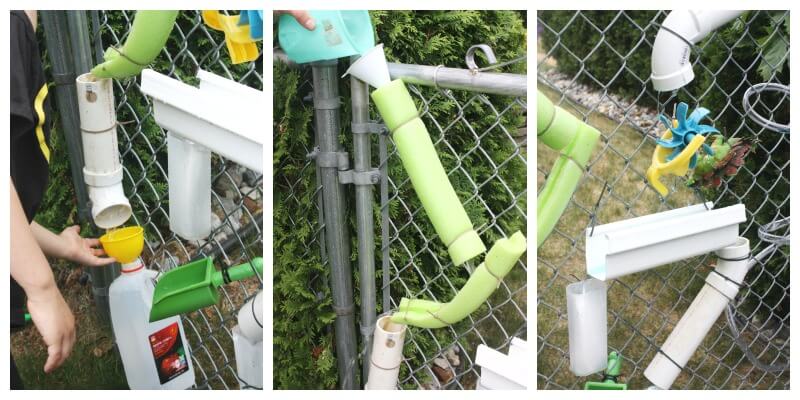
STEP 6: Continue redesigning and testing different pathways.
💡 The engineering design process is just as important as the final design!
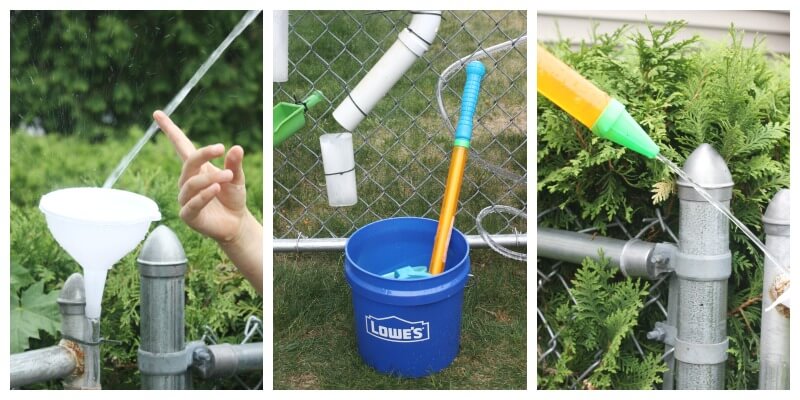
Water Wall Ideas To Try
Every water wall can be different. Experiment with new materials and layouts to create unique engineering challenges.
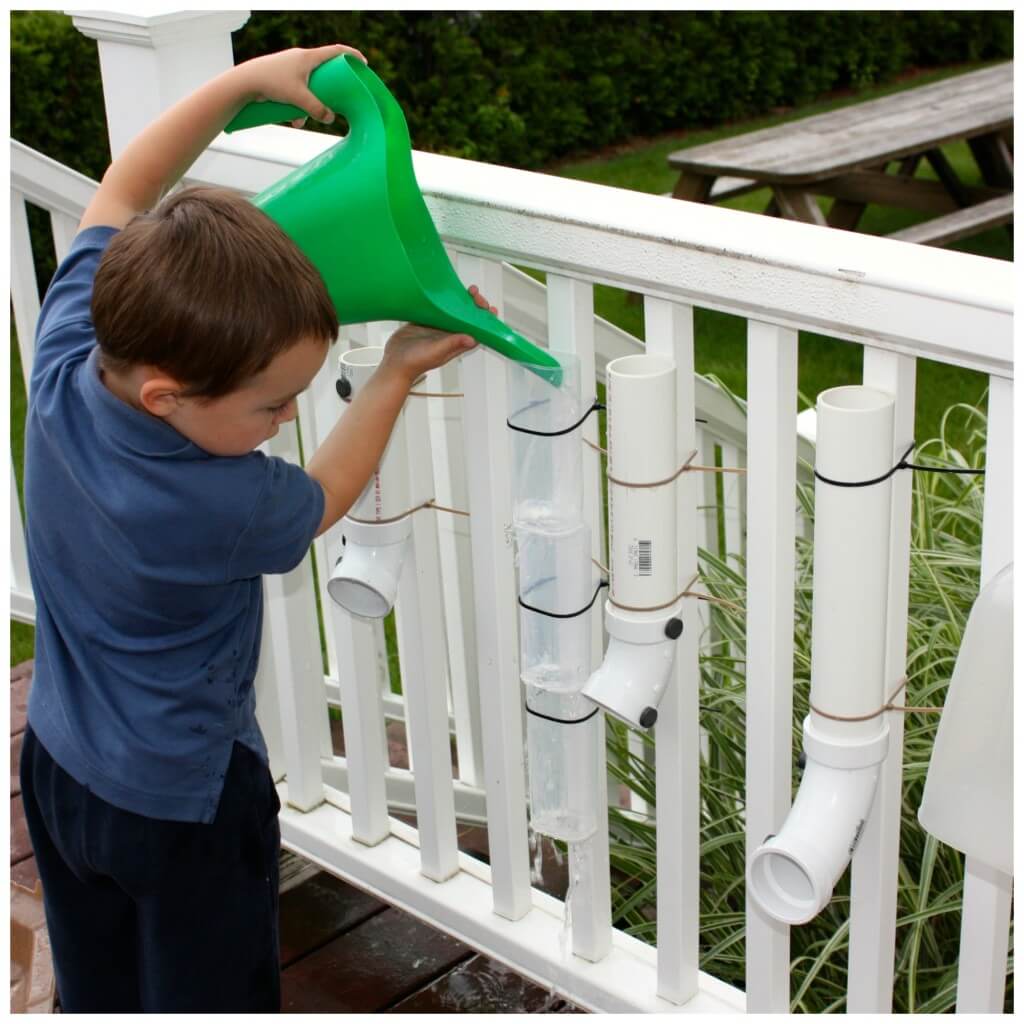
PVC Pipe Water Wall
Connect PVC pipes and elbows to create twisting pathways for water.
Pool Noodle Water Wall
Cut pool noodles in half to create lightweight channels that move water quickly.
Recycled Bottle Water Wall
Use plastic bottles, containers, and funnels to create a budget-friendly version.
Rain Gutter Water Wall
Attach sections of rain gutter to build long water runs and racing tracks.
Pallet Water Wall
Secure materials to a wooden pallet for a portable outdoor STEM station.
Water Wall Engineering Challenges
Once your wall is built, try these simple STEM challenges.
- Can You Make The Longest Path? Redesign your wall so the water travels through as many sections as possible.
- Can You Slow The Water Down? Experiment with different angles and materials to control the flow.
- Can You Create Two Routes? Build branching pathways that split the water into multiple directions.
- Can You Power A Water Wheel? Add a wheel and see if you can generate enough force to make it spin.
- Can You Catch Every Drop? Design a system that moves water from top to bottom with minimal spills.
Water Wall STEM Learning
Building a water wall combines engineering, science, and problem-solving. Kids test different pathways, observe how gravity moves water, make adjustments to improve flow, and experiment with funnels, tubes, and containers. It’s an easy way to explore cause and effect, motion, and simple engineering design through play.
A water wall is a great example of simple physics in action.
- Gravity: Gravity pulls water downward through each section of the wall.
- Motion: Water gains speed as it travels through tubes, gutters, and funnels.
- Engineering: Kids test designs, identify problems, and improve their solutions.
- Cause and Effect: Small changes to angle, height, or materials can dramatically change how the water moves.
Make It An Investigation
Turn your water wall into a science investigation.
Ask:
- Which material moves water fastest?
- Which pathway holds the most water?
- Does a steeper angle increase speed?
- Which design creates the fewest spills?
- How many sections can water travel through before reaching the bottom?
💡 Encourage kids to make predictions, record observations, and compare results.
More Outdoor STEM Activities
If your kids enjoyed building a water wall, try these outdoor engineering projects next:
- Build a solar oven
- Make a bottle rocket
- Design a paper helicopter
- Make a DIY Weather Station
- Make a paddle boat
👉 You can also explore our Outdoor STEM Activities collection for even more ideas.
Summer Science Camp Activities
Need a full week of hands-on fun?
Explore our Summer Science Camp ideas featuring simple science experiments, engineering challenges, nature activities, and printable STEM projects designed for preschool and elementary-aged kids.
Frequently Asked Questions
What can I use to build a water wall? Funnels, PVC pipe, tubing, rain gutters, pool noodles, recycled bottles, and plastic containers all work well.
Do I need a fence to make a water wall? No. You can attach materials to a pallet, a baby gate, a deck railing, or another sturdy vertical surface.
At what age is a water wall best for? Water walls work well for preschoolers, kindergarteners, and elementary-aged children with adult supervision.
What does a water wall teach? A water wall introduces engineering, gravity, motion, problem-solving, and cause-and-effect concepts through hands-on play.
Is a water wall a STEM activity? Yes. Building and testing a water wall combines science, technology, engineering, and math skills in an engaging outdoor activity.

Make Summer STEM a Blast!
From slime and bubbles to nature walks and camp weeks—this Summer bundle is your one-stop summer STEM solution. Over 11 hands-on activity packs to make this your most fun and educational summer ever!


13 Comments
Comments are closed.