

Learn how to make a lemon volcano! This erupting lemon volcano with dish soap is incredible chemistry. We enjoy all kinds of simple science experiments using common household ingredients.

The Science of a Lemon Volcano
Field of Science: Chemistry
Best For: Grades K–4
Science Concepts: Acids and bases, chemical reactions, carbon dioxide gas
A lemon volcano forms when you combine lemon juice (an acid) with baking soda (a base). This creates a chemical reaction that produces carbon dioxide gas. The gas forms bubbles, causing a fun, fizzy eruption. Add dish soap to trap the gas and make the reaction even more foamy!
NGSS-Aligned Questions
- What happens when I mix these ingredients? (Plan and carry out investigations)
- How can I make it fizz more or less? (Cause and effect)
- What patterns do I see if I change the fruit or the amount of baking soda? (Patterns in science)
- Why does this reaction happen with some fruits but not others?” (NGSS Practice: Constructing explanations)
Supplies:
- Lemons (grab a few!)
- Baking Soda
- Food Coloring
- Dawn Dish Soap
- Plate, Tray, or Bowl
- Craft Sticks
- Lemon Juice (optional: pick up a small bottle or use the juice from another lemon)
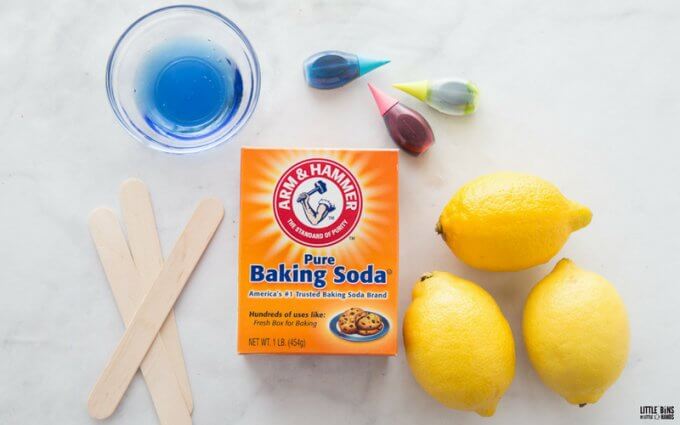
How To Make An Erupting Lemon Volcano
🎥 Watch the video!
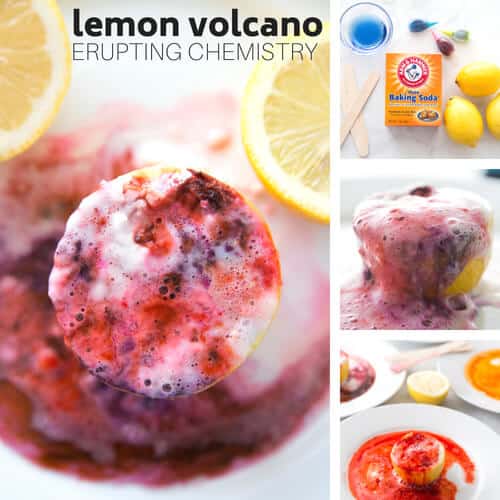
STEP 1: First, place half of a lemon in a bowl or plate that will catch the mess when it erupts.
You can juice the other half of the lemon to add to the erupting lemon volcano which you will read about below. Or you can set up two at a time!
🔎 EXPERIMENT: Try this with a variety of citrus fruits to see which produces the best eruption! What’s your guess?
STEP 2: Next, take your craft stick and poke holes in the various sections of the lemon. This will help start the reaction.
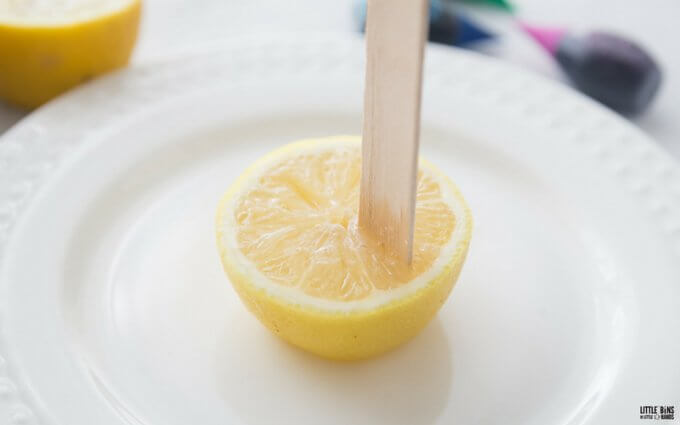
STEP 3: Now you can place drops of food coloring around the different sections on the top of the lemon.
Alternating different colors of food coloring will have a fun effect. However, you can also stick with just a couple of colors or even one color!
STEP 4: Pour some Dawn dish soap all over the top of the lemon.
What does dish soap do? Adding dish soap to a reaction like this produces some foam and bubbles! It’s not necessary, but a fun element to add if you can.
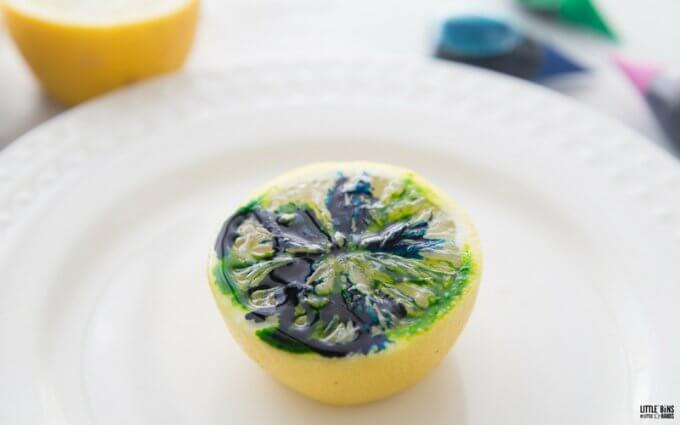
STEP 5: Go ahead and sprinkle a generous amount of baking soda onto the top of the lemon.
Then, use a craft stick to press some of the baking soda into the different sections of the lemon to start the eruption.
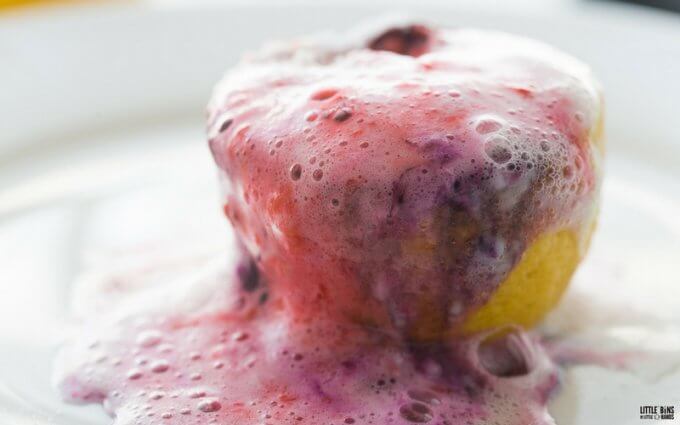
Wait a few minutes for the reaction to begin. Slowly, your lemon will begin to erupt into a variety of colors. Additionally, you can use the craft stick to mash the lemon and baking soda around a bit more!
💡 Did you know that you can make fizzy lemonade for edible science?
You can add some baking soda after the first erupting round to continue the reaction!
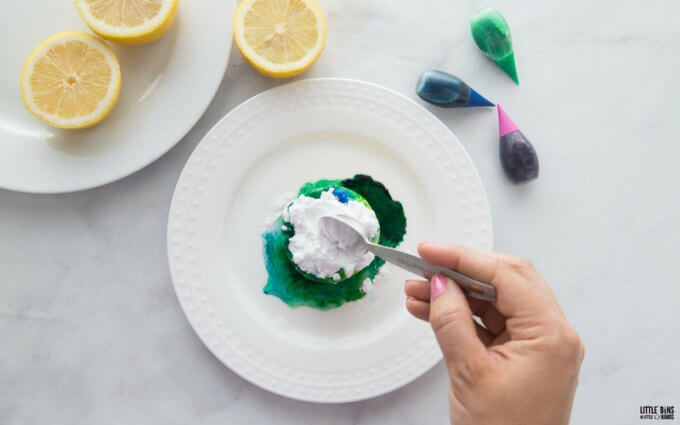
💡TIP: This experiment produces a prolonged eruption of color. If you want things to move a bit faster or be more dramatic, you can also pour a little extra lemon juice on top of the lemon.
Final Tips for Success
- Want bigger eruptions? Add extra lemon juice or even vinegar
- Use fresh, juicy lemons
- Poke deep holes to release more juice
- Add more baking soda in waves
Free Printable Science Activities Guide and Journal Pages

What’s Happening in the Lemon Volcano?
This experiment is a classic example of an acid-base reaction. Lemons contain citric acid, a weak acid. When you add baking soda, or sodium bicarbonate, it reacts with the acid to form a gas called carbon dioxide (CO₂).
This bubbly gas forms quickly, creating the fizz and foam you see during the eruption. The dish soap doesn’t cause the reaction, but it helps trap the gas, forming foamy bubbles for a more dramatic volcano effect.
🔬 Fun Fact: Real volcanoes erupt due to pressure from gas and molten rock (magma) inside the Earth. While your lemon volcano isn’t hot or dangerous, it models how gas can build up and cause an explosion of pressure.
Make It a Science Project
Use the scientific method to explore lemon volcano variations:
- Question: What happens if I use a lime, an orange, or a grapefruit instead of a lemon?
- Hypothesis: Which fruit will make the biggest eruption?
- Test: Try different fruits or change the amount of baking soda.
- Observe & Record: What’s the reaction time? Amount of foam?
- Conclusion: What made the best volcano?
💡 Tip: Try heating the lemon slightly in warm water to see if temperature affects the reaction!
What is The Scientific Method?
The scientific method is a process or method of research. A problem is identified, information about the problem is gathered, a hypothesis or question is formulated from the information, and the hypothesis is tested with an experiment to prove or disprove its validity. Here’s how to apply it:
💡To learn more about the scientific method, writing a hypothesis, and picking variables, click here.
More Fun Erupting Volcano Ideas
Learn more about real volcanoes with a free mini pack here. If your kids love things that fizz and foam, they’ll love these:
- Bubbling Volcano Slime
- Apple Volcano Experiment
- Pumpkin Volcano
- LEGO Volcano
- Watermelon Volcano
- Salt Dough Volcano
- Sandbox Volcano
More Fun Kitchen Science Experiments
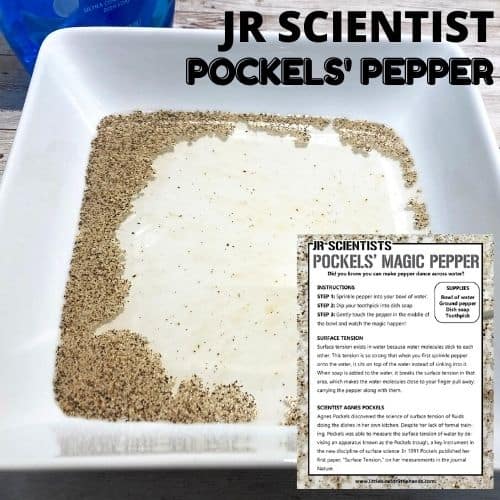
Check out our big list of science experiments for even more ideas!
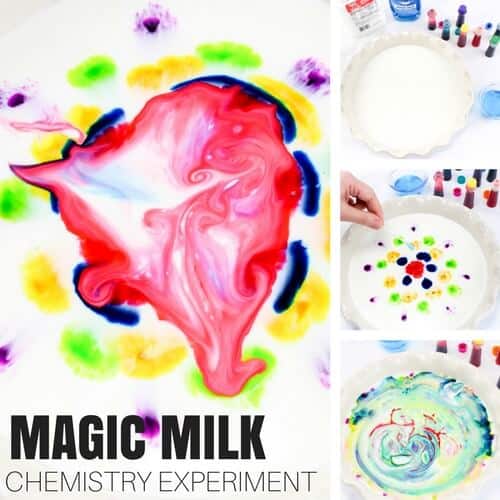
- Magic Milk
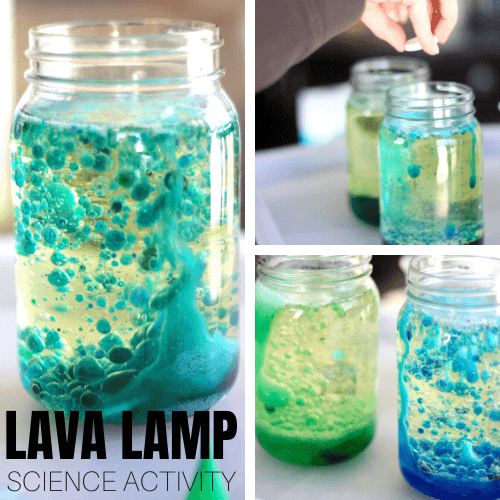
- Homemade Lava Lamp
- Egg in Vinegar Experiment
- Oobleck Recipe
- Salt Water Density with Eggs
- Osmosis Science Projects
- Cabbage pH Indicator

Printable Science Projects For Kids
If you’re looking to grab all of our printable science projects in one convenient place plus exclusive worksheets and bonuses like a STEAM Project pack, our Science Project Pack is what you need! Over 300+ Pages!





Hi thanks for this. We had fun noticing the lemons needed to be poked a lot! One point we would like to add is slicing the tip of the lemon off Would help it would sit better. Also, citric is spelled incorrectly.