
Fall makes wind easy to notice. Leaves tumble across the ground, grass bends, flags flap, and tree branches move on breezy days. Instead of checking the wind once, use this simple fall science investigation to see how it changes over the course of a week.
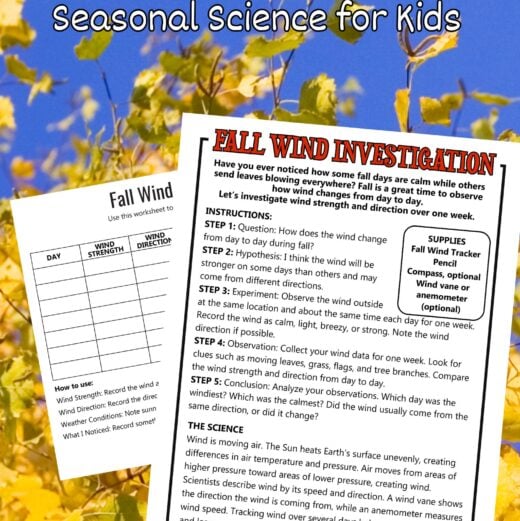
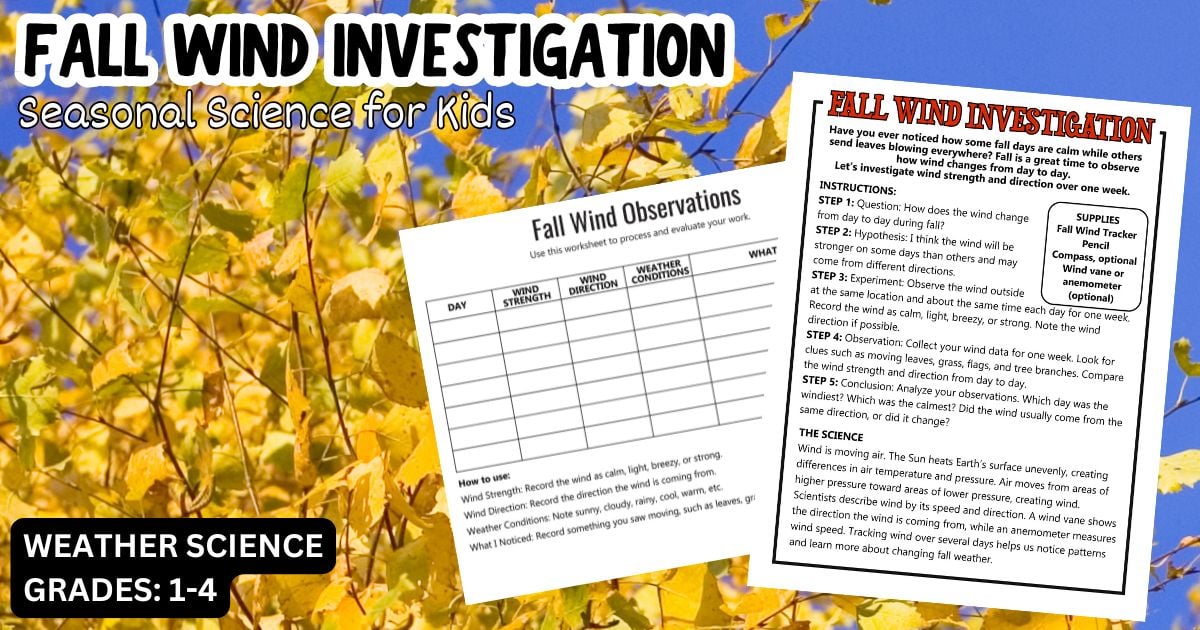
Kids will observe wind strength and direction, record the weather, and look for patterns in their results. The printable Fall Wind Observation Sheet makes it easy to keep everything in one place.
Field: Earth Science
Grades: 1–4
Concepts: Wind, weather, observation, patterns, data collection
Fall Wind Investigation
The main question for this investigation is: How does the wind change from day to day during fall?
Choose one outdoor location and check the wind at about the same time each day for one week. Students record whether the wind feels calm, light, breezy, or strong and note its direction when possible.
Supplies
- Fall Wind Observation Sheet
- Pencil
- Compass, optional
- Wind vane or anemometer, optional
How to Track the Wind
1. Pick an observation spot. Use the same place each day. A schoolyard, playground, backyard, or open area works well.
2. Check the wind. Look around before writing anything down. Are leaves moving? Is the grass bending? Are branches or flags moving?
3. Record wind strength. Use one of four simple descriptions:
- Calm
- Light
- Breezy
- Strong
4. Check the direction. If students have a compass or wind vane, record the direction the wind is coming from.
5. Add the weather. Note whether the day is sunny, cloudy, rainy, cool, warm, or something else.
6. Repeat for one week. At the end, compare all of the observations.
The printable tracker includes columns for wind strength, wind direction, weather conditions, and something students noticed moving outside.
How Can You Tell How Windy It Is?
You don’t need special weather equipment for this investigation.
Kids can use what they see around them as clues.
- Calm: Very little is moving.
- Light: Grass or small leaves may move.
- Breezy: Leaves move easily, and small branches may sway.
- Strong: Larger branches move, and loose leaves may blow across the ground.
💡 The goal isn’t to calculate an exact wind speed. The goal is to make the observations the same way each day so they can be compared later.
This is also a great way to introduce kids to a longer-term science project. Instead of completing an experiment in one sitting, students return to the same question, collect observations over several days to a whole month, and look for patterns in their data.
Keep the wind tracker in a science journal or notebook along with weather notes, sketches, and questions. Visit our Observation Activities for Kids post for more ideas on helping students make careful observations and record what they notice.
What Causes Wind?
Wind is moving air.
The Sun does not heat every part of Earth’s surface equally. These heating differences create variations in air temperature and pressure. Air moves from areas of higher pressure toward areas of lower pressure, creating wind.
💡 For younger students, keep the explanation simple: The Sun heats different places by different amounts. This helps get the air moving, and moving air is wind.
Measuring Wind
Scientists describe wind by both its speed and direction.
- A wind vane shows the direction the wind is coming from.
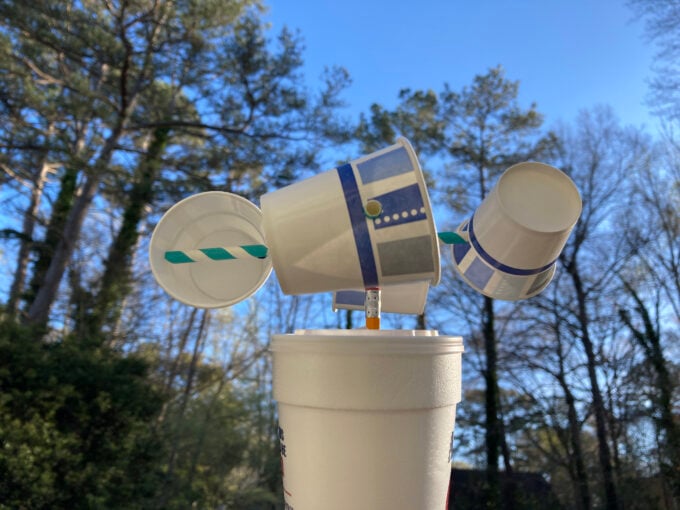
- An anemometer measures wind speed.
👉 If you want to add a weather-tool activity, try our Make an Anemometer project and compare how quickly it spins on different days.
👉 For older elementary students, you can also connect this investigation to our Homemade Weather Station.
Look for Patterns
After a week, spread out the observations and see what stands out.
Ask:
- Which day was the windiest?
- Which day was the calmest?
- Did the wind come from the same direction every day?
- What moved outside on the strongest wind day?
- Was the weather different on windy and calm days?
The printable investigation concludes with the same kinds of comparisons, so kids can use their own observations to draw conclusions.
Pair It With a Fall Temperature Investigation
👉 If you’re already tracking fall weather, add our Fall Temperature Investigation.
Students can collect wind observations and temperature data during the same week, then compare the two.
- Did the coolest day also happen to be windy?
- Were some warm days breezy too?
There doesn’t need to be a perfect pattern. The useful part is collecting real data and seeing what the week actually looked like.

Try More Fall Wind Science
Once you’ve tracked the wind for a week, extend the investigation in a few easy ways.
- Compare two locations. Is the wind different in an open field than it is next to a building or trees?
- Add a wind vane. Track direction more carefully.
- Build an anemometer. Compare how it moves on calm, breezy, and strong-wind days.
- Keep going. Track wind for several weeks and see whether larger patterns appear.
Keep it going for a month. One week gives kids a quick snapshot of fall wind, but tracking it for a full month makes it easier to notice bigger changes and patterns. Kids can compare calm and windy days, changes in wind direction, and how wind conditions shift as fall progresses. ⭐️ You may even want to keep this handy for a month during the spring season!
Guiding Questions
- What tells you that the air is moving?
- How would you describe today’s wind?
- What direction is the wind coming from?
- What do you notice moving outside?
- How is today’s wind different from yesterday’s?
- What pattern do you notice after one week?
- What would you like to track next?
Free Fall Wind Investigation Lab
Turn your fall observations into a seasonal science study with the Free Fall Investigation Lab.
Use the printable investigations to observe changing weather, collect data, compare results, and look for patterns throughout fall.
GET THE FREE FALL WIND INVESTIGATION LAB →
FAQ
What grades is this fall wind investigation for? It works well for grades 1–4. Younger students can focus on describing the wind, while older students can compare data and patterns.
Do you need an anemometer? No. Students can estimate wind strength by watching leaves, grass, flags, and branches. An anemometer is an optional extension.
How long does the investigation take? Plan on just a few minutes of observation each day for about one week.
What science skills does this activity practice? Kids practice observation, data collection, comparison, weather measurement, and pattern recognition.
Want the Full Fall Investigation Lab?
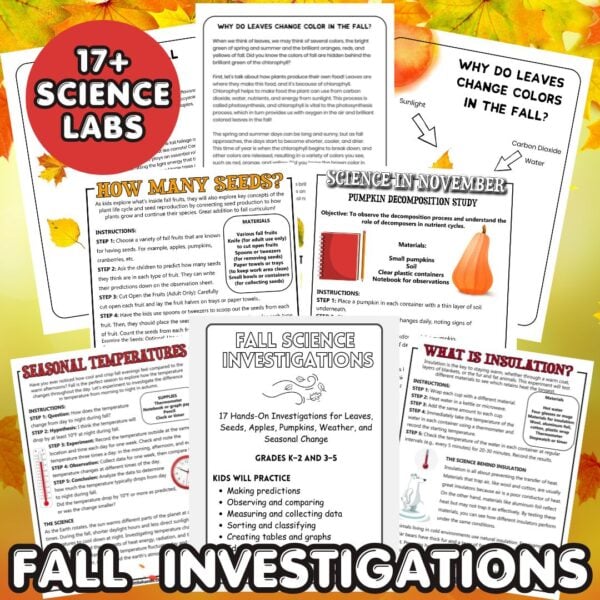
If you want more than the free wind investigation, the Fall Investigation Lab brings together seasonal science activities you can use across several weeks.
It’s designed for simple, observation-based fall science with printable recording pages and investigations that help kids collect data, compare changes, and look for patterns.
GET THE FALL INVESTIGATION LAB →
It’s also included in the All-Access Pass.
More Fall Science
For more seasonal science, head to our Fall Science Activities hub for experiments and investigations using leaves, apples, pumpkins, weather, and other fall themes.
You can also visit our Fall Weather Science collection for more ways to explore wind, temperature, clouds, pine cones, and changing weather.
Explore our Fall Life Science Activities hub for seasonal ideas exploring leaves, seeds, trees, migration, hibernation, animal behavior, and the ways living things respond to changes in fall.
Try next:
- Fall Temperature Investigation
- Pine Cone Weather Experiment
- Rain Gauge
- Cloud Activities
- Why Do Leaves Change Color?
- Fall Animal Life Cycles