
Fall Weather Science Projects for Kids
Fall is a great time to study weather because the changes are easy to notice. Mornings get cooler, windy days become more common, cloud cover and rainfall change, and daylight slowly decreases as the season progresses.
These fall weather science projects help kids do more than complete a one-time experiment. They can observe real weather, collect data over several days or weeks, and look for patterns as fall changes.

Field: Earth Science
Grades: K–5
Concepts: Weather, temperature, wind, rainfall, clouds, air pressure, observation, data collection, seasonal change
Featured Fall Weather Science Projects
Start with these simple fall weather investigations and weather tools.
- Fall Temperature Investigation – Track morning, afternoon, and evening temperatures and look for patterns.
- Fall Wind Investigation – Observe wind strength and direction over a week or full month.
- Pine Cone Weather Experiment – Watch how pine cones respond to changing moisture and humidity.
- DIY Rain Gauge – Measure and compare rainfall after fall storms.
- DIY Anemometer – Build a simple tool to investigate wind speed.
- DIY Wind Vane – Track the direction the wind is coming from.
- Cloud Viewer – Observe cloud types and record changing weather conditions.
- Homemade Barometer – Explore how changing air pressure can be connected to weather.
Start a Fall Weather Study
Instead of trying each weather activity once, choose a week or even a full month to follow your local fall weather.
Kids can record:
- Temperature
- Wind strength
- Wind direction
- Cloud conditions
- Rainfall
- General weather conditions
- Changes they notice outside
A week gives students a quick snapshot, but a month makes it easier to see larger patterns as fall progresses.
💡 Keep the observations together in a science journal or weather notebook. Add measurements, sketches, questions, and notes about anything unusual.
Visit our Observation Activities for Kids for more ways to help students make careful observations and record useful details.
Fall Temperature Investigation
Temperature is one of the easiest weather measurements to track over time.
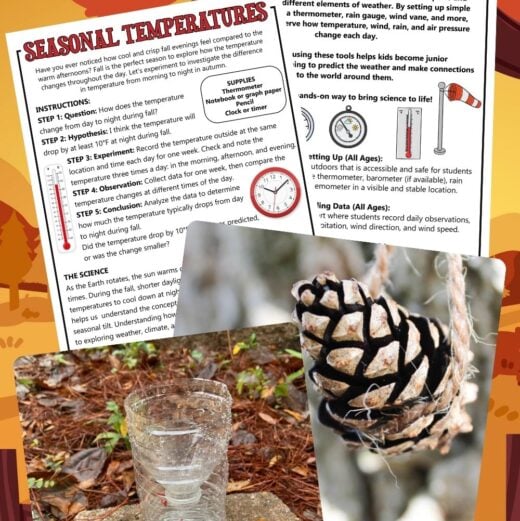
👉 Use our Fall Temperature Investigation to measure temperatures in the morning, afternoon, and evening.
Try it for one week or continue for a month. Older students can graph the measurements and compare one week with another.
Fall Wind Investigation
Wind changes from day to day too.
👉 Our Fall Wind Investigation has kids observe wind strength, wind direction, weather conditions, and what they notice moving outside.
Look at leaves, grass, flags, and branches for clues.
A one-week investigation works well, but continuing for a full month can reveal bigger changes in wind strength and direction as fall progresses.
💡 Pair this activity with an anemometer or wind vane if you want to add simple weather tools.
Pine Cone Weather Experiment
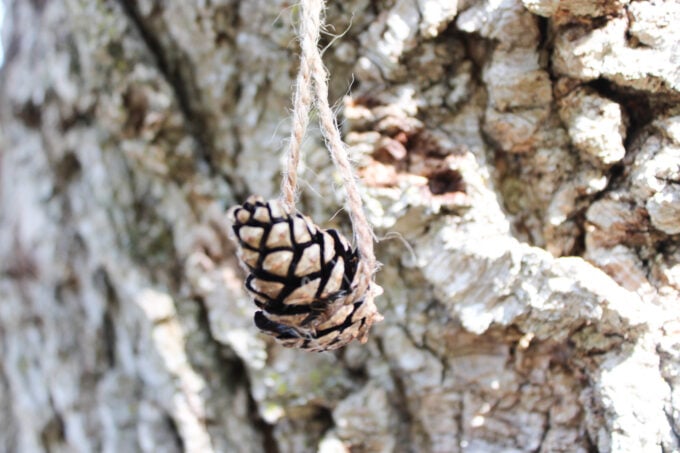
Pine cones can change depending on moisture in the air. Observe pine cones on dry and damp days and compare whether their scales are more open or closed.
👉 Our Pine Cone Weather Experiment makes an easy nature-based addition to a fall weather study and works especially well for younger elementary students.
Add the pine cone observations to your weather journal and compare them with the day’s clouds, rain, or humidity.
Measure Fall Rainfall
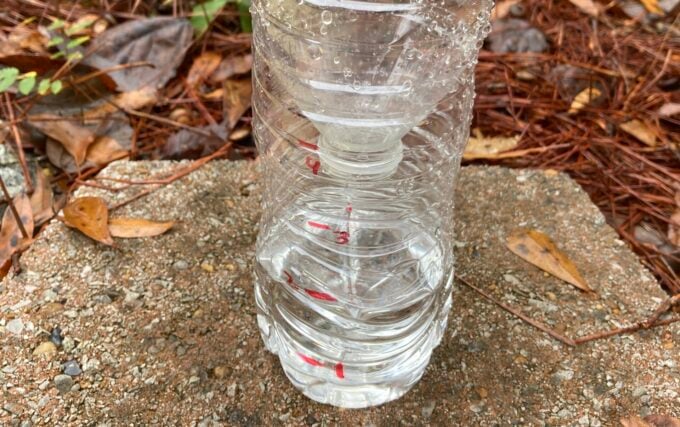
👉 A homemade Rain Gauge gives kids a simple way to collect real weather data.
Place the rain gauge in an open area and check it after rainfall.
Record:
- Date
- Amount of rain
- Cloud conditions
- Temperature
- Wind
Continue for several weeks and compare rainfall totals.
Ask:
- Which week had the most rain?
- Did several rainy days happen close together?
- What did the sky look like before the rain?
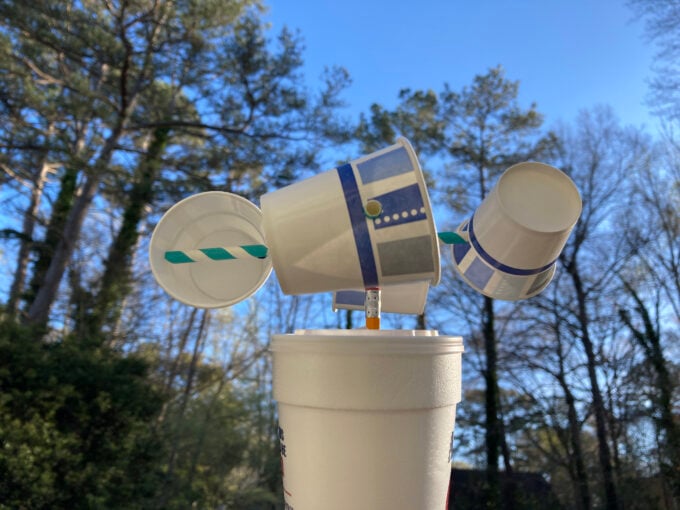
Measure Fall Wind Speed
👉 Build a simple DIY Anemometer to explore wind speed.
Kids can compare how quickly the cups spin on calm, breezy, and windy days.
You don’t need to calculate an exact wind speed for younger students. The goal can simply be to compare how the tool behaves under different wind conditions.
Older students can take repeated measurements and look for patterns.
Track Wind Direction
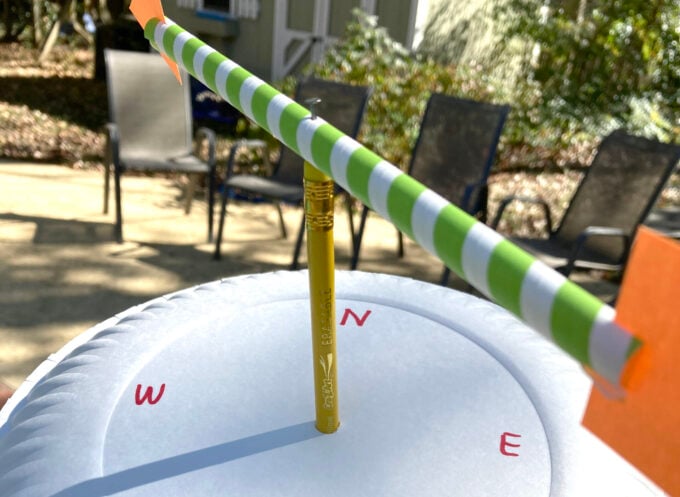
👉 A DIY Wind Vane shows the direction the wind is coming from.
Use it alongside the Fall Wind Investigation and record the direction each day.
After a week or month, compare the results.
- Did the wind often come from one direction?
- Did the direction change before rainy or stormy weather?
Observe Fall Clouds
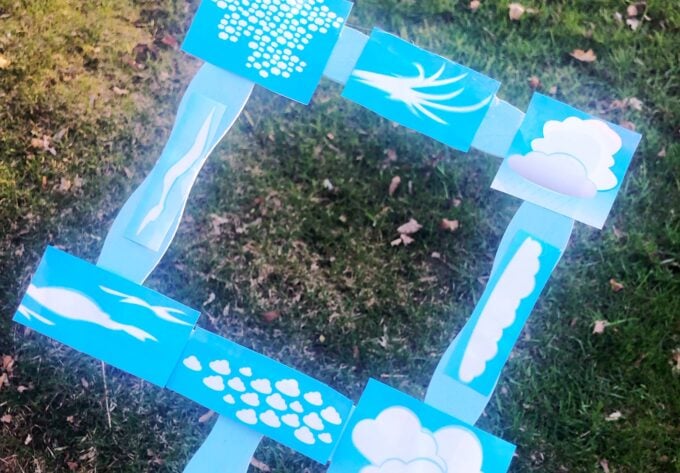
Clouds give kids another weather clue they can observe without special equipment.
Use our Cloud Viewer to identify and sketch different cloud types.
Add cloud observations to a science journal along with:
- Temperature
- Wind
- Rainfall
- What weather followed
💡 The goal isn’t to make a perfect weather forecast. Kids are practicing observing conditions and noticing connections.
Explore Air Pressure
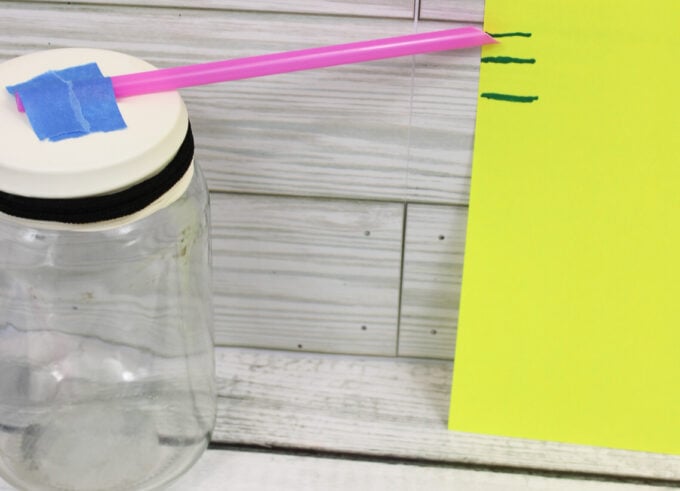
Air pressure is harder to see! Use a jar, balloon, and straw to create a simple barometer and observe how the straw moves as air pressure changes.
👉 A homemade Barometer can help make changes more visible.
For older elementary students, compare barometer readings with cloud, wind, and storm observations.
👉 You can also try our Air Pressure Balloon and Jar Experiment for another way to explore how temperature and air pressure are connected.
Keep a Fall Weather Journal
A weather journal turns several simple activities into one longer science project.
Kids might include:
- Daily or weekly temperature
- Wind strength and direction
- Rainfall
- Cloud sketches
- Pine cone observations
- Weather tool readings
- Questions
- Predictions
- Seasonal changes they notice
Encourage kids to return to the same location and make observations at similar times whenever possible.
At the end of the month, look back through the journal and ask:
- What changed most?
- What stayed fairly consistent?
- What surprised you?
- What patterns can you find?
Fall Weather and Seasonal Changes
Weather describes short-term conditions such as temperature, wind, clouds, and precipitation.
Fall also brings longer seasonal changes, including cooler average temperatures and changing daylight. These changes can affect the living world too.
👉 Visit our Fall Life Science Activities to explore how plants and animals respond through leaf changes, seed dispersal, migration, hibernation, adaptations, and other seasonal behaviors.
Free Fall Weather Science Guide
Want an easy way to start?
Grab the Free Fall Weather Science Guide for seasonal weather activities and observation ideas you can use at home or in the classroom.
GET THE FREE FALL WEATHER SCIENCE GUIDE →
Add the pages to a science journal or use them alongside your fall temperature, wind, cloud, and rainfall observations.
FAQ
What are good fall weather science projects for kids?
Temperature tracking, wind observations, rain gauges, anemometers, wind vanes, cloud journals, pine-cone weather observations, and barometers all work well in fall.
How long should a fall weather project last?
One week is enough for a simple investigation, but tracking weather for a full month makes larger seasonal changes and patterns easier to notice.
What grades are these fall weather activities for?
Most work well across grades K–5. Younger kids can focus on observation and simple comparisons, while older students can collect measurements, graph data, and look for patterns.
How can kids keep track of fall weather?
Use a science journal or weather notebook to record temperature, wind, clouds, rainfall, sketches, and questions over several weeks.
What is the difference between weather and climate?
Weather describes short-term conditions such as today’s temperature, wind, and rain. Climate describes typical weather patterns measured over much longer periods.
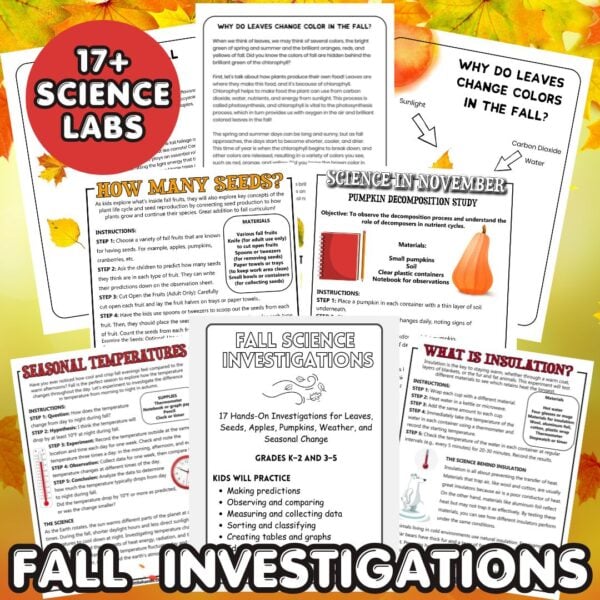
Want the Full Fall Investigation Lab?
If you want more than the free wind investigation, the Fall Investigation Lab brings together seasonal science activities you can use across several weeks.
It’s designed for simple, observation-based fall science with printable recording pages and investigations that help kids collect data, compare changes, and look for patterns.
GET THE FALL INVESTIGATION LAB →
It’s also included in the All-Access Pass.
More Fall Science
Looking for experiments beyond biology and life science?
Visit our Fall Science Activities hub for seasonal chemistry, physics, STEM, and Earth science.
Explore our Fall Weather Science Activities for wind, temperature, clouds, weather tools, and changing fall conditions.
You can also explore:
- Anatomy of Fall Coloring Pages (Leaf, apple, pumpkin)
- Fall 5 Senses Printable Craft
- Apple Science Experiments
- Pumpkin Science Experiments
- Homemade Weather Station for Kids
- Water Cycle in a Bag Experiment
- Fall Life Science Projects
- Winter Weather Science Projects
- Spring Weather Science Projects