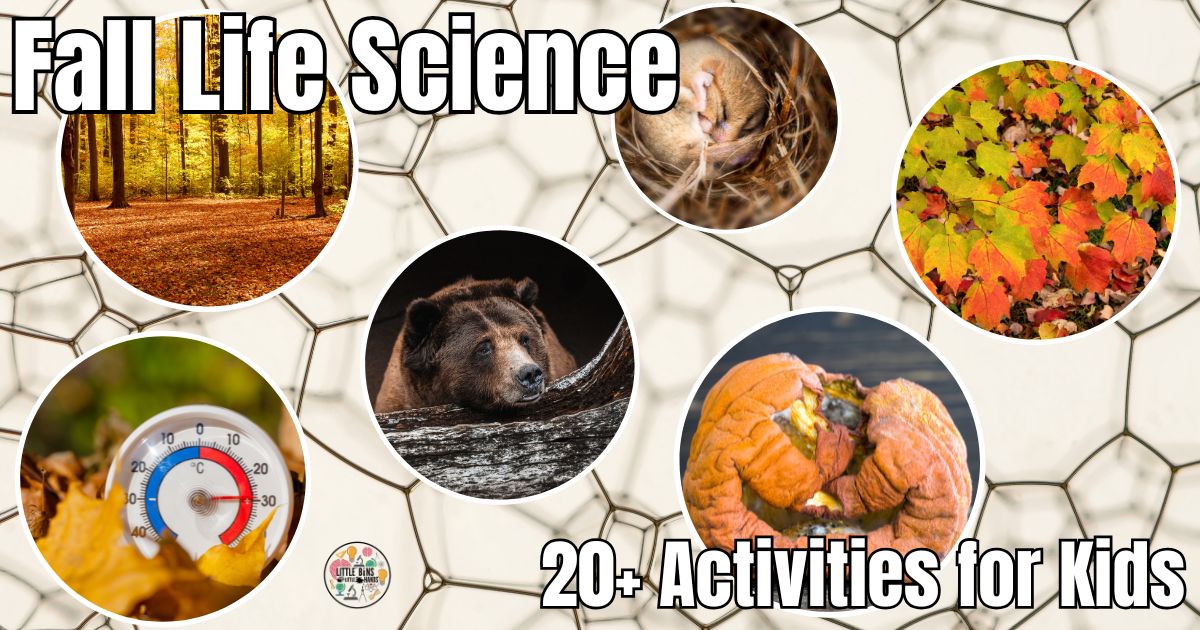
Fall Life Science Activities for Kids
Fall is one of the easiest seasons to observe life science in action. Leaves change color, seeds scatter, animals migrate or prepare for winter, and cooler temperatures begin changing the environment around us.
These fall life science activities for kids explore plants, animals, habitats, seasonal behavior, decomposition, and other changes you can actually observe during autumn.
Field: Life Science, Biology
Grades: K–5
Concepts: Seasonal changes, animal behavior, migration, hibernation, plant changes, seed dispersal, decomposition, habitats, observation
Featured Fall Life Science Activities
Start with these hands-on activities and observations.
- Hibernating Animals – Explore how animals prepare for and survive winter.
- Migration Activities – Discover why birds, butterflies, and other animals travel during fall.
- Seed Dispersal Experiment – Test different ways seeds can move to new places.
- Why Do Leaves Change Color? – Explore the science behind fall leaf colors.
- Decomposing Pumpkin Experiment – Observe how a pumpkin decomposes over time.
- Fall Seed Investigation – Compare the number of seeds inside different fruits.
- Diurnal and Nocturnal Animals – Compare animals that are active during the day and night.
- Build an Animal Shelter – Design a shelter that could help an animal meet its needs.
What Happens to Plants and Animals in Fall?
- Fall brings changes in daylight, temperature, weather, and available food.
- Plants and animals respond to those changes in different ways.
- Some animals migrate. Others grow thicker coats, store food, change behavior, or prepare to hibernate.
- Plants may stop producing new growth, leaves may change color and fall, and seeds may be dispersed to new places.
💡 These seasonal changes make autumn a useful time to take life science outdoors and observe what is actually happening.
Fall Animal Science
Animals provide some of the most noticeable signs of seasonal change.
Hibernation. Explore our Hibernating Animals Activities to learn how different animals survive periods of cold weather and limited food.
Migration. Our Migration Activities for Kids look at why birds, butterflies, and other animals travel to new areas as seasons change.
Animal adaptations. Compare structures and behaviors that help animals survive colder conditions. Explore our Winter Animal Adaptations activities for camouflage, insulation, food storage, and other survival strategies.
Daytime and nighttime animals. Use our Diurnal and Nocturnal Animals Activities to compare animals that are active during the day, night, or around dawn and dusk.
Seasonal food chains. Build a Winter Food Chain and explore how plants and animals remain connected as food availability and conditions change.
Spider life cycle. Fall is also a fun time to explore the Spider Life Cycle Lapbook, including the stages of a spider’s life and basic spider anatomy.


Fall Plant Science
Fall plants offer plenty to investigate without needing complicated supplies.
Seed dispersal. Fall is an excellent time to look for real seeds and seed pods outdoors. Try our Seed Dispersal Experiment and compare seeds that travel by wind, water, animals, or other methods.
Count the seeds. Cut open apples, pumpkins, peppers, or other fruits and use our Fall Seed Investigation to compare how many seeds each contains.
Changing leaves. Explore Why Leaves Change Color and investigate the pigments hidden inside green leaves.
How leaves work. Use a leaf investigation to closely examine veins, pores, and the structures that help leaves transport water, “sweat”, and exchange gases.
Plant life cycles. Connect seeds, plant growth, flowers, and new seeds with our Plant Life Cycle Activities.


Decomposition in Fall
A fallen leaf or rotting pumpkin isn’t simply disappearing. Decomposers break down dead material and return nutrients to the environment.
Our Pumpkin Jack Decomposition Experiment lets kids observe this process over time.
Keep a science notebook and record:
- Changes in color
- Changes in texture
- Mold growth
- Changes in shape
- Insects or other organisms you notice
- How quickly the pumpkin changes
You can repeat the observations over several weeks to turn it into a longer-term life science project.
Compost in a jar: Build a simple mini-compost system using leaves, plant scraps, and soil to observe decomposition over time. Track changes in color, texture, moisture, and decomposition, and connect these changes to decomposers and nutrient cycling.

Habitats and Ecosystems in Fall
Seasonal changes affect more than individual plants and animals. They can change entire habitats.
Animal habitats. Talk about how animals find food, water, shelter, and space as temperatures drop and plants change.
Build a habitat. Try our Build an Animal Shelter STEM Challenge and design a shelter using natural or recycled materials.
Living and nonliving things. Take a fall nature walk and sort what you find into living and nonliving groups with our Living and Non-Living Things Activities.
Ecosystems. Explore our Ecosystems for Kids activities to take a closer look at how plants, animals, soil, water, sunlight, and other parts of an environment interact.
👉 For an even broader look at these relationships, visit our Ecology Activities for Kids and Biomes for Kids collections.


Observe Fall Changes Over Time
Fall life science doesn’t have to be a one-day activity. Choose a tree, garden, schoolyard, park, or other outdoor spot and return to it throughout the season.
Kids might track:
- Leaf color
- Fallen leaves
- Seeds and seed pods
- Flowers disappearing
- Animal activity
- Birds
- Insects
- Temperature
- Wind
- Daylight
Add observations, sketches, questions, and measurements to a science journal or notebook.
👉Our Observation Activities for Kids offers more ideas to help students notice details and record useful science observations.
Connect Weather and Life Science
Weather isn’t life science by itself, but changing fall weather affects living things.
- Use our Fall Temperature Investigation to track how temperatures change through the season.
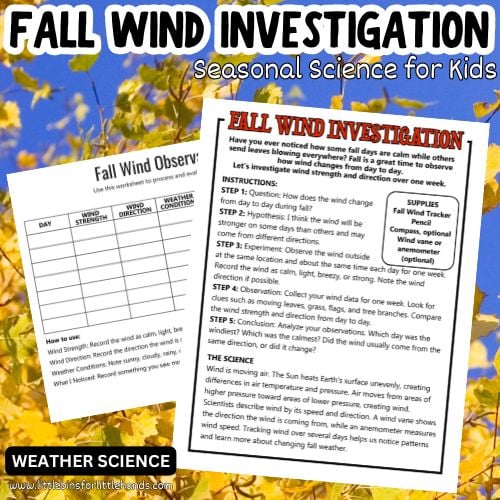
- You can also try the Fall Wind Investigation to observe wind strength and direction over a week or even a full month.
- Set up a Pine Cone Weather Station to observe humidity levels indoors or outdoors. Predict the weather!
Then ask:
- What changes do you notice in plants and animals as the weather changes?
- Are there fewer insects on cooler days?
- Do you notice changes in leaves as temperatures drop?
- What happens to seeds and leaves on windy days?
💡 This gives kids a chance to connect their weather observations with changes in the living world.


Start a Fall Nature Journal
A fall science journal can combine several of these activities into one longer project.
Kids can add:
- Nature walk observations
- Leaf sketches
- Seed collections or drawings
- Temperature data
- Wind observations
- Animal sightings
- Questions
- Predictions
- Changes they notice from week to week
👉 Use our Free Fall Science Observation Page to get started, or take along our Fall Nature Hunt on your next walk.
Guiding Questions
- What changes do you notice outside during fall?
- How are plants changing?
- What are animals doing differently?
- Where are seeds coming from and how are they moving?
- What happens to fallen leaves and dead plant material?
- How might cooler temperatures affect living things?
- What patterns do you notice after several weeks?
FAQ
What is fall life science? Fall life science explores how plants, animals, habitats, and ecosystems change or respond during autumn.
What are good fall biology activities for kids? Migration, hibernation, seed dispersal, leaf color investigations, decomposition, animal adaptations, and nature observations all make useful fall biology activities.
What grades are these fall life science activities for? Most work well across grades K–5. Younger students can focus on observation and sorting, while older students can collect data, investigate cause and effect, and make connections between weather and living things.
How can kids study seasonal changes? Choose an outdoor location and revisit it throughout fall. Record changes in plants, animals, temperature, wind, seeds, leaves, and other signs of the season.
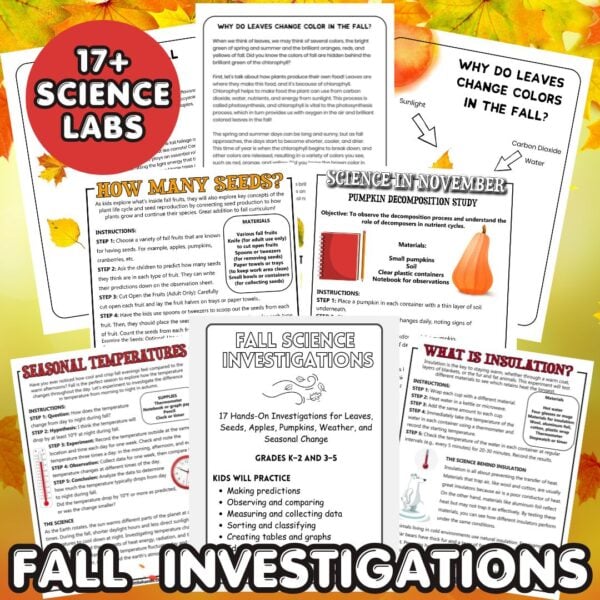
Want the Full Fall Investigation Lab?
If you want more than the free wind investigation, the Fall Investigation Lab brings together seasonal science activities you can use across several weeks.
It’s designed for simple, observation-based fall science with printable recording pages and investigations that help kids collect data, compare changes, and look for patterns.
GET THE FALL INVESTIGATION LAB →
It’s also included in the All-Access Pass.
More Fall Science
Looking for experiments beyond biology and life science?
Visit our Fall Science Activities hub for seasonal chemistry, physics, STEM, and Earth science.
Explore our Fall Weather Science Activities for wind, temperature, clouds, weather tools, and changing fall conditions.
You can also explore: