

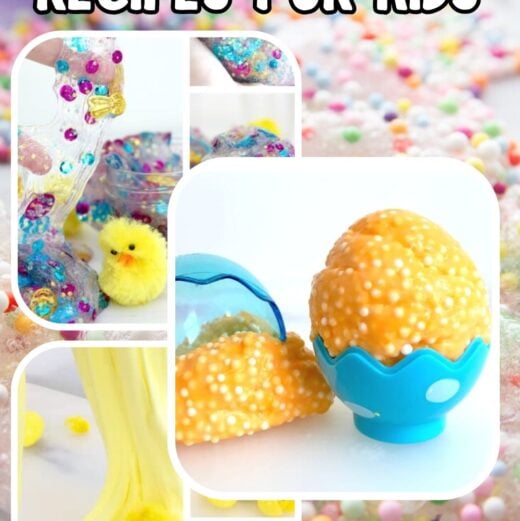
Easter slime is an easy and fun way to combine simple science and hands-on sensory play. This homemade slime recipe comes together quickly and can be turned into a creative Easter activity using plastic eggs, colors, and fun mix-ins.
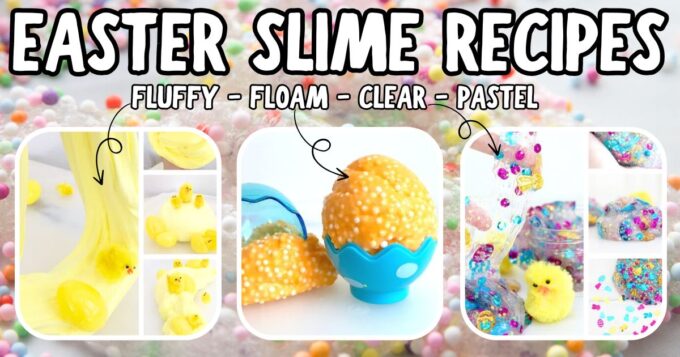
You can use this recipe to make Easter egg slime, fluffy slime, floam slime, or clear slime variations.
How To Make Easter Slime
This recipe uses a simple liquid starch slime, but you can use your preferred slime base as well. You’ll find more options in our homemade slime guide here.
Supplies:
- 1/2 cup washable PVA school glue (white or clear)
- 1/4 cup liquid starch
- food coloring (optional)
- plastic Easter eggs
- foam beads, glitter, or confetti (optional)
- labels (found in Easter slime project pack)
Instructions:
🎥 Watch the video:
- Add glue to a bowl.
- Mix in food coloring (if using) until combined.
- Stir in glitter (if using).
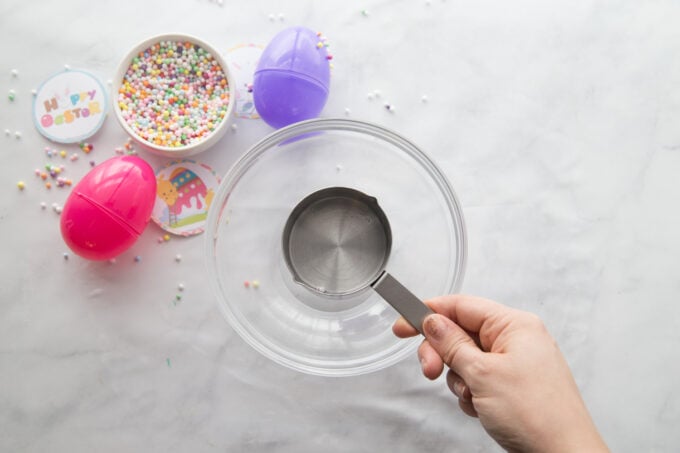
- Slowly add liquid starch while stirring.
- Add foam beads if using
- Continue mixing until slime forms.
- Knead with your hands until smooth and stretchy.
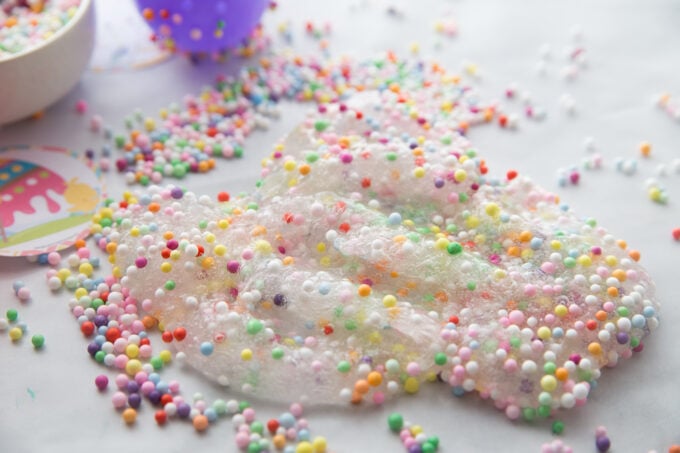
If the slime feels sticky, let it sit for a few minutes and continue kneading.
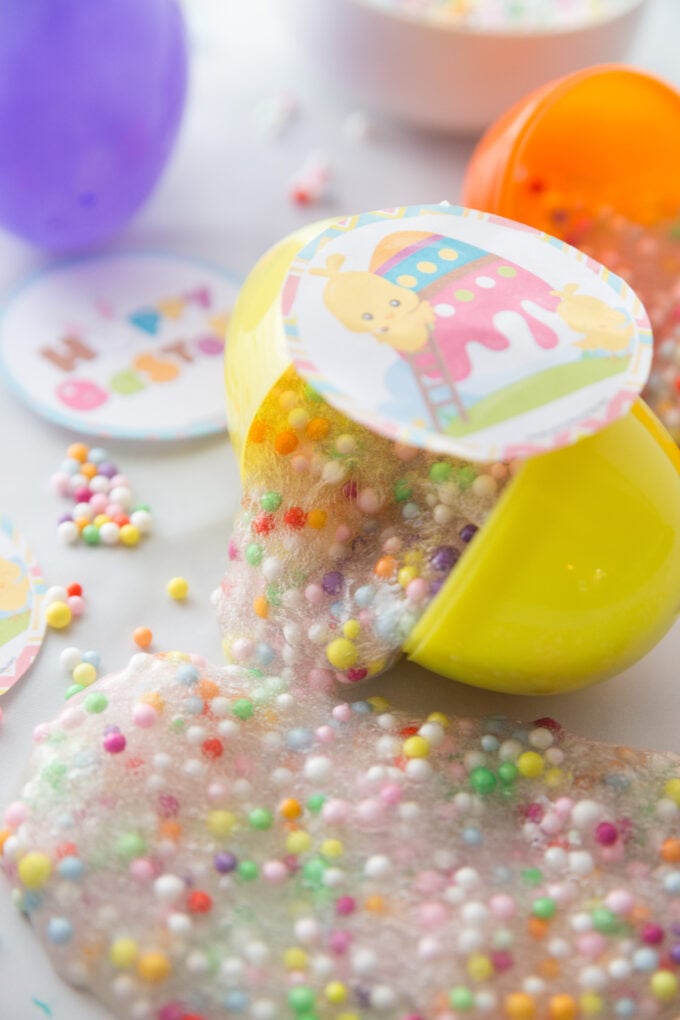
Easter Egg Slime Activity
Once your slime is ready, divide it into portions and place it inside plastic eggs.
You can use this idea in several ways:
- hide slime-filled eggs for an Easter egg hunt
- use as a simple party activity or favor
- create different colors and mix them together
This is one of the easiest ways to turn a basic slime recipe into a themed Easter activity.
Easter Slime Ideas to Try
Making slime for Easter is a great way to explore color, texture, and simple chemistry. Once you have a base slime recipe, you can easily create different variations using fun mix-ins and colors.
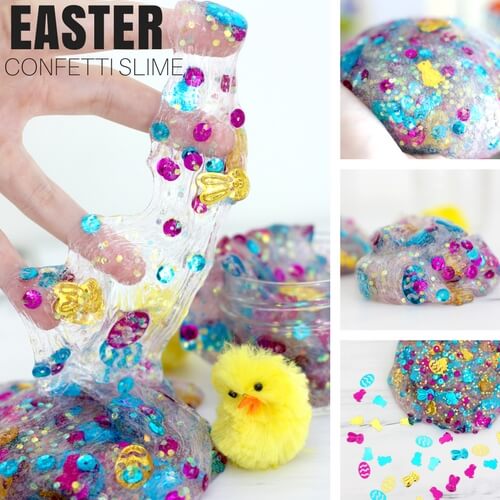
Easter Confetti Slime
Use a clear slime recipe and add Easter-themed confetti for a bright, detailed look.
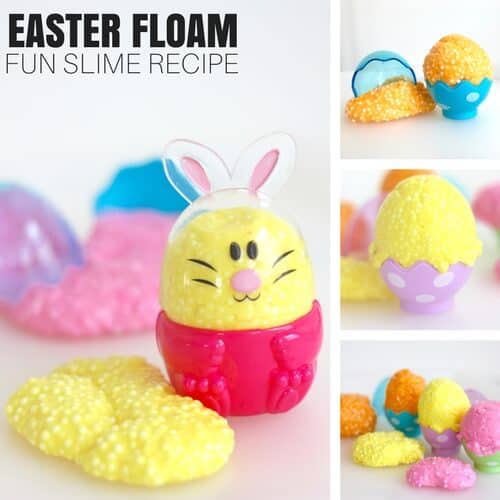
Easter Floam Slime
Add foam beads to create a textured slime that is thicker, slightly moldable, and fun for sensory play. Start with a homemade floam slime recipe.
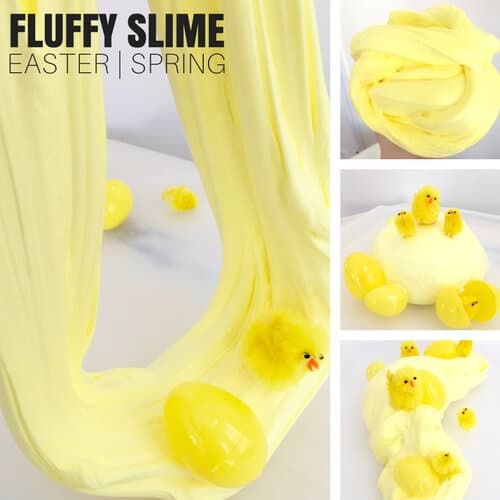
Easter Fluffy Slime
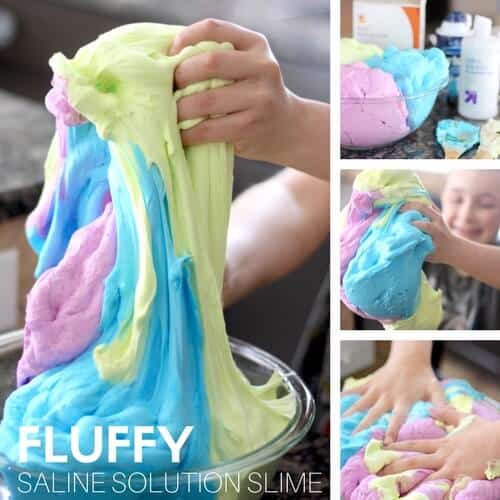
Add shaving cream to create a softer, lighter slime. This version is easy to make with a fluffy slime recipe.
Colorful Easter Egg Slime
Use bright or neon colors with clear glue for bold slime that pairs well with plastic eggs.
Pastel Easter Egg Slime
Use soft pastel colors along with white glue for a more traditional Easter look.
Peeps Slime (Taste-Safe Option)
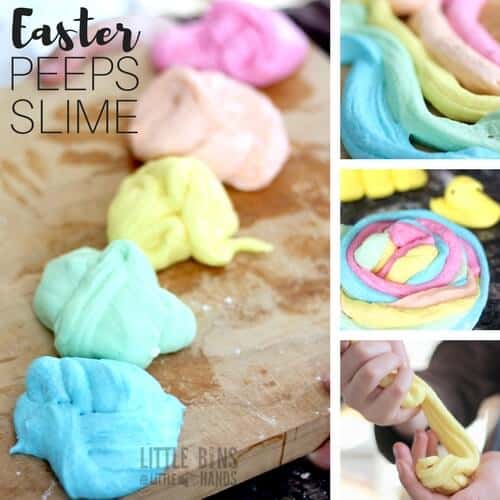
Try a Peeps taste-safe slime recipe made with marshmallow Peeps for a different type of slime activity.
What Do You Need To Make Easter Slime?
Making slime is a simple chemistry activity that uses just a few basic ingredients.
The most important ingredient is PVA school glue, which forms the base of the slime. You can use either white glue or clear glue, depending on the look you want.
An activator is added to the glue to create the slime texture. You can use liquid starch, saline solution, or borax, depending on your preferred recipe.
From there, you can customize your slime with colors and mix-ins to create different Easter-themed ideas.
👉 Read more about various slime activators here.
👉 Check out our basic slime recipes using the different activators here.
Optional Mix-Ins for Easter Slime
- plastic Easter eggs
- Easter confetti
- glitter or sequins
- mini erasers or chicks
- foam beads
- food coloring
Slime Tips
- Measure ingredients carefully for best results
- Add activator slowly to avoid over-activating
- Knead well to improve texture
- Let the slime rest briefly before playing
- Keep your hands clean to extend slime’s life
👉 Need more help? Troubleshoot with our how to fix slime guide here.
How To Store Slime
Store slime in a covered container.
- lasts about 1 week or more with proper care
- keep it clean and sealed when not in use
- avoid leaving it out for long periods
The Science Behind Slime
Slime is a simple chemistry activity that introduces the concept of a polymer.
The glue contains long chains of molecules that can move freely. When you add the activator, these chains begin to link together. This process is called cross-linking.
As the chains connect, the mixture changes from a liquid into a stretchy material.
Slime is also called a non-Newtonian fluid, which means it behaves like both a liquid and a solid depending on how it is handled.
A simple way to think about it is like spaghetti:
- freshly cooked spaghetti moves easily like a liquid
- leftover spaghetti sticks together like slime
👉 Learn more about the slime science here.
More Easter Science Activities
If you enjoyed this activity, you can also explore:

Easter Slime FAQs
How long does Easter slime last?
Slime will usually last about a week or longer if stored properly in a sealed container and kept clean.
Can I use clear glue instead of white glue?
Yes, clear glue works very well and is especially useful when adding beads or confetti.
What if I do not have liquid starch?
You can use saline solution with baking soda or a borax solution instead.
Why is my slime too sticky?
Sticky slime usually needs a little more activator or more kneading time.
Why is my slime too stiff?
Add a small amount of water or extra glue and knead until it softens.
Is this safe for kids?
Yes, with supervision. Slime is not edible and should be used with clean hands and surfaces.
Printable Easter Project Pack
- 20+ Easter science activities and STEM projects for kids that are easy to set up and fit into the time you have available, even if it’s limited!
INCLUDES:
- Easter STEM Pack
- PEEPS Theme STEM Pack
- 👉Easter Slime Science Pack



What fun Easter Slime 🙂 Thanks for letting me share in my Easter Roundup
Your welcome! Thank you!