
Explore how potatoes can power a light bulb! This potato light bulb experiment is a fantastic way to introduce kids to electricity and circuits. Follow the printable step by step instructions to set up a potato battery for an engaging addition to any STEAM curriculum.

Potato Light Bulb Experiment
Explore the physical sciences with this simple circuit activity for kids. Make sure to get the free printable instructions further below! It is perfect for 4th grade, 5th grade, and 6th grade science.
Supplies:
- 2-3 large potatoes
- 2 copper wires
- 2 galvanized nails (zinc-coated)
- 1 small LED light bulb (a low voltage one)
- 2 alligator clips
- A knife (for adult use only)
- A multimeter (optional for measuring voltage)
Instructions:
STEP 1. If the potatoes are too large, cut them in half. You’ll need two halves per potato. If they are a manageable size, you can use them whole. Make sure each potato has a flat surface to rest on.
STEP 2. Insert one galvanized nail into each potato. Push it in deep enough to stay secure but not go through.
STEP 3. Insert one copper wire into each potato, ensuring it’s not too close to the nail. The wire and nail should be about 1-2 inches apart.
STEP 4. Using an alligator clip, connect the first potato’s copper wire to the second potato’s nail. If you’re using more than two potatoes, continue connecting them in this series pattern: copper wire to nail, and so on.

STEP 5. Next, set up the light bulb. Connect the free copper wire from the first potato to one terminal of the LED light bulb using an alligator clip.
STEP 6. Use the second alligator clip to connect the free nail from the last potato to the other terminal of the LED light bulb.
Choose the Right Bulb: Ensure your LED light bulb is low voltage; otherwise the potatoes may not generate enough power.

Once all connections are secure, the LED light bulb should light up. If it doesn’t, check all connections to ensure they are tight and correct.
Optional – Measure the Voltage: If you have a multimeter, you can measure the voltage your potato battery produces. Connect the probes to the nails and wires to see the electrical output.

Free Potato Light Bulb Printable Instructions
Grab free instructions to add this potato light bulb project to your STEM lesson plan!

How Does It Work?
This potato battery is a simple way to demonstrate how a chemical reaction can produce electricity.
Your circuit consists of a potato, which acts as an electrolyte, a substance that contains free ions and conducts electricity. Copper wire (or a coin) and a galvanized nail (zinc-coated) are used as electrodes. Alligator clips connect the metals to complete the circuit. A light bulb or LED shows that electricity is being produced.
The potato contains phosphoric acid, which interacts with zinc and copper. The zinc undergoes a chemical reaction (oxidation) in which it loses electrons, and these electrons flow through the wire from the zinc nail to the copper wire.
As the electrons flow from the zinc to the copper, they pass through the wire and light up the bulb or LED.
In the potato, positively charged hydrogen ions move toward the copper electrode, gaining electrons (reduction). This completes the circuit, allowing continuous electron flow.
A potato battery is a fun demonstration of the principles of electricity and shows how chemical energy can be converted into electrical energy.
Experiment Further: Try using different fruits or vegetables like lemons or apples to see if they work as a battery and produce a similar or different voltage.
More Electricity Experiments For Kids
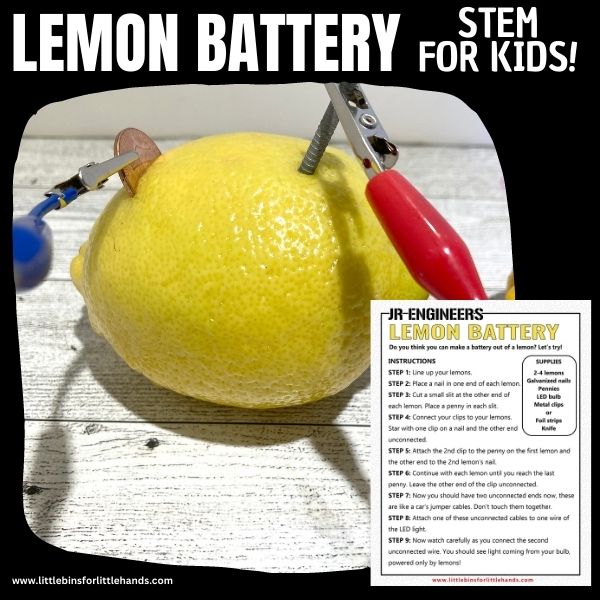
- Make a Lemon Battery
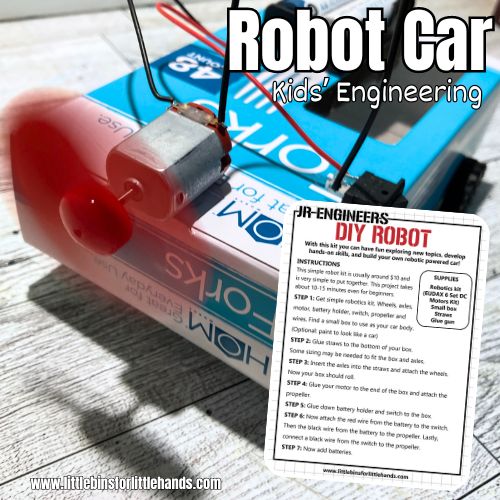
- Build a Simple Robot Car
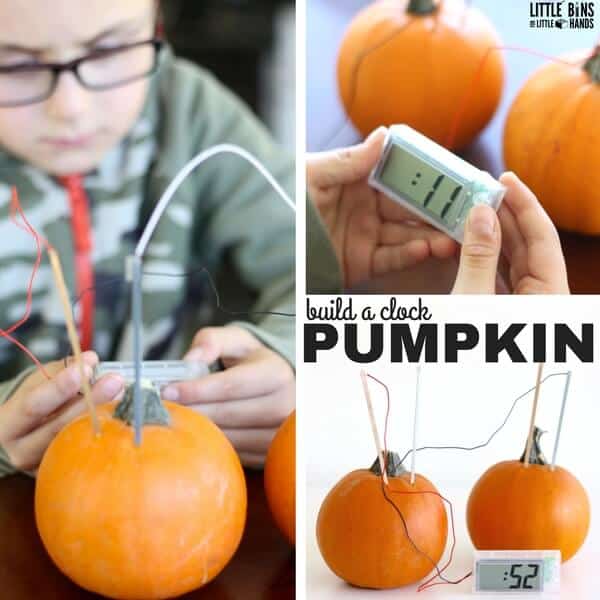
- Power a Clock With A Pumpkin
- Make an Electromagnet
- Make a homopolar motor
Also explore…

STEM Resources To Get You Started
Here are a few resources that will help you introduce STEM more effectively to your kiddos or students and feel confident yourself when presenting materials. You’ll find helpful free printables throughout.
- Engineering Design Process Explained
- What Is An Engineer?
- Engineering Words
- Real World STEM
- Questions for Reflection (get them talking about it!)
- BEST STEM Books for Kids
- 14 Engineering Books for Kids
- Jr. Engineer Challenge Calendar (Free)
- Must Have STEM Supplies List
- Join us in the Club
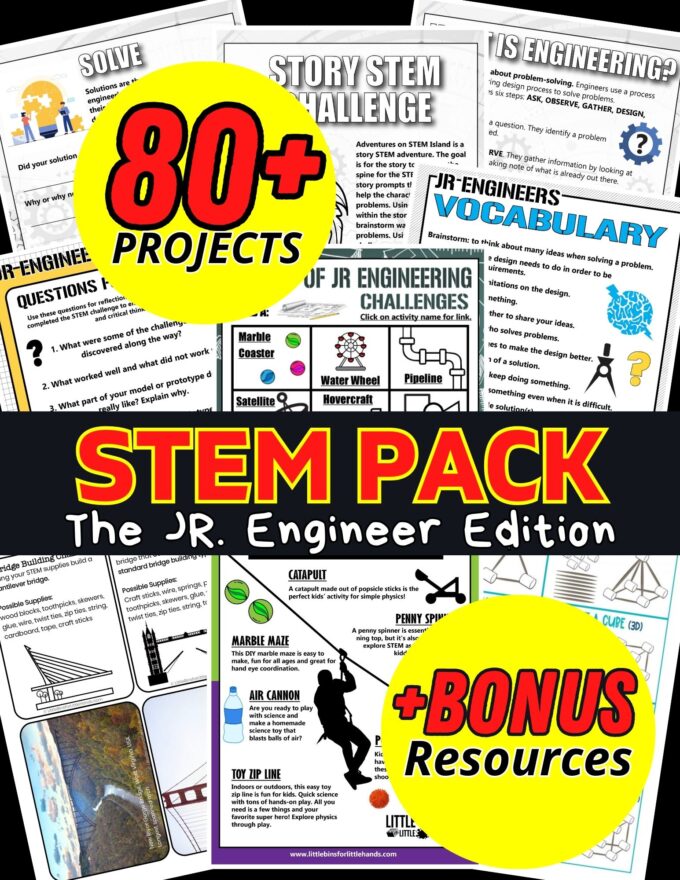
Printable STEM Pack for Kids
80+ Doable Engineering Projects in one convenient pack!
- Full instructions with sample images
- Activity-specific instruction sheets
- Data Collection Sheets
- Questions for Reflection
- Architecture Building Cards: Try the tallest tower challenge
- Bridge Building Cards: Explore different types of bridges to build your own.
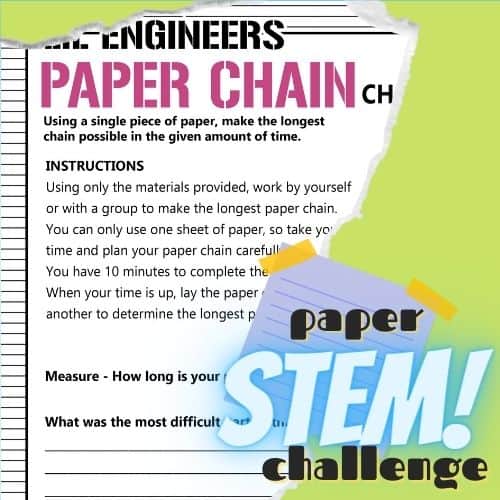
- Paper Chain STEM Challenge: Who can make the longest chain? Great icebreaker or quick challenge!
- 3 Little Pigs Architectural Pack: Design a house that won’t blow away!
- Great marshmallow challenge: A classic challenge kids love!
- Real-world STEM challenge lesson but don’t know where to start? Our easy-to-follow template shows the steps!
- What’s the difference between a scientist and an engineer?
- Crossword and word search with engineering vocabulary.
- Engineering vocabulary cards
- Design a one-of-a-kind invention and write about it with this 5-page activity!