
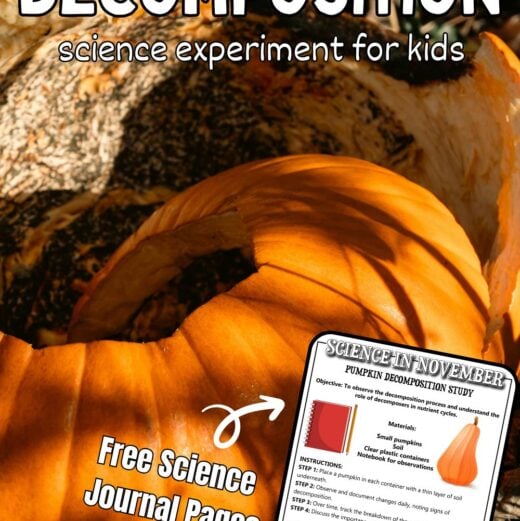
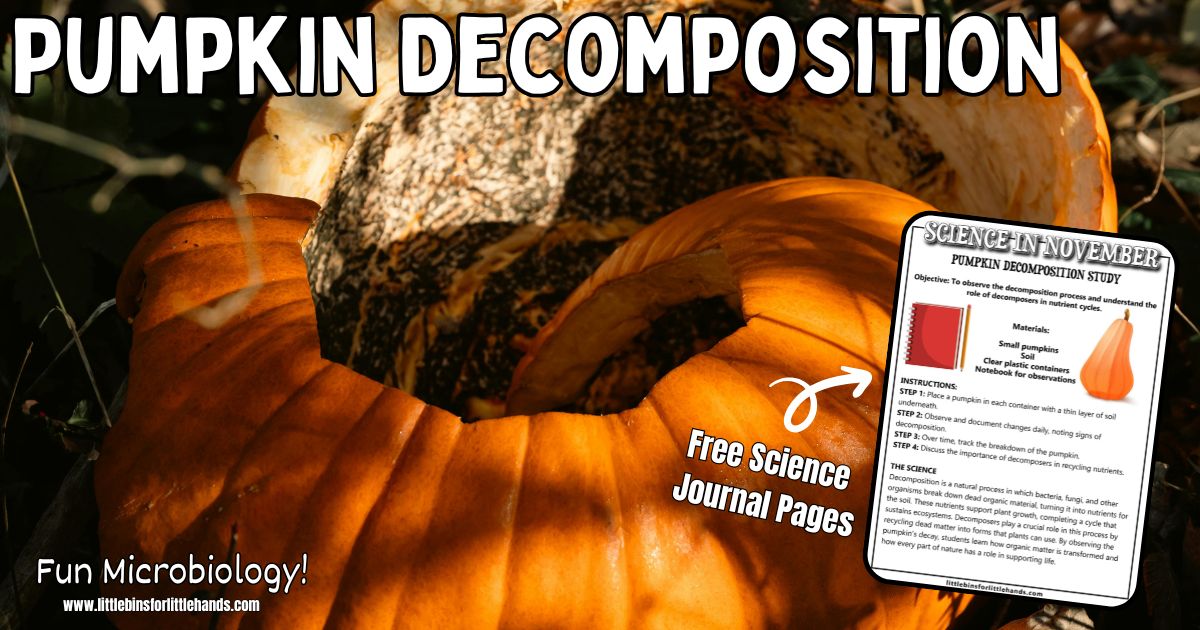
What happens to a pumpkin after Halloween? Instead of throwing it away, turn it into a simple pumpkin decomposition experiment and watch how it changes over time.
Kids can observe mold, softening, color changes, insects, and other signs of decay while learning how decomposers help recycle once-living material back into the environment. This is an easy fall life science investigation for classrooms, homeschool, or outdoor science.
Field: Life Science, Biology
Grades: K–5
Concepts: Decomposition, Fungi, Bacteria, Nutrient Cycling, Observation
What Is Pumpkin Decomposition?
Pumpkin decomposition is the natural process of a pumpkin breaking down after it is no longer living. Fungi, bacteria, yeast, insects, and other decomposers help break the pumpkin into smaller materials that eventually return nutrients to the soil.
How Long Does It Take for a Pumpkin to Decompose?
A carved pumpkin may begin showing mold, soft spots, and other signs of decay within a few days. In warm, damp conditions, it may collapse within a few weeks.
A whole, uncarved pumpkin usually takes longer to break down because the intact skin helps protect the inside.
The rate of decomposition can change depending on:
- whether the pumpkin is carved or whole
- temperature
- moisture
- contact with soil
- insects and microorganisms
This makes pumpkin decomposition a great long-term observation experiment because kids can compare how different conditions affect the process. can track, measure, and compare).
Pumpkin Decomposition Experiment Supplies
- 1–3 pumpkins
- Garden space, flowerpot, or large clear bin with soil
- Notebook or printable observation journal
- Magnifier or microscope, optional
- Camera, optional
- Gloves for handling the pumpkin as it softens
For a comparison experiment, try:
- a carved pumpkin
- a whole uncarved pumpkin
- an uncarved pumpkin with the top removed
How to Set Up the Pumpkin Decomposition Experiment
Step 1: Choose Your Pumpkins
Use one pumpkin for a simple observation activity, or set up several pumpkins to compare different conditions.
💡 Try a carved pumpkin, a whole pumpkin, and a pumpkin with the top removed.
Step 2: Pick a Spot
Place the pumpkins outside in soil, a garden bed, or a large container.
🔎 For closer observation, place part of each pumpkin in soil inside a clear bin.
Step 3: Observe Regularly
Check the pumpkins daily or weekly. Look for:
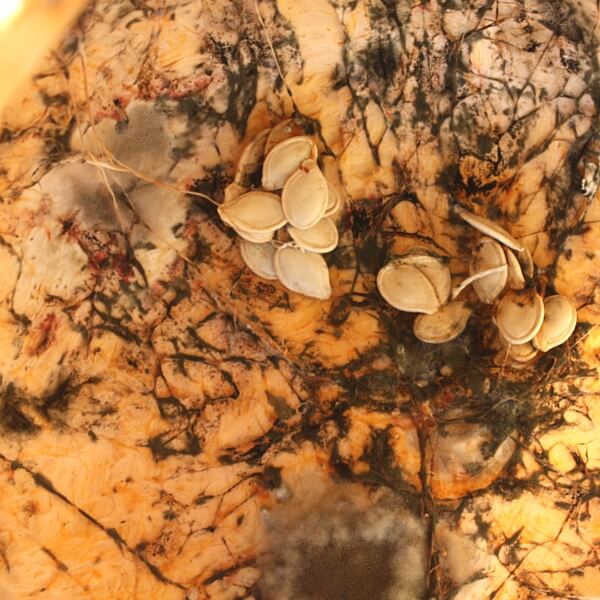
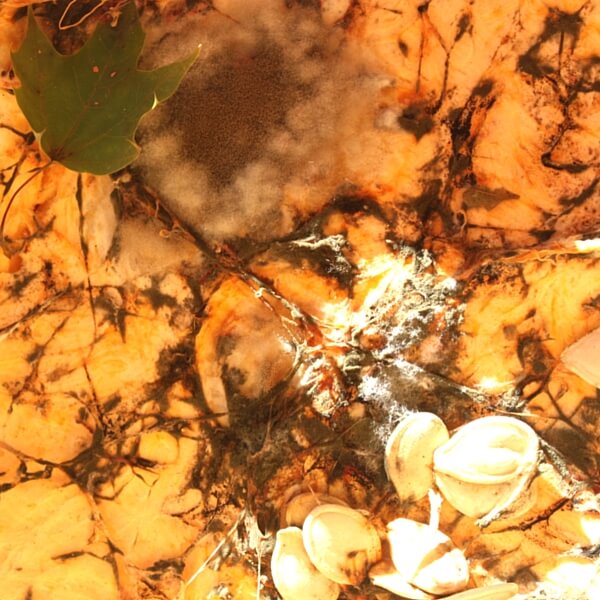
- mold
- changes in color
- soft or sagging skin
- moisture
- insects
- changes in shape or structure
Step 4: Record What You Notice
Draw, write, or photograph your observations. Older students can also measure changes, compare pumpkins, or create a decomposition timeline.
Step 5: Compare the Results
After several weeks, compare which pumpkin changed fastest and which took the longest.
🔎 Talk about what may have caused the differences.
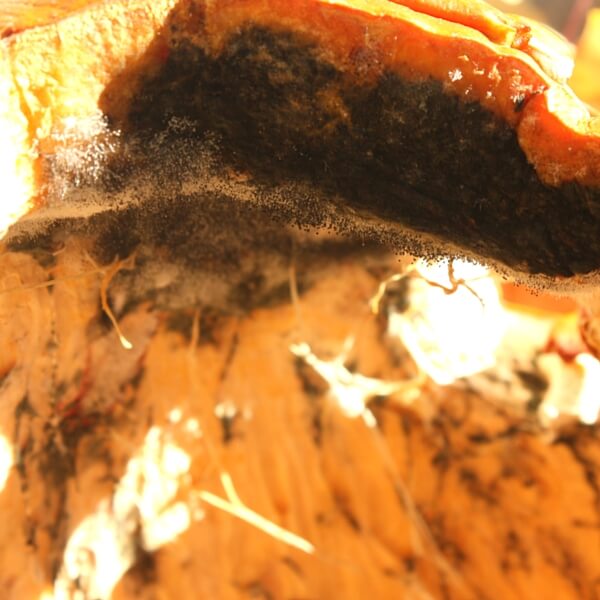
What to Observe
Encourage kids to look closely at how the pumpkin changes over time.
They can record:
- when mold first appears
- where mold appears
- changes in color
- changes in texture
- how the pumpkin smells
- whether insects visit
- whether the pumpkin collapses
- changes in the surrounding soil
For younger kids, simple drawings and verbal observations work well. Older students can add dates, measurements, photographs, and comparisons.
The Science Behind Pumpkin Decomposition
Decomposition is the process of breaking down once-living material into smaller parts.
- Fungi and mold often become visible on the pumpkin’s surface.
- Bacteria and yeast help break down sugars and other materials inside the pumpkin.
- Insects and worms may also help speed up decomposition.
💡 As the pumpkin breaks down, it returns nutrients to the surrounding environment.
Guiding Questions
- What changes do you notice first?
- Where does mold appear?
- Does a carved pumpkin change faster than a whole pumpkin?
- How does temperature affect decomposition?
- What role might soil, insects, fungi, and bacteria play?
- What evidence shows that the pumpkin is breaking down?
Turn It Into a Pumpkin Science Investigation
Make this activity more investigative by changing one variable and comparing the results.
- Carved vs. Whole Pumpkin: Does a carved pumpkin decompose faster than an uncarved pumpkin?
- Temperature Test: Place one pumpkin in a warmer location and one in a cooler location.
- Soil vs. No Soil: Compare a pumpkin placed on soil with one placed on another surface.
- Compost Comparison: Compare a pumpkin added to compost with one left in the yard.
Make It a Pumpkin Mold Experiment
Turn the activity into a more focused mold investigation by asking one testable question. Possible questions include:
- Does mold appear faster indoors or outdoors?
- Does a carved pumpkin grow mold faster than a whole pumpkin?
- Does soil type affect how quickly the pumpkin decomposes?
🔎 Have students make a prediction, choose one variable to change, record observations, and compare results.
Safety Notes
- Wear gloves when handling moldy or decomposing pumpkins.
- Wash hands after observing.
- Do not eat or taste pumpkins used in the experiment.
- Avoid touching mold directly.
- Keep observation tools separate from food-use items.
Free Pumpkin Decomposition Observation Journal
Use the printable journal to record changes as the pumpkin decomposes. Kids can sketch what they see, add dates, compare pumpkins, and track changes over time.
👉 Get the Pumpkin Decomposition Observation Journal
Pumpkin Decomposition FAQ
How long does it take for a pumpkin to decompose?
A carved pumpkin may start to rot within a few days and can collapse within a few weeks, depending on temperature and moisture. A whole pumpkin usually takes longer.
Why does mold grow on pumpkins?
Mold is a fungus. Once the pumpkin begins to break down, mold can grow on the surface and feed on the decaying material.
Which decomposes faster: a carved pumpkin or a whole pumpkin?
A carved pumpkin usually decomposes faster because more of the inside is exposed to air and moisture.
What helps a pumpkin decompose?
Fungi, bacteria, yeast, insects, worms, moisture, and temperature can all affect how quickly a pumpkin breaks down.
Can this be used as a science project?
Yes. Compare carved and whole pumpkins, change temperature or soil conditions, or track mold growth over time.
Printable Pumpkin STEM Pack
Want your pumpkin science, STEM, math, and art activities organized?
Our Pumpkin STEM Pack includes 100+ pages of pumpkin-themed science, engineering, early math, and hands-on activities. It’s a great way to build a complete pumpkin theme without needing a Halloween focus.
👉 Explore the Printable Pumpkin STEM Pack
More to Explore
Pumpkin Science Activities | Pumpkin Life Cycle | Parts of a Pumpkin | Fall Life Science Activities | Microbiology Experiments | Bread Mold Experiment