

Our Halloween density experiment is perfect for your young mad scientist! We love science and Halloween, so we have tons of fun Halloween science experiments. Learn about the density of different liquids with a classic liquid density science experiment!
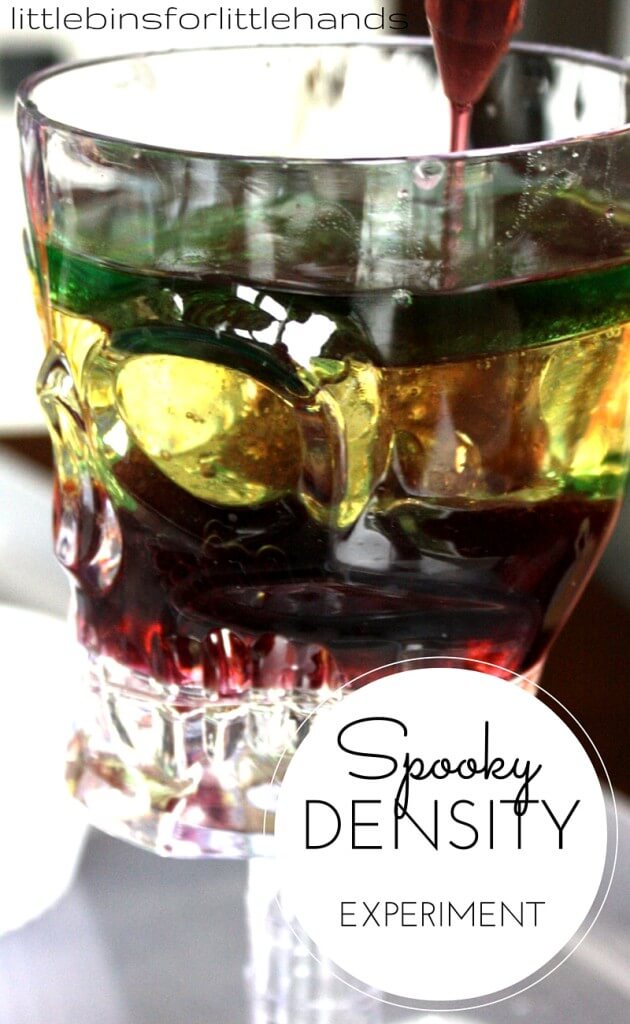
Halloween Density Experiment
You can check out even more of our awesome Halloween science experiments towards the end, but I will share now that we have had a lot of fun exploring brains and hearts this fall for some really creepy science!
Supplies:
- Tall Cup or Jar
- Vegetable Oil
- Water
- Rubbing Alcohol
- Corn Syrup
- Food Coloring
- Alka Seltzer Tablets
- Eye Dropper
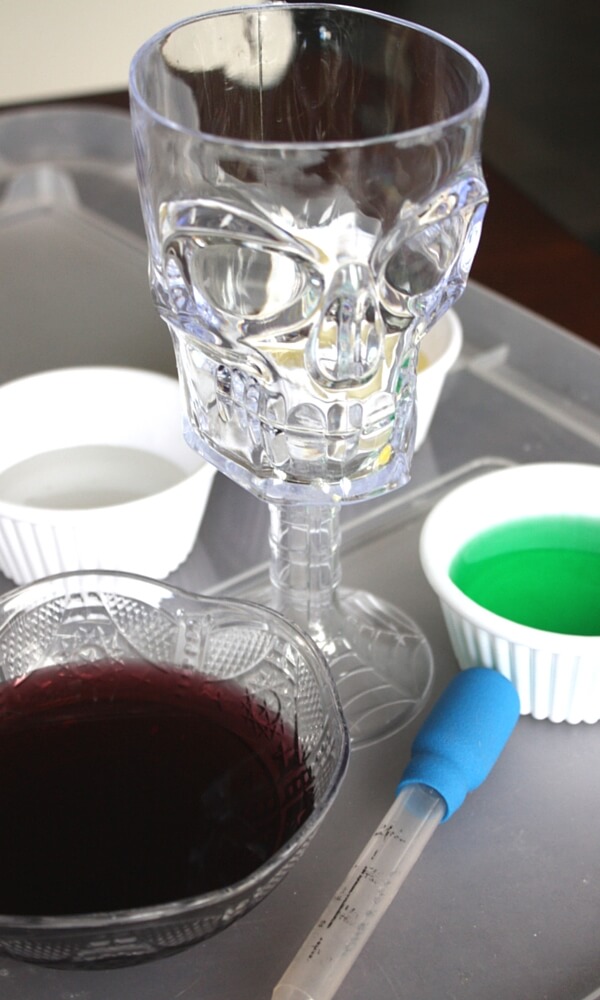
Experiment Setup:
STEP 1. To get started, pour your vegetable oil into the cup or jar.
Ask your kids if they think the oil is heavy or light? Can they predict what will happen when the next liquid is added? {Free science worksheets here}
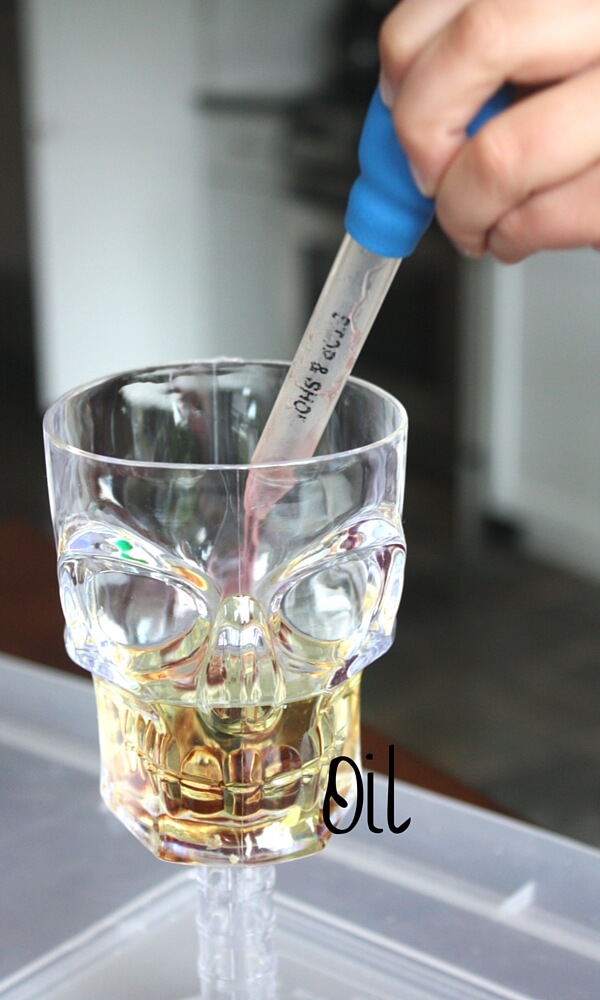
STEP 2. Once your kids have made their predictions have them use an eyedropper to add water to the oil. Now, after making some simple observations, which liquid is lighter or heavier meaning which is liquid is denser?
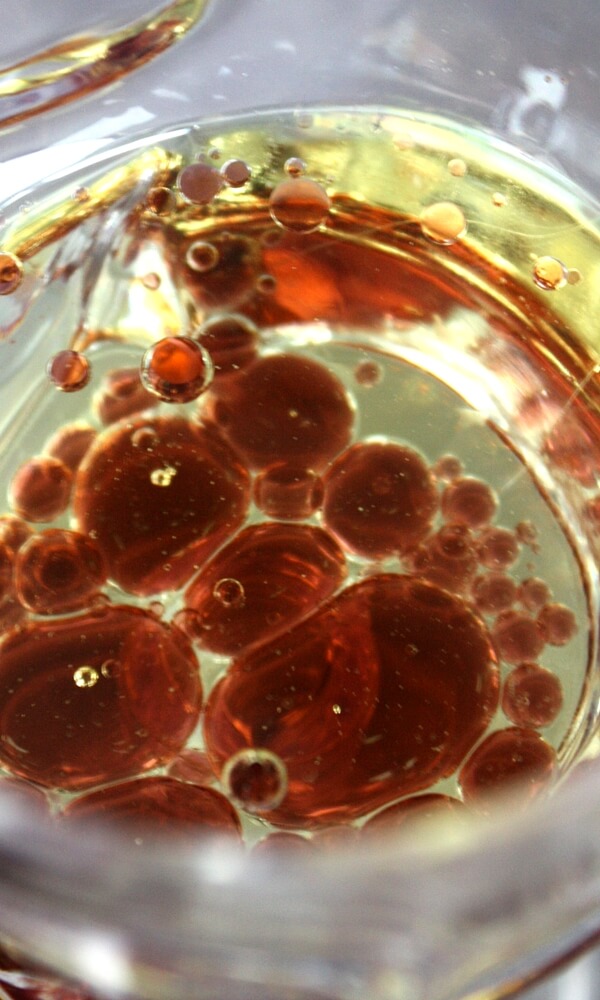
Check out how cool the activity looks as the water drops sink to the bottom! Below you will see a picture we took looking down from the top of the cup at colored water droplets sinking through the oil.
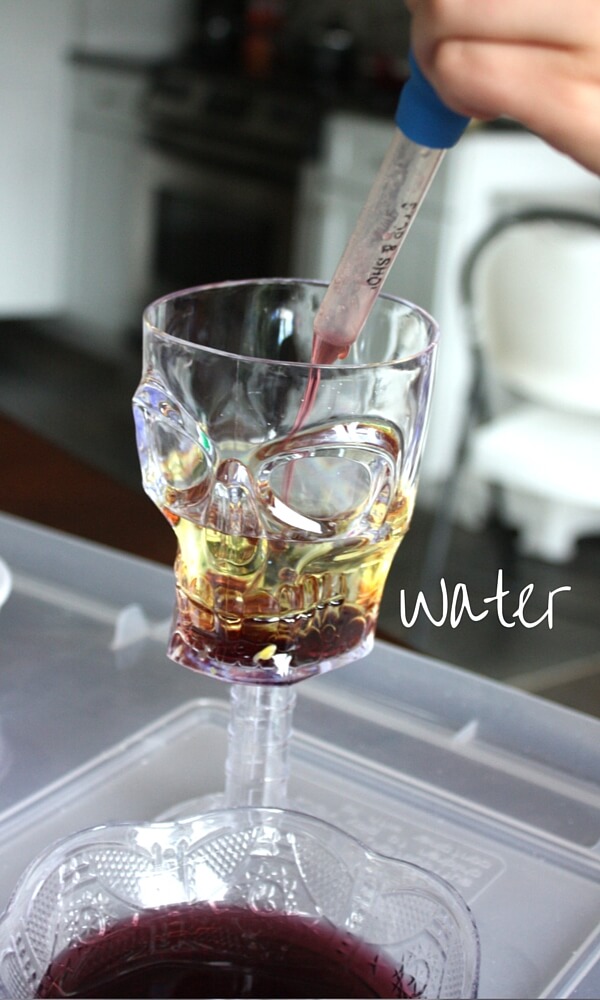
STEP 3. Once you have added your oil and water and made your observations, you can go ahead and pour the corn syrup into the cup. Here’s another opportunity to ask your kids if they think the syrup will be heavier or lighter than the liquids already in the cup.
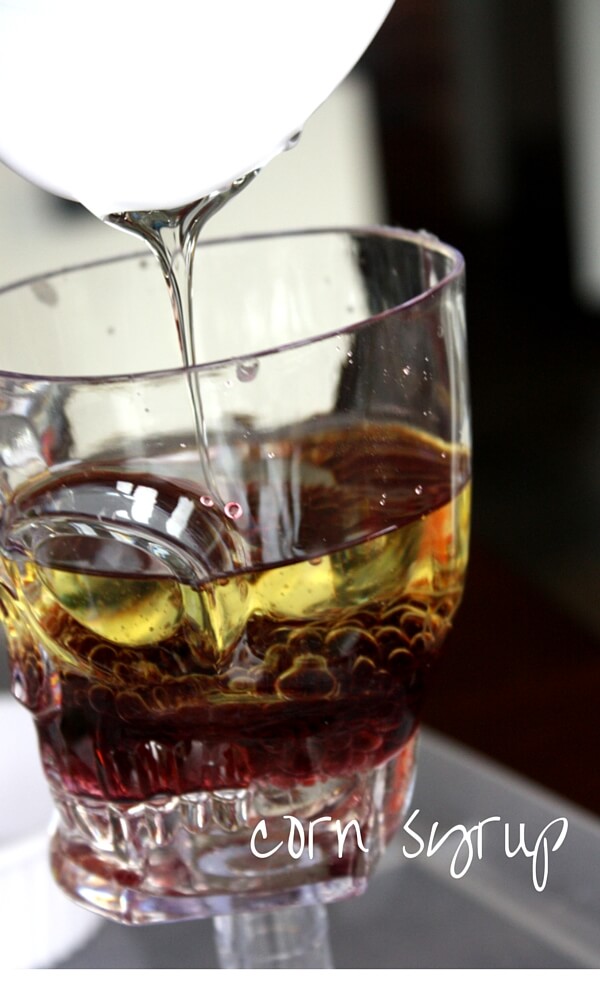
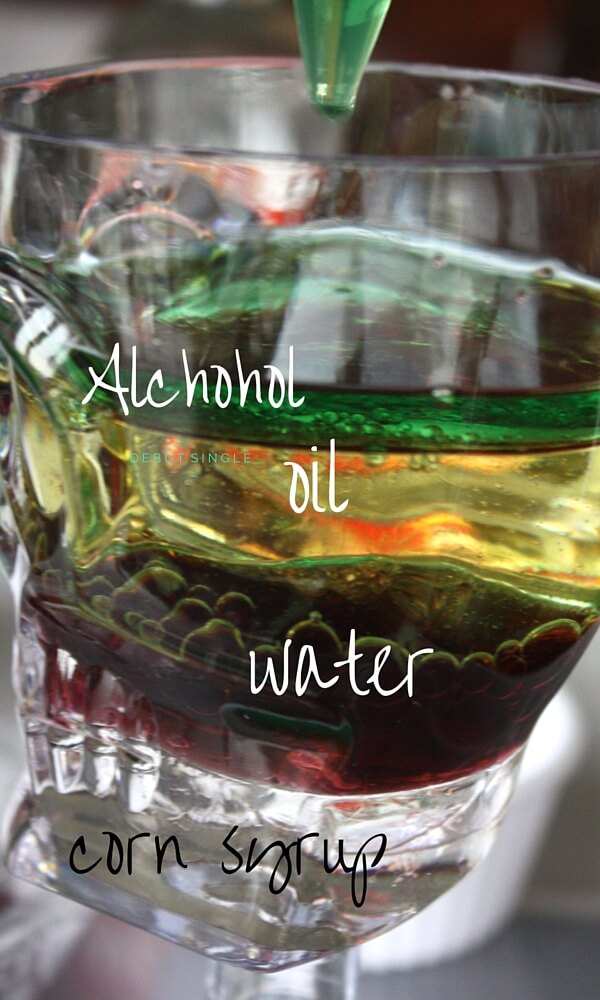
STEP 4. Now it’s time to use an eyedropper again to add colored drops of rubbing alcohol to the cup. What happens? The droplets sink and rise back up. Is the alcohol lighter or heavier than the other liquids?
👉 Try this fall theme density column experiment with apple cider vinegar.
What Is Liquid Density?
If you asked your kids if different liquids weigh different amounts, what would they say? Of course, you want to make sure that you specify the same measurement of each liquid! I know my son would point that out right away.
So does a cup of water weigh the same amount as a cup of oil? Now that’s a good question! Make a prediction, write a hypothesis and conduct a test.
The answer is that different liquids weigh different amounts {given the measurements are the same} and that is because each type of liquid is made up with a different combination of atoms and molecules. Some of these molecules are packed more tightly together than others too!
Kids will find when they add the water to the oil, the water sinks to the bottom, and essentially the oil floats. Photos of an oil spill in the ocean come to mind. They definitely don’t mix. Water is denser than oil.
👉 Read more about why oil and water don’t mix [here]
Can you change the density of water? Yes, you can with this salt water density experiment.
Learn more about density here!
Add An Alka Seltzer Tablet
Since my son remembers adding alka seltzer tablets to our lava lamp, he suggested we try adding them to this experiment. If you choose to do this, make sure your cup is on a tray to minimize potential mess! Drop a tablet into your liquid density experiment and see what happens.
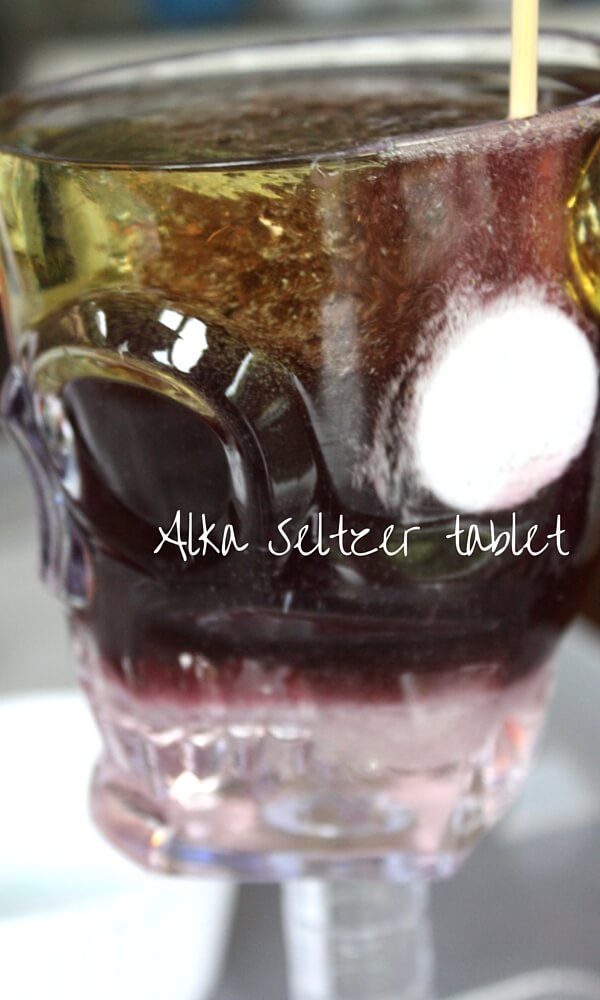
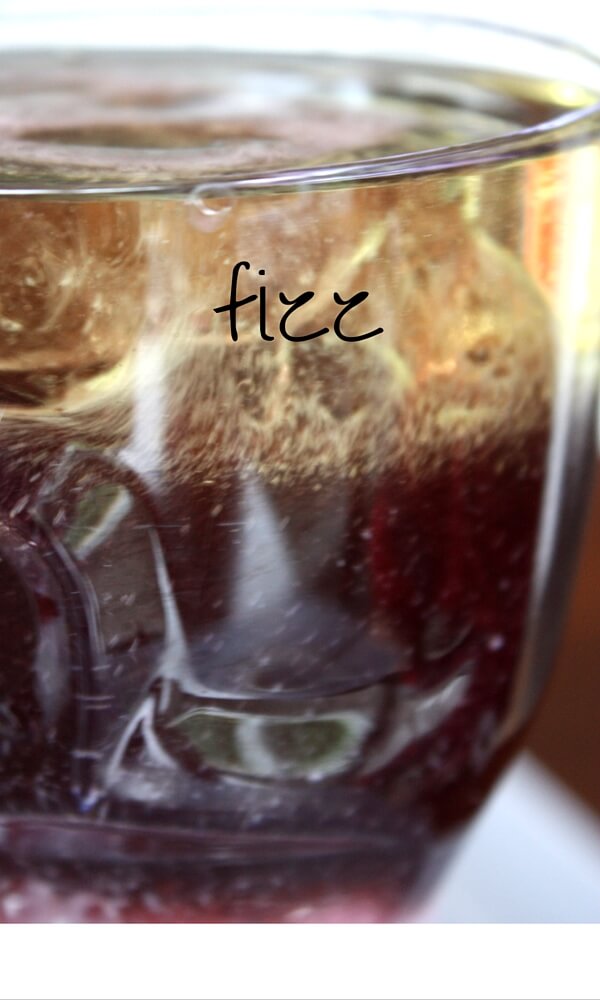
When the tablet hits the water, the chemical reaction occurs letting off a gas called carbon dioxide which creates the fizz! Now you have a cool chemical reaction that looks like a fizzing or bubbling skull. It is so much cooler looking in person. The photo doesn’t capture how neat the density experiment looked as it was brewing.
More Creepy Science To Try
- Monster Slime
- Fluffy Zombie Slime
- Dissolving Candy Corn
- Halloween Lava Lamp
- Frankenstein’s Frozen Brain
- Gelatin Heart Experiment
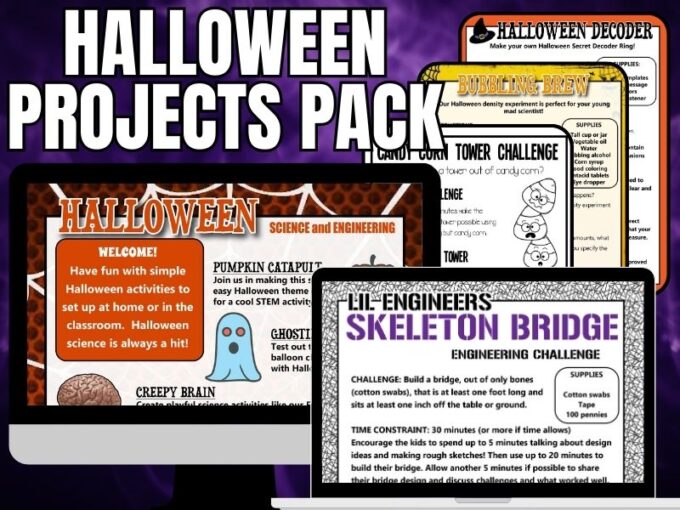
Printable Halloween STEM Activities Pack
150+ Pages of Halloween-Themed Materials!
This Halloween project pack is suitable for home, school, and group use for kids in grades Kindergarten through elementary but is scaleable for many ages and abilities.
What’s Included:
- 25+ Halloween theme science and STEM activities with printable sheets, instructions, and useful information all using easy-to-source materials perfect for limited-time needs. Includes a Halloween engineering pack with fun, problem-based challenges for kids to solve!
- The skeleton activity pack includes building a skeleton challenge and a coding challenge! Try a skeleton bones bridge-building STEM challenge!
- Halloween theme brick printable activities for hands-on learning with math that is perfect for early finishers or home fun and reinforces basic math concepts.
- Bonus fun pack includes games and activities to round out your Halloween theme activities such as I Spy, bingo, matching, Would You Rather cards, scavenger hunt, word search, A-Z Halloween hunt, and a coloring page.
- Halloween STEAM Pack includes artist-inspired projects by Warhol, Lichtenstein, and more!






Hi I’ve just been testing this experiment and I’m having some problems. When I use water based ink/food colouring to mix with the alcohol, the colour seems to seep into the water layer. Also when I add even plain alcohol it seems to cause some muddying of the layers in general. Do you feel it’s the dropper that helps the layers remain separate?
What percentage is your alcohol?
I was wondering where did you guys get those skull glasses/cups from? Trying to do a science project with about 50 kids.
Also what material are they?
Hi! These are from the dollar store and are plastic!