
Try this straw boats STEM challenge! Water is great for an awesome STEM activity for kids. Design a boat made from nothing but straws and tape, and see how many items it can hold before it sinks. Learn about simple physics while you test out your engineering skills.
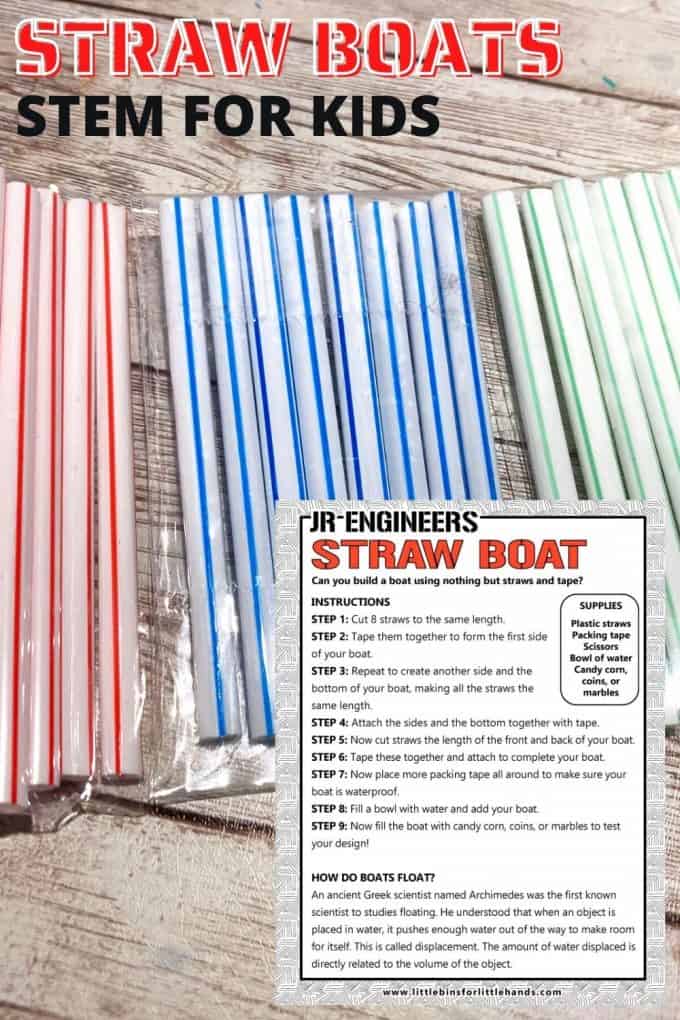
Straw Boat Challenge
The Straw Boat Challenge invites kids to become mini engineers as they design and test floating boats. This hands-on activity sparks creativity and problem-solving skills while teaching kids about buoyancy, balance, and basic engineering design.
Field of Science/Engineering: Physics (buoyancy), Engineering Design
Grade Level: K-5
Key Concepts: Buoyancy, displacement, stability, weight distribution, problem-solving, engineering design process
Simplified NGSS Alignment
- What do you notice? Some boats float well, while others tip or sink.
- What does it make you wonder? Why do certain shapes or designs float better than others?
- What happens if…? I add more weight or change the boat’s shape?
STEM Challenge
Take the challenge: Will your straw boat sink or float?
💡Note: You can build your boat any way you want with the same materials! You can also add a time constraint to fit your available time. For example, give 3-5 minutes for design, 15-20 minutes for building, and 3-5 minutes for reflection!
Supplies:
- Plastic straws
- Packing tape
- Scissors
- Bowl of water
- Candy, coins, marbles, etc.
How to Make Straw Boats
STEP 1: Cut 8 straws to the same length.
STEP 2: Tape them together to form the first side of your boat.
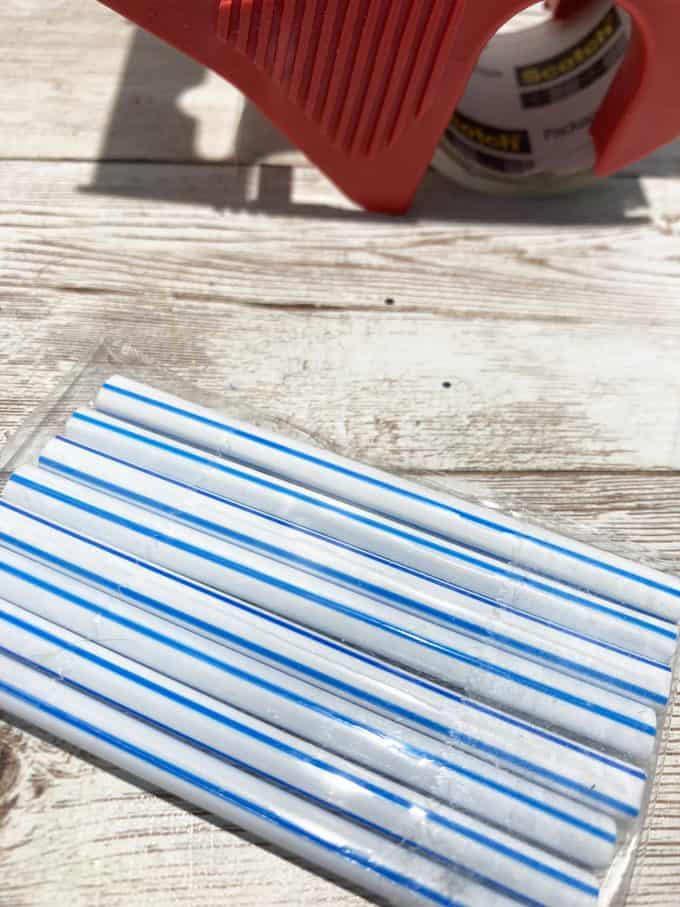
STEP 3: Repeat to create another side and the bottom of your boat, making all the straws the same length.
STEP 4: Attach the sides and the bottom together with tape.
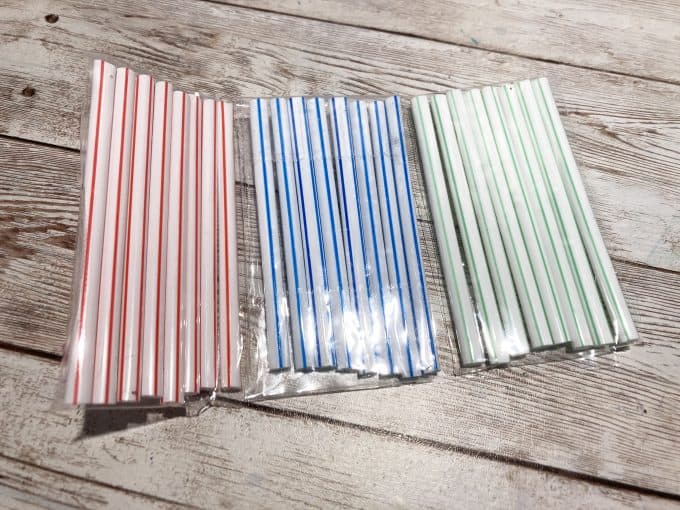
STEP 5: Now cut straws the length of the front and back of your boat. Tape these together and attach to complete your boat.
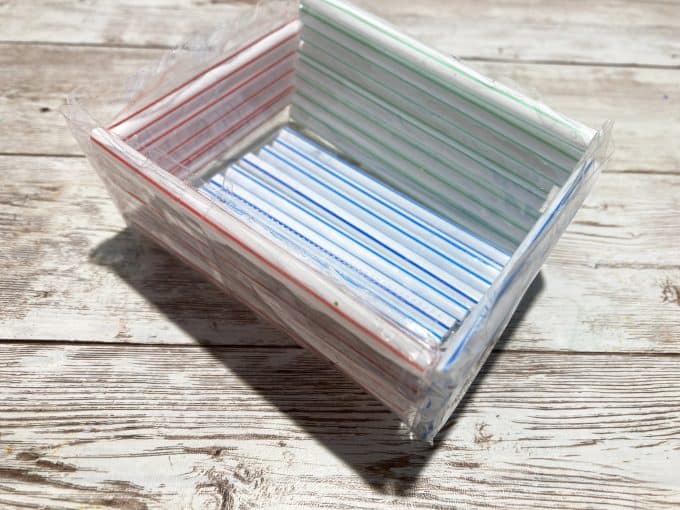
STEP 6: Now place more packing tape around to ensure your boat is waterproof.
STEP 8: Fill a bowl with water and add your boat.
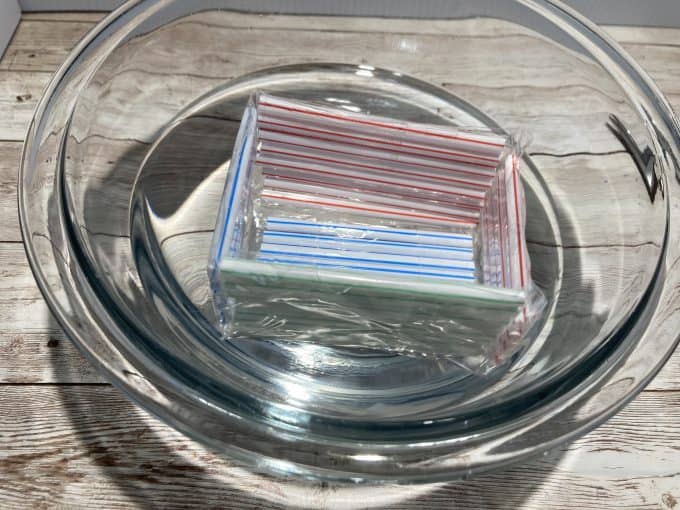
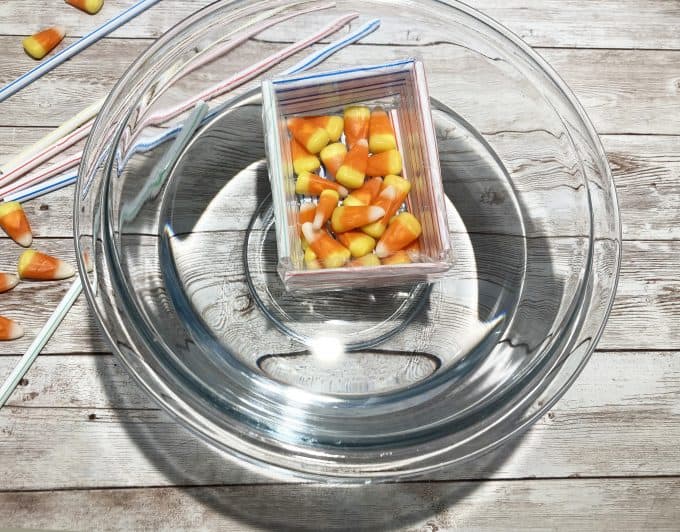
STEP 9: Now, fill the boat with candy corn, coins, or marbles to test your design!
How Does A Boat Float?
An ancient Greek scientist, Archimedes, was the first known person to discover the law of buoyancy through experimentation. Legend has it that he filled a bathtub and noticed that water spilled over the edge as he got in. He realized that the water displaced by his body was equal to the weight of his body.
Archimedes discovered that when an object is placed in water, it pushes enough water out of the way to make room for itself. This is called water displacement.
The amount of water displaced is directly related to the object’s volume. If the weight of the object’s volume is less than the weight of the water it displaces, the object will float.
How do large ships float in water? A boat will float in water if it weighs less than the volume of water it displaces. It will usually sink if the boat weighs more or is more dense than water.
Tips For Setting Up An Open Ended Boat Challenge
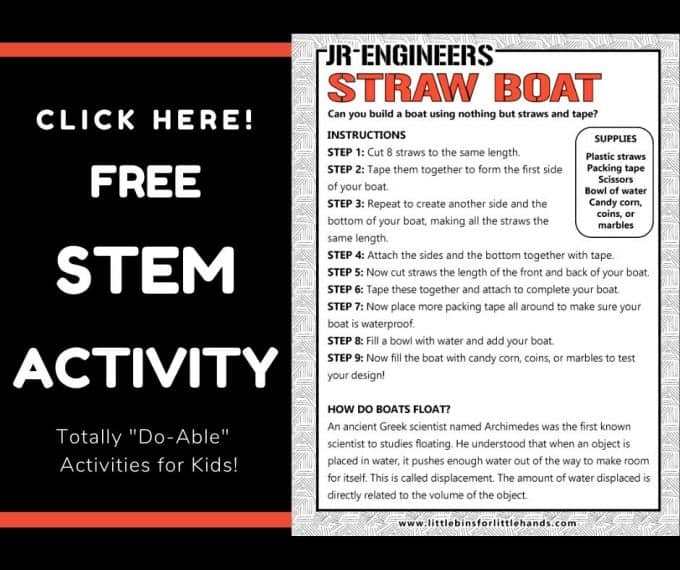
You can follow our boat model below or use this as an open-ended challenge! Here are a few suggestions for how to set it up.
- Introduce kids to the challenge: building a straw boat that can float and hold the most weight possible. Discuss the basic principles of buoyancy and boat design, emphasizing concepts like displacement, weight distribution, and stability. Encourage creativity and experimentation, letting participants know that there’s no single “correct” solution.
- Keep your groups small – 2 to 4 people per group works well!
- Provide each group with the necessary materials, including straws, tape, scissors, and any optional materials you’ve prepared for boat construction. Assorted materials for boat construction could include cardboard, plastic wrap, rubber bands, craft sticks, aluminum foil or Plasticine or modeling clay.
- Give a time constraint of 20 mins with an additional 3-5 minutes for planning beforehand and 3-5 minutes for discussion afterward.
- Once the boats are constructed, set up the containers or trays filled with water for testing. After initial testing, introduce the challenge of adding weights (e.g., coins, washers, small rocks) to the boats to see how much weight they can support before sinking.
- Make sure to use our reflection questions below at the end of the activity!
Questions For Reflection!
Get the kids thinking! Here are some great questions for reflection to ask as a wrap-up to this challenge including:
- If you could repeat the challenge, what would you do differently?
- What was the hardest part of the challenge?
- What other types of materials would you like to use for this challenge?
Helpful STEM Resources
Here are a few resources that will help you introduce STEM more effectively to your kiddos or students and feel confident yourself when presenting materials. You’ll find helpful free printables throughout.
- Engineering Design Process Explained
- What Is An Engineer?
- Engineering Words
- Real World STEM
- Questions for Reflection (get them talking about it!)
- BEST STEM Books for Kids
- 14 Engineering Books for Kids
- Jr. Engineer Challenge Calendar (Free)
- Must Have STEM Supplies List
- Join us in the Club
More Fun STEM Challenges To Try
Check out our most popular STEM activities here! Including…
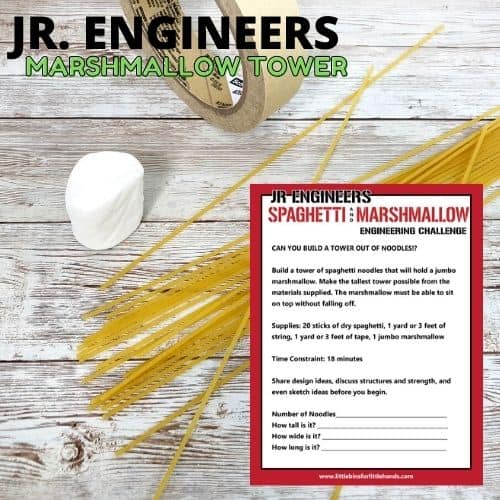
Spaghetti Marshmallow Tower – Build the tallest spaghetti tower that can hold the weight of a jumbo marshmallow.
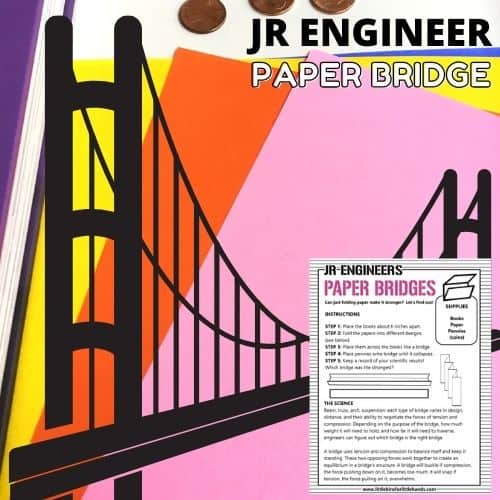
Paper Bridges – Similar to our strong spaghettti challenge. Design a paper bridge with folded paper. Which one will hold the most coins?
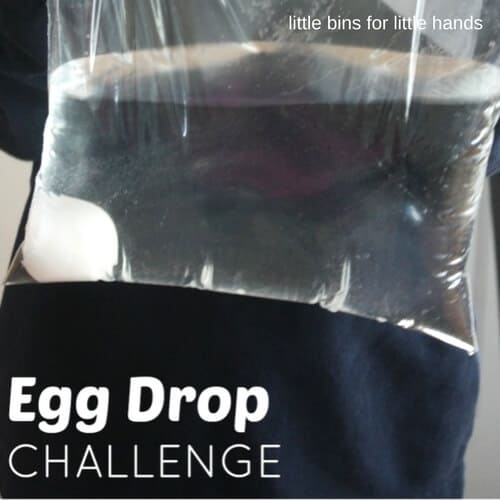
Egg Drop Challenge – Create your own designs to protect your egg from breaking when it is dropped from a height.
Paper Grabber – Use your creativity and engineering skills to build a grabbing tool made from paper.
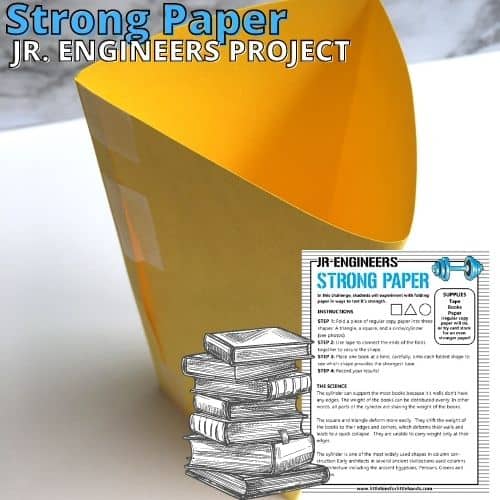
Strong Paper – Experiment with folding paper in different ways to test its strength, and learn about what shapes make the strongest structures.
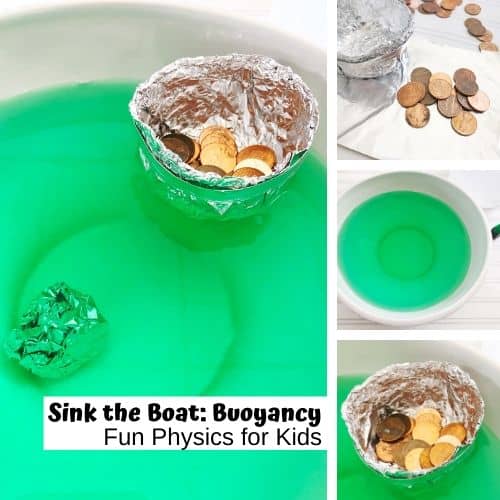
Penny Boat Challenge – Design a simple tin foil boat, and see how many pennies it can hold before it sinks.
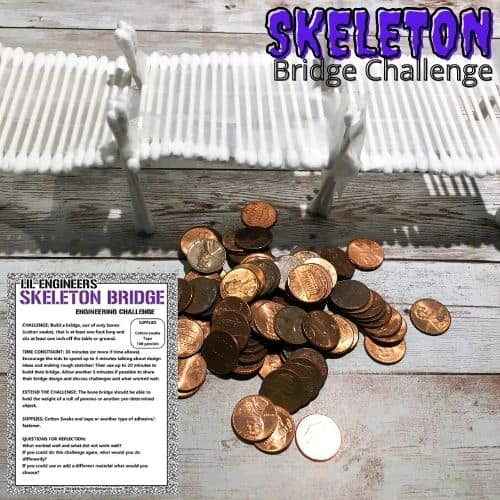
Gumdrop Bridge – Build a bridge from gumdrops and toothpicks and see how much weight it can hold.
Paper Clip Challenge – Grab a bunch of paper clips and make a chain. Are paper clips strong enough to hold weight?
Join the Library Club Today!
Support Real Learning with Real Projects! When you join the Library Club Membership, you’re not just getting instant access to our complete library of art and STEM printables—you’re helping us keep hands-on, high-quality learning alive. Thoughtfully created resources made by real people who care about inspiring kids through creativity, curiosity, and connection.