Whether you’re teaching in the classroom, homeschooling, or just want fun family activities, pairing apple books with hands-on STEAM (Science, Technology, Engineering, Art, and Math) is a wonderful way to engage kids.

Hands-On Activities for Apple Books
Below are apple-themed books for grades K–4, each paired with a classroom-ready STEAM activity. Most use basic supplies and can be adapted for different grade levels.
🔎 Add this free anatomy of fall apple coloring sheet (includes one for leaves and pumpkins) for a quick STEAM activity or early finisher project.
- Quick Centers (15–20 min) → great for rotations and small groups.
- Longer Projects (30–45 min) → perfect for bulletin boards, portfolios, or deeper lessons.
💡 Make sure to look through more Apple science activities and Apple art projects to add to your lessons.
Apple Picking Day! by Candice Ransom (extension option)
Grades: K–2
Activity (Math/Art): Create a classroom apple color graph. Have students vote for their favorite apple color (red, green, or yellow). Use paper apple cutouts or stickers to build a bar graph on chart paper. Younger students can count and compare, while older students can calculate differences (e.g., “How many more red than green?”).
Helpful Tip: Use real apples or photos of each color to help kids make their choice before graphing.
Type: Quick Center
NGSS: Collecting and analyzing data.
Core Concepts: Data collection, graphing, comparing numbers, visual math.
Ten Apples Up on Top! by Dr. Seuss
Grades: K–2
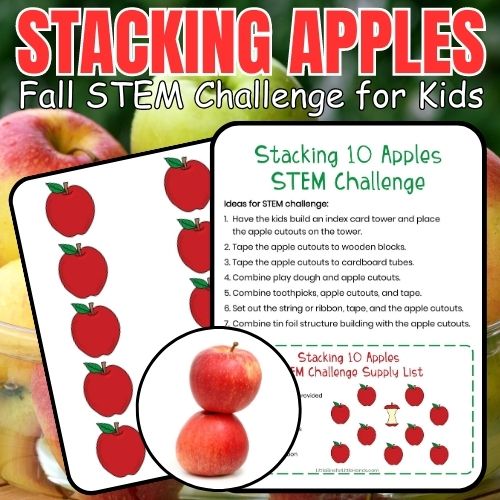
Activity (Math/Art): Stacking Apple Challenge — Students draw or glue apple cutouts into tall stacks on a character. Compare the tallest and shortest stacks.
Helpful Tip: Use real classroom objects (such as erasers and blocks) for a quick demonstration of stability before starting.
Type: Quick Center
NGSS: Objects can be stacked and balanced.
Core Concepts: Counting, balance, stability, and fine motor skills.
Ten Apples Up on Top! by Dr. Seuss (alternative activity)
Grades: K–2
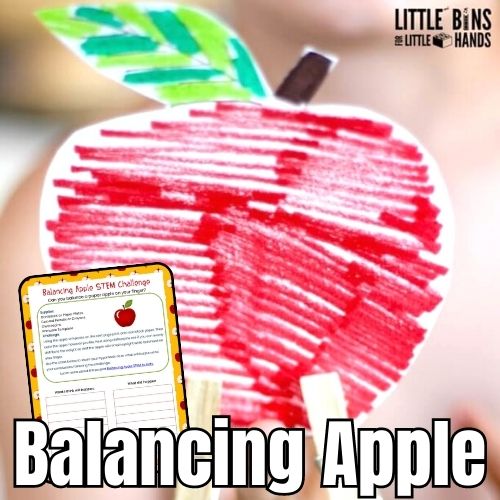
Activity (Engineering/Math): Create a balancing apple challenge. Give each student a sturdy paper apple cutout and a handful of clothespins. Clip clothespins around the edges to test balance. How many can each apple hold before tipping? Record and compare results.
Helpful Tip: Use cardstock or laminated apples for durability.
Type: Quick Center
NGSS: Balance and stability in structures.
Core Concepts: Weight distribution, balance, counting, engineering design.
Apples, Apples, Apples by Nancy Elizabeth Wallace
Grades: K–3
Activity (Science/Math): Apple taste test. Compare varieties by sweetness, tartness, and crunch. Record results in a pictograph.
Helpful Tip: If taste testing isn’t possible, use photos of different varieties or prepped apple slices. Students can still classify based on color, size, and firmness.
Type: Quick Center (extend with graphing)
NGSS: Apples have observable properties.
Core Concepts: Classification, graphing, and sensory observation.

Applesauce Day by Lisa J. Amstutz
Grades: K–4
Activity (Science/Art): Explore how apples change when mashed vs. cooked. First, slice or mash raw apples with a fork to show a physical change (it’s still apple, just in smaller pieces). Then compare to apples that have been cooked into applesauce — notice the softness, smell, and flavor differences caused by heat. Students can record their observations in a chart or illustrate the three stages: whole apple → mashed apple → applesauce.
Helpful Tip: If cooking isn’t possible, use a short video clip of apples being made into applesauce.
Type: Longer Project (can be simplified into a demo)
NGSS: Physical vs. chemical changes in matter.
Core Concepts: Physical change (size/shape), heat change (texture), irreversible change, sensory observation, and recording data.
Apples by Gail Gibbons
Grades: K–4
Activity (Science/Art/Research): Apple Fact Posters. Divide into 4 sections: History, Varieties, Life Cycle, Uses. Illustrate and add captions.
Helpful Tip: Provide apple fact cards for younger students, while older ones take their own notes.
Type: Longer Project
NGSS: Science and history help us understand the plants we use.
Core Concepts: Research, nonfiction literacy, categorizing, diagramming.
Johnny Appleseed by Jodie Shepherd
Grades: 2–4
Activity (Engineering/Art): Design a seed dispersal model (parachute, spinner, boat). Illustrate and label it.
Helpful Tip: Show kids photos/videos of real dandelions, maple seeds, and water-dispersed seeds to inspire designs.
Type: Longer Project
NGSS: Seed dispersal helps plants survive.
Core Concepts: Plant survival, engineering design, problem-solving.

The Seasons of Arnold’s Apple Tree by Gail Gibbons
Grades: K–3
Activity (Science/Art): Four-seasons tree art — fold paper into quarters, draw/paint the same tree in four seasons or use our free printable seasons tree art page here. Add to a science journal and revisit each season.
Helpful Tip: Show seasonal apple orchard photos (spring blossoms, fall harvest) to spark details.
Type: Longer Project
NGSS: Seasonal cycles affect plants.
Core Concepts: Seasonal change, patterns, observation, artistic expression.
An Apple’s Life by Nancy Dickmann
Grades: 2–4
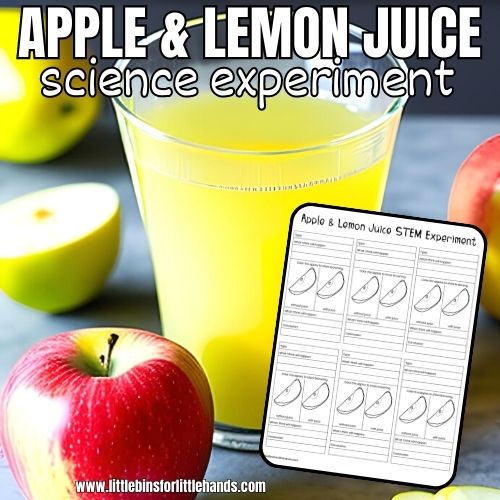
Activity (Science/Math): Apple oxidation test. Compare slices treated with lemon juice, salt water, and plain water. Record color changes.
Helpful Tip: Take photos over time so students can compare “fresh vs. browned” later in the day.
Type: Quick Center
NGSS: Chemical reactions change food properties.
Core Concepts: Chemical change, observation over time, and data collection.
Apples for Everyone by Jill Esbaum
Grades: K–2
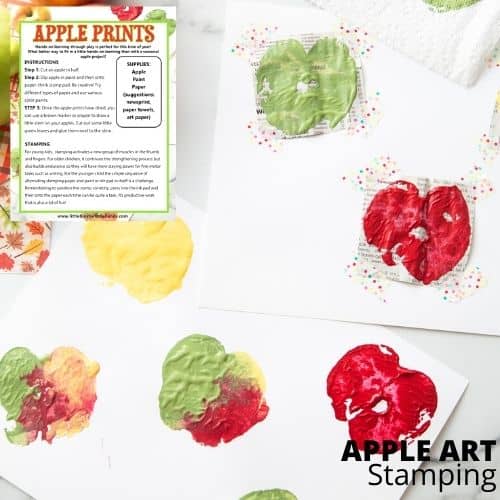
Activity (Science/Art): Apple prints with paint. Stamp to reveal star seed patterns and compare.
Helpful Tip: Cut apples different ways (across vs. lengthwise) so students can observe different core patterns.
Type: Longer Project
NGSS: Apples reproduce with seeds.
Core Concepts: Reproduction, patterns in nature, texture exploration.
The Biggest Apple Ever by Steven Kroll
Grades: K–2
Activity (Engineering/Art): Paper apple basket. Test how many apples or tennis balls it can hold.
Helpful Tip: Before testing, have students make a prediction (“I think my basket will hold 8 apples”). Compare to the results.
Type: Longer Project
NGSS: Structures can be designed for strength.
Core Concepts: Engineering design, strength testing, estimation.
Apple Fractions by Jerry Pallotta
Grades: 2–4
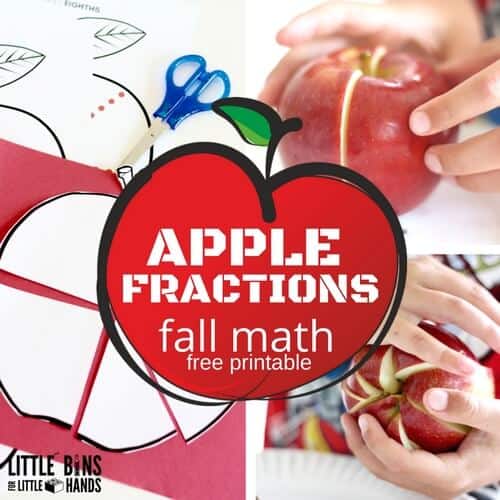
Activity (Math/Art): Paper apple fractions (halves, thirds, fourths). Decorate and label.
Helpful Tip: If possible, cut a real apple into halves/quarters to demonstrate fractions before the art.
Type: Quick Center
NGSS: Fractions describe parts of a whole.
Core Concepts: Fractions, equal parts, and math modeling.
The Apple Orchard Riddle by Margaret McNamara
Grades: K–3
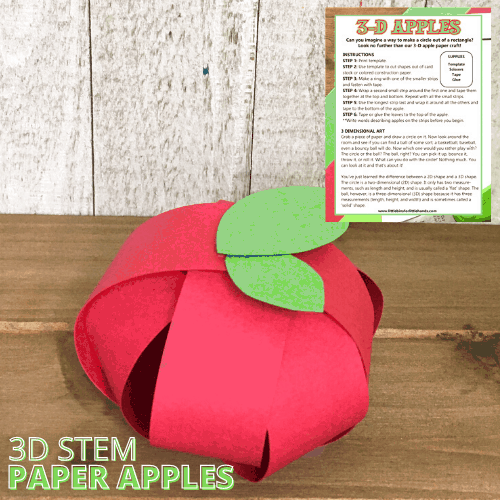
Activity (Art/Literacy/Engineering): Create a 3D paper strip apple. Before assembling, students decorate the paper strips — younger kids can doodle or add patterns, while older students can write apple riddles, vocabulary words, or fun apple facts. Connect the strips at the top and bottom with a brad, staple, or string to form a rounded apple. Display the finished apples along with riddles for creative fall decor.
Helpful Tip: Pre-cut strips for younger students to save time and make assembly easier.
Type: Quicker or Longer Project
NGSS: Simple materials can be engineered into new forms.
Core Concepts: 3D construction, literacy/art integration, creative thinking.
Helpful Tips
Recommended Grade Levels:
- K–2: Ten Apples Up on Top, Apples, Apples, Apples, The Apple Pie Tree, Arnold’s Apple Tree, Bad Apple, Apple Picking Day, Apples for Everyone, The Biggest Apple Ever, Apple Farmer Annie, Apple Trouble.
- 3–4: Johnny Appleseed, An Apple’s Life, Apple Fractions, The Apple Orchard Riddle, Apples by Gail Gibbons.
Skills Covered:
- Counting, sorting, graphing, life cycles, seasonal change, seed dispersal, fractions, chemical reactions, engineering design, research skills, and art techniques (collage, stamping, 3D construction).
Extensions:
- Literacy: Write a short review after each book, or create an apple-themed poem.
- Cross-Curricular: Use apple graphing in math, orchard maps in geography, or apple facts in writing journals.
- Bulletin Boards: Apple fact posters, life cycle murals, or a display of 3D paper apples.