
Ready to head outside and explore? This Nature Summer Camp is filled with hands-on science activities, outdoor STEM challenges, nature art, and simple investigations that encourage kids to observe the world around them.
Whether you’re planning summer camp at home, in the classroom, or for a homeschool unit, these low-prep nature activities make it easy to spend a week learning about plants, animals, habitats, insects, and ecosystems.
Download the FREE Nature Camp Starter Guide below.
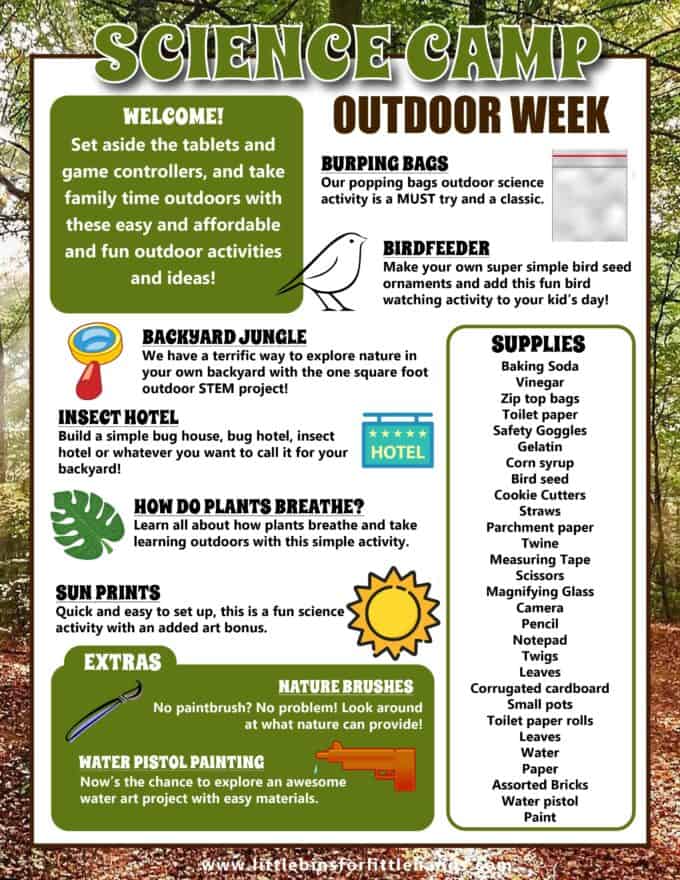
Nature Camp Activities
Nature is one of the best classrooms! Nature camp introduces children to biology, Earth science, ecology, and environmental science through playful investigations.
💡 Most activities take about 20 to 45 minutes and use inexpensive supplies along with items collected outdoors.
Kids will explore:
- Plants and flowers
- Habitats and ecosystems
- Birds and insects
- Chemical reactions
- Plant life cycles
- Scientific observation
- Weather and sunlight
- Engineering with natural materials
- Creativity through nature art
Nature Camp Weekly Plan Suggestion
Monday Nature Explorers – Explore your backyard ecosystem and start your Pinecone Weather Station. Make predictions and observe how your pinecone changes throughout the week.
Tuesday Plant Science – Discover how plants breathe, drink, and move water with three simple plant investigations.
Wednesday Backyard Wildlife – Build a bird feeder and an insect hotel while learning about habitats and the animals that call your backyard home.
Thursday Nature Engineers – Complete Nature STEM Challenges using sticks, rocks, leaves, and other natural materials you collect outdoors.
Friday Nature Artists – Celebrate the week with sun prints, nature brushes, and a beautiful nature weaving project using your favorite outdoor finds.
💡Mix and match activities to fit your camp, club, or family’s schedule.
Nature and Plant Science Activities
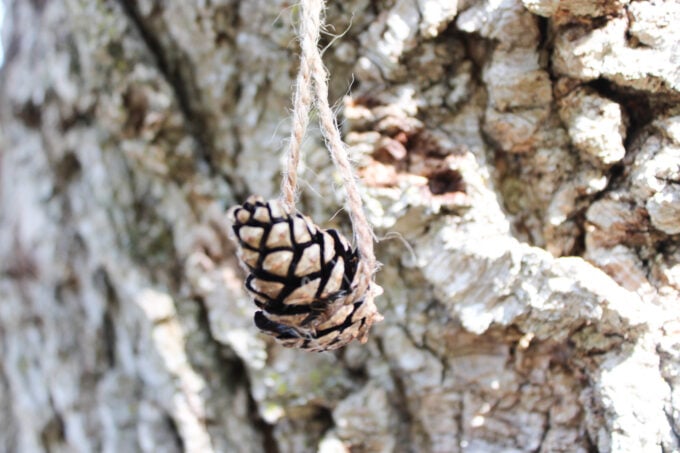
Can a pinecone help predict the weather? Collect a pinecone and observe how it changes on dry and rainy days. Pinecones open when the weather is dry to help release their seeds and close when it’s damp to protect them.
Create a simple weather station by checking your pinecone each day and recording whether it is open or closed. Then compare your observations with the day’s weather!
Science Concepts: Plant adaptations, weather, observation, seed dispersal.
Extension: Collect several different pinecones and compare their size, shape, and how quickly they respond to changes in humidity.
Choose a small section of grass or soil and become a backyard scientist. Carefully observe insects, plants, rocks, and other living things as you discuss habitats and ecosystems.
Science Concept: Ecosystems and biodiversity.
Place leaves underwater and watch tiny bubbles form as plants exchange gases through small openings called stomata. This simple investigation introduces kids to one way plants carry out photosynthesis.
Science Concepts: Stomata, gas exchange, photosynthesis
Explore how water travels through a plant by placing a stem in colored water and watching the color move upward over time. This classic experiment demonstrates how plants transport water from their roots to their leaves.
Science Concepts: Xylem, water transport, plant structure
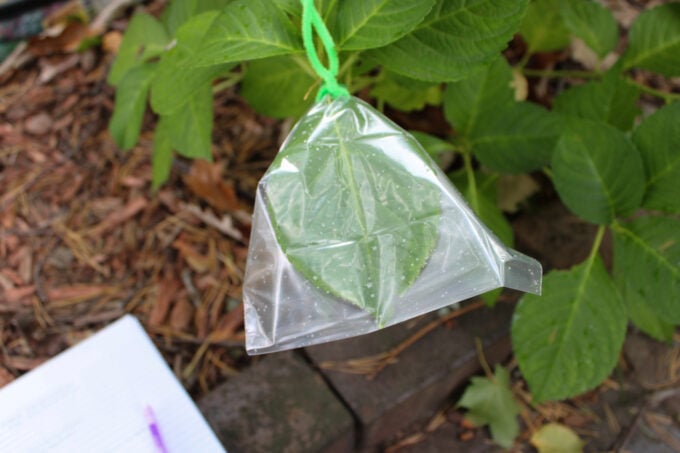
Cover a leafy branch with a clear plastic bag and observe tiny water droplets collecting inside. This experiment demonstrates transpiration, the process by which plants release water vapor into the air.
Science Concepts: Transpiration, water cycle, plant adaptations
Nature Engineering Activities
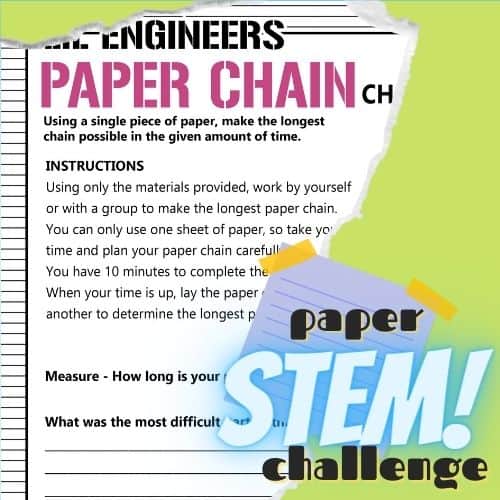
Gather sticks, rocks, leaves, pinecones, and other natural treasures to complete simple engineering challenges. Build, test, improve, and redesign your creations as you discover different ways to solve each challenge.
Engineering Concepts: Planning, designing, testing, problem-solving, and creative thinking.
Create an easy bird feeder using simple materials and observe which birds visit your yard. Keep a bird journal to record your observations.
Design a shelter for beneficial insects using recycled materials and natural objects. Learn why insects play such an important role in healthy ecosystems.
Extension: Build an animal shelter using natural materials.
Nature Art Activities
Use sunlight and natural objects to create beautiful shadow prints while learning how sunlight creates patterns.
No sunshine? Try making rain prints instead!
Collect leaves, flowers, grasses, pine needles, and twigs to create homemade paintbrushes. Experiment with different textures and patterns while creating process art.
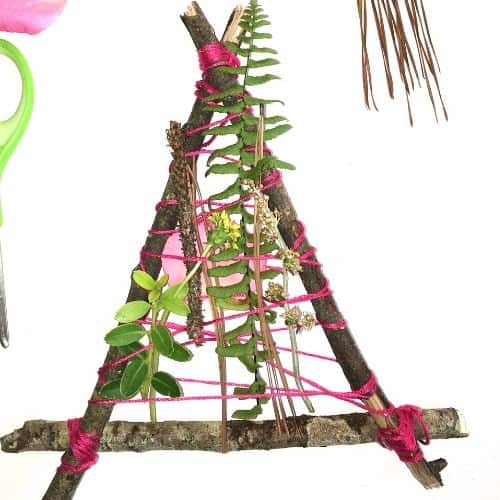
Collect leaves, grasses, flowers, and other natural treasures to create a beautiful woven nature collage. Kids will explore different colors, textures, and patterns while creating unique artwork inspired by the outdoors.
Art Concepts: Texture, pattern, color, composition, and creativity.
Think Like a Naturalist
Naturalists carefully observe the world around them. Encourage kids to slow down, ask questions, and notice details they may have missed before.
Ask questions like:
- What do you notice?
- What patterns do you see?
- Why do you think this plant grows here?
- Which insects visit different flowers?
- What evidence supports your observations?
💡 Nature camp helps kids develop curiosity, patience, and scientific thinking while building a deeper appreciation for the outdoors.
Free Nature Camp Starter Guide
Ready to spend the week exploring outdoors?
Download the FREE Nature Camp Starter Guide with activity ideas to help organize your week.
Build a Week of Nature Learning
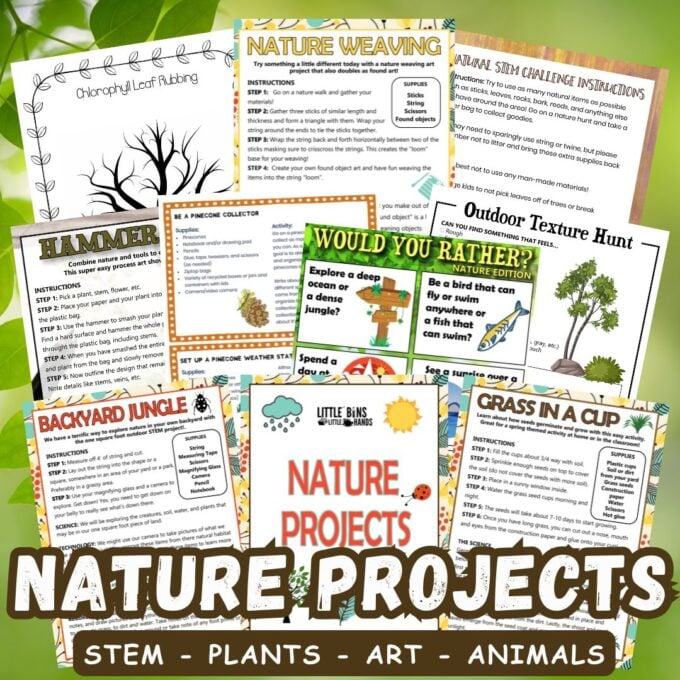
Turn one activity into a whole week of outdoor exploration with our Printable Nature Activities Pack!
From plant science and backyard investigations to STEM challenges, nature journaling, and outdoor art, this printable pack makes it easy to keep kids learning through hands-on discovery.
Whether you’re planning a Nature Summer Camp, homeschool unit, classroom theme, or simply looking for screen-free outdoor fun, you’ll have everything you need in one printable resource.
👉 Explore the Nature Activities Pack here.
Frequently Asked Questions
What ages is this Nature Summer Camp designed for? These activities work well for preschool through early elementary students and can easily be adapted for older children by encouraging more detailed observations and investigations.
Do I need a large outdoor space? Not at all! Many activities can be completed in a backyard, neighborhood park, school playground, or even with natural materials collected during a short walk.
How long do the activities take? Most activities take between 20 and 45 minutes, making them perfect for summer camps, homeschool, classrooms, or afternoon outdoor learning.
What science topics do kids learn? Children explore biology, Earth science, ecosystems, habitats, plant science, engineering, weather, and scientific observation through hands-on activities.
Can I use these activities in a classroom? Yes! These low-prep activities are designed for classrooms, homeschool groups, nature clubs, summer camps, and family learning.
More Outdoor Science Activities
- Nature Activities for Kids
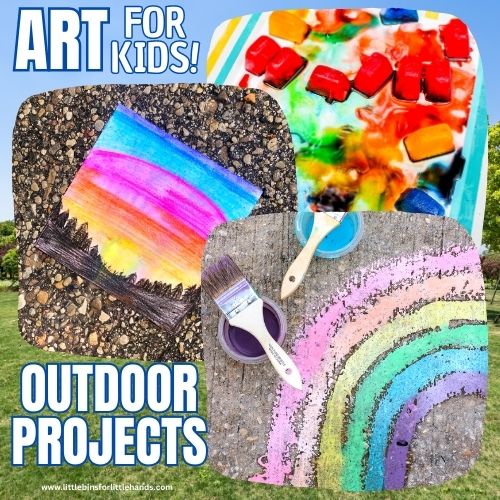
- Outdoor Art Projects
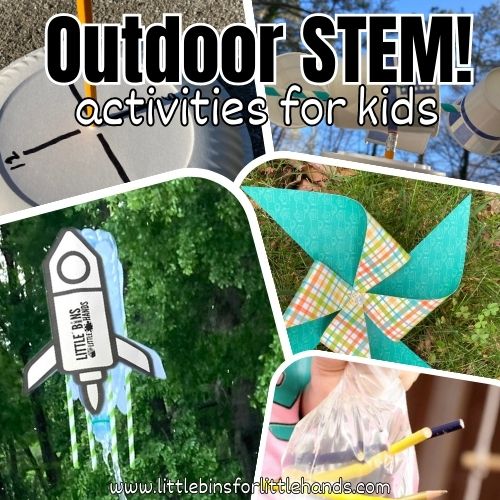
- Outdoor STEM Projects
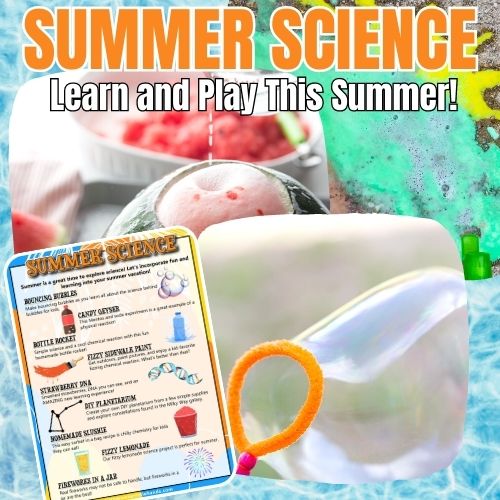
- Summer Science Activities
- Nature Summer Camp
- 7 Day Flower STEAM Investigation Lab


Make Summer STEM a Blast!
From slime and bubbles to nature walks and camp weeks—this Summer bundle is your one-stop summer STEM solution. Over 11 hands-on activity packs to make this your most fun and educational summer ever!