
An element is a substance made entirely of one kind of atom. It can’t be broken down into anything simpler using regular chemical processes. Each element has unique properties based on how its atoms are built.

What is an Element?
💡 Before learning about elements, it helps to understand what matter is and how matter exists in different forms.
All known elements are listed on the Periodic Table of Elements. You may recognize some common ones:
- Oxygen (O): We breathe it in!
- Carbon (C): Found in all living things.
- Iron (Fe): Found in tools and our blood.
- Gold (Au): Used in jewelry and electronics.
Try These Hands-On Element Activities
Make learning about elements fun and engaging with these science and STEAM activities!
🔎 DIY Scientific models are perfect for kids to make to explore bigger science concepts.
Recommended for Grades 3–6
Kids will explore atoms and elements as the building blocks of matter. Key concepts include the structure of an atom (protons, neutrons, electrons), the definition of an element, and an introduction to the periodic table.
NGSS Guiding Questions:
- What will kids explore? What elements and atoms are, and how they relate to matter.
- What will kids do? Build atom models, label atomic parts, and investigate real-world elements.
- What will kids figure out? Elements are pure substances made of one type of atom, and each element’s atomic structure defines its properties.
Water Molecule Pencil Craft
Add a creative twist to your chemistry lesson with this quick and fun water molecule pencil topper! Kids can visualize how atoms combine to form molecules, using a common example: H₂O (water).
Supplies:
- Pencils (with erasers)
- 2 small blue pom-poms (hydrogen atoms)
- 1 medium white pom-pom (oxygen atom)
- Glue or hot glue gun
How To Make It:
- Glue one white pom-pom to the top of the pencil to represent oxygen.
- Glue two blue pom-poms on either side of the white pom-pom to represent hydrogen atoms.
- Let dry and place your pencil in a cup for a colorful molecule display!
🔎 Water is a molecule, which means it’s made up of two or more atoms bonded together. Its formula is H₂O—meaning two hydrogen atoms and one oxygen atom. These atoms are elements, and when they bond chemically, they form a compound.
This simple model helps kids understand that:
- Atoms make up everything.
- Elements can combine to form molecules.
- A molecule of water has a specific shape, with the hydrogen atoms forming an angle around the oxygen atom.
Use this craft to reinforce the idea that elements aren’t just individual particles—they can team up to create something entirely new!

Pom-Pom Carbon Atom Model
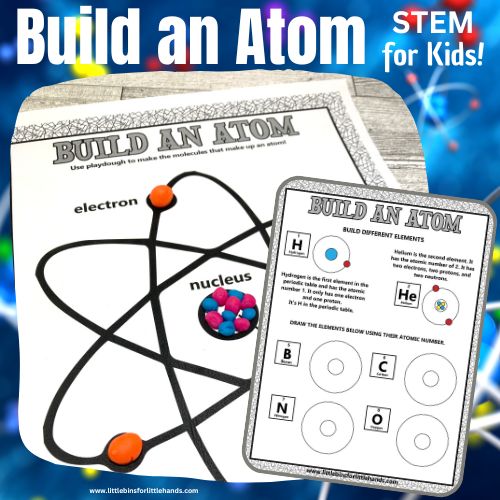
Make a simple model of the carbon atom using pom-poms and a free printable template. Learn about protons, neutrons, and electrons while building a real element kids recognize!

Parts of an Atom Worksheet
Help kids identify and label the key parts of an atom (proton, neutron, electron) with this interactive worksheet activity. Great for reinforcing vocabulary and structure.
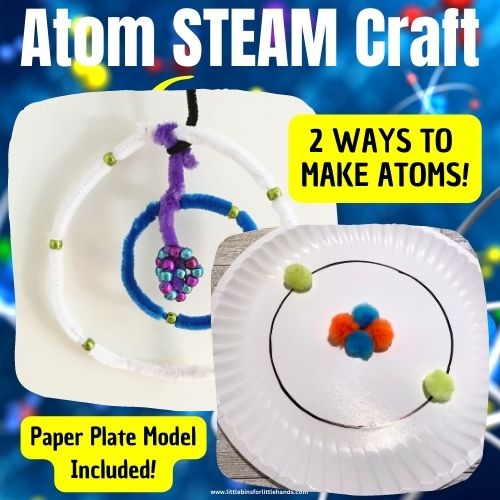
Paper Plate Atom STEAM Craft
Build an atom model using a paper plate and a few basic craft supplies. This activity reinforces both science and art skills while visualizing atomic structure.
Pipe Cleaner Atom Craft
Craft a 3D model of an atom using pipe cleaners and beads to show the nucleus and electron orbits. An engaging way to understand structure and symmetry in atoms.
Periodic Table of Elements Worksheet
Introduce the Periodic Table with this kid-friendly worksheet. Practice identifying element names, symbols, and atomic numbers.

Elements Science Information
Each element has its own kind of atom, defined by the number of protons in the nucleus. This number is called the atomic number and it determines the element’s identity.
Atoms also have:
- Neutrons: no charge, add mass
- Electrons: negative charge, orbit the nucleus
The Periodic Table organizes elements by their properties and increasing atomic numbers. It helps us predict how elements behave, react, and combine to form compounds.
Free Printable Atom Information Sheet

More Facts for Kids
- There are 118 known elements (and counting!).
- The first element on the periodic table is hydrogen.
- Elements combine to form everything—from water to plastic to your pencil.
- Noble gases (like helium) don’t like to react with others.
- The human body is mostly oxygen, carbon, hydrogen, nitrogen, calcium, and phosphorus!
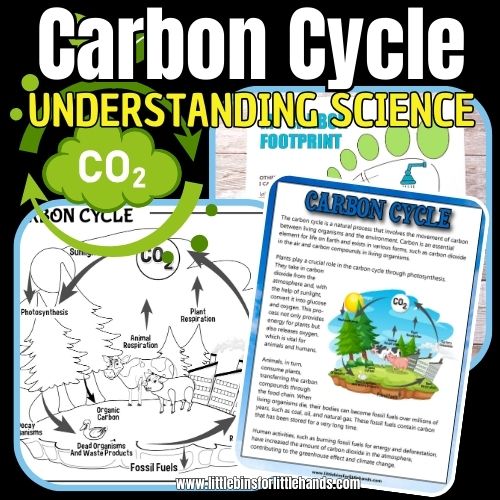
- Carbon moves through plants, animals, air, and soil in the carbon cycle—a key part of how life on Earth works.
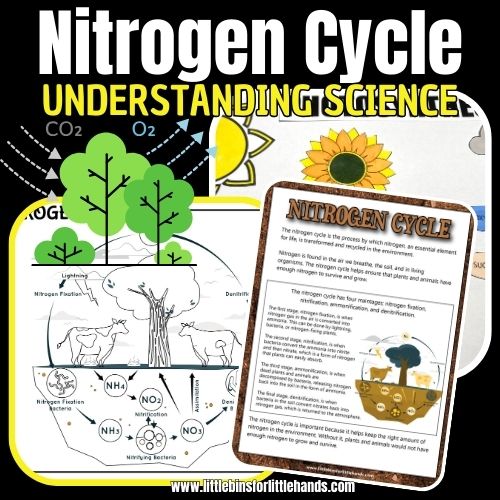
- Nitrogen, essential for proteins and DNA, travels through the environment in the nitrogen cycle.
Make It a Science Project
Which elements are part of your everyday life?
- Ask a question: Which household items are made from a pure element?
- Create a hypothesis: I think aluminum foil is made from a single element.
- Test it: Use research or labels to identify the element(s).
- Record and report: Make a list of items and the elements they contain.
🔎 This is a fantastic opportunity to try out the scientific method for kids.
Related Science Activities
- States of Matter – Observe how solids, liquids, and gases change form by melting, freezing, or evaporating.
- Density Tower – Layer liquids to explore how matter can have different densities.
- Baking Soda & Vinegar Reaction – Mix two substances to see a chemical reaction in action.
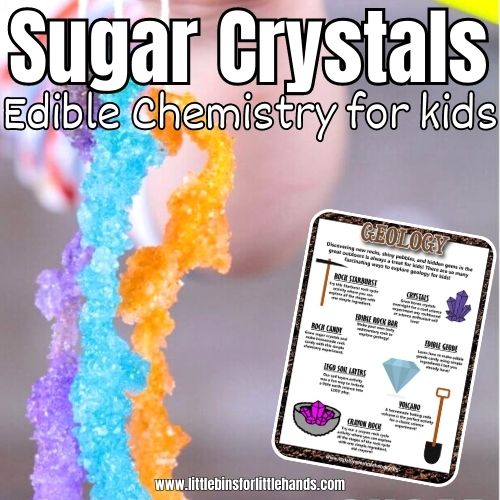
- Rock Candy Crystals – Grow sugar crystals to see how molecules form repeating structures.
- Water Cycle in a Bag – Model evaporation and condensation using just water and a plastic bag.
- Balloon & Heat Experiment – Show that air expands when heated by placing a balloon over a warm bottle.
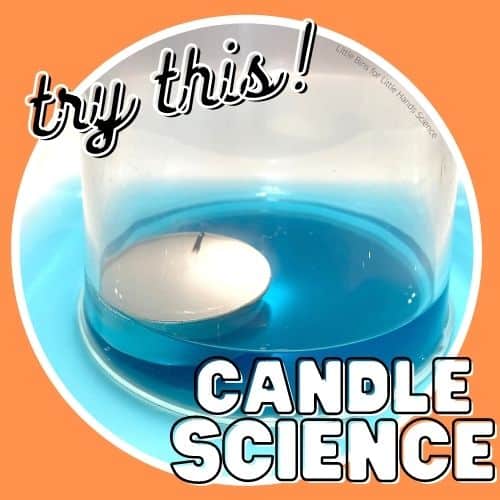
- Candle in a Jar (Combustion) – Explore how fire needs oxygen to burn with this simple chemistry experiment.
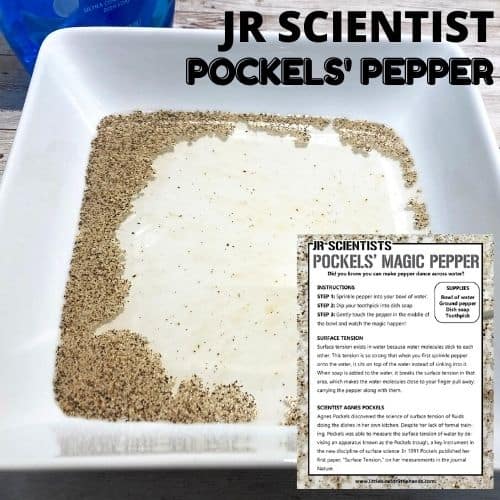
- Surface Tension with Soap – Use milk and dish soap to observe how molecules interact at surfaces.
- Magnet Test – Find out which materials are magnetic and learn about metal properties.


Join the Library Club Today!
Support Real Learning with Real Projects! When you join the Library Club Membership, you’re not just getting instant access to our complete library of art and STEM printables—you’re helping us keep hands-on, high-quality learning alive. Thoughtfully created resources made by real people who care about inspiring kids through creativity, curiosity, and connection.