
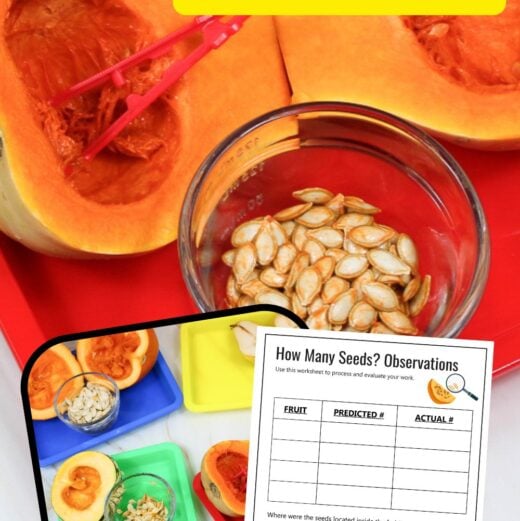
Have you ever wondered why some fall fruits have so many seeds while others have only a few? Set up a fall seed investigation to explore the inside of some favorite fall fruits—like apples, pumpkins, and cranberries—to find out just how many seeds they have! Free printable science journal page included.

Fall Seed Science Investigation
The “How Many Seeds?” experiment fits perfectly into a fall science curriculum by reinforcing key concepts such as the plant life cycle and seed reproduction. As students explore the seeds inside various fall fruits, they connect the seed production to the broader cycle of how plants grow, reproduce, and continue their species.
It also ties into fall harvest themes and seasonal changes, helping students understand how fruits form and seeds’ role in growing new plants. This hands-on activity engages kids by applying the scientific method and giving them a deeper understanding of plant biology and botany.
Grade Level: Kindergarten – 2nd Grade
Supplies Needed:
- Different types of fall fruits (apples, pumpkins, cranberries, etc.)
- Knife (for adult use only) to cut open fruits
- Spoons or tweezers (for removing seeds)
- Paper towels or trays (to keep the work area clean)
- Small bowls or containers (for collecting seeds)
- Printable recording sheet for seed count (see below)
- Pencils or markers
- Magnifying glass (optional for observing seeds up close)

Fall Seed Investigation Instructions:
1. Gather the Fruits: Choose a variety of fall fruits known for having seeds, such as apples, pumpkins, cranberries, and any other available fall fruits.
2. Predict: Ask the children to predict how many seeds they think are in each type of fruit. They can write their predictions down on the chart or printable recording sheet. For example, “How many seeds do you think are in the apple?”
🛑 Cut Open the Fruits (Adult Only): Carefully cut open each fruit. Be sure to supervise or handle this part for safety, especially when dealing with pumpkins or other hard fruits. Lay the fruit halves on trays or paper towels.
3. Scoop and Count: Have the kids use spoons or tweezers to scoop out the seeds from each fruit. Then, they should place the seeds in small bowls or containers for each type of fruit.
Count the seeds from each fruit and record the number on the chart. Encourage kids to use their fingers or tweezers to handle the seeds carefully.
4. Examine the Seeds: Optional: Use a magnifying glass to observe the seeds up close and discuss any differences in size, color, or shape.
5. Record Data: Create a simple chart to record the number of seeds in each fruit. You can draw this on large paper or use a printable seed-counting chart.
Example of a simple chart: (grab our free printable chart below)
| Fruit | Predicted Seeds | Actual Seeds |
|---|---|---|
| Apple | 5 | 8 |
| Pumpkin | 30 | 35 |
| Cranberry | 2 | 1 |
6. Compare Results: Ask the kids to compare their predictions with the actual number of seeds. Were their guesses close? Which fruit had the most seeds? The fewest?
7. Discuss the Results: Discuss why different fruits have different numbers of seeds. Explain that some fruits need to produce more seeds to ensure that new plants will grow.

Free Fall Seed Investigation Sheets

Fall Seed Science Information
Plants produce seeds as part of their life cycle. Seeds are vital because they are how plants reproduce and grow new plants. The number of seeds inside different fruits can vary depending on the type of plant and how it reproduces.
Why Do Some Fruits Produce More Seeds Than Others?
Some fruits have a lot of seeds, while others only have a few or even just one. Let’s explore why that happens! 🌱
Type of Fruit
- Fruits are part of a plant’s way of spreading seeds to grow new plants. Some plants, like watermelons and strawberries, make many seeds to increase the chance of new plants growing.
- Other fruits, like mangoes or avocados, only have one big seed. They put all their energy into growing that one seed well!
How the Seeds Spread
- Small seeds can spread easily by wind, water, or animals. These fruits (like berries) need more seeds to increase the chance of some landing in the right spot to grow.
- Larger seeds don’t spread as easily, so plants only need one or a few. For example, coconuts use water to float to new places!
Animal Helpers
- Some fruits rely on animals to eat them and carry their seeds far away. Fruits like apples have many seeds to improve the odds that animals spread them.
- Meanwhile, fruits like cherries and peaches have fewer seeds because their large pits can travel with animals over long distances before being dropped.
Fruit’s Job
- The job of a fruit is to protect the seeds inside and help them spread. Some plants use quantity (more seeds) to increase success, while others focus on quality (fewer but stronger seeds).
Fun Fact
- Bananas we eat today have tiny seeds that don’t grow, but wild bananas have many big seeds inside!
💡 By counting seeds, kids can start seeing patterns and differences in the plant world while exploring concepts like prediction, observation, and comparison.
Extension Activities:
More Fall Science Activities
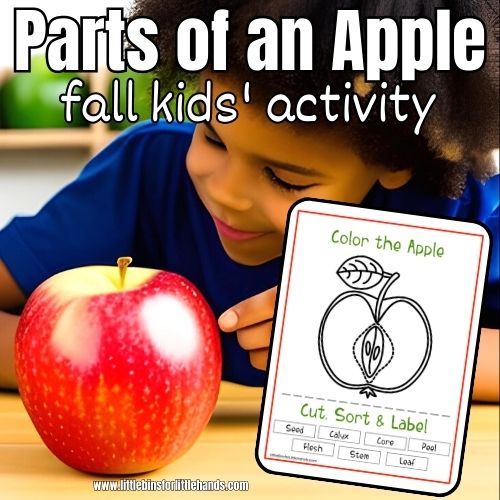
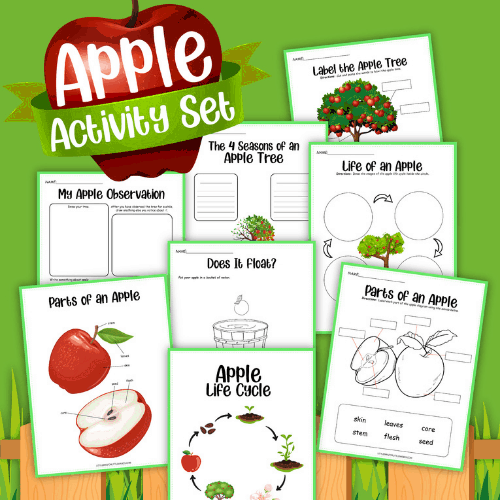
Apple Investigation: Tie this experiment into an apple-themed investigation where kids can explore the parts of an apple, experiment with apple taste tests, and make apple prints.
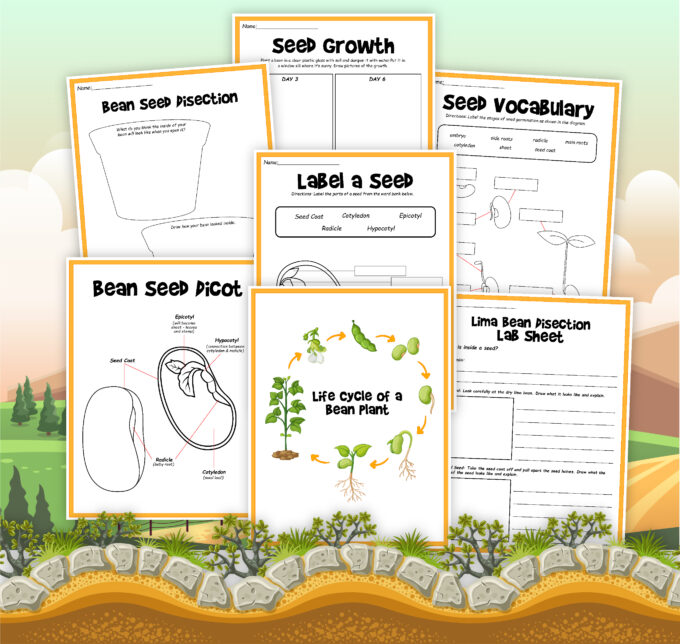
Pumpkin Life Cycle: Learn about the life cycle of a pumpkin from seed to plant to fruit, and discuss how pumpkins grow. Also, explore pumpkin math and seed counting!
Fall Sink or Float: Use mini pumpkins and other fall theme items to explore what sinks and what floats.
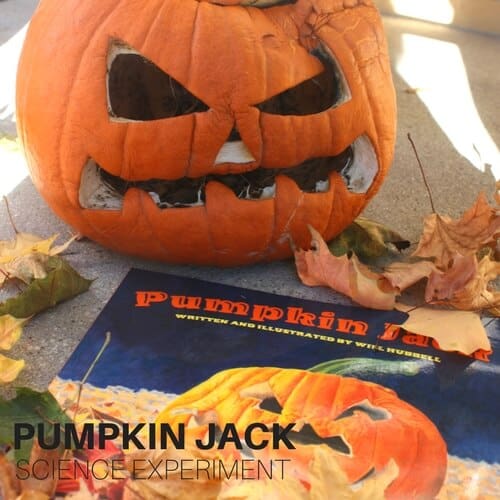
Decomposing Pumpkin: This activity ties into lessons on the life cycle of plants and teaches about natural processes. You can also discuss why decomposition is essential for returning nutrients to the soil.
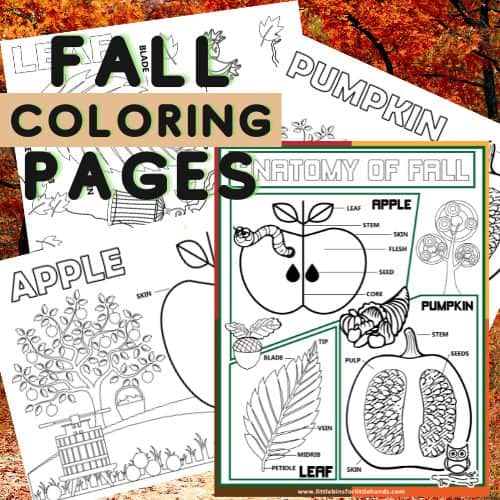
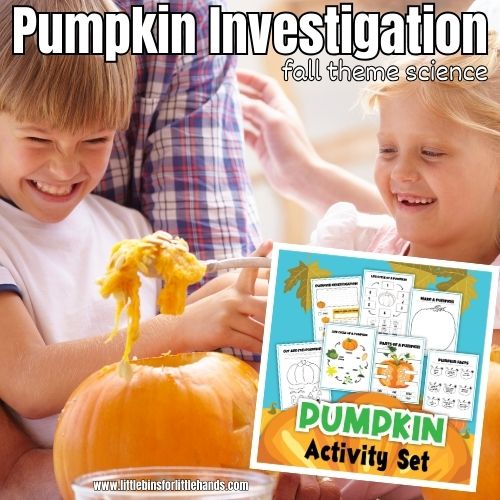
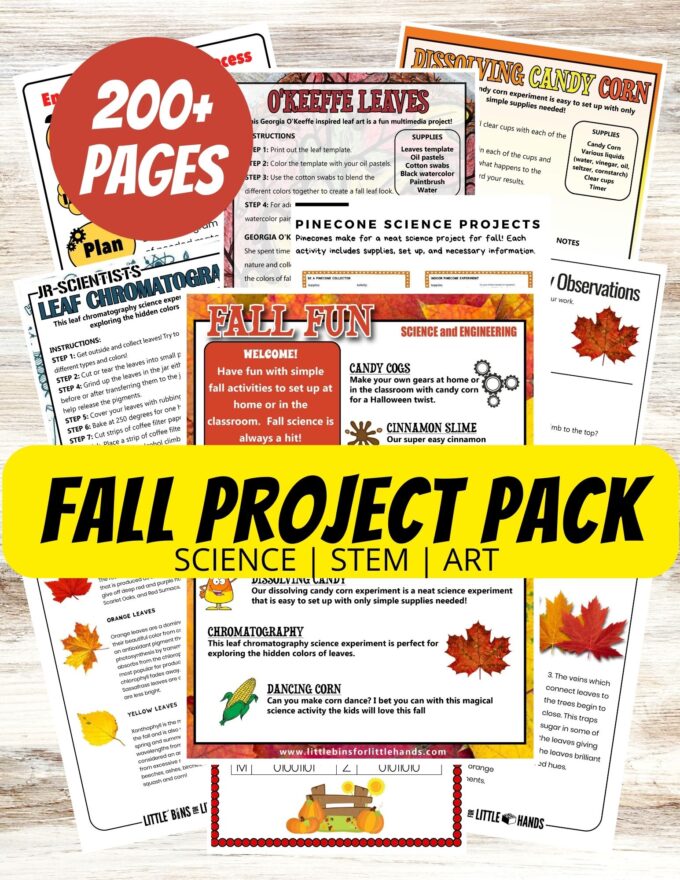
Printable Fall STEM Projects Pack
This 200+ page fall theme pack complements both the apple and pumpkin packs. There are no overlaps!
What’s Included:
- 20+ Fall theme science and STEM activities with printable sheets, instructions, journal pages, and useful information all using easy-to-source materials perfect for limited time needs. Includes a fall theme engineering pack with fun, problem-based challenges for kids to solve
- Leaf theme science activities include parts of a leaf, leaf coloring pages, leaf rubbing sheets, leaf graphing, and why leaves change colors information and lapbook! Go on a leaf scavenger hunt too.
- Pinecone Pullout Pack: includes pinecone life cycle information, science investigations, and more.
- Fall Screen Free Code Pack includes an introduction to binary code, algorithms, puzzles, and more
- Fall Art/STEAM Projects
- Bonus Fall fun pack includes games and activities to round out your fall theme activities, such as brain breaks, Would You Rather cards, mystery math pictures, and more