
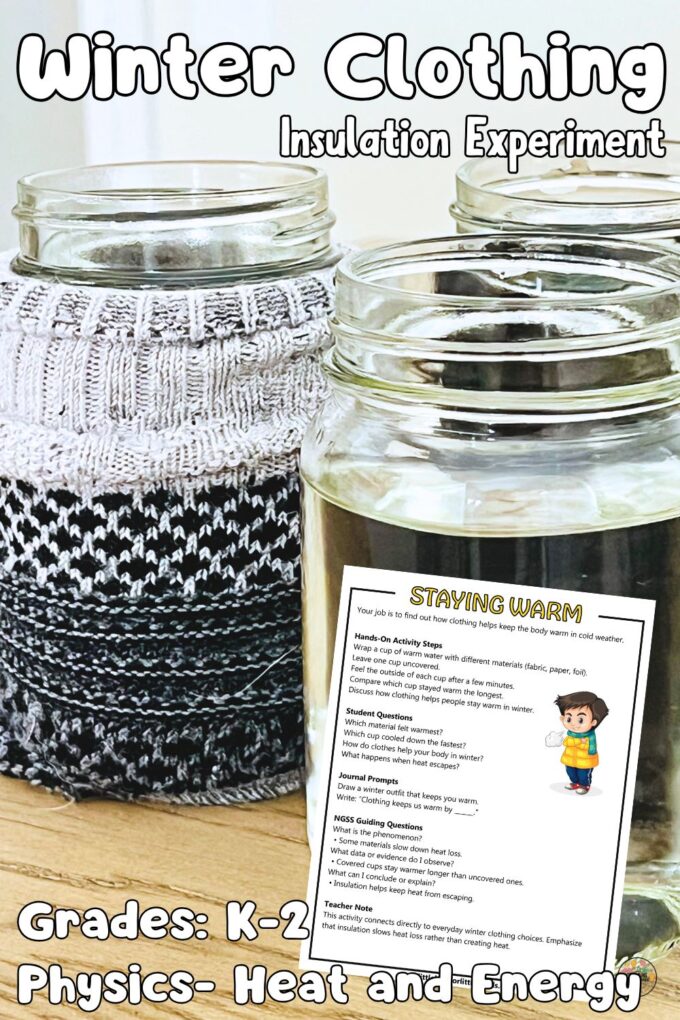
Winter clothes help keep us warm—but how do they actually work? In this winter clothing insulation experiment for kids, young learners test different clothing materials to see which ones keep heat in best. Using warm water and everyday winter items, kids explore insulation in a hands-on, visual way that connects directly to real life.
The Science Behind Winter Clothing Insulation
This simple winter science experiment is perfect for kindergarten through grade 2, and works well for classrooms, homeschool, and winter science units. We have an advanced insulation experiment for grades 2-5.
Field: Physical Science — Heat & Energy
Grades: K–2
Concepts Explored:
- Heat moves from warm objects to cooler surroundings
- Insulating materials slow heat loss
- Air trapped in materials helps keep heat in
- Winter clothing helps regulate body temperature
Winter Clothing Insulation Experiment Supplies
- 4–6 identical small cups or bottles
- Warm water (not too hot or boiling)
- Winter clothing materials (one per container):
- Wool sock
- Cotton sock
- Fleece or jacket lining
- Scarf
- Mitten or glove
- Can cozy – these are excellent insulators for a reason!
- Rubber bands (optional to secure material around the cup)
- Timer
- Thermometer (optional) Amazon Affiliate Link
- Observation sheet or paper for drawing

How to Test Winter Clothing Insulation
- Prepare the containers.
Fill each cup or bottle with the same amount of warm water. - Wrap the containers.
Wrap each container in a different winter clothing material. Secure with a rubber band if needed. - Create a control.
Leave one container uncovered so kids can compare insulated versus non-insulated water. - Start the test.
Set a timer for 10–15 minutes. - Observe and record.
Have kids feel the outside of each container or use a thermometer to compare temperatures. - Compare results.
Which material kept the water warm the longest?

How Insulation Keeps Us Warm
Insulation is anything that slows down heat transfer. Heat naturally moves from warmer objects to cooler ones. When we wrap something warm in insulating material, we slow how quickly heat escapes into the air.
Many winter clothing materials—like fleece and wool—trap tiny pockets of air. Air is a poor conductor of heat, so these trapped air spaces help keep warmth close to our bodies. Thicker materials or materials that trap more air usually work better as insulators.
In this experiment, the warm water represents body heat, and the clothing materials act like winter clothes. The container that stays warm the longest shows which material is the best insulator.
🔎 Tip: Make sure all containers start with the same amount of warm water for a fair test. This is an excellent opportunity to discuss variables in science experiments.
Winter Clothing Science for Kids
- Animals like polar bears and penguins stay warm using thick fur or feathers that trap air.
- Wearing layers traps more air than wearing one thin layer.
- Hats and mittens help reduce heat loss from the head and hands.
- Insulation works the same way in winter clothing and in house walls.
NGSS Guiding Questions for Insulation Experiments
What happens to warm objects over time?
Warm objects cool down as heat moves into the surrounding air.
How does wrapping a container change how fast it cools?
Wrapping slows heat loss by trapping air around the container.
Why do some materials keep water warm longer than others?
Some materials trap more air, which slows heat transfer.
How is this experiment similar to wearing winter clothes?
Winter clothes trap heat close to our bodies, helping us stay warm in cold weather.
Make It a Winter Science Project
Turn this activity into a science project by changing one variable and measuring results over time. Find great tips for setting up easy science fair projects and creating science fair boards.
Try these investigation ideas:
- Test the same material with different thicknesses
- Compare layered materials vs. single layers
- Measure temperature every 5 minutes and create a simple graph
- Test insulation in a cold room vs. warm room
Science Fair Question Examples:
- Which winter clothing material keeps water warm the longest?
- Does thicker insulation keep heat in better?
- Do layered materials insulate better than a single thick layer?
💡This is an excellent opportunity to apply the scientific method even with younger kids! Learn how to write a hypothesis, choose variables, test, collect, and share data!
Winter Clothing Insulation Experiment FAQ
Is this winter clothing experiment safe for young kids?
Yes. This experiment uses warm (not hot) water and everyday clothing materials, making it safe for young learners with basic supervision.
What age is this insulation experiment best for?
This activity works best for kindergarten through second grade but can be simplified for preschool or extended for older elementary students.
Do I need a thermometer for this experiment?
No. Kids can compare warmth by touch. A thermometer is optional and works well for older students or science fair projects.
Why does one material work better than another?
Some materials trap more air, which helps slow heat loss and keep warmth in longer.
Related Winter Science Activities
💡 Be sure to explore all of our winter science experiments and activities here.
- Winter Animal Adaptations
- Insulation Experiment
- Winter Weather Science
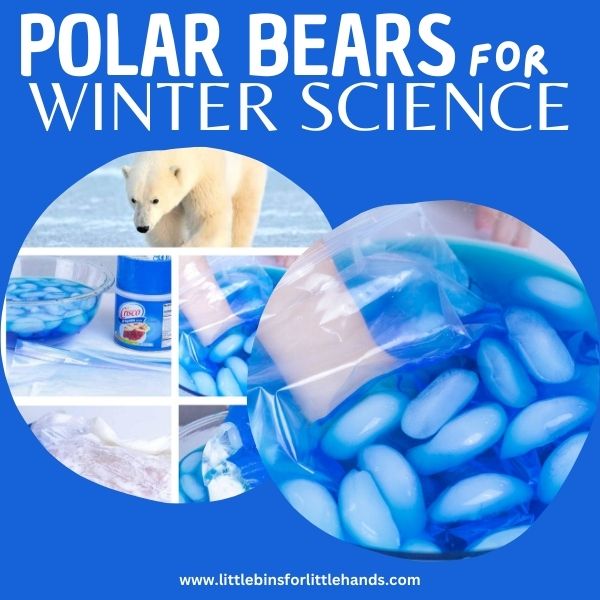
- Polar Bear Science Project
- Winter STEM Challenges


Printable Winter STEM Pack
Even if you don’t live in a snowy winter climate, there are many ways to explore the season!
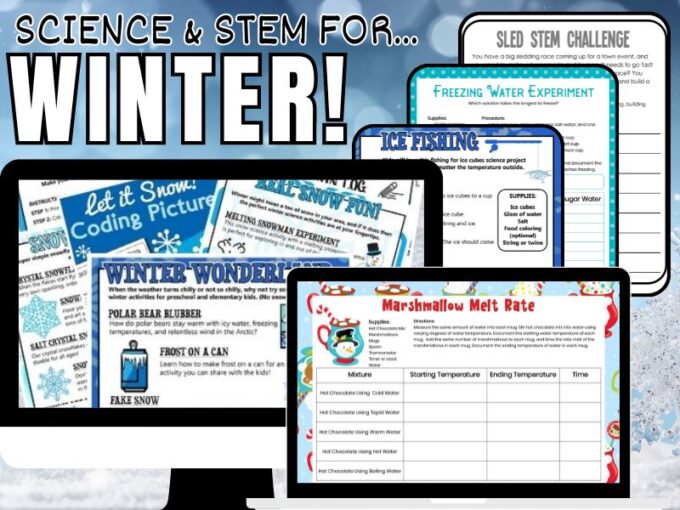
WHAT’S INSIDE? You’ll find 250+ Pages of Winter theme projects for science, STEM, and art!
- 25+ winter science activities and STEM projects for kids that are easy to set up and fit into the time you have available, even if it’s limited! NEW: Activity observation sheets.