
Ever wonder how polar bears stay warm in freezing temperatures? Explore the science of insulation with this easy, hands-on winter experiment that tests how different materials retain heat. Kids will discover which materials — from wool and cotton to foil and fall leaves — make the best insulators.

Inulation Science Experiment
Field of Science: Physical Science (Heat and Temperature), Life Science (Animal Adaptations)
Grade Level: 2nd–5th Grade (simple winter clothing experiment for K-2 here)
Insulation helps prevent heat transfer — the movement of heat from one object to another. When something is well insulated, it keeps warm things warm and cold things cold by trapping air or reflecting heat. In this experiment, kids test a variety of materials to see which one best prevents heat loss.
Concepts Explored
- Heat transfer (conduction and convection)
- Insulation and thermal energy
- Material properties and comparison
- Animal adaptations in cold environments
Supplies Needed
- 4 glasses, mugs, or jars (heat safe)
- Hot water (adult supervision required)
- Thermometer
- Stopwatch or timer
- Various insulation materials:
- Wool
- Cotton
- Aluminum foil
- Plastic wrap or bubble wrap
- 🍂 Fall leaves (optional natural material!)
- Rubber bands or tape
- Free printable data chart (optional)
🛑 Adult supervision and assistance are required for kettle use and pouring hot water.
How to Do the Insulation Experiment
Step 1: Prepare the Cups
Pour the same amount of hot water into each cup. Make sure all the cups start at roughly the same temperature.

Step 2: Wrap the Cups
Wrap each cup in a different insulating material — one with wool, one with cotton, one with foil, one with plastic wrap — and leave one unwrapped as a control.
👉 You can also test real fall leaves as a natural insulator! Collect dry, clean leaves and layer them tightly around one of your cups.
Step 3: Record the Starting Temperatures
Use the thermometer to measure and record the temperature of each cup before the experiment begins.
Step 4: Observe and Record
Check the temperature every 5 minutes for 20–30 minutes, writing down the results each time.
Step 5: Compare Results
Which cup stayed warmest? Which cooled fastest? Talk about which material worked best and why.


Insulation Science Information
What Is Insulation?
Insulation slows down the transfer of heat energy. Some materials trap air (like cotton or leaves), while others reflect heat (like foil). Air is a poor conductor of heat, meaning it doesn’t transfer heat energy easily. The more air trapped inside a material, the better it is at keeping heat from escaping.
Conduction and Convection
- Conduction: Heat transfer through direct contact (like a metal spoon getting hot in soup).
- Convection: Heat transfer through fluids — warm water rises while cooler water sinks, forming a current.
Real-World Connection: Animal Insulation
Animals use natural insulation to survive in cold environments:
- Polar bears have thick fur and a layer of fat called blubber.
- Whales and seals use blubber to prevent heat loss in icy waters.
- Birds fluff up their feathers to trap air for warmth.
- Hedgehogs and chipmunks build leafy nests for insulation — just like your fall leaf test!
NGSS Guiding Questions
| NGSS Question | Concept Focus |
|---|---|
| How can we compare the effectiveness of different materials as insulators? | By measuring how quickly heat is lost through various materials. |
| How do animals stay warm when their environment gets colder? | Animals use natural insulation like fur, feathers, or fat to trap heat. |
| What patterns can we observe when testing how materials retain heat? | Materials that trap more air tend to slow heat loss better than those that don’t. |

Make It a Science Project
Use the scientific method to turn this into a science fair project:
- Ask a Question: Which material keeps heat in the longest?
- Make a Hypothesis: If a material traps more air, then it will keep water warmer longer.
- Test Materials: Try wool, foil, cotton, and leaves.
- Record Data: Track temperature every 5 minutes.
- Analyze Results: Graph your temperature changes.
- Draw a Conclusion: Identify which material worked best and why.
Variable Tip: Only change one thing at a time — the material. Keep all other factors (water amount, temperature, and time) the same.
More Insulation Facts for Kids
- Air trapped between feathers, fur, or leaves helps keep animals warm.
- Aluminum foil reflects heat but doesn’t trap it — that’s why it cools quickly.
- Wool is one of the best natural insulators because of its tiny air pockets.
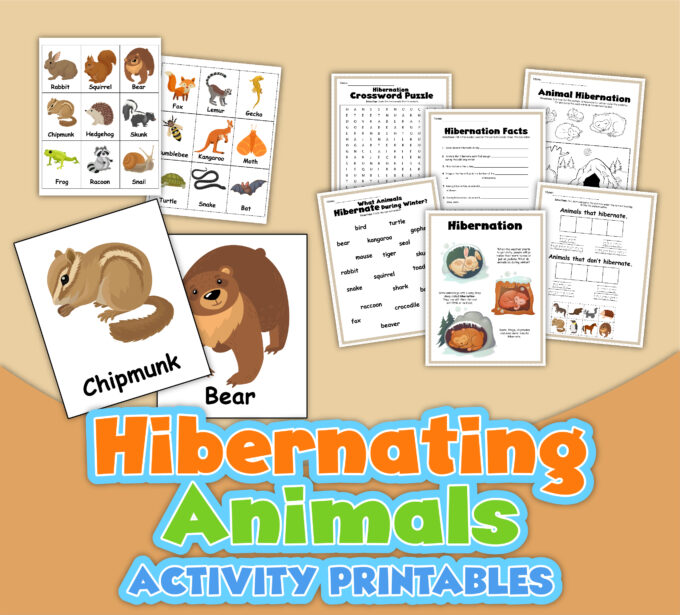
- Animals that hibernate often line their dens with leaves and grasses for warmth.
Extension Insulation Activities
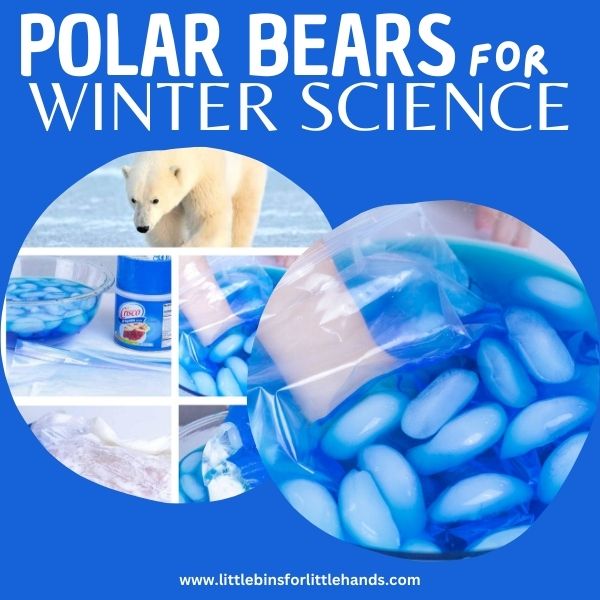
- Polar Bear Blubber Experiment
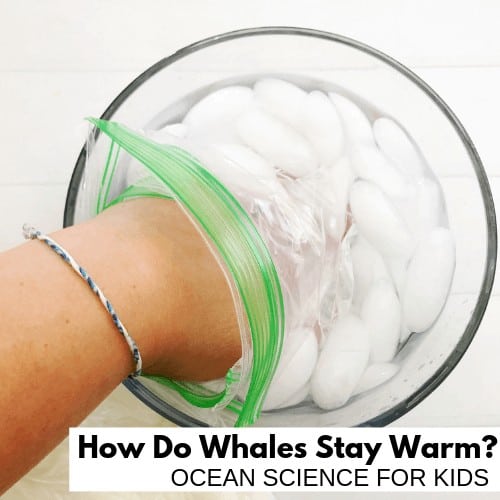
- Whale Blubber Experiment
- Ice Cube Insulation Challenge
- Build A Solar Oven

Related Science Activities
- Build an Animal Shelter STEM Challenge
- Winter Adaptations STEM Challenge
- Temperature Investigation
- What Absorbs Heat?


Simple Insulation Science Vocabulary
- Insulation – A material that slows down the transfer of heat and helps keep things warm or cold.
- Heat Transfer – The movement of heat energy from something warm to something cooler.
- Conduction – Heat moving through direct contact between objects (like a metal spoon getting hot in soup).
- Convection – Heat moving through liquids or gases as warm parts rise and cool parts sink.
- Temperature – A measure of how hot or cold something is.
- Thermometer – A tool used to measure temperature.
- Energy – The ability to do work or cause change; heat is one kind of energy.
- Air Pockets – Small spaces of trapped air that help slow down heat loss and act as insulation.
- Adaptation – A feature or behavior that helps a living thing survive in its environment.
- Blubber – A thick layer of fat under the skin of whales, seals, and other marine animals that keeps them warm.
Printable Science Packs for Kids
Visit our SHOP for easy-to-print STEM and science lesson plans for the whole year. Or join us in the Little Bins Club.