Kindergarten STEM is all about doing. Kids build, test ideas, solve problems, and make simple connections about how things work. Instead of worksheets or long explanations, STEM for kindergarten focuses on hands-on experiences that encourage curiosity, creativity, and problem-solving.
What Are Kindergarten STEM Activities?
Kindergarten STEM activities give young learners a chance to explore science, engineering, math, and technology through hands-on investigation and building.
At this age, STEM should be simple and concrete. Kids do not need complicated experiments or elaborate supplies. Instead, they can practice important STEM skills by building a tower, testing a ramp, comparing objects, or figuring out how to make a simple design work better.
Kindergarten STEM helps kids learn how to:
- Ask questions and make predictions
- Build and test simple designs
- Observe what happens
- Count, measure, sort, and compare
- Try a new idea when something does not work
- Talk about what they noticed and discovered
Most of these activities use basic classroom supplies such as paper, index cards, cups, blocks, craft sticks, tape, toy cars, and small classroom objects.
Quick Kindergarten STEM Activities
Looking for an easy place to start? Try one of these classroom-friendly STEM challenges:
These activities are easy to set up for partners, small groups, STEM centers, or whole-class investigations.
Engineering and Building STEM Challenges
Engineering is a natural fit for kindergarten because kids can build, test, and improve their ideas using familiar materials.
Cup Tower Challenge: Build the tallest tower you can using plastic or paper cups. What helps a tower stay standing?
Paper Bridge Challenge: Place a sheet of paper across two blocks or cups and test how much weight it can hold. Fold or change the paper and test it again.
Strong Shapes Challenge: Create simple paper shapes such as triangles, squares, and circles. Test which shapes are strongest when used as part of a structure.
Index Card Structure Challenge: Use index cards and tape to build a structure that can hold a small toy or classroom object. Experiment with folding, rolling, or stacking the cards.
Foil Boat Challenge: Shape a piece of aluminum foil into a boat and test whether it floats. Add counters or cubes one at a time to see how much it can hold.
Build a Shelter Challenge: Use blocks, craft sticks, paper, or other classroom materials to build a small shelter for a toy. Test whether the shelter stays standing when gently blown with a fan or waved piece of cardboard.
Motion STEM Activities
Motion activities let kindergarten students explore pushes, pulls, ramps, gravity, and how objects move.
Ramp and Roll Investigation: Make a ramp from cardboard and books. Roll a toy car or ball down the ramp and compare what happens when the ramp is higher or lower.
Paper Helicopter Challenge: Drop a simple paper helicopter and observe how it spins and falls. Change one part of the design and test it again.
Roll or Slide Investigation: Test classroom objects on a ramp. Which objects roll? Which slide? What do you notice about their shapes?
Move It Challenge: Challenge kids to move a lightweight object from one spot to another without using their hands. Try blowing through a straw, creating a ramp, or using another simple tool.
Science Investigations for Kindergarten
Simple investigations help kids practice predicting, observing, testing, and describing results.
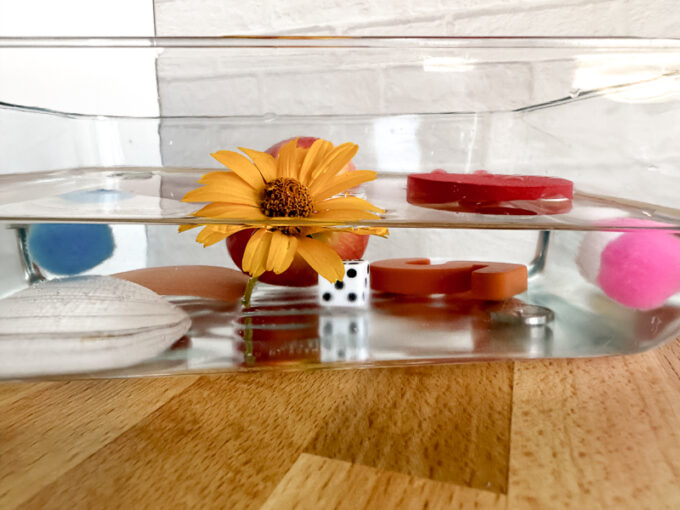
Sink or Float Investigation: Choose several classroom objects, predict whether each will sink or float, and test them in a container of water.
Magnet Investigation: Test a collection of safe classroom objects with a magnet. Sort the objects into magnetic and nonmagnetic groups and compare what they are made from.
Ice Melt Investigation: Place ice cubes in different locations or on different materials and observe which melts fastest. Keep the investigation simple by changing just one thing at a time.
Math Through STEM
Math becomes meaningful when kindergarten students use it while building and investigating.
Measure Your Build: Measure towers, bridges, or ramps with nonstandard units such as snap cubes, blocks, or craft sticks.
Compare Designs: Use words such as taller, shorter, longer, heavier, lighter, more, and fewer to compare STEM creations.
Count the Load: Add counters or cubes one at a time to a bridge or foil boat. Count how many it can hold before the design changes or collapses.
Build a Pattern: Use blocks, cups, or craft sticks to create repeating patterns, then extend or copy a classmate’s pattern.
Sort and Classify: Sort objects by properties such as shape, size, material, whether they roll or slide, or whether they are attracted to a magnet.
LEGO Math: Build towers and use math skills with a free printable LEGO Tower Math Game.
💡The goal is not to find one perfect answer. Kindergarten STEM is about giving kids a simple problem, time to explore it, and opportunities to notice what happens when they try something new.
Technology in Kindergarten STEM
Technology in kindergarten STEM does not have to mean screens or devices. Young kids can explore technology by using simple tools, following steps, and choosing the best tool for a job.
Explore Simple Tools: Give kids classroom tools such as scoops, tweezers, rulers, craft sticks, funnels, or droppers. Let them experiment with how each tool helps them complete a task.
Follow a Sequence: Use simple picture directions or task cards that ask kids to complete steps in order. This introduces the idea that instructions and processes need to happen in a logical sequence.
Try a Simple Tool Challenge
Give each group a small collection of classroom objects and several tools. Challenge kids to move, sort, or arrange the objects without using their hands.
Try:
- Tweezers for picking up and moving objects
- Scoops or spoons for transferring objects
- Funnels for directing materials into a container
- Rulers or craft sticks for pushing or lining up objects
Ask questions such as:
- Which tool worked best?
- Was one tool easier to use?
- What happened when you changed tools?
- Which tool would you choose next time?
You can also extend the activity by having kids sort and classify objects by observable properties such as size, shape, texture, or material.
👉 Explore more: Science/STEM Tools for Kids (Free Printables)
👉 Learn more: Observation in Science (Free Printables)
More Kindergarten Science Investigations
Science investigations are another easy way to add STEM learning to the kindergarten classroom. Keep the focus on making predictions, observing changes, comparing results, and talking about what happened.
Five Senses Investigations: Use sight, sound, touch, and smell to observe and describe safe classroom materials. Our Mystery Object Investigation is perfect!
Sink or Float: Predict and test whether familiar objects sink or float in water.
Seed Germination: Observe a seed over several days and record how it changes as it begins to grow.
Magnet Investigation: Test classroom objects and sort them according to whether they are attracted to a magnet.
Ice Melt Investigation: Compare ice cubes under different conditions and observe which melts faster.
👉 For more hands-on science ideas, explore our Kindergarten Science Experiments collection.
STEM vs. Kindergarten Science (What’s the Difference?)
Skills Built Through Kindergarten STEM
Kindergarten STEM activities help kids develop essential early learning skills, including:
- Problem-solving and persistence
- Fine motor skills
- Early math reasoning (counting, comparing, measuring)
- Communication and explanation
- Creativity and flexible thinking
Kindergarten STEM Guiding Questions
| STEM Focus | Guiding Questions |
|---|---|
| Building Structures | What materials make the strongest tower? |
| Motion & Ramps | How does changing the ramp angle affect speed? |
| Problem Solving | What could you change to make your design work better? |
| Measurement | Which tower is taller or shorter? |
| Comparing Designs | Which design worked best and why? |
| Tools & Technology | Which tool works best for this task? |
Free Kindergarten STEM Guide
Looking for an easy way to start STEM at home or in the classroom?
👉 Get the free Kindergarten STEM Guide here.
How to Run STEM in Kindergarten (Without Overplanning)
You don’t need detailed instructions to succeed in STEM. Try these simple tips:
- Ask open-ended questions like “What do you think will happen?”
- Encourage kids to try again and make changes
- Focus on effort and ideas, not perfect results
- Let kids explain what they built or tested
💡 STEM works best when kids feel free to explore.
STEM Activities by Theme (Optional Inspiration)
STEM challenges can easily be adapted for seasons and holidays by changing materials or adding creative twists.
Kindergarten STEM FAQs
What are STEM activities for kindergarten?
STEM activities for kindergarten are hands-on challenges that combine science, technology, engineering, and math through building, testing ideas, and solving simple problems.
What does STEM look like in kindergarten?
Kindergarten STEM usually includes building towers, testing ramps, solving simple design problems, and using math concepts like counting and measuring during play.
What are easy STEM activities for kindergarten?
Easy STEM activities include building cup towers, designing ramps, creating marble runs, measuring structures, and solving simple engineering challenges with everyday materials.
What is the difference between STEM and science in kindergarten?
Science focuses on observing the natural world, such as plants, weather, and materials. STEM focuses on building, designing, testing ideas, and solving problems using those science concepts.
Want more hands-on STEM ideas that actually work?
Our Classic STEM & Engineering Projects Pack includes 50+ favorite experiments and engineering challenges with printable journal pages, instructions, and easy-to-find supplies. Perfect for classrooms, homeschool, and curious kids who love to build and test ideas.