
Preschool science should be simple, hands-on, and easy to repeat. Young kids learn best when they can touch, test, observe, compare, and talk about what they notice.
These preschool science activities and experiments use familiar supplies and work well for ages 3–6 at home, in the classroom, or at a preschool science center.
Kids can explore ideas like sinking and floating, magnets, plants, weather, rocks, light, motion, the five senses, measurement, and simple reactions without needing complicated lessons.
💡 Looking for more hands-on learning? Explore our Preschool Activities for science, STEM, art, sensory play, math, and more.
What Does a Preschool Scientist Do?
Preschoolers are already using early science skills when they:
- observe something closely
- ask questions
- make a prediction
- test an idea
- compare what they notice
- sort and classify objects
- measure or count
- record what happened
You do not need a formal lab setup. A bowl of water, a magnet, a magnifying glass, a flashlight, or a few rocks can be enough to start an investigation.
Try asking:
- What do you notice?
- What do you think will happen?
- What changed?
- What stayed the same?
- Which one is heavier?
- What could we try next?
Easy Science Experiments for Preschoolers
Start with activities that give kids something interesting to observe right away.
Sink or Float: Gather a collection of classroom or household objects and predict whether each one will sink or float. Try blocks, toy animals, spoons, corks, lids, paper clips, or seasonal objects.
👉 Try our Sink or Float Experiment.
Magic Milk: Add drops of food coloring to milk and touch the surface with a cotton swab dipped in dish soap. Kids can observe the colors move and swirl across the surface.
👉 Try Magic Milk.
Walking Water: Connect cups with paper towels and watch colored water slowly travel from one cup to another.
👉 Try the Walking Water Experiment.
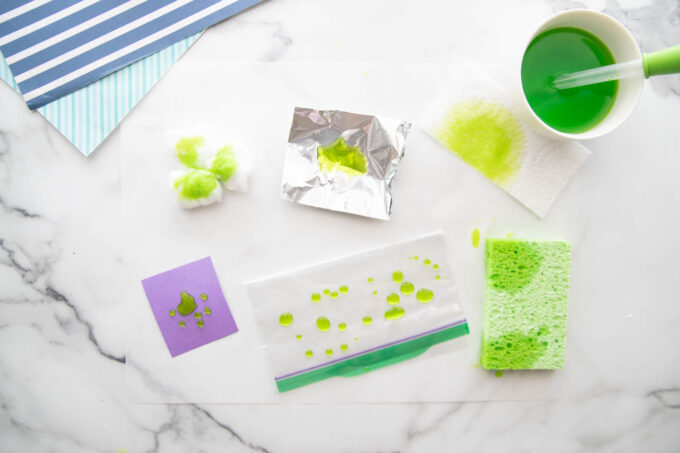
What Absorbs Water? Test materials such as paper towels, foil, fabric, sponges, and plastic. Predict what will absorb water before testing.
👉 Explore our Preschool Water Science Experiment.
Explore Magnets
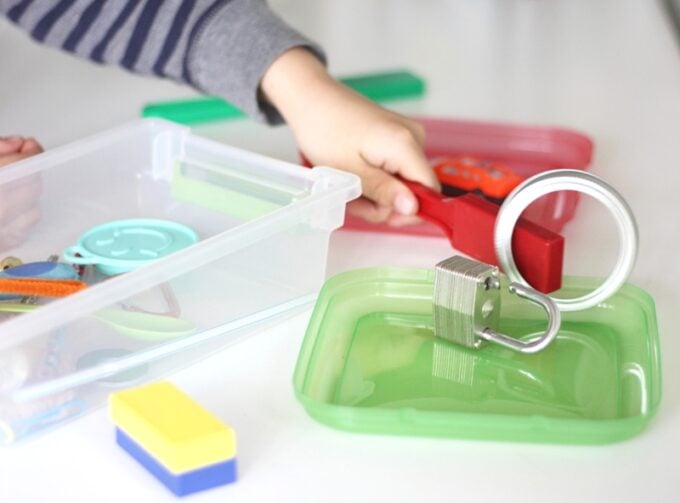
Magnets make an easy preschool science center because kids can test objects independently.
Set out a magnet or magnetic wand with a tray of safe objects. Try paper clips, craft sticks, lids, buttons, plastic toys, keys, pom-poms, and coins.
Sort the objects into magnetic and not magnetic.
Ask:
- What sticks to the magnet?
- What does not?
- What are the magnetic objects made from?
👉 Set up a Preschool Magnet Activity.
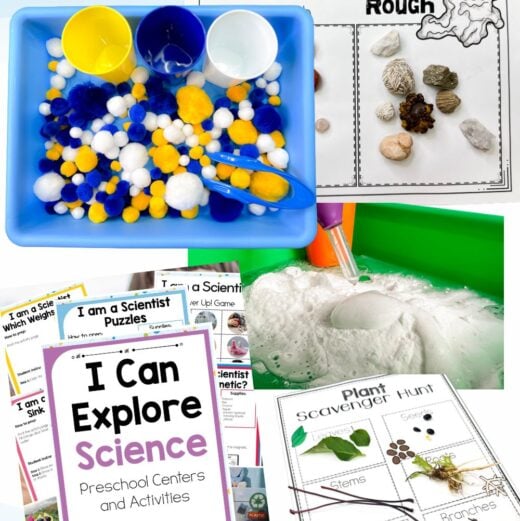
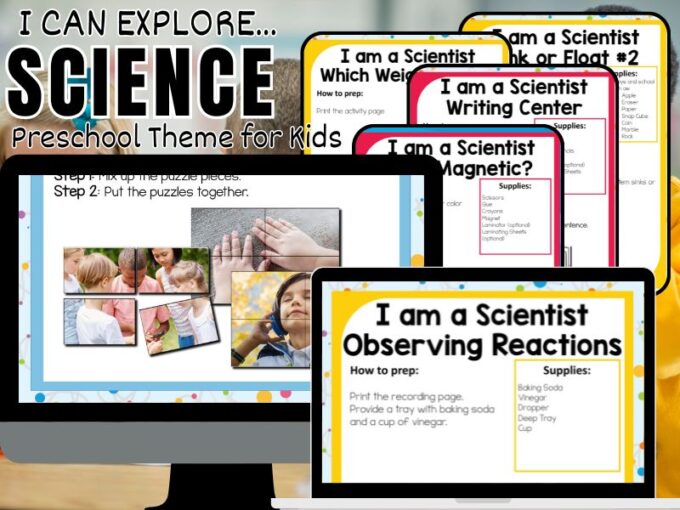
The I Can Explore Science Pack also includes “Is It Magnetic?” activity where kids test and sort objects using a simple recording page.
Explore Weight and Measurement
Preschoolers can begin comparing weight long before they use standard units of measurement.
Set out two familiar objects and ask:
- Which feels heavier?
- Which feels lighter?
- Do they look like they should weigh the same?
If you have a balance scale, let kids test their predictions.
The Which Weighs More? activity in the I Can Explore Science Pack gives kids a simple way to compare familiar objects and practice early measurement thinking.
Explore Light and Shadows
Light and shadows are easy to investigate with flashlights, toys, blocks, or sunlight. Place an object in front of a light source and observe the shadow. Then move the object or light.
Ask:
- Did the shadow move?
- Did it get bigger or smaller?
- What happens when you turn the object?
👉 Try our Shadow Activities for Preschoolers.
You can also use mirrors to explore reflections and how light bounces.
👉 Explore Mirrors and Reflections.
Explore Plants and Living Things
Plants make wonderful preschool science because kids can observe changes over several days or weeks.
Grow Seeds in a Jar or bag: Place seeds where kids can watch roots and shoots develop.
👉 Try our Seed Jar Experiment or Seed Bag Experiment.
You can also germinate seeds in a bag and tape them to a sunny window.

Celery in Colored Water: Place celery stalks in colored water and watch the color move through the plant.
👉 Try our Celery Science Experiment.
Grow Grass Heads: Plant grass seed in cups, watch it grow, and give the grass a pretend haircut.
👉 Make Grass Heads.
Explore Plant Parts: Go outside and look for stems, leaves, flowers, seeds, and roots.
👉 Try our Preschool Plant Scavenger Hunt.

👉 Explore all of our Preschool Plant Activites here
Apple and Pumpkin Science
Seasonal foods are an easy way to explore living things with young kids.
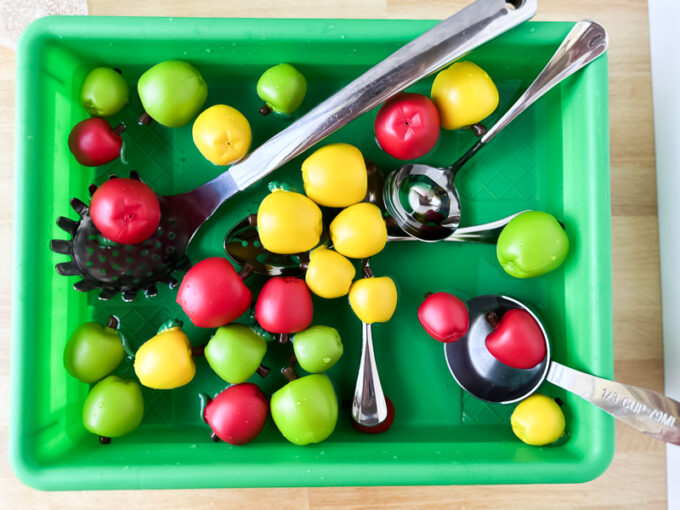
Explore an Apple: Cut an apple open and look at the skin, flesh, core, seeds, and stem. You can also compare varieties, taste test, or test whether pieces sink or float.
👉 Find more Preschool Apple Activities.
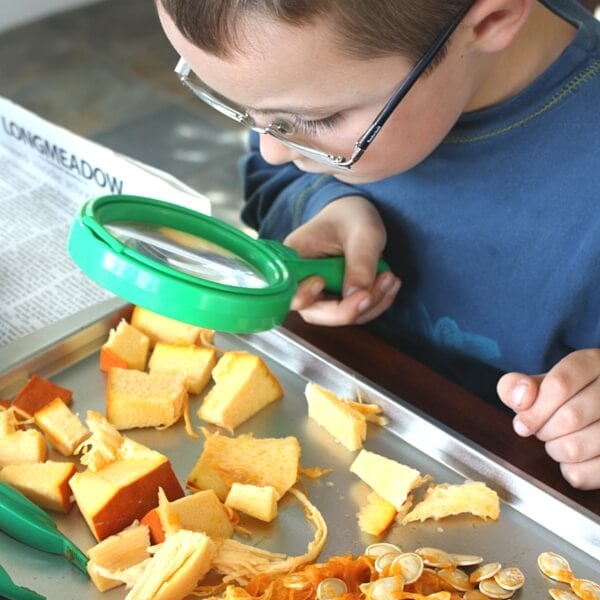
Explore a Pumpkin: Cut open a pumpkin and investigate the skin, stem, pulp, and seeds. Try counting seeds, comparing pumpkins, or testing small pumpkins in water.
👉 Explore our Preschool Pumpkin Activities.
Preschool Weather Science
Weather changes every day, making it a natural science topic for preschoolers.
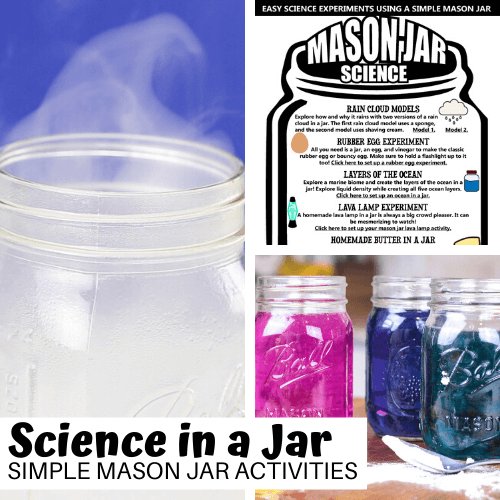
Rain Cloud in a Jar: Use a jar, water, shaving cream, and colored water to model rain falling from a cloud.
👉 Try our Rain Cloud in a Jar.
Make a Rain Gauge: Set up a simple rain gauge outside and check it after rainy weather.
👉 Make a DIY Rain Gauge.
Water Cycle Bag: Hang a simple water cycle bag in a sunny window and watch water evaporate and condense.
👉 Try our Water Cycle in a Bag.
Weather Sensory Bin: Explore clouds, rain, sunshine, snow, and other weather ideas through sensory play.
👉 Try our Weather Sensory Bin.
👉Find even more Weather Activities for Preschoolers.
Explore Pushes, Pulls, and Motion
Preschoolers can explore forces by watching what happens when they push or pull familiar objects.
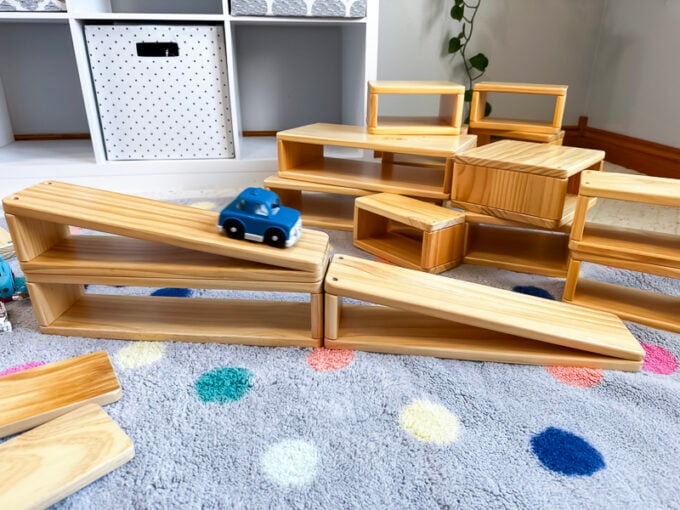
Push and Pull With Toy Cars and Ramps: Set up a simple ramp and use toy cars to explore how pushes and pulls move objects.
Try changing:
- how hard the car is pushed
- where the car starts on the ramp
- the height of the ramp
- the surface under the car
Ask:
- What made the car move?
- What happens with a gentle push?
- What happens with a stronger push?
- Does the car travel farther from a higher ramp?
👉 Try our Push and Pull Activity with Toy Cars and Ramps.
Gravity Drops: Drop safe objects from the same height and compare what happens.
👉 Try our Preschool Gravity Experiment.
Balloon Rocket: Thread a straw onto a string, attach a balloon, and watch it race along the line.
👉 Make a Balloon Rocket.
💡 These simple activities introduce pushes, pulls, motion, and gravity through play, creating an easy bridge from preschool science to STEM.
Explore Rocks and Earth Science
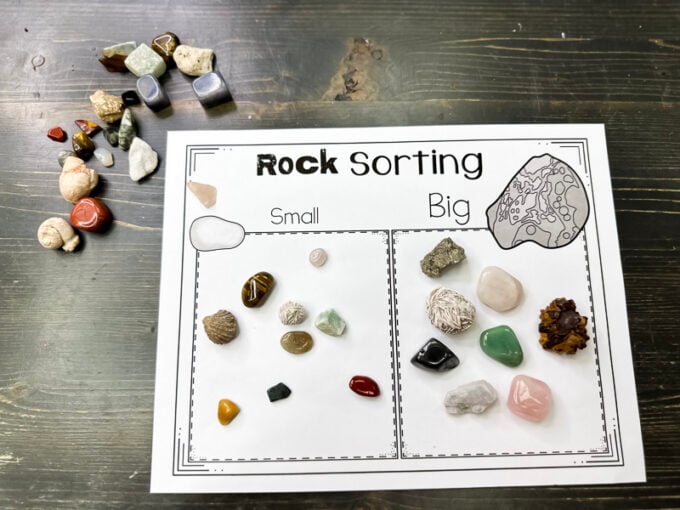
Rocks are easy to collect, compare, and investigate. Give kids a small collection of rocks and magnifying glasses.
Compare:
- color
- size
- texture
- shape
- weight
Sort rocks into groups and ask kids how they decided where each one belongs.
👉 Explore our Preschool Rock Activities.
👉 You can also set up a Preschool Nature Science Table with rocks, leaves, shells, sticks, and other natural finds.
Explore the Five Senses
The five senses give preschoolers an easy way to connect science with everyday experiences.
Explore:
- sight
- hearing
- touch
- smell
- taste
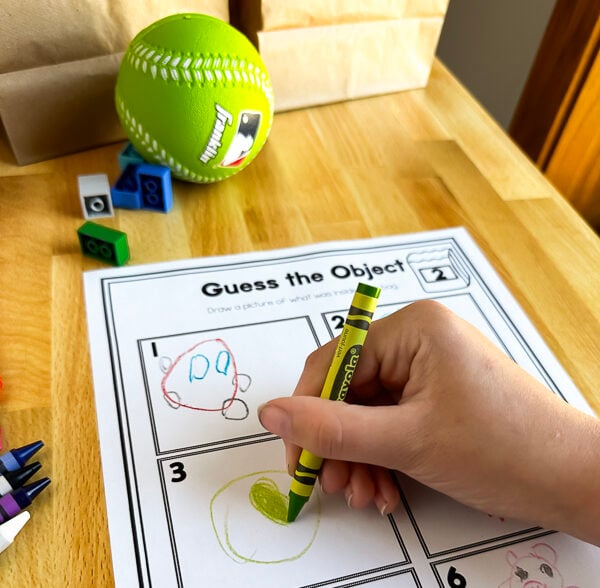
Try simple observation games such as identifying sounds, comparing textures, or describing what an object looks and feels like.
👉 Explore our 5 Senses Activities.
The I Can Explore Science Pack also includes a five-senses board game, a cover-up game, and puzzles for extra practice.
Observe a Simple Reaction
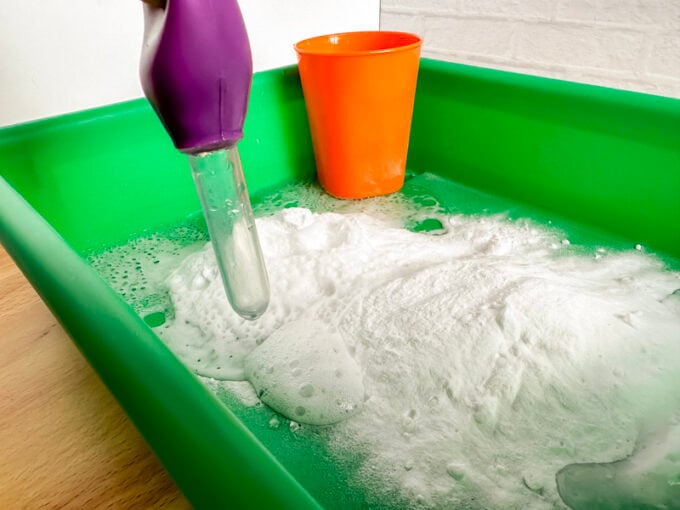
Preschoolers love experiments where something visibly changes. One easy example is baking soda and vinegar. Let kids predict what will happen first.
Then combine the materials and observe:
- bubbles
- fizzing
- movement
- sound
The Observing Reactions activity in the I Can Explore Science Pack includes a simple prediction-and-observation page so kids can draw what they think will happen and what they actually observe.
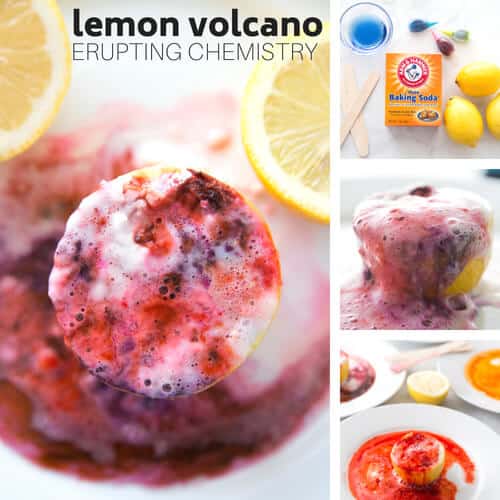
👉 You can also try our Lemon Volcano Experiment for another easy fizzy reaction.
👉 Explore various baking soda and vinegar science experiments here.
Preschool Science Centers
Science centers give kids time to explore materials more independently. These activities should require very little adult assistance and be more about exploring and observing!
Keep the setup simple:
- place supplies on trays or in shallow bins
- use only a few materials at once
- choose activities kids can repeat
- add magnifying glasses, magnets, measuring tools, or picture cards
- allow time for observation and conversation
Good science center choices include magnets, sink-or-float, rocks, mirrors, sensory exploration, sorting natural objects, and simple water investigations.
👉 Learn more about setting up Preschool Science Centers.
I Can Explore Science Preschool Pack
Hands-on exploration should come first, but simple printables can help preschoolers slow down, notice what happened, and begin recording their observations.
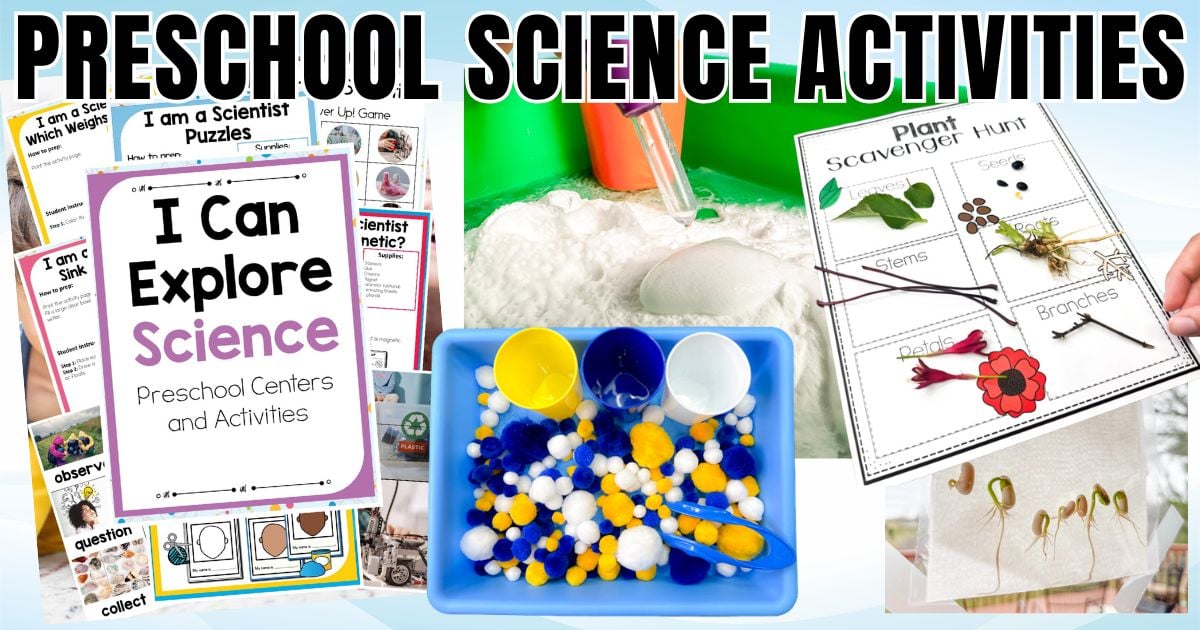
The I Can Explore Science Pack is designed specifically for young learners and introduces basic science skills through simple investigations and activities.
Kids can explore:
- Sink or Float: Test objects and draw or place pictures to show what sinks and what floats.
- Is It Magnetic? Test familiar objects and sort them into magnetic and non-magnetic groups.
- Which Weighs More? Compare objects and practice early measurement skills.
- Observing Reactions: Make a prediction, combine baking soda and vinegar, and record what happens.
- Five Senses: Use games and puzzles to explore sight, hearing, touch, smell, and taste.
The pack also includes:
- science seek-and-find
- scientist vocabulary tracing cards
- scientist mini-book
- writing center
- puzzles
- cover-up games
- “I Am a Scientist” crown
👉 Explore the I Can Explore Science Preschool Pack
Explore Science With Preschool Themes
Want to spend more time exploring one science topic?
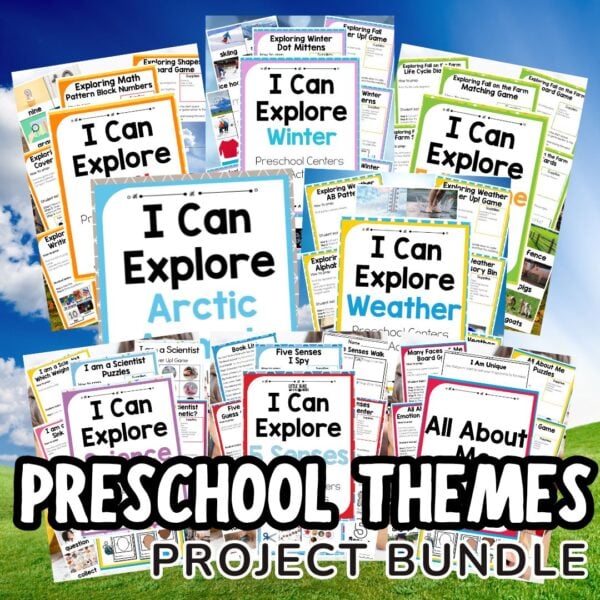
Our Preschool Themes Bundle includes separate themed packs that let kids dig deeper into familiar science concepts through hands-on activities, games, printables, sensory play, and simple investigations.
Science-focused themes include:
- Weather: Explore clouds, rain, weather observations, and seasonal changes.
- Plants: Investigate seeds, plant parts, growth, and what plants need.
- Rocks: Observe, compare, sort, and investigate different rocks.
- Forces & Motion: Explore pushes, pulls, ramps, movement, and simple building challenges.
- Five Senses: Investigate sight, sound, touch, smell, and taste through hands-on play.
These themed packs make it easy to turn one science idea into several days of preschool learning.
👉 Explore the Preschool Themes Bundle
Free Preschool STEAM Starter Guide
Want an easy way to get started with hands-on preschool science and STEM?
Grab our free Preschool STEAM Starter Guide.
- a sink-or-float activity
- preschool theme ideas guide
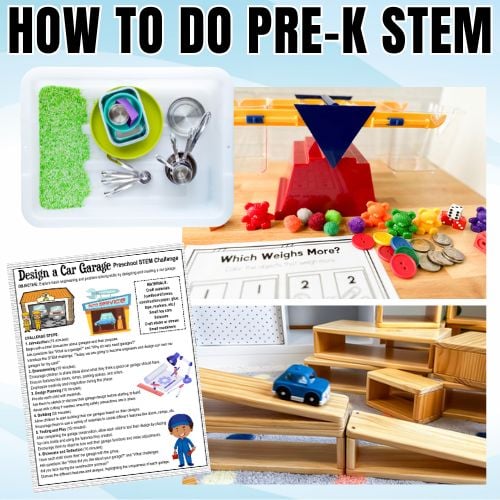
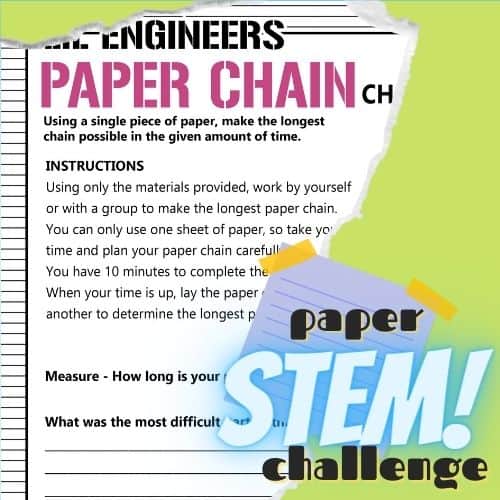
- a simple STEM challenge
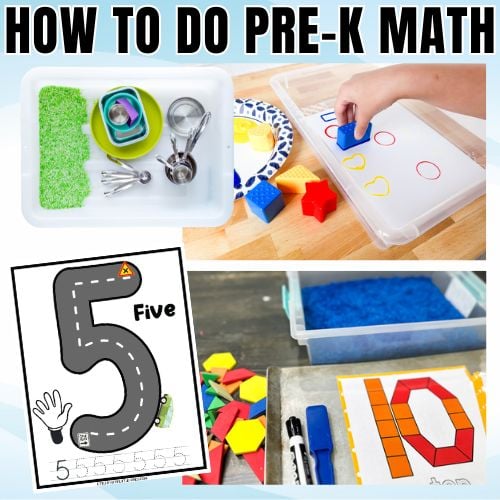
- a sample math road mat
- easy ways to add hands-on learning to your day
👉 GET THE FREE PRESCHOOL STEAM MINI GUIDE
Science and Preschool STEM
Science and STEM naturally overlap at this age.
Kids are already using STEM skills when they:
- test what sinks or floats
- build ramps
- compare structures
- investigate magnets
- measure rainfall
- sort materials
- make predictions
- try a solution and change it
STEM does not need to mean complicated building projects. For preschoolers, it can simply mean giving kids a problem to explore and materials to test.
👉 Explore our Preschool STEM Activities for more simple building and problem-solving ideas.
Preschool Science FAQ
What science should preschoolers learn?
Preschoolers can explore plants, weather, water, magnets, light, motion, rocks, the five senses, measurement, and simple physical and chemical changes through hands-on play.
What are easy science experiments for preschoolers?
Sink or float, magnets, Magic Milk, Walking Water, seed growing, shadows, rain clouds, ramps, and simple reaction experiments are all good choices.
How long should a preschool science activity last?
Many preschool science activities work well with about 10–15 minutes of active investigation. Growing projects and weather observations can continue over several days or weeks.
How do you teach science to preschoolers?
Give kids real materials to explore and ask simple questions. Encourage them to predict, test, observe, compare, and describe what happens.
Do preschoolers need formal science lessons?
No. Young kids can build science skills through short experiments, sensory exploration, outdoor observation, science centers, and everyday questions about how things work.
What is the difference between preschool science and STEM?
Science focuses on observing and understanding the natural and physical world. STEM can also include engineering, technology, and math as kids build, measure, test, and solve simple problems.
More Preschool Learning
Keep exploring with:
- Preschool Activities
- Preschool STEM Activities
- Preschool Math Activities
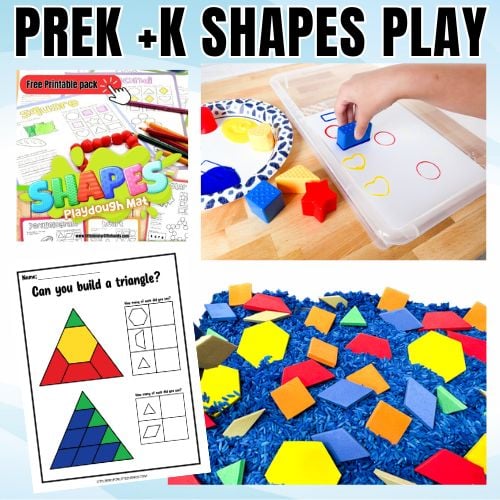
- Shape Activities for Preschool and Kindergarten
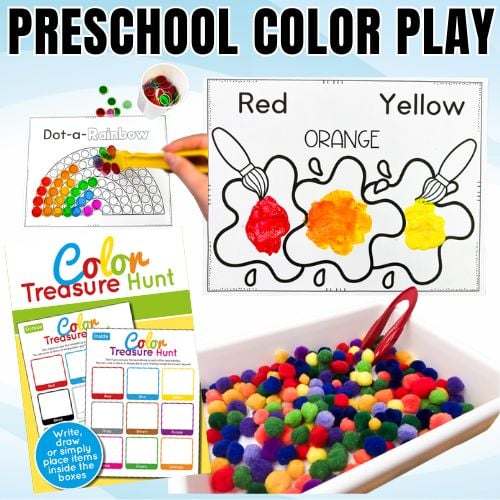
- Preschool Color Activities
- Preschool Art Activities

22 Comments
Comments are closed.