
Kindergarten science experiments are a wonderful way for young learners to explore the world through hands-on discovery. Simple science activities help children observe patterns, ask questions, and describe what they notice.
The kindergarten science experiments and activities below use everyday supplies and introduce basic science topics, including weather, plants, forces, light, and the five senses. These easy investigations are perfect for the classroom or for at-home use.
Hands-on experiments help kids build curiosity and confidence while developing early science skills.
Kindergarten Science Topics to Explore
Kindergarten science introduces children to important science concepts through observation and simple experiments. Looking for more beginner science topics? These popular kindergarten science guides are a great place to start:
• Living vs Nonliving Things – Learn how to identify characteristics of living organisms.
• What Plants and Animals Need – Discover the basic needs all living things must have to survive.
• Seasons Science – Observe how weather and nature change throughout the year.
• Day and Night – Explore why the sky looks different during the day and at night.
• Five Senses – Use sight, smell, taste, touch, and hearing to investigate the world.
These guides introduce key science ideas that kindergarten students explore through hands-on activities and observation.


Quick Kindergarten Science Experiments List
Jump to a fun science activity:
- Five Senses Apple Investigation
- Magic Milk Experiment
- Grow a Rainbow
- Sink or Float
- Egg in Salt Water
- Oobleck: Non-Newtonian Fluid
- Magnet Discovery Table
- Mirrors and Reflection
- Colored Carnations
- Seed Germination Jar
- Rain Cloud in a Jar
- Rainbow Light Experiment
- Shadow Tracking Experiment
- Ice Melt Investigation
- What Absorbs Water
- Push and Pull Ramp Experiment
- What Melts Investigation
- Static Electricity Balloon
- Pepper and Soap Experiment
- Color Mixing Experiment
- Rubber Band Sound Experiment
- Animals and Habitats
Easy Science Experiments for Kindergarten
These science experiments are simple to set up, inexpensive, and highly visual, making them perfect for young scientists. Each activity encourages kids to observe, ask questions, and talk about what they discover.
Five Senses Apple Investigation
The five senses are a great way for young children to practice observation skills.
Provide several varieties of apples and invite children to explore them using sight, smell, touch, taste, and hearing. Listen for the crunch when biting into the apple, feel the skin, and compare the smell and taste of different types.
👉 This activity encourages kids to observe carefully and describe differences.
Magic Milk Experiment
This colorful science activity demonstrates how soap interacts with milk.
Add drops of food coloring to a shallow dish of milk. Touch the milk with a drop of dish soap and watch the colors swirl and move.
👉 Kids observe how the soap changes the surface of the milk, creating exciting patterns.
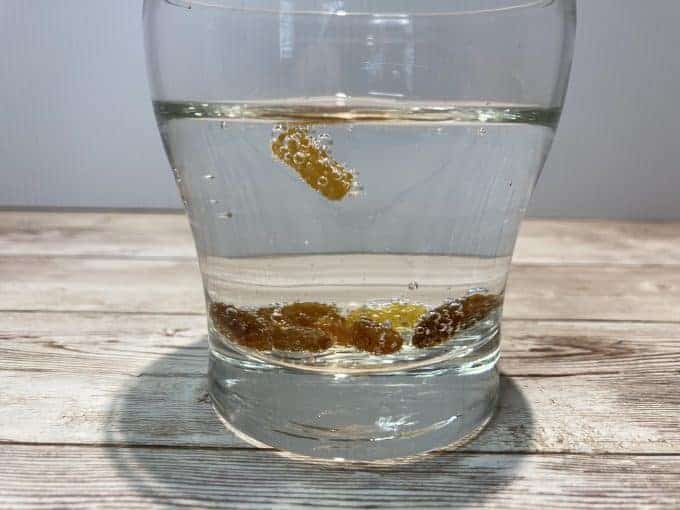
Dancing Raisins Experiment
Can raisins really dance?
Add raisins to a glass of clear soda or sparkling water and watch what happens. Tiny bubbles attach to the raisins and lift them to the surface. When the bubbles pop, the raisins sink again.
👉Kids can observe this repeating pattern and watch the raisins appear to dance.
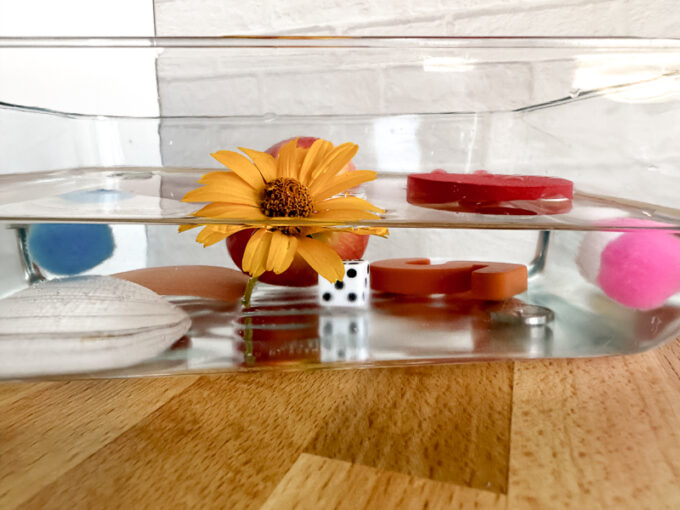
Sink or Float Investigation
Gather everyday objects and test whether they sink or float in water.
Encourage kids to predict what will happen before placing each object into the water. Compare different materials and discuss what they notice.
👉 This investigation introduces kids to ideas about buoyancy and materials.
Walking Water Rainbow Experiment
Set up several cups filled with colored water and connect them with folded paper towels.
Over time, the water travels through the paper towels and moves into the empty cups, mixing colors along the way.
👉 Kids can observe how water moves and how colors combine.

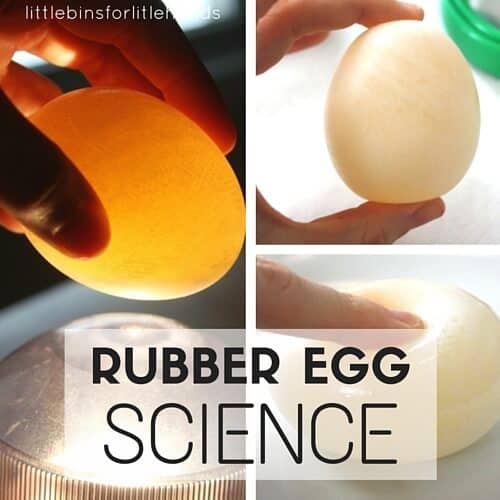
Egg in Salt Water
Will an egg float or sink?
Place an egg in a glass of plain water and observe what happens. Then add salt to the water and try again.
👉 Kids can compare how the egg behaves in different types of water.
Oobleck
Is it a liquid or a solid?
Oobleck is made from cornstarch and water and behaves like both. When squeezed, it feels solid, but when poured, it flows like a liquid.
👉 Kids can explore how this unusual material changes depending on how it is handled.
Magnet Discovery Table
Magnets provide wonderful opportunities for exploration.
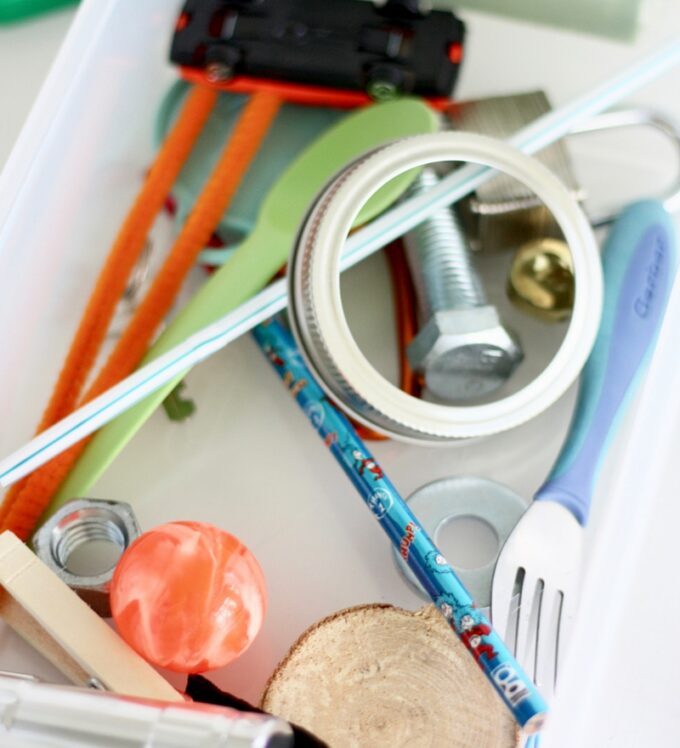
Provide magnets along with objects made from different materials, such as paper clips, coins, plastic items, and wooden blocks. Kids can test which objects are attracted to magnets.
👉 This investigation introduces basic ideas about magnetic force.
Mirrors and Reflection
Mirrors create exciting opportunities to explore light.
👉 Kids can experiment with mirrors to observe reflections and see how light bounces off surfaces. Try changing the angle of the mirror and noticing how the reflection moves.
Colored Carnations
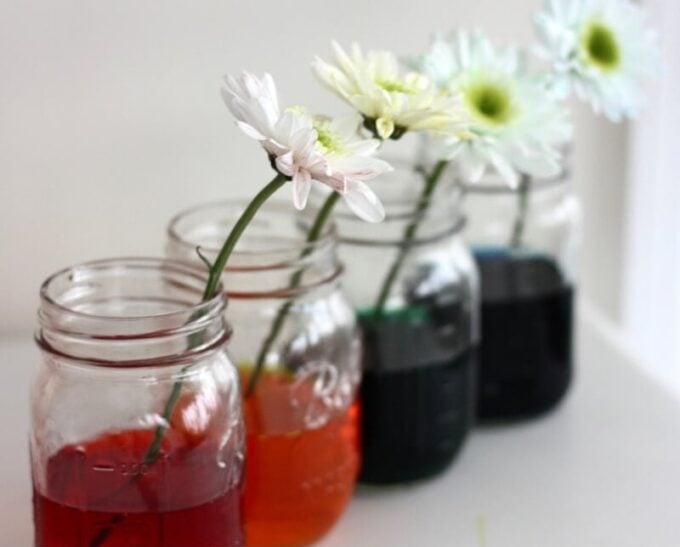
Place white carnations in glasses of colored water and observe what happens over time.
As the flowers absorb water, the petals begin to change color. This demonstrates how plants move water through their stems.
👉 You can also try this experiment using celery.
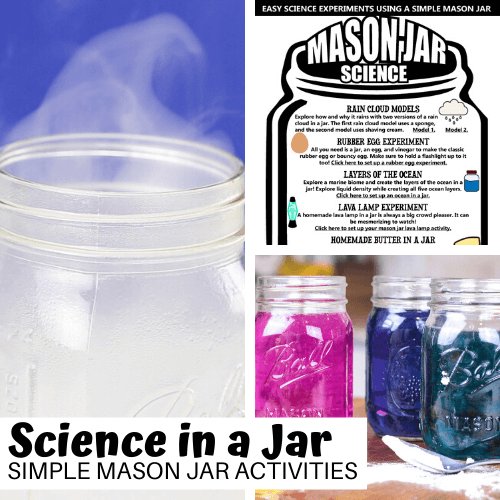
Rain Cloud in a Jar
Where does rain come from?
Fill a jar with water and add a layer of shaving cream on top to represent a cloud. Slowly drip colored water onto the cloud and watch it begin to fall through like rain.
👉 This simple experiment introduces basic weather science concepts.
Seed Germination Jar
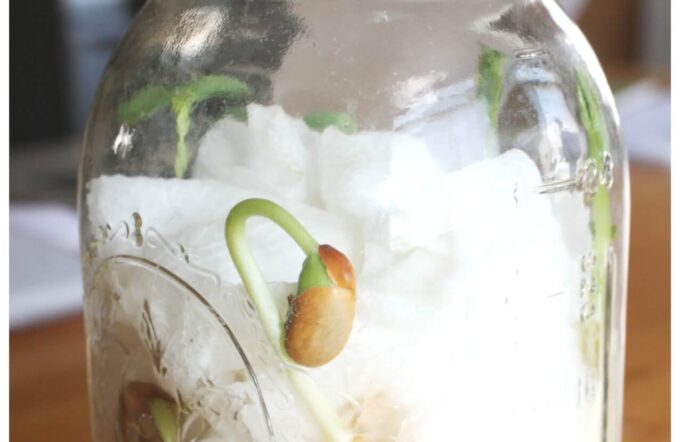
Place seeds inside a jar lined with a damp paper towel so children can observe them sprouting.
👉 This setup allows kids to see the roots and shoots develop as the seed begins to grow.
Rainbow Light Experiment
Use a prism or a glass of water to explore how white light can separate into rainbow colors.
👉 Kids can observe how light bends and spreads into different colors.
Shadow Tracking Experiment
Go outside and trace a shadow with chalk. Return later in the day and trace the shadow again. Compare how the shadow has changed position.
👉 This simple investigation helps children observe patterns in the Sun’s movement.
Ice Melt Investigation
Ice is an excellent material for science exploration.
Observe how ice melts over time, and test different ways to melt it faster using warm water, salt, or tools like droppers and basters.
👉 Kids can compare which method melts the ice the fastest.
What Absorbs Water?
Test different materials to see which ones absorb water.
Try materials such as paper towels, sponges, cloth, foil, and plastic. Place water on each material and observe what happens.
👉 Kids can compare which materials soak up water and which repel it.
What Melts Investigation
Explore how heat changes materials.
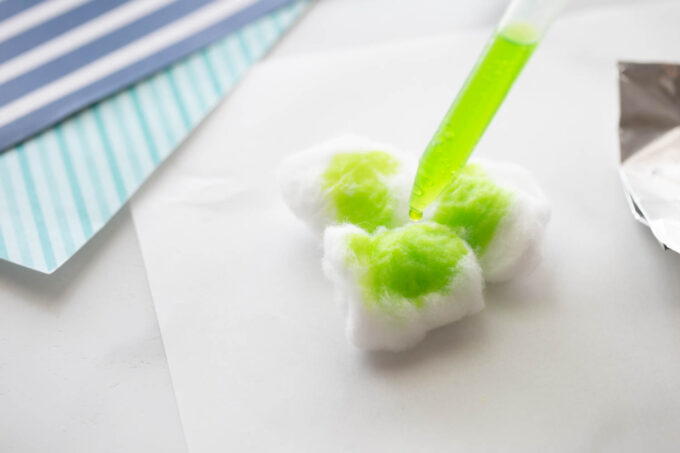
Place small items such as chocolate, butter, crayons, or ice in the sun or near a warm window. Observe which materials melt and which remain unchanged.
👉 Encourage kids to make predictions before observing the results.
Static Electricity Balloon Experiment
Rub a balloon on hair or wool and bring it close to small pieces of paper or pepper. The pieces may jump toward the balloon as the balloon becomes charged with static electricity.
👉 Kids can also observe how the balloon can bend a thin stream of water.
Pepper and Soap Experiment
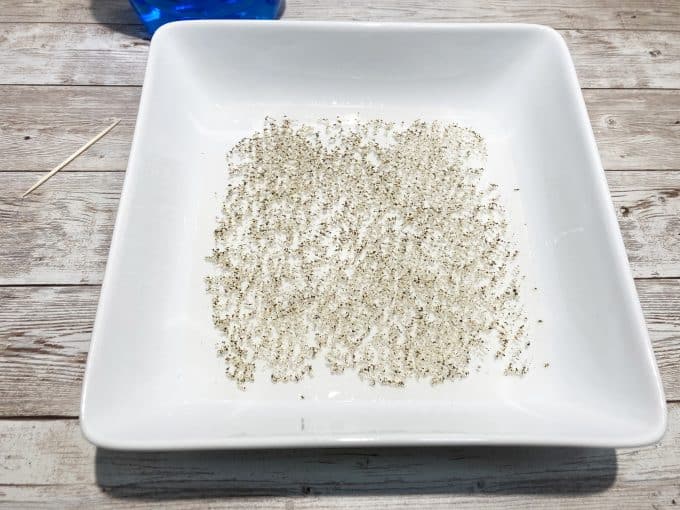
Sprinkle black pepper onto the surface of a bowl of water. When a drop of dish soap touches the water, the pepper quickly moves away.
👉 Kids observe how soap changes the surface of the water.
Color Mixing Experiment
Fill cups with red, blue, and yellow colored water. Mix small amounts together to see how new colors form.
👉 Kids can observe how primary colors combine to create secondary colors.
Rubber Band Sound Experiment
Stretch rubber bands around a small box or container and pluck them.
👉 Kids can observe how the rubber bands vibrate and produce sound. Try using rubber bands with different thicknesses to compare the sounds they make.

Try it Now! Push and Pull Ramp Experiment
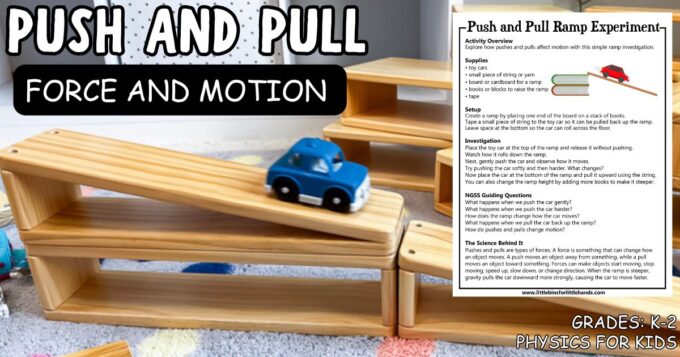
Explore how pushes and pulls affect motion with a simple ramp investigation.
Create a ramp using a board or piece of cardboard and a stack of books. Roll a toy car down the ramp and observe how it moves.
Try gently pushing the car, then push it harder. Attach a small string to the car and pull it back up the ramp.
👉 Take a look at the full Push and Pull Ramp Experiment and printable page here.
Learn About Animals with Jane Goodall
Kindergarten science also includes learning about animals and how scientists study the natural world.
Jane Goodall is a famous scientist known for studying chimpanzees in the wild. Her work helped scientists understand how animals live, communicate, and care for their families.
Kids can explore animal science with our Jane Goodall activity and printable, which encourages observation and discussion about animals and habitats.
This activity is perfect for introducing young learners to the idea that scientists observe and learn from nature.
👉 Try the Jane Goodall Animal Science Activity

Printable Science Activity Cards for Kids
Want an easy way to explore science with kids?
Our printable science activity cards make it simple to set up hands-on experiments and investigations. Each card includes a science idea, simple materials, and prompts to help kids observe and discuss what happens.
These cards are perfect for:
• classroom science centers
• homeschool learning
• early finishers
• quick science exploration
👉 Explore the Printable Science Activity Cards
The Science Behind Kindergarten Experiments
Kindergarten science experiments help children explore cause and effect through observation.
These activities introduce ideas such as:
• properties of materials
• changes in matter
• plant growth
• weather patterns
• light and shadows
Young learners do not need complex explanations. Instead, experiments help them notice patterns, ask questions, and describe what they observe.
NGSS Guiding Questions for Kindergarten Science
Kindergarten science encourages students to ask questions and observe patterns in nature.
| Science Topic | Guiding Questions |
|---|---|
| Push and Pull | What happens when we push or pull an object? Does pushing harder change how it moves? |
| Plants and Animals | What do plants and animals need to live and grow? |
| Living vs Nonliving | How can we tell if something is living or nonliving? |
| Weather | What patterns do we notice in the weather today? |
| Day and Night | What do we see in the sky during the day and at night? |
| Light and Shadows | What makes a shadow? How do shadows change? |
| Water | Which objects sink and which float? |
| Materials | What materials absorb water and which do not? |
Free Kindergarten Science Experiment Guide
Want a simple way to try these activities with kids?
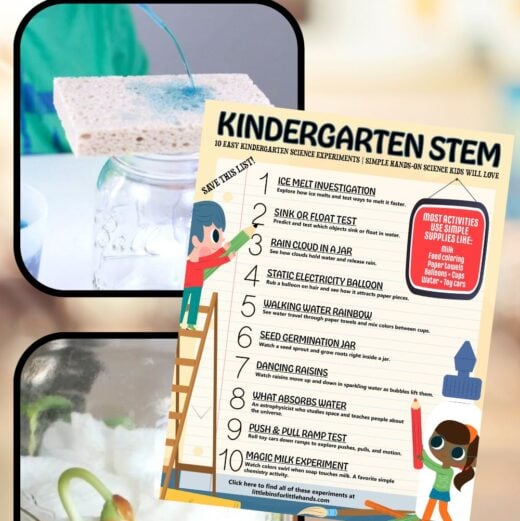
👉 Download our free Kindergarten Science Experiment Guide, which includes:
• a one-page list of 10 easy science experiments
• a Draw My Experiment page for young scientists
• a Scientific Process poster pack to introduce basic science vocabulary
Kindergarten Science Experiment FAQs
What are good science experiments for kindergarten? Good kindergarten science experiments are simple, visual, and hands-on. Popular activities include sink-or-float tests, magic milk, growing seeds, rain cloud experiments, and shadow observations.
What science topics do kindergarteners learn? Kindergarten science usually introduces topics such as the five senses, living vs. nonliving things, plants’ and animals’ needs, weather and seasons, light and shadows, and push-and-pull forces.
How do you teach science to kindergarten students? Science is best taught through hands-on activities and experiments. Observing plants grow, testing objects in water, and exploring shadows help children understand scientific ideas through real experiences.
Continue Exploring Science
Want printable science investigations, reusable recording pages, STEM challenges, and organized hands-on activities all in one place?
Explore the Classic Science Activities Pack for ready-to-use science and STEM learning at home or in the classroom.