
Seeds are a fun and simple way to teach elementary grades about life cycles, plant needs, and the environment. Whether you’re exploring seed germination, seed dispersal, or plant life cycles, these ideas will keep kids engaged in real science.

Seed Science Activities for Kids
These seed science activities introduce kids to
- Plant life cycles
- Seed germination
- Seed dispersal
- What plants need to survive
Kids will learn to observe and record changes, compare conditions for seed growth, and explore how seeds are adapted to travel and thrive. Perfect connections to life science, ecology, and plant and animal needs topics.
🔎 Related posts: Plant Life Cycle Activities, What Do Plants and Animals Need to Survive?, Fall Plant Science Activities.
Grades (K–2): Seed Science Activities
- Germinate Seeds in a Bag: Tape a damp paper towel and a few seeds inside a plastic bag on a sunny window. Kids can watch roots and shoots appear in just a few days.
- Growing Seeds in Eggshells: Use clean eggshell halves as mini planters. Kids can decorate them, add soil, and watch their seeds sprout.
- How Many Seeds? Open up fruits and vegetables (pumpkins, apples, peppers) and count the seeds inside. Practice estimating before counting!
- Seed Sorting: Provide a variety of seeds and let kids sort by size, shape, or color.

Grades (3–5): Seed Science Activities and Experiments
- Germinating Seeds in a Clear Jar: Line a jar with damp paper towels and place seeds around the edge to see the roots and shoots grow. Perfect for measurement and data collection.
- Seed Bombs: Combine clay, soil, and native wildflower seeds to make seed bombs. Test which environments are best for growth.
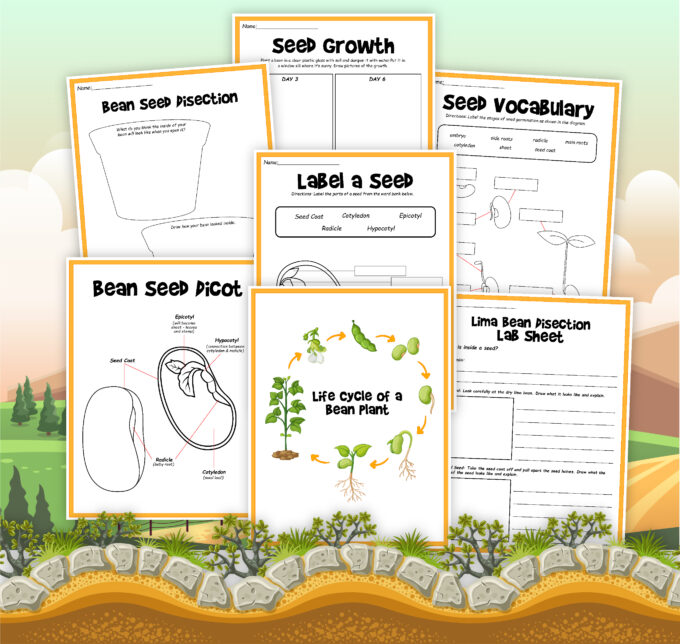
- Seed Dissection: Soak bean seeds and carefully pull them apart to identify the seed coat, cotyledon, and embryo.
- Seed Dispersal Models: Challenge kids to design a model “seed” that can float, fly, or stick. Test which dispersal methods work best.
- DIY Mini Greenhouse: Design and test a greenhouse using plastic bottles. Track temperature and moisture levels inside vs. outside.

Seed Vocabulary for Kids
- Seed: the part of a plant that can grow into a new plant.
- Seed Coat: the tough outer covering that protects the seed.
- Embryo: the tiny baby plant inside the seed.
- Epicotyl: the part of the embryo that will grow into the stem and leaves.
- Hypocotyl: the part of the embryo that connects the root and shoot; it often becomes the lower stem.
- Radicle: the first root that grows out of a seed.
- Cotyledon: the stored food inside a seed that helps it start growing.
- Germination: when a seed begins to sprout and grow roots and shoots.
- Dispersal: how seeds move to new places (by wind, water, or animals).
- Pollinator: an animal that helps plants make seeds, like bees and butterflies.
Make It a Seed Science Project
Learn about the Scientific Method [here]. Turn seed experiments into full science projects by testing one variable:
- Do seeds sprout faster in light or dark?
- Does temperature affect germination speed?
- Do larger seeds sprout faster than smaller seeds?
🔎 Students can record results in a chart, calculate averages, and present conclusions. Set up our plant growth experiment here with free printables.

NGSS Recommendations
Guiding Questions:
- What do plants need to live and grow?
- How do seeds change as they grow?
- How do seeds travel to new places?
Alignment by Grade Band:
- K–2: Observe how plants grow and what they need to live.
- 3–5: Investigate how different environments affect seed germination and plant growth.
Seed Science FAQs
How long does it take seeds to germinate?
It depends on the seed type and conditions, but many sprout within 3–10 days.
What seeds sprout the fastest?
Beans, radish, cress, and peas are quick and reliable.
Do seeds need sunlight to germinate?
Most seeds don’t need light to start, but once seedlings sprout, they need sunlight for energy.
Why don’t all seeds sprout?
Seeds may be too old, too dry, or missing the right conditions (water, temperature, air).
More Plant Science Resources
- Fall Plant Science Activities for Kids
- What Do Plants and Animals Need to Survive?
- Life Cycle Activities for Elementary Science
- Preschool Plant Science Activities