
Matter moves through living and nonliving parts of Earth in repeating cycles. Kids can explore the water cycle, carbon cycle, nitrogen cycle, and even the rock cycle through hands-on activities. These fun matter cycles projects are perfect for Earth science lessons in the classroom or at home.

Cycles of Matter Science for Kids
🔎 Branch of Science: Life Science (Ecology) and Earth Science (Earth’s Systems), with connections to Physical Science (matter and energy).
- Field of Science: Life Science & Earth Science
- Grades: 3–6
- Concepts: Movement of matter, nutrient cycling, energy flow, ecosystems, Earth processes, conservation
Cycles of Matter Activities
1. Water Cycle in a Bag
Use the free water cycle in a bag template. Add a little water, tape it to a sunny window, and observe the process of evaporation, condensation, and precipitation. Also, try this water evaporation experiment.
NGSS Guiding Questions:
- How does water move between air, land, and water?
- What evidence shows evaporation and condensation in the bag?

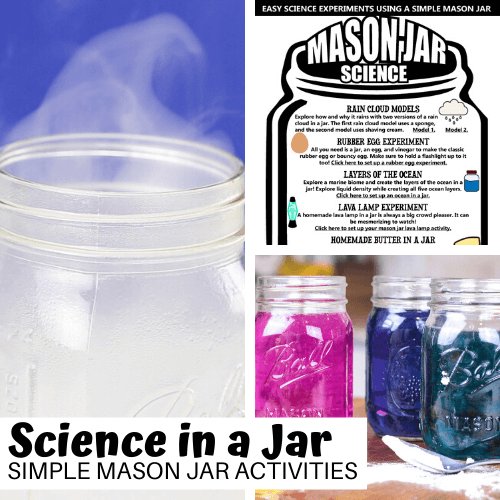
2. Weather in a Jar Condensation Experiment
Fill a jar with hot water and place a plate of ice cubes on top. Watch condensation form as “rain.”
NGSS Guiding Questions:
- What happens when warm air meets cold air?
- How does condensation lead to precipitation?

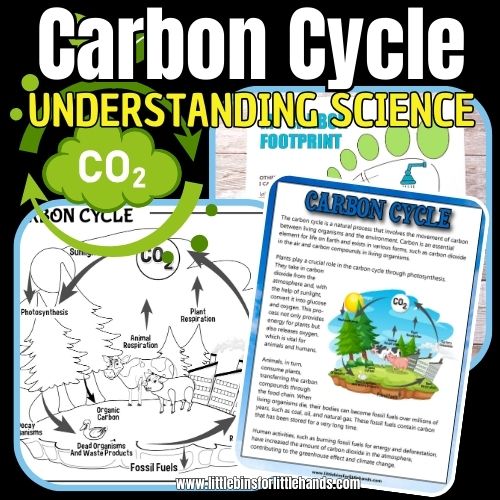
3. Carbon Cycle in a Bag (Coming Soon)
Place a plant in a sealed bag with sunlight. Observe the process of condensation and gas exchange as the plant cycles carbon dioxide and oxygen. Also, explore our carbon cycle worksheets.
NGSS Guiding Questions:
- How does carbon move between plants, animals, and the air?
- Why is the carbon cycle important for life on Earth?
4. Photosynthesis & Respiration Demonstration
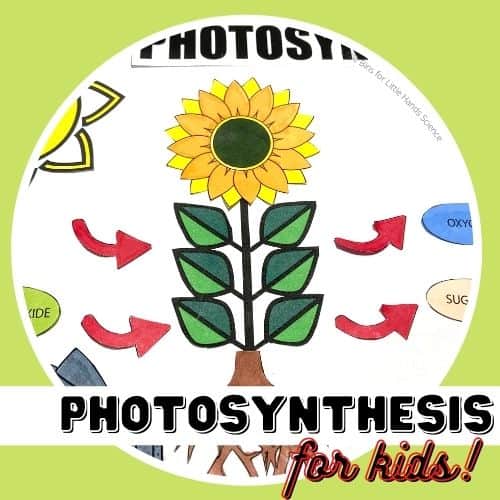
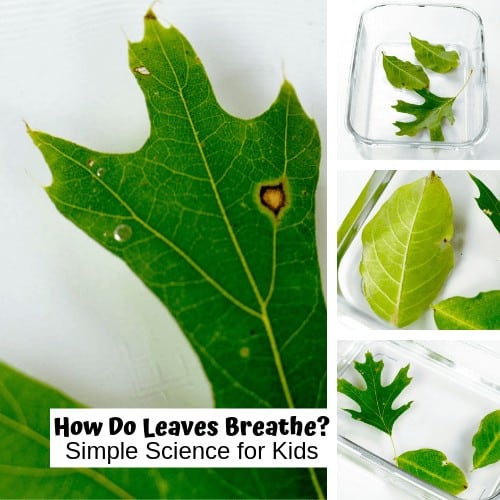
Use simple plant growth experiments to show how plants take in carbon dioxide and release oxygen, while animals do the opposite.
- Plant Growth Experiment for Kids
- Photosynthesis Worksheets for Kids
- Photosynthesis STEAM Project
- How do Leaves Breathe?
NGSS Guiding Questions:
- How do plants and animals exchange gases?
- How do these processes support the carbon cycle?

5. Nitrogen Cycle
Use the free Nitrogen Cycle guide and diagram to learn more about this cycle of matter.
NGSS Guiding Questions:
- How does nitrogen move from the air to the soil to living things?
- Why do plants and animals need nitrogen to survive?

6. Soil and Decomposers Observation (Coming Soon)
Bury organic material (fruit peel, leaf, bread) in soil jars. Observe over time as decomposers return matter to the soil.
NGSS Guiding Questions:
- What happens when plants and animals die?
- How do decomposers recycle nutrients into the nitrogen cycle?
7. Human Impact Investigation (Carbon Footprint)
Use a carbon footprint worksheet to explore how daily choices affect the carbon cycle and climate.
NGSS Guiding Questions:
- How do human actions change the balance of natural cycles?
- What choices can reduce our impact?

8. Compare the Cycles Project
Create posters or diagrams comparing the water, carbon, and nitrogen cycles. Emphasize what they have in common and how they relate to each other.
🔎 Make sure to check out the nitrogen or carbon cycle free guide for a Venn diagram.
NGSS Guiding Questions:
- What do the water, carbon, and nitrogen cycles all have in common?
- How do these cycles connect to keep ecosystems balanced?
9. Rock Cycle Experiment
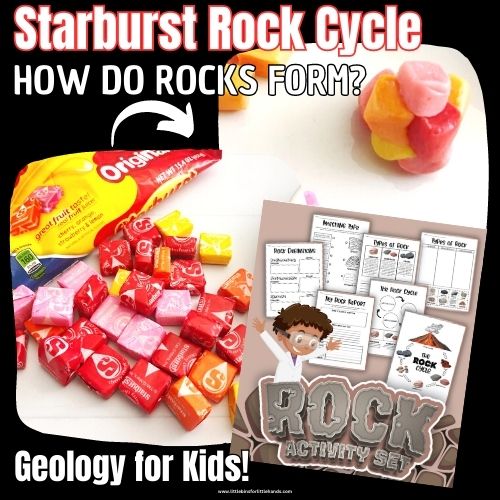
Use crayons or candy to model the rock cycle. Shave crayons or cut up candy for sediment, press them into “sedimentary rock,” heat with a hairdryer for “metamorphic rock,” and melt/solidify for “igneous rock.”
NGSS Guiding Questions:
- How do rocks change form over time?
- What forces drive the rock cycle on Earth?
Top 10 Cycles of Matter Vocabulary Words
- Cycle – A repeating process where matter moves through stages.
- Matter – Anything that takes up space and has mass.
- Water Cycle – Movement of water through evaporation, condensation, and precipitation.
- Carbon Cycle – Movement of carbon through plants, animals, air, and soil.
- Nitrogen Cycle – Movement of nitrogen through air, soil, plants, and animals.
- Evaporation – Liquid water changing into gas.
- Condensation – Gas cooling into liquid water.
- Photosynthesis – Plants making food using sunlight, water, and carbon dioxide.
- Respiration – Animals and humans breathing in oxygen and releasing carbon dioxide.
- Decomposer – Organisms that break down dead plants and animals.
Recommended Grade Levels:
- K–2: Simple observations of evaporation and condensation (water cycle).
- 3–5: Hands-on models of the water, carbon, nitrogen, and rock cycles.
- Upper elementary: Deeper investigations of human impacts, decomposers, and connections between cycles.
NGSS Connections:
- 3-ESS2-1: Represent data to describe typical weather conditions (water cycle).
- 5-LS2-1: Develop a model to describe the movement of matter among plants, animals, decomposers, and the environment.
- 5-PS3-1: Use models to describe how plants use energy from light to produce food.
- 5-ESS3-1: Explore how communities protect Earth’s resources and environment.
- MS-ESS2-1: Develop a model to describe the rock cycle.
Extension Activities
- Create a classroom mural with all four cycles side by side.
- Research how human actions (deforestation, burning fuels) change the carbon cycle.
- Test how different conditions affect evaporation (sun vs. shade).
- Use soil jars to compare decomposition rates with or without worms.
Make It a Science Project
🔎 This is a fantastic opportunity to explore using the scientific method [here].
- Does more sunlight increase evaporation in the water cycle?
- Which decomposers break down food the fastest?
- How does plant growth change in sealed vs. open systems (carbon cycle)?
- Which soil type holds water longest (link to nitrogen cycle and runoff)?
- How does heat vs. pressure change crayon “rocks” in the rock cycle experiment?
Related Science Activities
- Earth’s Systems Activities
- Microbiology Experiments
- Ecology Projects for Kids
- Life Science Activities for Kids
- Water Conservation Activities
- Renewable Energy Projects
- 8 Biomes for Kids and Free Lapbook
- Animal Activities
- Natural Vs Man-made Worksheets
FAQ About Cycles of Matter
What are the main cycles of matter?
The main cycles of matter are the water cycle, carbon cycle, nitrogen cycle, and rock cycle. These cycles show how matter moves through Earth’s systems.
What is an example of a cycles of matter activity for kids?
A simple activity is the water cycle in a bag experiment. Kids can see evaporation, condensation, and precipitation happen right on a sunny window.
What grade levels are cycles of matter projects for?
Cycles of matter projects are best for grades 3–6. Younger students can explore the water cycle, while older students can model carbon, nitrogen, and rock cycles.
Why are cycles of matter important?
Cycles of matter keep ecosystems balanced. They recycle nutrients like water, carbon, and nitrogen so plants, animals, and decomposers can survive.
How do cycles of matter connect to NGSS?
Cycles of matter activities align with NGSS standards by modeling the movement of matter through plants, animals, decomposers, and the environment, as well as Earth processes like the rock cycle.
Can cycles of matter be taught with worksheets?
Yes! Kids can diagram the water cycle, label the rock cycle, or complete cut-and-paste activities for food chains and nutrient cycles. Worksheets make these big science concepts easier to understand.