
These fun Earth’s Systems activities will help kids explore how each sphere works and how they depend on one another. Easy addition to an Earth Science lesson plan! Perfect for classrooms, homeschools, or curious kids at home.

Earth’s Systems for Kids
Earth is made up of four major systems: the geosphere (land), hydrosphere (water), atmosphere (air), and biosphere (living things). These systems don’t work alone—they interact with each other every day! From storms shaping land to forests cleaning the air, Earth’s systems are always connected.
🔎 Explore: Earth Science (Earth’s Systems) with connections to Life Science (ecosystems, cycles) and Physical Science (forces, air pressure).
NGSS Alignment (Simplified Guiding Questions)
- What is the phenomenon? → Earth’s four systems (geosphere, hydrosphere, atmosphere, biosphere) interact and change each other.
- What evidence do I observe? → I can see, model, and test processes like the water cycle, erosion, and weather.
- What can I conclude or design? → Earth’s systems are always connected, and a change in one affects the others.
🔎 Please click on the titles to learn more about each experiment or demonstration. Many projects include a free printable to add to your science journal.
Geosphere Activities
- Layers of the Earth Model (Geosphere) → Explore Earth’s crust, mantle, outer core, and inner core with a hands-on model. Make a printable 3d Earth Layers Model here.
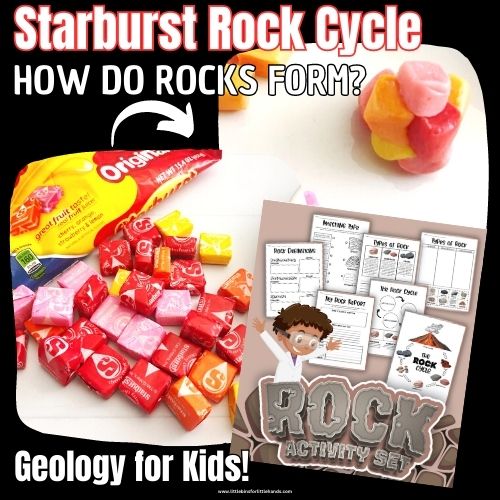
- Rock Cycle Experiment (Geosphere) → Model how rocks change between sedimentary, metamorphic, and igneous.
- Soil Erosion Experiment (Geosphere + Hydrosphere) → See how plants protect the land from erosion when compared to bare soil. Explore coastal beach erosion here, and learn about bodies of water, too.
- Baking Soda Volcano Model (Geosphere + Atmosphere) → Create a classic volcano to show how eruptions connect Earth’s inside with the air. Make a 3d Volcano Model here.


Hydrosphere Activities
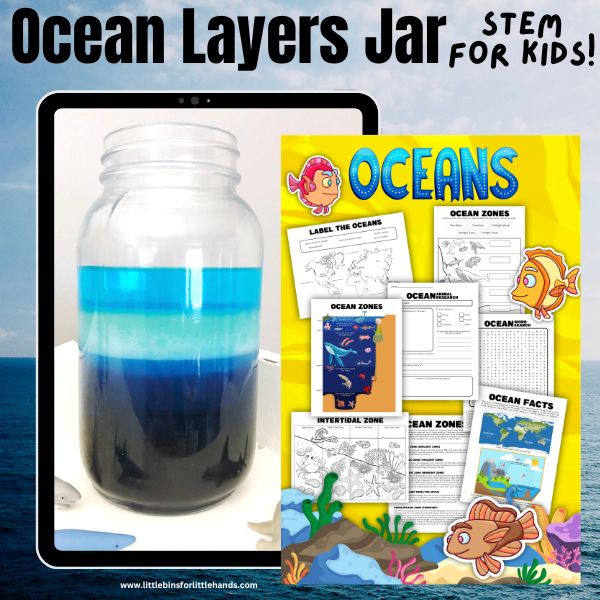
- Layers of the Ocean (Hydrosphere + Biosphere) → Explore the five ocean zones—sunlight, twilight, midnight, abyss, and trench—and the animals that live there.
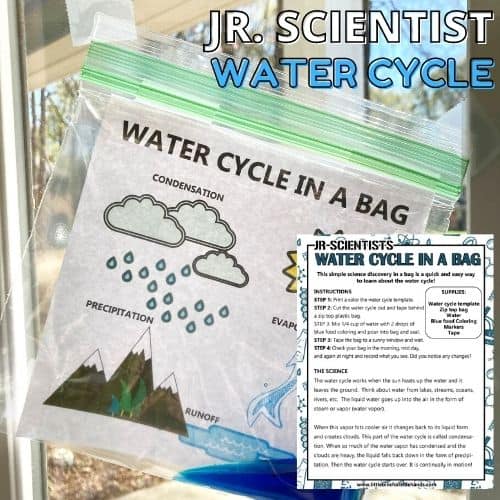
- Water Cycle in a Bag (Hydrosphere + Atmosphere) → Model evaporation, condensation, and precipitation in a sealed bag. Explore the snow cycle here.
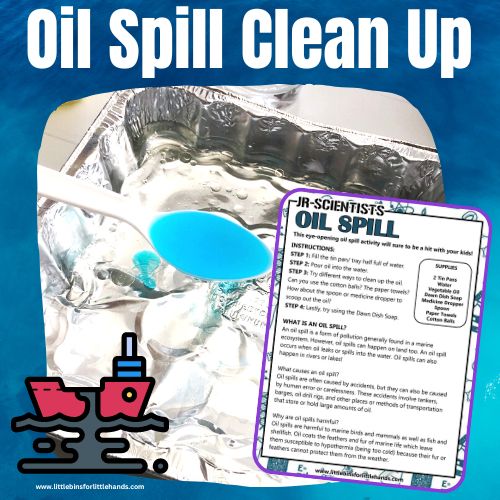
- Oil Spill Cleanup Experiment (Hydrosphere + Biosphere) → Simulate an oil spill and test cleanup methods while discussing pollution’s effect on living things.
Atmosphere Activities
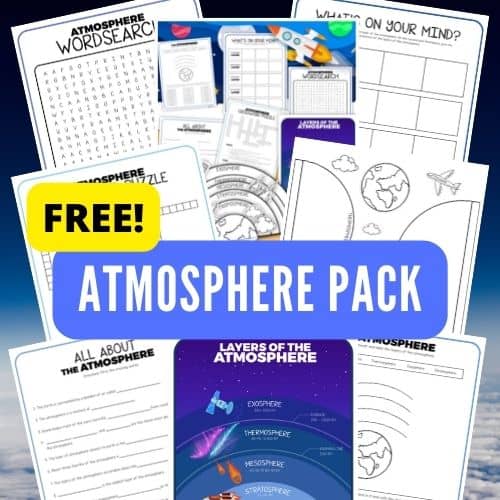
- Layers of the Atmosphere (Atmosphere) → Learn about the troposphere, stratosphere, mesosphere, thermosphere, and exosphere.
- Homemade Weather Station (Atmosphere + Geosphere + Hydrosphere) → Build simple instruments like a rain gauge, wind vane, and thermometer chart. Make a pine cone weather station here.
- Air Pressure Experiments (Atmosphere) → Try rising water in a jar, the balloon in a jar, or a DIY barometer.


Biosphere Activities
- Soil Layers & Living Things Jar (Biosphere + Geosphere) → Build a soil jar to explore how soil supports plants and animals. Try this printable 3d Soil Layers Model.
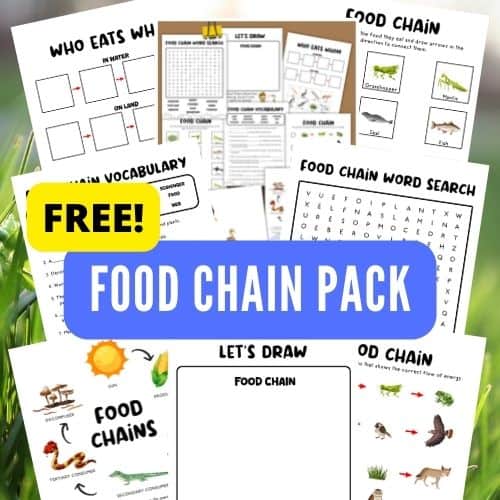
- Food Chain Mobile (Biosphere + All Systems) → Show producers, consumers, and decomposers and how they connect to air, land, and water. Explore the winter food chain here.
- Plant Transpiration Experiment (Biosphere + Atmosphere) → Watch a plant “breathe” water vapor in a sealed bag and connect it to the carbon cycle.
- Carbon Cycle Model (Biosphere + Atmosphere + Geosphere + Hydrosphere) → Explore how carbon moves between air, land, water, and living things.
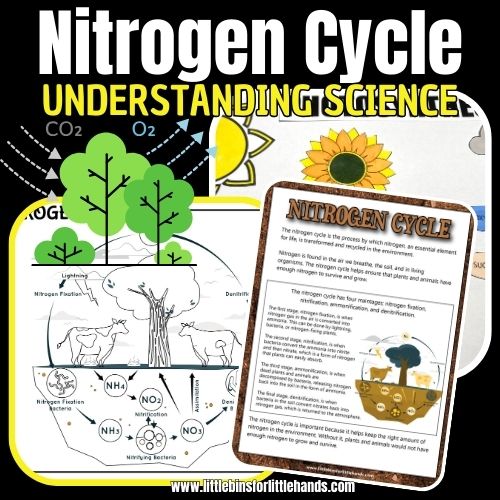
- Nitrogen Cycle Model (Biosphere + Atmosphere + Geosphere) → Learn how nitrogen cycles through soil, air, plants, and animals.

Earth’s Systems Science Information
The four systems of Earth are:
- Geosphere → rocks, soil, landforms, volcanoes
- Hydrosphere → oceans, lakes, rivers, glaciers
- Atmosphere → air, weather, climate
- Biosphere → plants, animals, humans
Key Concept: The systems constantly interact. For example:
- Rain (in the atmosphere) erodes land (in the geosphere).
- Rivers (hydrosphere) shape valleys.
- Plants (biosphere) absorb carbon dioxide from the air (atmosphere).
- Volcanoes (geosphere) release gases that change the atmosphere and affect life.
Some changes happen slowly (rock cycle, soil formation). Others happen suddenly (earthquakes, hurricanes, wildfires).
Quick Earth System Vocabulary Words
- Geosphere – the solid Earth (rocks, land, soil)
- Hydrosphere – all water on Earth (oceans, lakes, rivers, glaciers)
- Atmosphere – the layer of gases surrounding Earth (air, weather, climate)
- Biosphere – all living things on Earth (plants, animals, humans)
- System – a group of parts working together
- Interaction – when one system affects or changes another
Teaching Tips
- Assign each student group one of the four systems and have them present how it connects with the others.
- Use journaling or observation charts so kids can record interactions they see in the experiments.
- Take activities outdoors (such as erosion, weather, and volcanoes) to reduce mess and make observations more realistic.
- Pair experiments with a map or globe so kids can connect small-scale models to real-world locations.
Related Science Activities
- Life Science Activities for Kids
- Ecology Projects for Kids
- Animal Activities for Kids
- Earth Science Experiments
- Renewable Energy Activities and Study
- 8 Biomes for Kids
- Natural Vs Man-made Resources Worksheets
Earth Process’s FAQ
What are the 4 Earth’s systems?
Geosphere, hydrosphere, atmosphere, and biosphere.
How do Earth’s systems interact?
Changes in one system affect the others. Example: Rain (atmosphere) causes flooding (hydrosphere), which erodes soil (geosphere) and impacts plants and animals (biosphere).
What NGSS standards does this cover?
Earth’s Systems (ESS2) for grades K–5, with crosscutting connections to life science (ecosystems, cycles) and physical science (forces, weather, air pressure).
What are examples of Earth’s systems in daily life?
Breathing plants and animals (biosphere + atmosphere), rivers shaping land (hydrosphere + geosphere), and storms affecting crops (atmosphere + biosphere).