

Looking for an easy science activity that works across ages, including preschool? A sink or float experiment is the perfect choice! With just a container of water and common household items, kids can predict, test, and record whether objects sink or float. Plus, grab our free printable worksheet to extend the activity.

Why Do a Sink or Float Experiment?
This activity is a fun way to explore the properties of matter, including density and buoyancy. Kids get to practice making predictions, testing ideas, and observing results—just like real scientists. It’s also a great tie-in with other water science experiments and early lessons on states of matter.
Recommended Grade Level: Preschool – 2nd Grade
Supplies Needed
- Large clear container filled with water
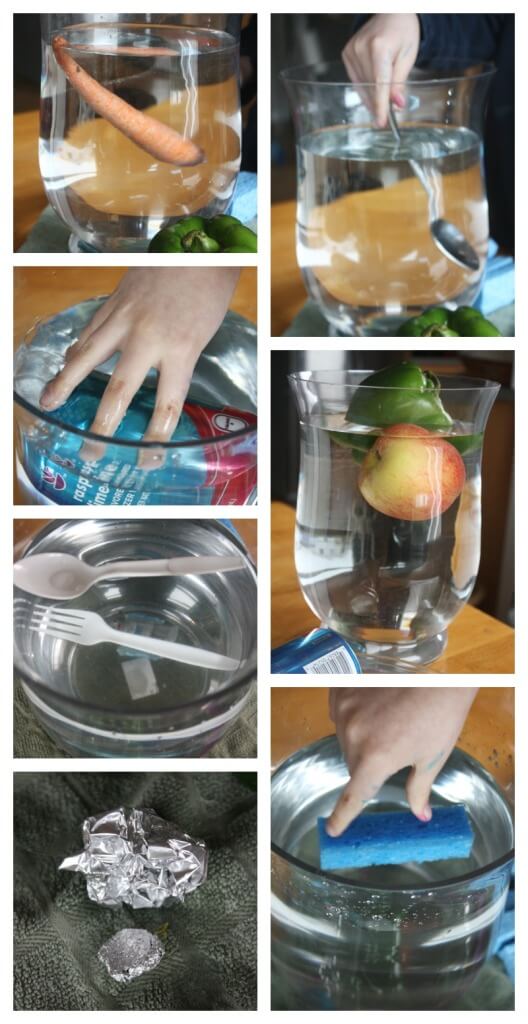
- Fruits and vegetables (apples, oranges, carrots, potatoes, cucumbers, etc.)
- Aluminum foil (flat sheet and crumpled ball)
- Aluminum cans (empty and full)
- Plastic and metal spoons
- Sponge
- Small toys or blocks
- Free printable sink or float worksheets (see below)
💡 Tip: Try peeling or slicing vegetables to see if it changes the result!
Sink or Float Instructions
Step 1. Predict
Ask: “Do you think this will sink or float?” Write down or circle predictions on the worksheet.
Step 2. Test
Place objects in the water one at a time. Observe carefully.
Step 3. Record
Write or draw the results. Did the item float on top of the water or sink to the bottom?
Preschool Science Version
Keep it simple! Choose 5–6 familiar items (like a spoon, sponge, toy car, apple, and block). Use picture-based worksheets so preschoolers can circle or draw what they see. Focus on vocabulary words like sink, float, heavy, light, top, and bottom. Try a fall sink or float with seasonal and nature items.
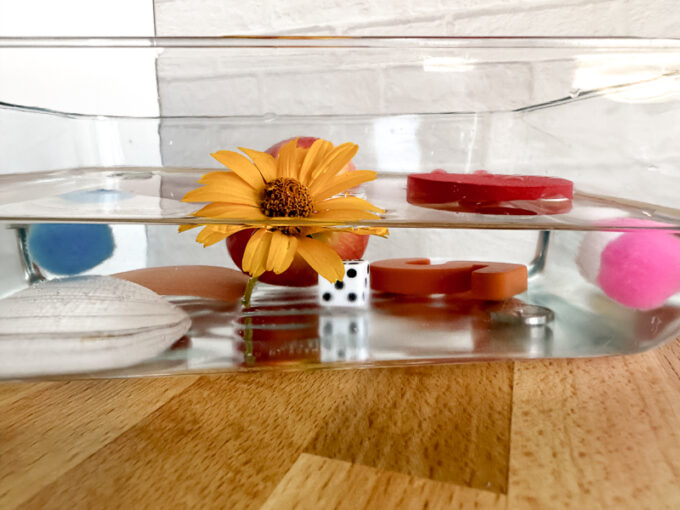
The Science Behind Sink or Float
Sink or float tests explore density, a physical property explained in our Physical Properties of Matter for Kids post.
NGSS Alignment (Simplified Guiding Questions)
- K-PS1-1: Can you describe what happens when we put different objects in water?
- 2-PS1-1: How can we tell if objects sink or float by observing their properties?
- 2-PS1-2: Can we test and sort objects by what happens when they go into water?
Density
Density is how tightly matter’s molecules are packed. If an object is denser than water, it sinks. If it is less dense, it floats. For example, a plastic fork floats, but a metal fork sinks. Explore more density experiments here.
Buoyancy
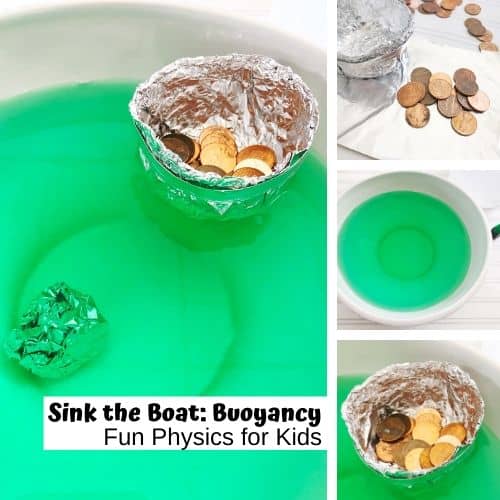
Buoyancy is the upward force that water pushes on an object. If the upward push is stronger than the weight of the object, it floats. This is why foil boats can float even though foil can also sink when flattened. Explore more fun buoyancy examples here.
💡 Fruits like apples float because they have air pockets inside that lower their density.
Try This: Vegetables in Water
Floaters: Apples, oranges, lemons, cucumbers, peppers, tomatoes
Sinkers: Potatoes, carrots, onions, beets, winter squash
Sink or Float Extension Ideas
- Aluminum Can Challenge: Test empty vs. full cans. Why does one float and the other sink?
- Foil Shapes: Try a flat sheet, crumpled ball, and foil boat. Which floats best?
- Tricky Items: Try making marshmallows, paper clips, or even a coin float.
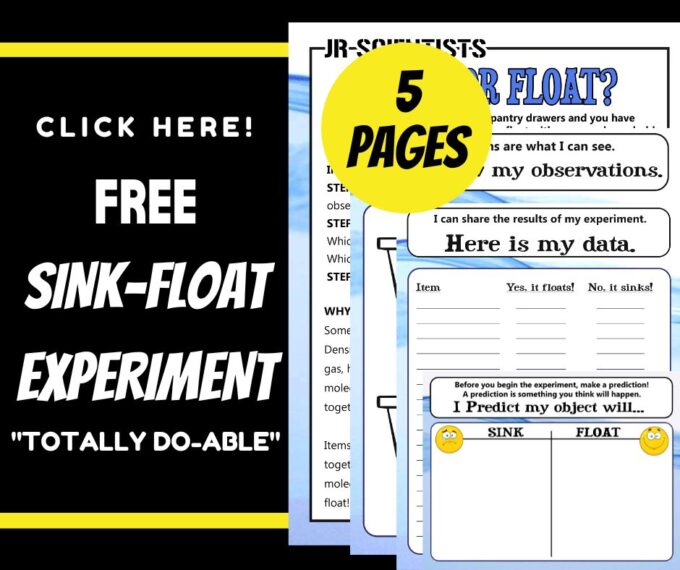
Free Printable Worksheets
Grab our free sink or float printable worksheets for kids to record their observations! Find more [here].
NGSS Guiding Questions
What happens when an object is placed in water?
The object either sinks to the bottom or floats on the surface.
Why do some objects sink while others float?
Objects sink or float based on their density compared to water.
Does the size of an object determine if it will sink or float?
No. Size alone does not determine whether an object sinks or floats.
Does the material an object is made of matter?
Yes. The type of material affects an object’s density and how it behaves in water.
Can changing an object’s shape affect what happens in water?
Yes. Changing the shape can change how the object interacts with water and affect whether it sinks or floats.
Is sinking or floating a physical change?
Yes. The object remains the same substance and does not form anything new.
Sink or Float – FAQ (Schema-Optimized)
Q: What is a sink or float experiment?
A: A sink or float experiment tests whether objects sink or float when placed in water.
Q: Why do some objects sink while others float?
A: Objects sink or float based on their density compared to water.
Q: Is sink or float a physical or chemical change?
A: Sink or float is a physical change because the object does not become a new substance.
Q: Does size determine if an object will sink or float?
A: No. Size alone does not determine whether an object sinks or floats.
Q: Can changing an object’s shape affect if it sinks or floats?
A: Yes. Changing an object’s shape can change how it interacts with water and affect whether it sinks or floats.
Q: What grade levels are sink or float experiments best for?
A: Sink or float experiments are commonly used from preschool through upper elementary grades.
More Water Science Experiments
Check out our list of science experiments for Jr Scientists!
- Walking Water Experiment
- What Absorbs Water?
- What Dissolves In Water?
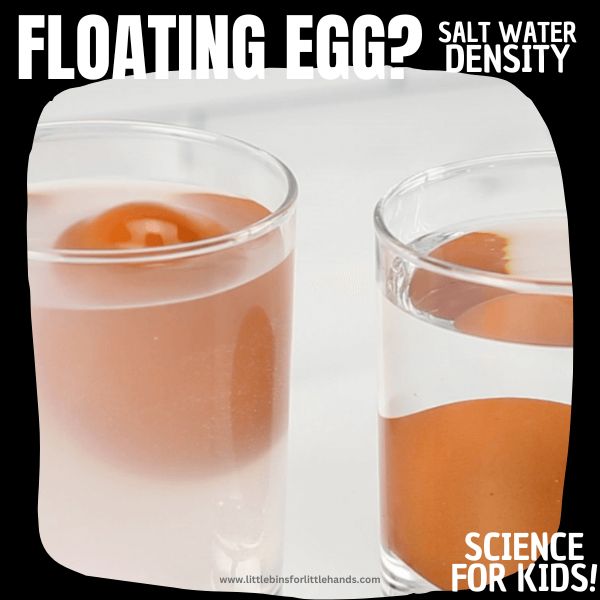
- Saltwater Density Experiment
- Do Oranges Sink or Float?
- Freezing Water
- Cocoa In Water
Printable Science Packs for Kids
Visit our SHOP for easy-to-print STEM and science lesson plans for the whole year. Or join us in the Little Bins Club.


Very nice
Wonderful idea and great way to kick start our science week in the little room. But the free printable is not there anymore. Is the link broken?
Hi Emily, thank you! It is there towards the bottom of the page. It is possible that your organization is blocking the link. Feel free to email me sarah@littlebinsforlittlehands.com