

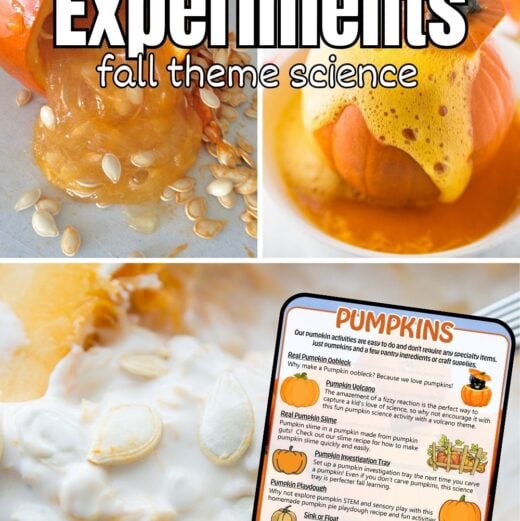
Pumpkins are perfect for hands-on fall science! Kids can explore everything from the pumpkin life cycle and plant parts to chemical reactions, buoyancy, decomposition, measurement, and motion.
Use these pumpkin science experiments for classroom science, homeschool lessons, science centers, or a complete fall pumpkin theme. Many use real pumpkins or simple supplies you may already have.
Field: Life Science, Chemistry, Physics
Grades: Preschool–5th Grade
Concepts: Plant Life Cycles, Observation, Decomposition, Buoyancy, Chemical Reactions, Measurement, Matter, Motion
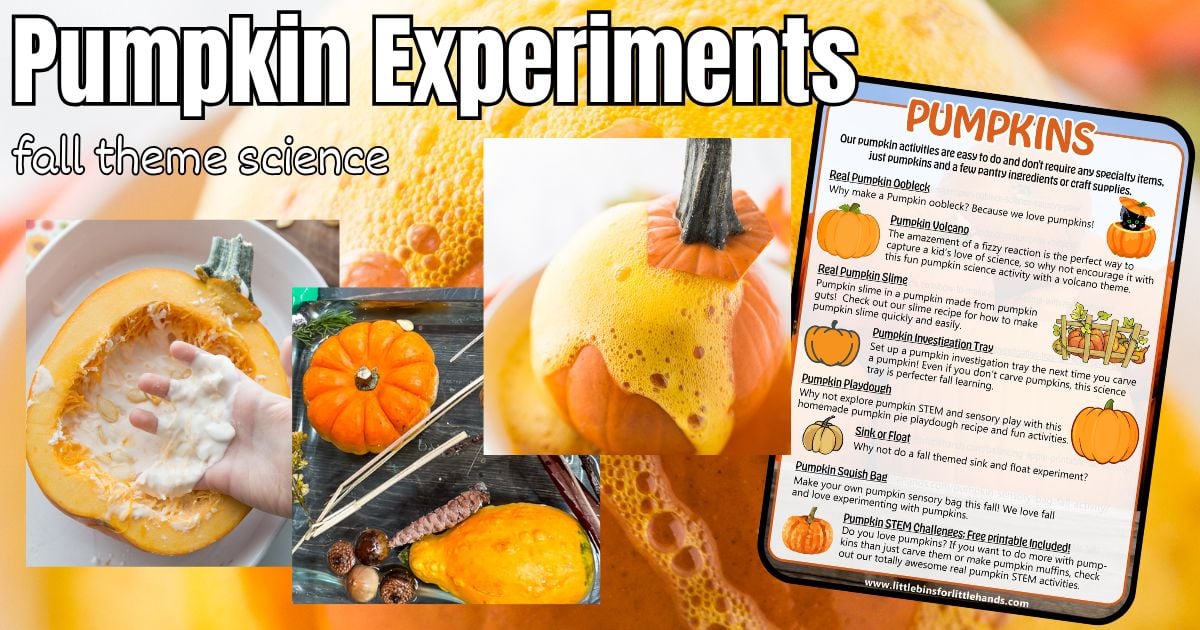
Free Pumpkin Science Guide
Planning a pumpkin science theme? Grab our free Pumpkin Science Guide and STEM challenge cards to add simple science and engineering activities to your fall lessons.
Kids can observe, investigate, build, test, and record what they discover as they explore pumpkins in different ways.
👉 Get the Free Pumpkin Science Guide
Featured Pumpkin Science Activities
Start with these pumpkin science activities for a mix of life science, chemistry, physics, measurement, and hands-on investigation.
Pumpkin Life Cycle
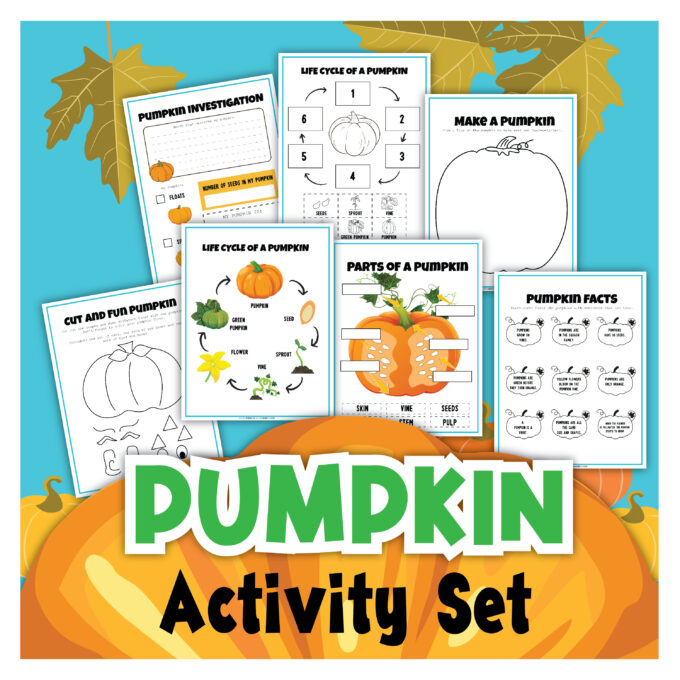
Explore how a pumpkin grows from seed to mature pumpkin with printable pumpkin life cycle activities. Kids can identify each stage of plant growth and put the stages in order.
Parts of a Pumpkin
Cut open a real pumpkin and identify the stem, skin, flesh, pulp, seeds, and other pumpkin structures. Add the printable pumpkin diagram for an easy life science lesson.

Pumpkin Investigation
Set up a pumpkin investigation tray and encourage kids to observe the inside of a pumpkin using magnifying glasses, tongs, water, and simple science tools.
Pumpkin Volcano
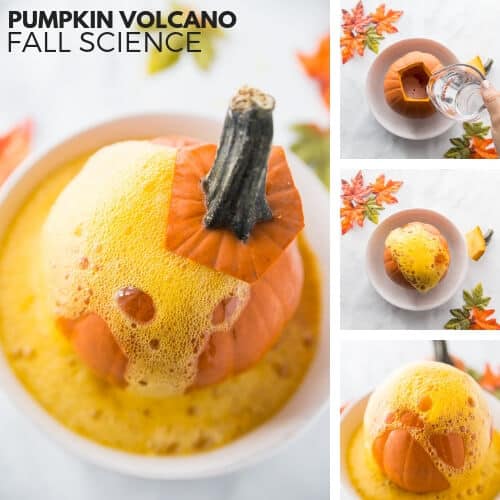
Combine baking soda and vinegar inside a real pumpkin for a bubbling fall chemical reaction.
Pumpkin Sink or Float
Will a pumpkin sink or float? Have kids make a prediction, test it, and compare pumpkins with other fall objects while exploring buoyancy.

Pumpkin Decomposition Experiment
Observe how a pumpkin changes over time and explore how mold, bacteria, fungi, and other decomposers help break down organic matter.
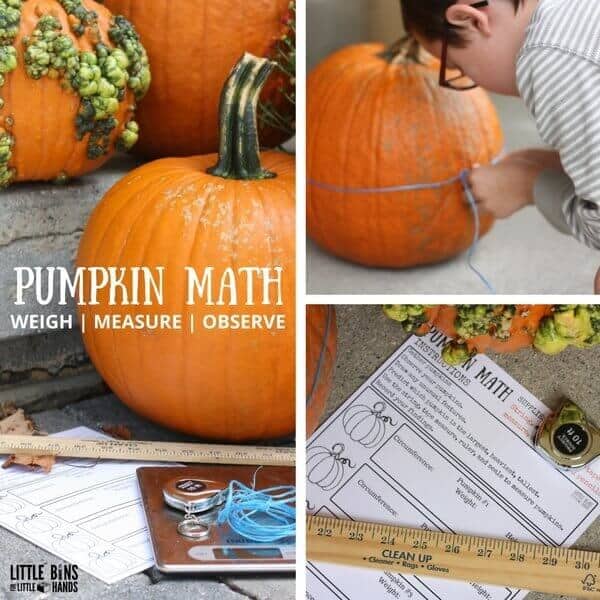
Measuring Pumpkins
Measure and compare pumpkins by height, circumference, size, and other characteristics. Record the results and use the data for simple comparisons or graphing.
Pumpkin Slime
Make slime right inside a real pumpkin for a fun way to combine pumpkin sensory play with polymer science.

Pumpkin Life Science Activities
Pumpkins are plants, making them a natural choice for fall life science. Explore how pumpkins grow, examine their structures, make observations, and watch what happens as a pumpkin decomposes.
- Pumpkin Life Cycle – Follow a pumpkin from seed to sprout, flower, green pumpkin, and mature pumpkin.
- Parts of a Pumpkin – Identify the stem, vine, skin, flesh, pulp, and seeds of a real pumpkin.
- Pumpkin Investigation – Examine the inside of a pumpkin and practice making detailed observations.
- Pumpkin Decomposition Experiment – Observe a pumpkin breaking down and explore the role of microbes in decomposition.
- Pumpkin Jack Rotting Experiment – Pair the story Pumpkin Jack with a long-term observation of a carved pumpkin as it decays.
- Pumpkin Sensory Bag – Explore pumpkin pulp and seeds in a mess-contained sensory setup for younger learners.
Pumpkin Chemistry Experiments
Pumpkins can also add a seasonal twist to classic chemistry activities. Explore chemical reactions, polymers, crystal formation, dissolving, and unusual states of matter.
- Pumpkin Volcano – Combine baking soda and vinegar inside a pumpkin for a fizzy chemical reaction.
- Mini Pumpkin Volcanoes – Turn mini pumpkins into individual bubbling volcano experiments.
- Puking Pumpkin Experiment – Carve a pumpkin and create an overflowing baking soda and vinegar reaction.
- Pumpkin Slime – Make slime inside a real pumpkin while exploring polymer science.
- Orange Fluffy Slime – Make fluffy orange slime for another pumpkin-themed polymer activity.
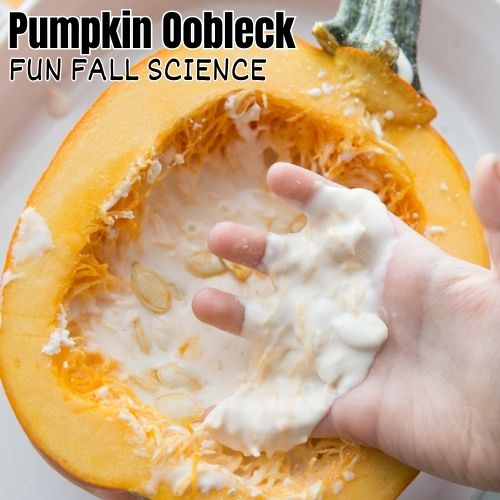
- Pumpkin Oobleck – Explore a non-Newtonian fluid with simple two-ingredient oobleck.
- Crystal Pumpkins – Grow crystals while exploring saturated solutions and crystal formation.
- Pumpkin Skittles Experiment – Watch candy coatings dissolve and colors spread through water.
Pumpkin Physics Activities
Use pumpkins to explore motion, forces, buoyancy, energy, measurement, and data collection.
- Pumpkin Sink or Float – Predict and test whether pumpkins and other fall objects will sink or float.
- Rolling Pumpkins – Roll pumpkins of different shapes and sizes and compare how they move.
- Measuring Pumpkins – Measure circumference, height, size, and other observable pumpkin properties.
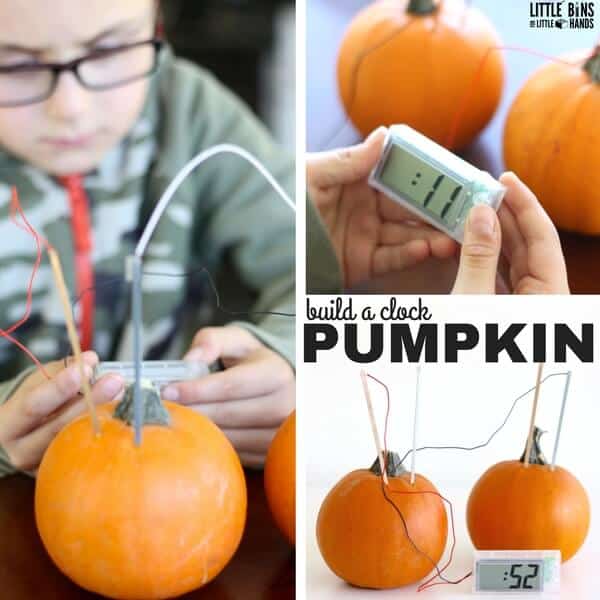
- Pumpkin Clock – Explore basic circuits and chemical energy by using pumpkins to help power a clock.
Pumpkin STEM Activities
Add engineering and design challenges to your pumpkin theme. These activities encourage kids to build, test, measure, redesign, and solve problems.
- Real Pumpkin STEM Activities – Use real pumpkins for hands-on building, testing, measuring, and engineering challenges.
- Five Little Pumpkins STEM Challenge – Build a fence or structure inspired by the classic Five Little Pumpkins story.
- Spookley Pumpkin STEM Activity – Design and build a square pumpkin inspired by The Legend of Spookley the Square Pumpkin.
- Pumpkin Books and STEM Activities – Pair favorite pumpkin books with related science and engineering challenges.
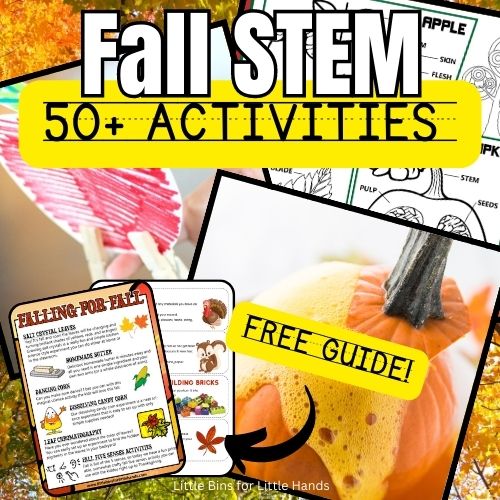
- Fall STEM Activities – Find even more fall building challenges, experiments, and STEM ideas.

Pumpkin Science for Preschool
Pumpkins are especially useful for preschool science because kids can see, touch, scoop, measure, sort, compare, and investigate them.
Keep preschool pumpkin science simple and focused on observation, prediction, and hands-on exploration.
Try:
- Pumpkin Investigation – Explore pumpkin pulp, seeds, textures, and other observable features.
- Pumpkin Sink or Float – Make a prediction and test what happens.
- Pumpkin Life Cycle – Introduce the stages of pumpkin growth with simple printable activities.
- Parts of a Pumpkin – Identify and compare the different parts of a real pumpkin.
- Pumpkin Sensory Bag – Investigate pumpkin insides without as much mess.
- Pumpkin Oobleck – Explore an unusual mixture through hands-on sensory science.
- Preschool Pumpkin Activities – Find even more simple pumpkin learning ideas for younger kids.

Turn Pumpkin Activities Into Science Investigations
You don’t need an elaborate experiment to practice science. Encourage kids to slow down, look closely, ask questions, make predictions, test ideas, and record what they notice.
Try these guiding questions:
- What do you notice about the pumpkin?
- How are two pumpkins alike and different?
- What do you predict is inside?
- How many seeds do you think the pumpkin contains?
- Will the pumpkin sink or float?
- Does pumpkin size or shape affect how it rolls?
- What happens to a pumpkin over several days?
- What changes do you observe?
- What stays the same?
- What could you change and test next?
🔎 Older kids can extend an activity by identifying variables, taking measurements, organizing results, graphing data, and repeating their experiment.
Learn more:
Pumpkin Art and Crafts
Want to mix pumpkin science with art? Try painting, printmaking, sculpture, texture, and process art with a fall pumpkin theme.
- Pumpkin Painting in a Bag – Try mess-contained pumpkin painting for younger kids.
- Pumpkin Bubble Wrap Prints – Use bubble wrap to create textured pumpkin prints.
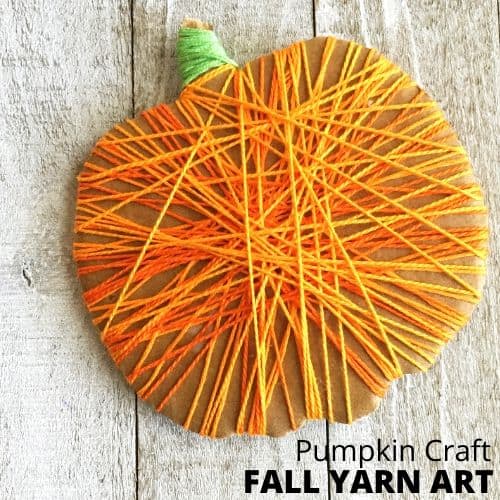
- Yarn Pumpkins – Explore line and texture with yarn-wrapped pumpkin art.
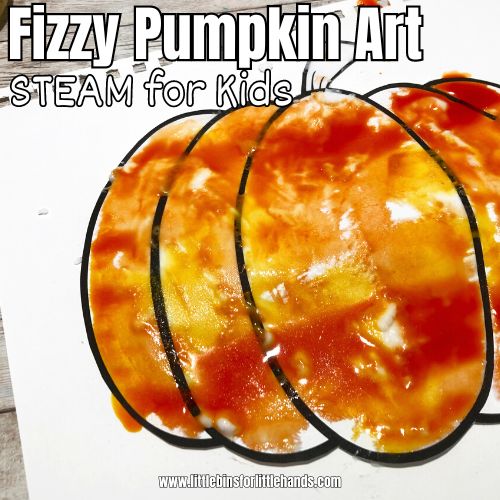
- Black Glue Pumpkin Art – Combine bold outlines and color for a striking pumpkin project.
- Pumpkin Dot Art – Explore color and pattern with pumpkin-themed dot art.
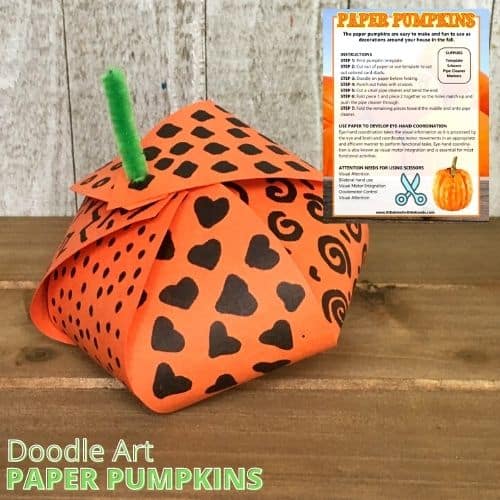
- 3D Paper Pumpkins – Build dimensional pumpkins from paper.
- Zentangle Pumpkins – Fill pumpkins with repeating patterns for mindful art.
👉 Explore the full Pumpkin Art and Crafts collection.
Pumpkin Painting in a Bag | Bubble Wrap Pumpkins | Yarn Pumpkins | Zentangle Pumpkins

Printable Pumpkin STEM Pack
Want your pumpkin science, STEM, math, and art activities organized?
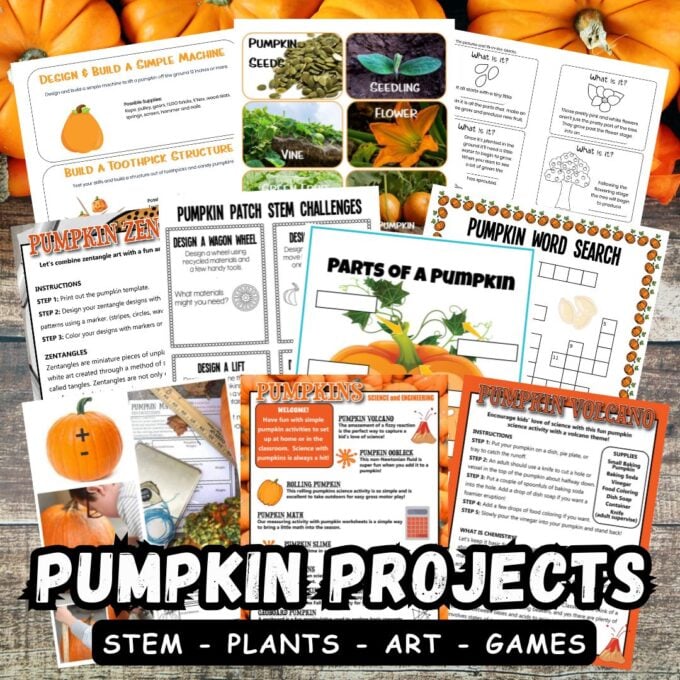
Our Pumpkin STEM Pack includes 100+ pages of pumpkin-themed science, engineering, early math, and hands-on activities. It’s a great way to build a complete pumpkin theme without needing a Halloween focus.
👉 Explore the Printable Pumpkin STEM Pack
Pumpkin Preschool Pack
Need activities specifically designed for younger learners?
Our Pumpkin Preschool Pack includes hands-on pumpkin activities, printable pages, templates, and book suggestions for a complete preschool pumpkin theme.
Pumpkin Science FAQ
What science can kids learn with pumpkins? Pumpkins can help kids explore plant life cycles, plant structures, decomposition, buoyancy, chemical reactions, measurement, motion, matter, and observation skills.
What is an easy pumpkin science experiment? Pumpkin sink or float is one of the easiest. Have kids predict whether a pumpkin will float, test it in water, and compare the results with other fall objects.
How can I use a real pumpkin for science? Observe and measure it, cut it open, identify its parts, count the seeds, test whether it floats, roll it down a ramp, use it for a chemical reaction, or observe it decomposing over time.
Can preschoolers do pumpkin science? Yes. Preschoolers can investigate pumpkin parts, make observations, explore the pumpkin life cycle, test whether it sinks or floats, measure pumpkins, and try simple sensory science activities.
How can I make pumpkin science appropriate for older kids? Have older students develop a testable question, identify variables, take measurements, collect data, graph their results, compare trials, and explain what they discovered.
More to Explore
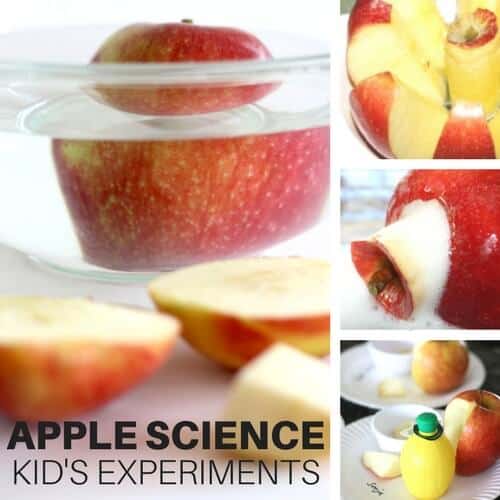
Apple Science Experiments | Fall STEM Activities | Pumpkin STEM Activities | Pumpkin Art & Crafts | Preschool Pumpkin Activities | Preschool Apple Activities | Fall Science Experiments

Those look like fun experiments.
Thank you! There are so many fun ways to play and learn with pumpkins. Makes science extra cool this time of year.
Thank you so much for sharing these amazing experiments! Can’t wait to try them out!
What a great round-up of pumpkin science experiments. So fun! Thank you for sharing at Sharing Saturday and congratulations on being tied for most clicked this week!