
Looking for an easy way to plan science during the first month of school?
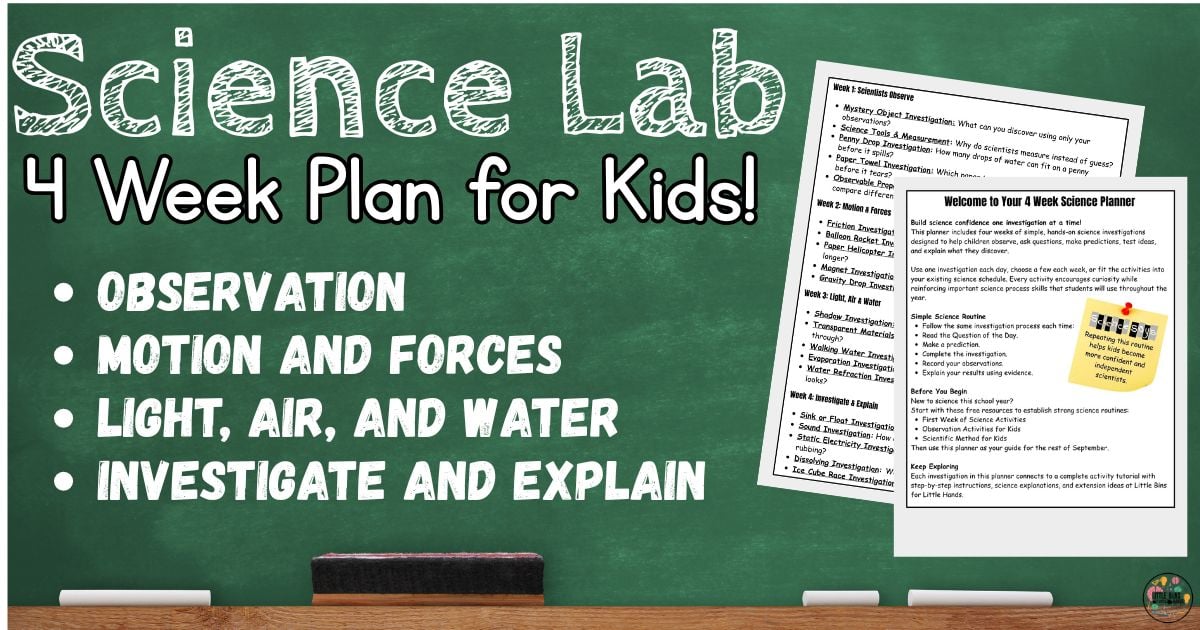
This September Science Planner includes four weeks of simple, hands-on investigations that help students build observation skills, ask questions, make predictions, gather evidence, and explain what they discover. Each activity uses everyday materials, requires minimal prep, and links to a complete investigation for deeper learning.
Whether you teach in the classroom, homeschool, or run an after-school program, this flexible planner makes it easy to build a consistent science routine all month long.
📥 Download the FREE Four Week Science Planner below with a printable monthly calendar, Question of the Day prompts, investigation pages, observation sheets, and more.
Start with Strong Science Habits
If you’re beginning a new school year, introduce a few simple science routines before diving into content.
We recommend starting with:
These resources help students practice observing, questioning, making predictions, recording results, and using evidence to explain their thinking before moving into the investigations below.
How to Use This Planner
Start a monthly science routine! This planner is designed to fit a variety of schedules.
You can:
- Complete one investigation each day.
- Choose one or two activities each week.
- Use the questions as science warm-ups.
- Pair investigations with science notebooks.
- Spread each week’s activities across several weeks.
Follow the same simple routine every time:
- Read the Question of the Day.
- Make a prediction.
- Complete the investigation.
- Record observations.
- Explain the results using evidence.
September Science at a Glance
This September Science Planner gives you a flexible four-week science plan for the first month of school. These investigations help establish a consistent monthly science routine while building important science process skills.
| Week | Theme | Focus |
|---|---|---|
| Week 1 | Scientists Observe | Observation, measurement, and describing materials |
| Week 2 | Motion & Forces | Motion, air, magnets, gravity, and friction |
| Week 3 | Light, Air & Water | Light, water, and observable changes |
| Week 4 | Investigate & Explain | Evidence, patterns, and communicating results |
Week 1: Scientists Observe
Help students slow down, notice details, compare materials, and build strong observation skills through simple investigations.
Mystery Object Investigation: What can you discover using only your observations? Gather clues, describe what you notice, and use evidence to predict what is hidden before revealing the object.
Science Tools & Measurement: Why do scientists measure instead of guess? Introduce simple science tools while students compare estimates with actual measurements.
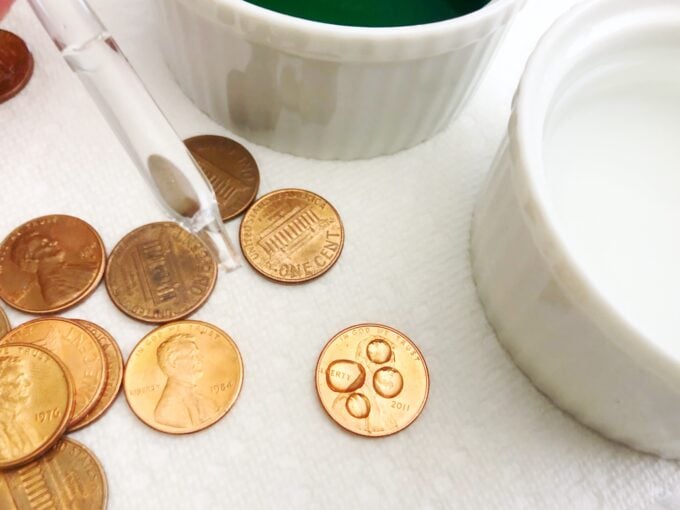
Penny Drop Investigation: How many drops of water can fit on a penny before it spills? Predict, test, count, and compare the results while practicing careful observation.
Paper Towel Investigation: Which paper towel will hold the most water before it tears? Compare different paper towels using the same testing method and record observations.
Observable Properties of Materials Investigation: How can you describe and compare different materials? Observe materials by their texture, flexibility, strength, appearance, and absorbency, then compare the results.
Week 2: Motion & Forces
Investigate how pushes, pulls, friction, magnets, gravity, and air affect the way objects move.
Friction Investigation: Which surface slows an object down the most? Compare different surfaces to discover how friction changes motion.
Balloon Rocket Investigation: How can air make something move? Build a balloon rocket and observe how escaping air creates motion.
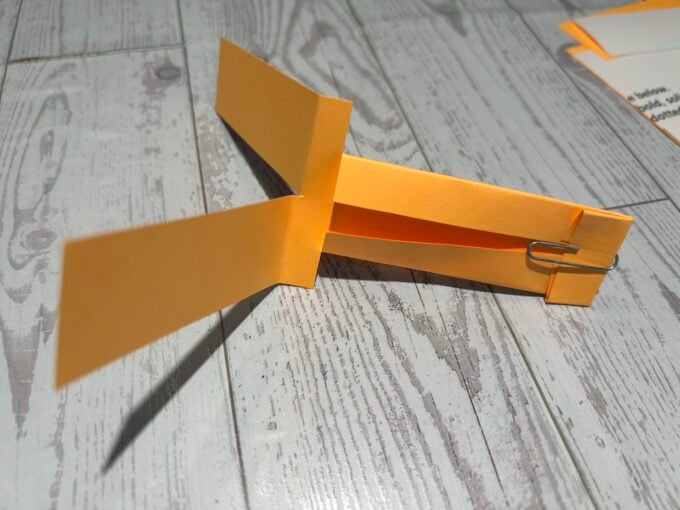
Paper Helicopter Investigation: What helps a paper helicopter stay in the air longer? Test one design change at a time and compare flight times.
Magnet Investigation: Which materials are attracted to magnets? Predict, test, and sort classroom objects by their magnetic properties.
Gravity Drop Investigation: Do all objects fall at the same speed? Compare falling objects and discuss how gravity and air resistance influence what you observe.
Week 3: Light, Air & Water
Explore everyday science through simple investigations involving light, water, and changes students can easily observe.
Shadow Investigation: What causes a shadow to change? Move a light source or object and observe how the size and direction of the shadow change.
Transparent Materials Investigation: Which materials let light pass through? Test classroom objects and sort them into transparent, translucent, and opaque groups.
Walking Water Investigation: Can water move by itself? Watch colored water travel through paper towels and observe capillary action over time.
Evaporation Investigation: Where does water go when it disappears? Compare water placed in different locations and observe how quickly it evaporates.
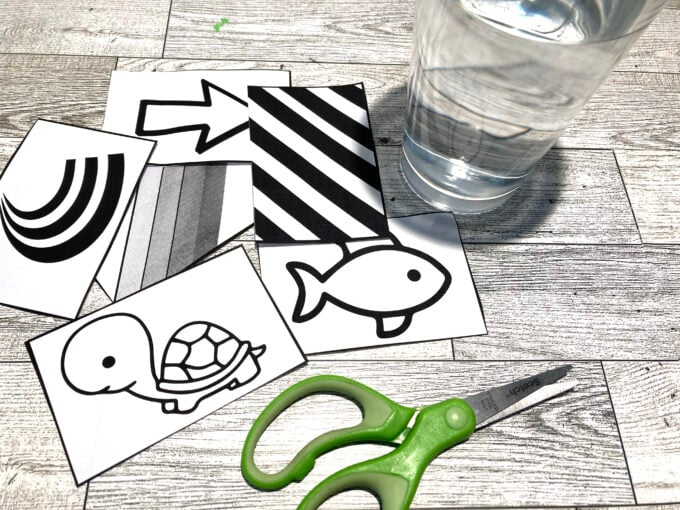
Water Refraction Investigation: How does water change the way an image looks? Observe how light bends when it passes through water and changes the appearance of simple images.
Week 4: Investigate & Explain
Bring together the science skills students have practiced all month by making predictions, collecting evidence, identifying patterns, and explaining what they discover.
Sink or Float Investigation: What makes an object float or sink? Test everyday objects, record the results, and look for patterns based on the materials you observe.
Sound Investigation: How does sound travel? Explore vibrations using simple classroom materials and compare how different sounds are produced.
Static Electricity Investigation: Why do some objects stick together after rubbing? Use a balloon to investigate static electricity and compare what happens with different materials.
Dissolving Investigation: Which materials dissolve in water? Compare everyday materials to discover which dissolve, settle, or remain unchanged when mixed with water.
Ice Cube Race Investigation: What helps an ice cube melt the fastest? Test different surfaces or locations and compare how quickly identical ice cubes melt.
Download the FREE September Science Planner
The printable planner includes:
- Monthly planning calendar
- Daily Question of the Day prompts
- Weekly planning pages
- Observation recording sheets
- Prediction pages
- Scientific Method investigation page
- Direct links to every activity
Use it in the classroom, homeschool, science centers, or after-school programs to spend less time planning and more time exploring science.
📥 Get the FREE September Science Planner
Frequently Asked Questions
What is a September Science Planner? A September Science Planner is a four-week guide filled with simple, hands-on investigations that help students practice observation, prediction, testing, and evidence-based thinking while building science routines.
Do I have to complete every investigation? No. Complete one investigation each day, choose a few each week, or fit the activities into your existing science schedule. The planner is designed to be flexible.
What grade levels are these activities designed for? Most investigations work well for elementary students in grades K–5 and can easily be adapted for different ages and learning environments.
Do I need special science equipment? No. The activities use common classroom or household materials that are easy to gather.
Can I use this planner for homeschool? Yes! The planner works well for homeschool, classrooms, science centers, STEM clubs, and after-school programs.
How long does each investigation take? Most activities can be completed in about 15–30 minutes, depending on the discussion, observations, and extensions you choose.
What science skills do students practice? Throughout the month, students practice observing, asking questions, making predictions, testing ideas, recording observations, identifying patterns, and explaining their conclusions using evidence.
What should I use after September? Continue building science skills with seasonal investigations, life science, earth science, chemistry, physics, and STEM activities, or choose another monthly science plan.
Make Science Easy This Week!
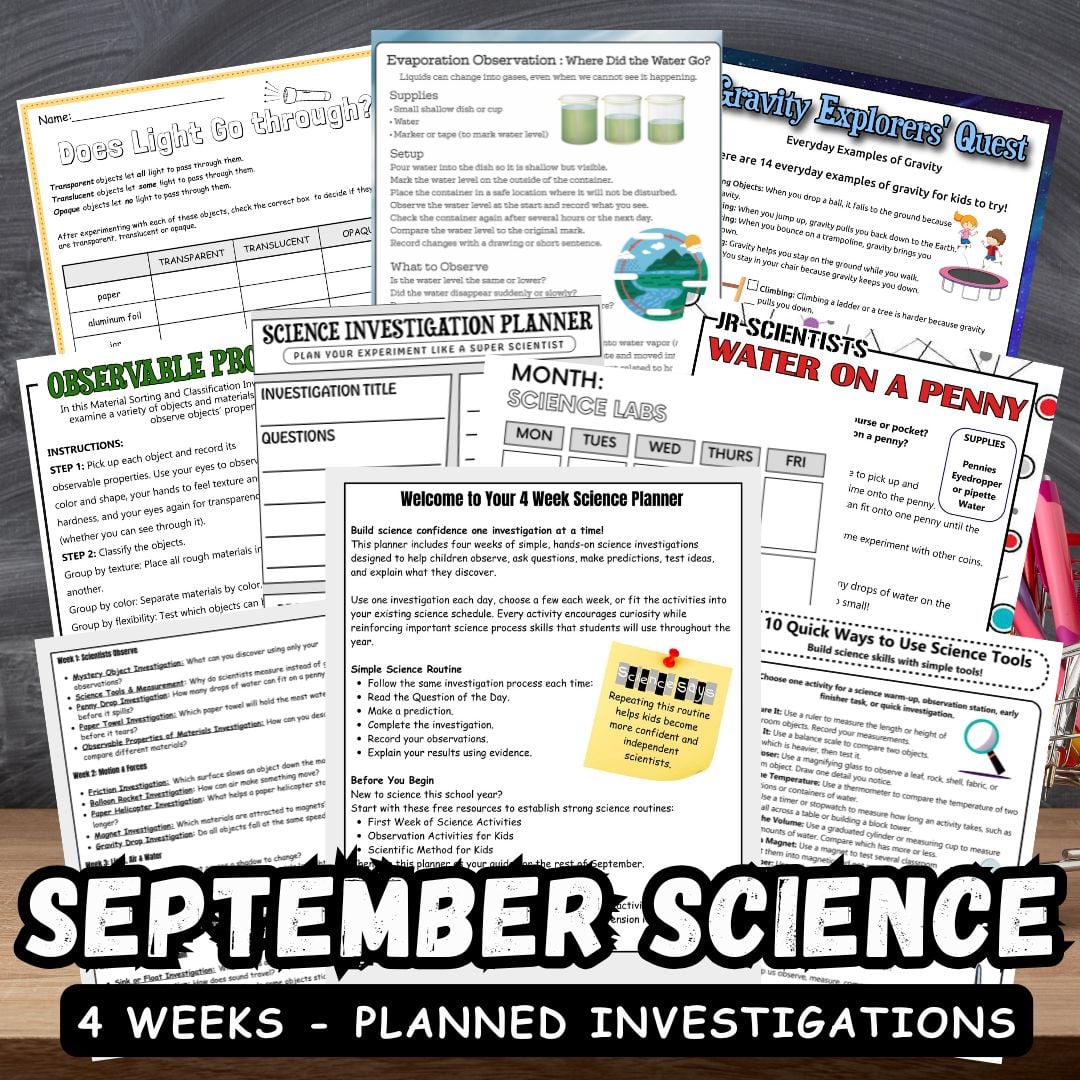
The September Science mini pack pulls all 20 investigations together in one place, with the activity instructions, science explanations, student recording pages, and planning support already organized for you.
👉 Explore the September Science Investigations»
Continue Exploring
Keep building science skills with:
- First Week of Science Activities
- Observation Activities for Kids
- Scientific Method for Kids
- Science Detectives
- Science Experiments for Kids
- Engineering Projects
- STEM Challenges for Kids
Or browse by grade level: