

Looking for easy Thanksgiving science experiments and STEM activities for kids? Explore hands-on investigations with cranberries, corn, pumpkins, squash, and other familiar fall materials! From bubbling chemical reactions and food science to plant investigations and engineering challenges, these activities make learning in November fun.
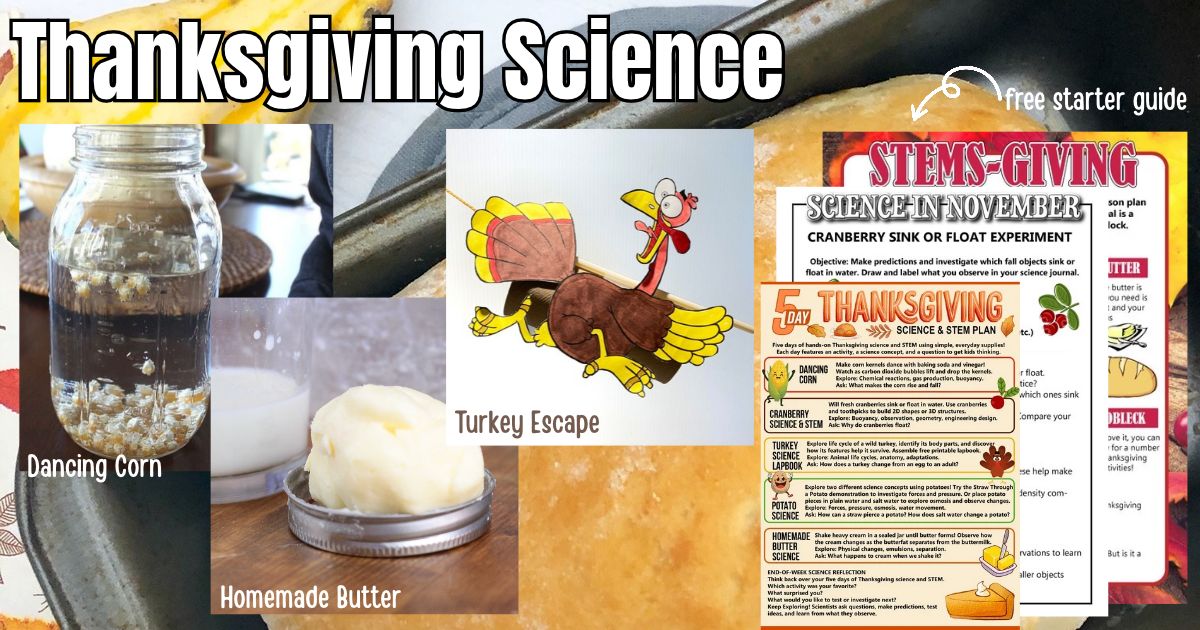
Perfect for preschool, kindergarten, and elementary students, these Thanksgiving science activities use simple supplies and include free printables to make planning easier for classrooms, homeschool, and family learning.
Science Fields: Chemistry, Physical Science, Life Science, Engineering, Technology
Grades: Pre-K–5
Concepts: Chemical reactions, buoyancy, forces and motion, food chemistry, plant anatomy, animal life cycles, engineering design
Free Thanksgiving Science & STEM Printables
Make November learning easier with our FREE Thanksgiving Science & STEM Activity Guide! This printable collection includes activities, challenge cards, and recording pages you can use throughout the Thanksgiving season.
Your free download includes:
- 5-Day Thanksgiving Science & STEM Plan: Five ready-to-use activities with science concepts and guiding questions.
- STEMS-Giving Guide: Explore science with familiar Thanksgiving foods.
- Thanksgiving STEM Challenge Cards: Design, build, and solve Thanksgiving-themed challenges.
- Cranberry Science Investigation: Predict, test, and observe floating and sinking.
- Reusable Science Recording Page: Record predictions, observations, and discoveries.
- Engineering Design Page: Plan, build, test, and improve a design.
Use the printables for science centers, STEM stations, early finishers, or a week of Thanksgiving learning.
👉 Get our free Thanksgiving Project Guide here!
Easy Thanksgiving Science Experiments
Start with these hands-on Thanksgiving science experiments using common kitchen and classroom supplies. Kids can explore chemical reactions, density, buoyancy, and changes in matter.
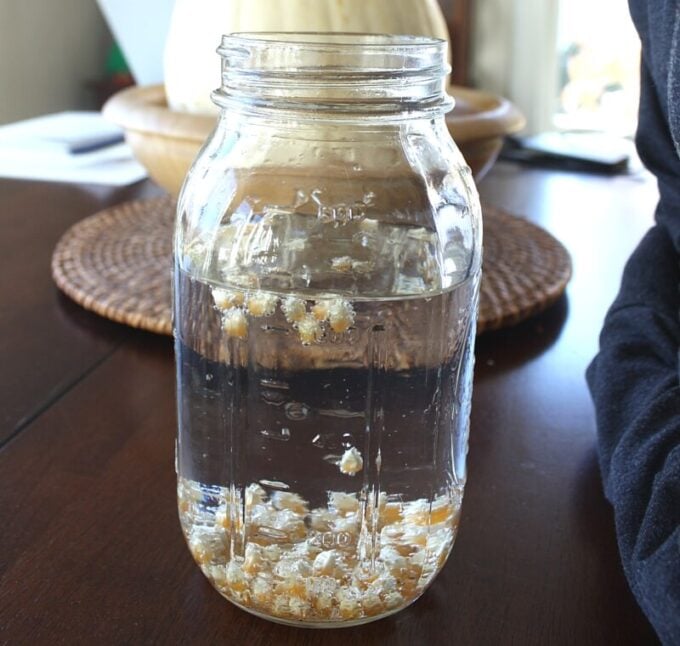
Dancing Corn Experiment
Can you make corn kernels dance? Combine baking soda, vinegar, and water to create carbon dioxide bubbles that lift and drop the kernels.
This colorful experiment is an easy way to introduce chemical reactions and observe how gas bubbles affect movement.
Explore: Chemical reactions, carbon dioxide, buoyancy.
Ask: What makes the corn rise and fall?
👉 Try the Dancing Corn Experiment.
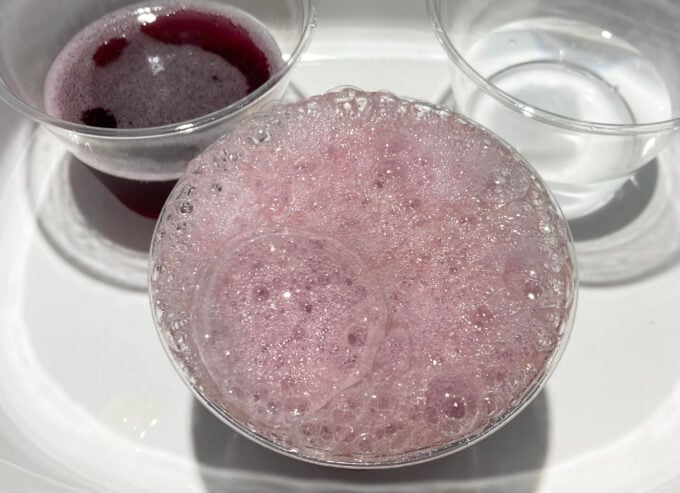
Fizzing Cranberry Experiment
Give a classic baking soda and vinegar reaction a Thanksgiving twist! Watch a colorful cranberry-themed mixture bubble and fizz as carbon dioxide gas forms. Try changing the amount of one ingredient and compare the reaction.
Explore: Chemical reactions, gas production.
Ask: What happens when you change the amount of baking soda?
👉 Try the Fizzing Cranberry Experiment.
Cranberry Sink or Float Experiment
Do cranberries sink or float? Find out with this easy Thanksgiving science experiment! Kids make predictions, test fresh cranberries in water, and compare what happens with other fall objects like acorns, grapes, and pumpkin seeds.
Use our free Cranberry Sink or Float printable to guide the investigation and encourage observation.
Explore: Sinking and floating, buoyancy, prediction, observation.
Ask: Do bigger objects always sink and smaller objects always float?
👉 FREE CRANBERRY SINK OR FLOAT PRINTABLE (PART OF FREE GUIDE ABOVE)
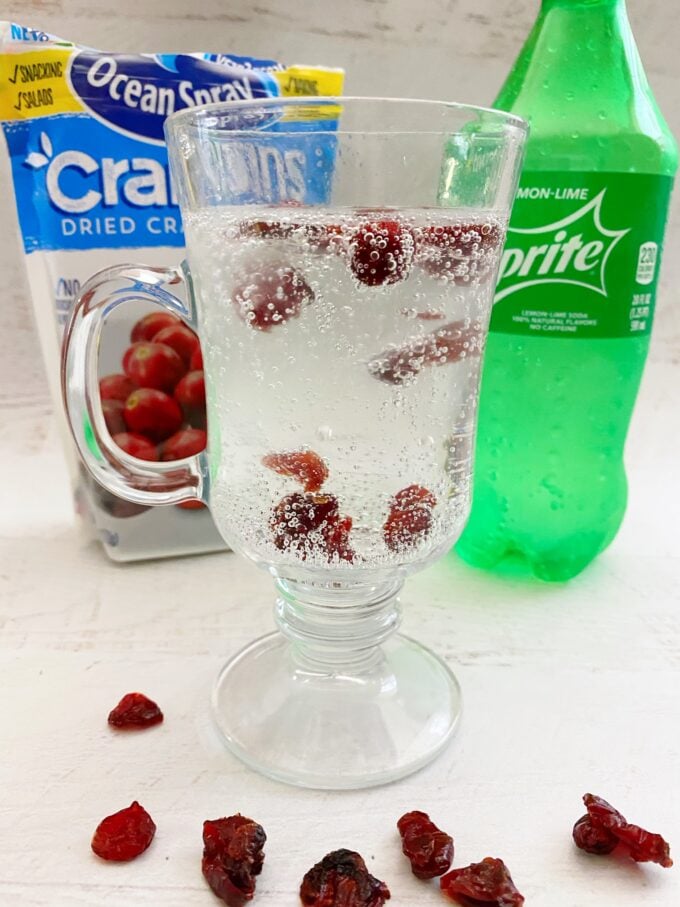
Dancing Cranberries
Can you make cranberries dance in a glass? Add cranberries to a carbonated drink and watch the bubbles lift and release them. Compare what happens as the drink loses its fizz.
Explore: Carbon dioxide, gas bubbles, buoyancy.
Ask: What happens when the bubbles disappear?
👉 Explore Dancing Cranberries.
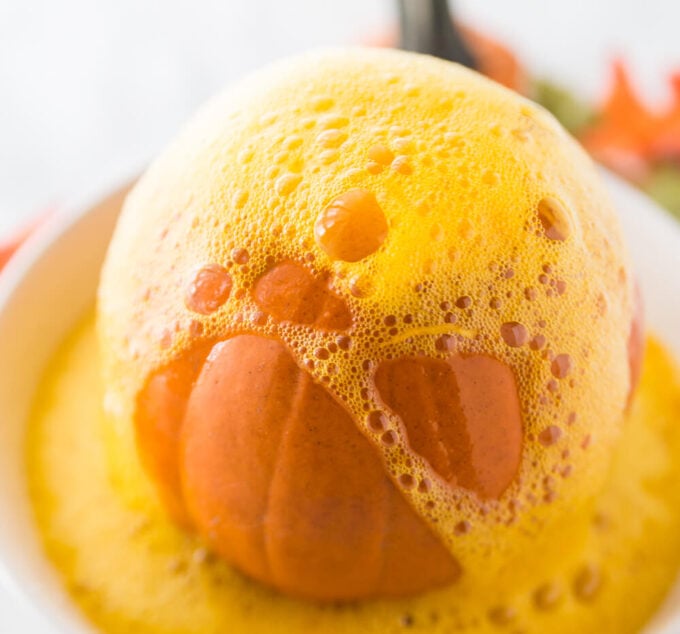
Pumpkin Volcano
Save a small pumpkin for a bubbling Thanksgiving science experiment! Add baking soda and vinegar to create a fizzy eruption.
Change the amount of one ingredient and compare the reactions.
Explore: Chemical reactions, gas production.
Ask: How does changing the amount of vinegar affect the eruption?
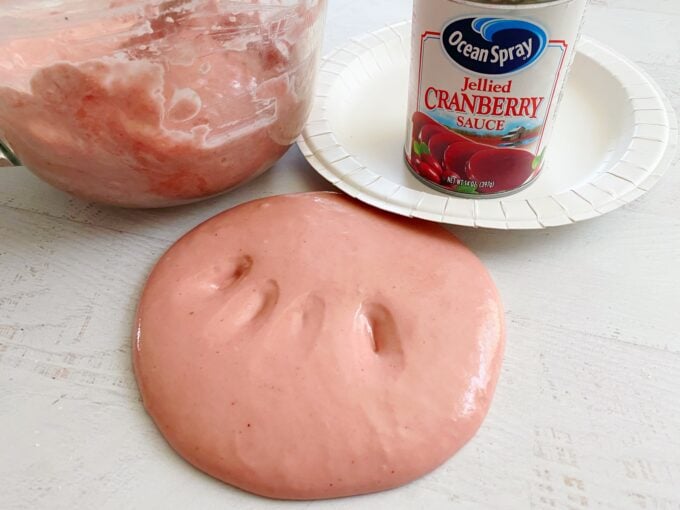
Cranberry Oobleck
Mix cranberry sauce and cornstarch to make a Thanksgiving-themed oobleck experiment.
Press, squeeze, and release the mixture to see how this non-Newtonian fluid behaves under different forces.
Explore: Mixtures, viscosity, non-Newtonian fluids.
Ask: Why does oobleck feel solid when squeezed but flow when released?
Cranberry Secret Messages
Explore color-changing chemistry with cranberry juice! Use cranberry pigments to investigate acids and bases while creating secret messages.
Explore: Chemical indicators, acids and bases, color changes.
Ask: What causes the cranberry color to change?
👉 Make Cranberry Secret Messages.
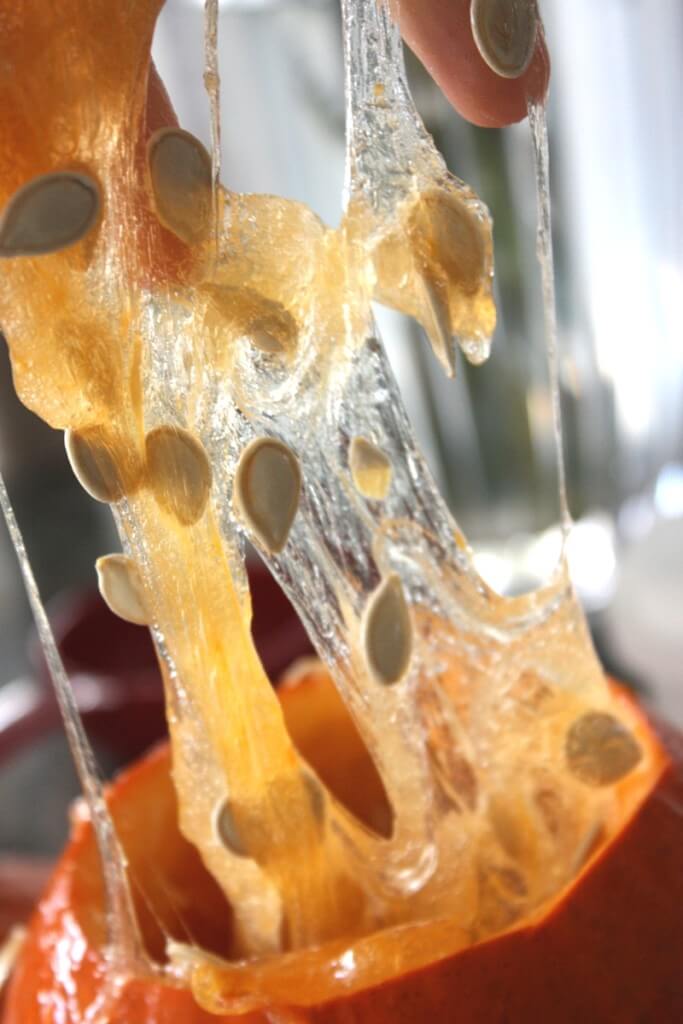
Pumpkin Slime
Make a batch of slime inside a small pumpkin for a seasonal investigation of mixtures and material properties.
Add pumpkin pulp and compare the texture with your regular slime recipe.
Explore: Polymers, mixtures, material properties.
Ask: What happens to the slime when you add pumpkin pulp?
Thanksgiving Food Science Experiments
Turn familiar Thanksgiving ingredients into science investigations with our STEMS-Giving food science activities!
These experiments explore how foods change when we mix, shake, heat, or test them.
Homemade Butter Science
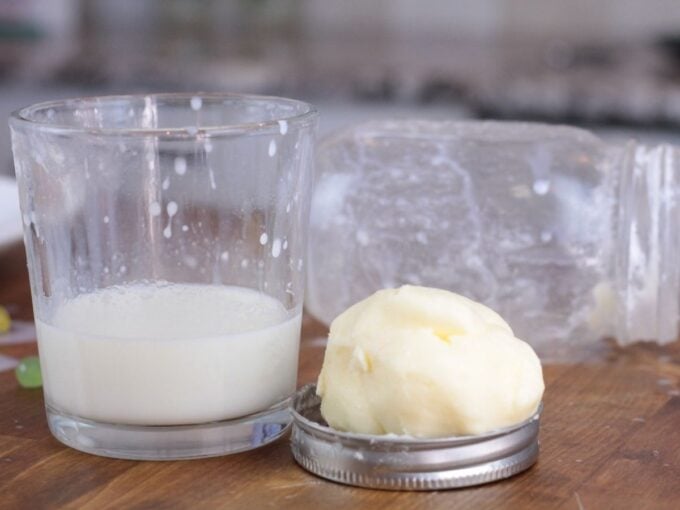
Can you turn liquid cream into butter? Add heavy cream to a jar and shake until the butterfat separates from the buttermilk.
Compare the cream and butter to observe changes in texture and consistency.
Explore: Emulsions, separation, physical changes.
Ask: What happens to cream when it is shaken?
Bread in a Bag
Make bread dough in a resealable bag and observe how yeast helps the dough rise. Explore how yeast produces carbon dioxide during fermentation and how the dough changes as it rests.
Explore: Fermentation, gas production, chemical changes.
Ask: What causes bread dough to rise?

Popcorn Science
Why does popcorn pop? Explore what happens when the water inside a popcorn kernel turns to steam and creates pressure.
Compare popped and unpopped kernels and examine changes in size, texture, and appearance.
Explore: Heat, pressure, changes in matter.
Ask: Why don’t all corn kernels pop?

Iodine Starch Experiment
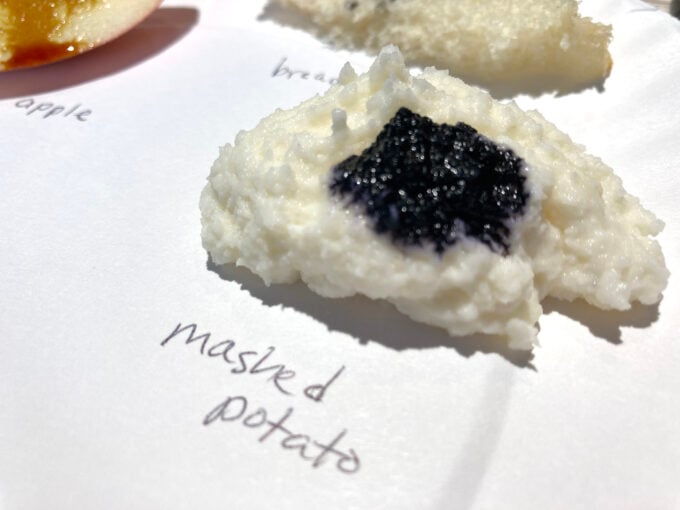
Which Thanksgiving foods contain starch? Test small samples of potatoes, bread, corn, and other foods using an iodine indicator.
Look for a blue-black color change, which indicates the presence of starch. Use the free food starch test worksheet to record results. 💡 Iodine testing requires adult handling. Do not eat any tested food.
Explore: Food chemistry, carbohydrates, chemical indicators.
Ask: Which foods test positive for starch?
👉 Try the Iodine Starch Test + Printable.
Straw Through a Potato Experiment
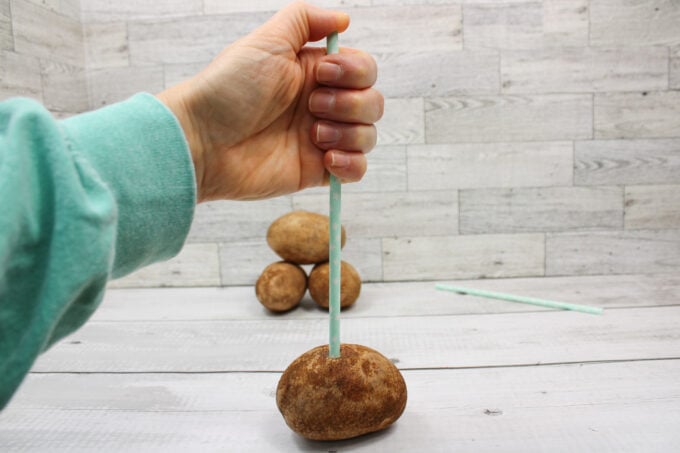
Can you push a drinking straw straight through a raw potato? Try this surprising science demonstration to explore force, pressure, and how a straw’s shape and stiffness affect its strength.
Explore: Force, pressure, air pressure, structural strength.
Ask: How does covering the end of a straw affect its ability to pierce the potato?
👉 Try the Straw Through a Potato Experiment.
Potato Science: Raw vs. Cooked
Explore how heat changes food by comparing raw and cooked potatoes. Observe differences in appearance, firmness, and texture. Mash both samples and record the changes.
Explore: Heat transfer, material properties, physical and chemical changes.
Ask: Can you turn a cooked potato back into a raw potato?
Potato Osmosis Experiment
What happens when potatoes are placed in plain water and salt water? Observe how water moves through plant cells and compare changes in the potatoes’ firmness or mass.
Explore: Osmosis, water movement, plant cells.
Ask: How does salt change what happens to the potato?
👉 Try a potato osmosis experiment

Cranberry Sauce Science
Make cranberry sauce into an investigation of heat and changes in matter!
Observe what happens as cranberries soften, burst, and release pectin as they cook. Compare the sauce while warm and after cooling.
Explore: Heat transfer, mixtures, changes in matter.
Ask: Why does cranberry sauce become thicker as it cools?
Thanksgiving Life Science & Nature Investigations
Explore fall plants, seeds, and animals with hands-on investigations covering plant anatomy, animal life cycles, and observation.
Turkey Science & Life Cycle Lapbook
Discover how wild turkeys grow and survive with our free printable Turkey Science Lapbook!
Kids can explore the turkey life cycle, identify body parts, sort turkey facts, and learn about habitats and adaptations.
Explore: Animal life cycles, anatomy, adaptations.
Ask: How does a turkey change from an egg to an adult?
👉 Explore Turkey Science + Free Lapbook.

Turkey Call Sound Science
Did you know wild turkeys use different calls to communicate? Male turkeys gobble to attract mates, while hens cluck and use other sounds to stay in contact with their young and warn of danger.
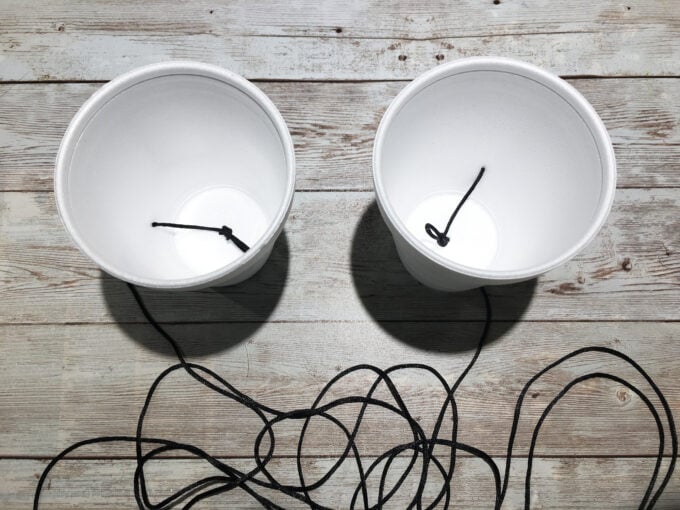
Give the classic cup-and-string telephone experiment a Thanksgiving twist! Use two plastic cups and string to send turkey gobbles and other sounds back and forth. Experiment with a tight or loose string to discover how vibrations carry sound.
Explore: Sound vibrations, sound transmission, energy transfer.
Ask: How does tightening or loosening the string change what you hear?
👉 Try the Cup and String Sound Experiment.
How Many Seeds? Fall Seed Investigation
Which fall fruit has the most seeds? Compare apples, pumpkins, squash, and other seasonal fruits with this hands-on investigation.
Make predictions, remove and count the seeds, and use the existing free seed investigation printable to record and compare the results.
Explore: Plant reproduction, seeds, estimation, counting, data comparison.
Ask: Does a larger fruit always contain more seeds?
👉 Try the How Many Seeds Investigation + Printable.

Corn Kernel Dissection
What’s inside a corn kernel? Explore a seed’s parts with this hands-on plant science investigation!
Soak dried corn kernels overnight, carefully open them, and use a magnifying glass to look for the seed coat, endosperm, and embryo. Our free Corn Kernel Dissection printable includes instructions and a simple explanation of the science.
Explore: Seed anatomy, plant life cycles, observation.
Ask: What parts of a seed help a new plant grow?
DOWNLOAD CORN KERNEL DISSECTION PRINTABLE
Parts of a Pumpkin Investigation
Cut open a pumpkin and explore what’s inside!
Examine the skin, flesh, pulp, and seeds with magnifying glasses and other simple tools. Use the printable worksheets to label and identify pumpkin parts.
Explore: Plant anatomy, observation, seeds.
Ask: What parts of a pumpkin help protect its seeds?
👉 Explore the Parts of a Pumpkin.
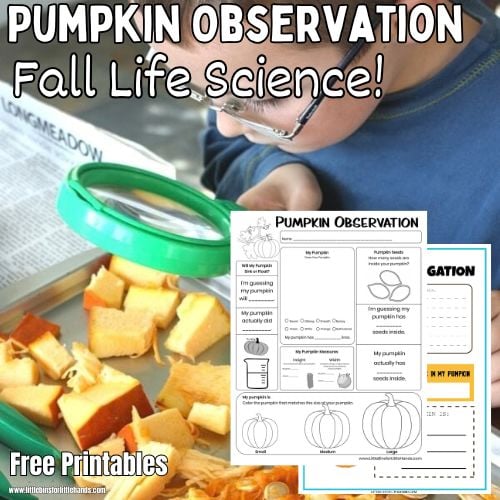
Pumpkin Decomposition Experiment
What happens to a pumpkin as it decomposes? Observe and record changes in a leftover pumpkin over several weeks. Explore how decomposers break down organic matter.
Explore: Decomposition, ecosystems, changes over time.
Ask: What changes can you observe as the pumpkin breaks down?
👉 Try the Pumpkin Decomposition Experiment (free printable).
Thanksgiving STEM Challenges & Engineering Activities
Get kids designing, building, testing, and improving their ideas with these hands-on Thanksgiving STEM challenges! Use the free Thanksgiving STEM Challenge Cards and Engineering Design Page to guide the process.
Turkey Escape STEM Challenge
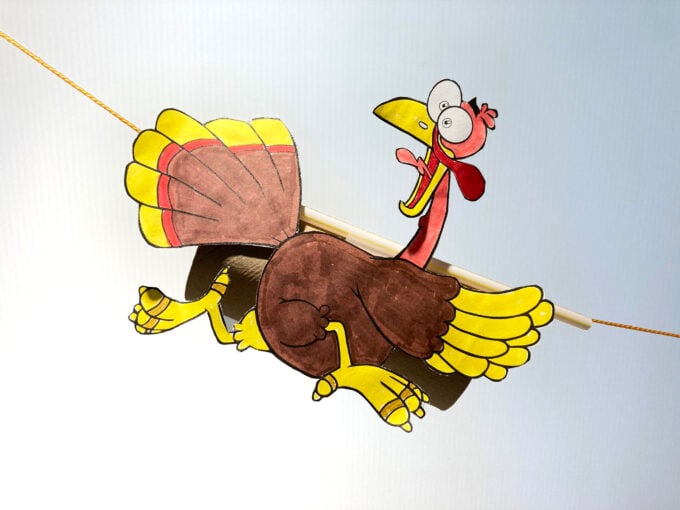
Can you help a turkey escape? Design and test a turkey zip line using string, a paper turkey, and simple building supplies. Experiment with different slopes and attachments to see what works best.
Explore: Gravity, friction, forces and motion, engineering design.
Ask: How does the angle of the zip line affect the turkey’s movement?
👉 Try the Turkey Escape STEM Challenge.
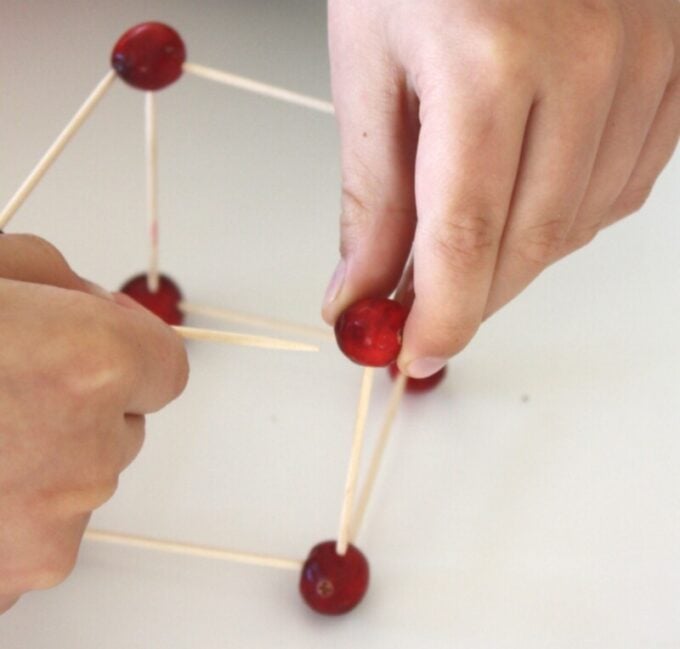
Cranberry Structures
Build shapes and structures with cranberries and toothpicks! Explore 2D and 3D shapes, then challenge kids to create a stable tower or another structure. Printable building cards add an extra challenge.
Explore: Geometry, structural stability, engineering.
Ask: Which shapes help make the strongest structure?
Rolling Pumpkins Experiment
Explore forces and motion with pumpkins and ramps! Roll different pumpkins down a ramp and compare how far they travel. Change the ramp height or surface and record the results.
Explore: Gravity, friction, forces and motion.
Ask: How does ramp height affect the distance a pumpkin travels?
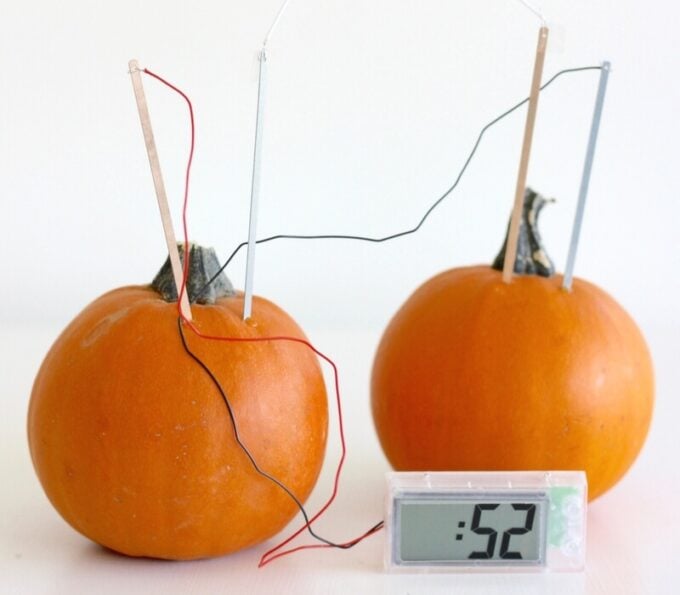
Pumpkin Clock STEM Project
Can a pumpkin help power a clock? Use a clock kit and electrodes to explore how an electrochemical cell converts chemical energy into electrical energy.
Try comparing a pumpkin with a potato or another suitable fruit or vegetable.
Explore: Electricity, circuits, chemical energy.
Ask: What happens when you change the fruit or vegetable in your circuit?
👉 Try the Pumpkin Clock STEM Project.
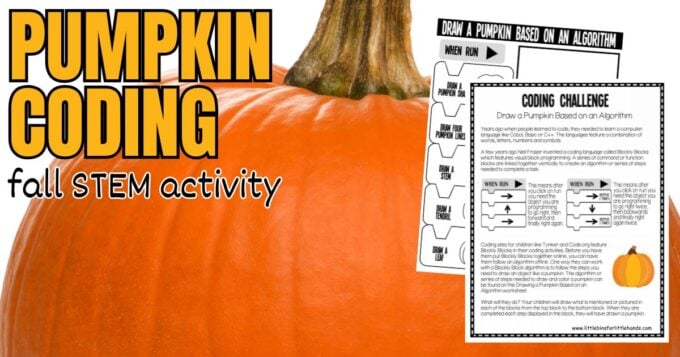
Pumpkin Coding Activity
Explore screen-free coding with a pumpkin drawing activity!
Kids follow a visual algorithm step by step to draw a pumpkin. Then they can create their own instructions and see whether a partner can follow them.
Explore: Algorithms, sequencing, debugging, computational thinking.
Ask: Why does the order of instructions matter?
👉 Try Pumpkin Coding + Free Printable.
Potato Battery Experiment
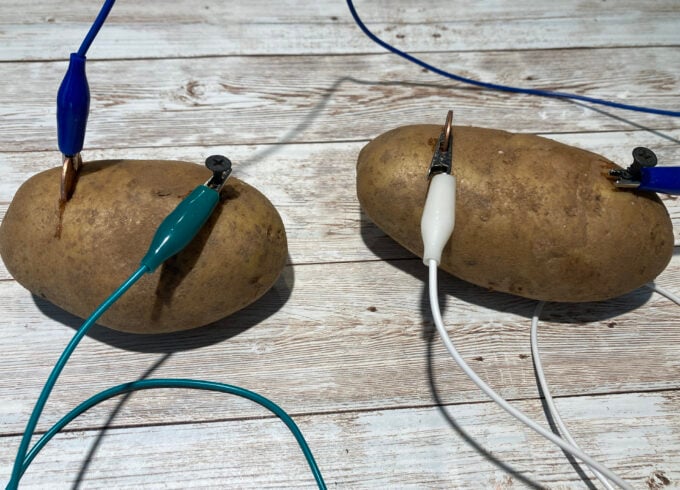
Can a potato help power a small electronic device? Build a simple potato battery using copper and zinc electrodes, connecting wires, and a low-power clock or LED.
Explore how chemical reactions produce electrical energy and experiment with connecting multiple potatoes to make a stronger battery.
Explore: Electrochemistry, electrical circuits, energy conversion.
Ask: How does connecting more potato cells change the electrical output?
👉 Try the Potato Battery Experiment.
Thanksgiving LEGO Challenges
Put building bricks to work with Thanksgiving-themed engineering challenges! Build turkeys, seasonal structures, or designs that solve a specific problem. Add material or size limits to encourage creative thinking.
Explore: Engineering design, structures, spatial reasoning.
Ask: How can you improve your design using fewer bricks?
👉 THANKSGIVING LEGO CHALLENGES

Thanksgiving Paper Engineering
Explore how 2D shapes can become 3D structures with Thanksgiving paper crafts.
Cut, fold, and assemble printable templates while investigating shapes, folds, and construction.
Explore: Geometry, 2D and 3D shapes, paper engineering.
Ask: How do folds help flat paper become a three-dimensional object?
👉 Try Thanksgiving Paper Crafts.
5-Day Thanksgiving Science & STEM Plan
Need a simple week of Thanksgiving science? This 5-Day Thanksgiving Science & STEM Plan brings together easy experiments, animal science, and engineering challenges using familiar fall materials.
Explore chemical reactions on Monday, combine cranberry science and engineering on Tuesday, investigate wild turkeys on Wednesday, experiment with potatoes on Thursday, and finish with homemade butter science on Friday!
Each day includes a science focus and guiding question. Choose one activity or extend the learning when time allows.
| Day | Activity | Explore |
|---|---|---|
| Monday | Dancing Corn | Chemical reactions and buoyancy |
| Tuesday | Cranberry Sink or Float + Cranberry Structures | Buoyancy, geometry, and engineering |
| Wednesday | Turkey Science Lapbook | Animal life cycles and adaptations |
| Thursday | Potato Science: Straw Through a Potato or Potato Osmosis | Forces, pressure, or water movement |
| Friday | Homemade Butter Science | Physical changes and separation |
🔎 Each day includes a simple investigation and a guiding question to encourage discussion. Use the free 5-Day Thanksgiving Science starter guide to get started.
Thanksgiving Science for Preschoolers & Kindergarten
Younger learners can explore Thanksgiving science with simple investigations that emphasize observation, prediction, and comparison.
Try these easy activities with common materials:
- Cranberry Sink or Float: Predict and observe what happens when cranberries go in water.
- Dancing Corn: Watch how bubbles affect corn kernels’ movement.
- Parts of a Pumpkin: Explore a real pumpkin with magnifying glasses and observation tools.
- How Many Seeds?: Estimate, sort, and count seeds from fall fruits.
- Coffee Filter Turkey Science: Observe how water spreads marker colors through a coffee filter.
For preschoolers, focus on describing what they notice! Kindergarten students can add predictions, drawings, simple measurements, and comparisons.
👉 Explore More Preschool Thanksgiving Activities.
Build a Fence for a Turkey STEM Challenge
Can you build a fence to keep a turkey safely inside? This simple Thanksgiving STEM challenge invites preschoolers to use craft sticks, blocks, or other building supplies to design an enclosure for a paper turkey.
Kids can build, test, and improve their fences while exploring shapes, structures, and problem-solving.
Explore: Engineering design, spatial reasoning, structures.
Ask: How can you build a fence that completely surrounds your turkey?
👉 Try the Build a Fence for a Turkey STEM Challenge.

Thanksgiving Science FAQs
What are some easy Thanksgiving science experiments? Dancing corn, cranberry sink or float, pumpkin volcanoes, homemade butter, and popcorn science are easy experiments using common kitchen supplies.
What Thanksgiving science activities work for preschoolers? Try cranberry sink or float, pumpkin investigations, seed counting, and dancing corn. These activities introduce observation, prediction, and comparison through hands-on learning.
How can I teach science with Thanksgiving foods? Use potatoes, bread, cranberries, corn, and other foods to investigate chemical reactions, mixtures, heat transfer, and changes in matter.
What is STEMS-Giving? STEMS-Giving is a collection of Thanksgiving-themed science and STEM activities inspired by familiar foods and seasonal materials. Kids can explore chemistry, physics, life science, and engineering through hands-on projects.
How can I turn Thanksgiving STEM activities into engineering challenges? Start with a problem, ask kids to make a plan, and give them materials to build and test a solution. Encourage them to observe what happens and improve their designs.
Printable Thanksgiving Science & STEM Pack
Make Thanksgiving learning easy with our STEMS-Giving Thanksgiving Activity Pack!
This ready-to-use collection includes seasonal science experiments, creative engineering challenges, and printable activities using everyday supplies.
Perfect for classrooms, homeschool, STEM centers, and November lesson planning.
What’s Included?
- Thanksgiving Science Experiments: Hands-on investigations and food science activities.
- Thanksgiving Engineering Challenges: Design, build, test, and improve solutions to seasonal STEM problems.
- Turkey Disguise STEAM Projects: Creative design challenges, writing activities, and color-by-code printables.
- Cranberry Building Challenges: Explore shapes, structures, and engineering with printable cards.
- Thanksgiving LEGO Challenges: Brick-building activities for STEM centers and early finishers.
- Bonus Printable Activities: Secret codes, recording sheets, and more seasonal learning activities.
Everything is designed to make Thanksgiving science and STEM easy to fit into your day!
Explore the Thanksgiving STEM Activity Pack →

More to Explore
Thanksgiving Activities for Kids | Thanksgiving Worksheets | Thanksgiving Art Projects | Preschool Thanksgiving Activities | Fall Science Experiments | Animal Life Cycles

amazing blog..i love detective books and games and i also prepared lot of detective games very easily within days from here..http://goo.gl/70rofE.. thank you for sharing this interesting and helpful blog