
Looking for November science activities for kids that aren’t all about Thanksgiving? November is a wonderful time to explore changing seasons, animals preparing for winter, cooler weather, and the natural world around us!
These easy November science experiments and activities use everyday supplies and include hands-on investigations, nature observations, and free printables for elementary students.
Whether you’re planning classroom lessons, homeschool activities, or a fun week of science, you’ll find plenty of ways to explore November without a holiday theme.
Easy November Science Activities
Fields of Science: Life Science, Earth Science, Physical Science
Grades: K–5
Concepts: Seasonal changes, hibernation, migration, animal adaptations, weather, temperature, light, heat transfer, observation
What changes in nature during November? Shorter days, cooler temperatures, falling leaves, and changing animal behaviors offer plenty of opportunities for scientific discovery.
Explore how animals prepare for winter, investigate daylight and weather, and try simple experiments that connect science to the season.
Best of all, you don’t need snow or a Thanksgiving theme to enjoy these activities!
Why November Is a Great Month for Science
November is a transition month. In many places, fall is winding down, and winter is getting closer.
Trees lose their leaves, some animals become less active, others migrate, and temperatures begin to drop. These changes give kids real-world examples of science they can observe and investigate.
Popular November science themes include:
- Hibernation and animal behavior
- Migration and animal adaptations
- Leaves, seeds, and plant changes
- Weather and temperature investigations
- Shorter days, sunlight, and shadows
- Insulation and heat transfer
💡 Teacher Tip: November looks different depending on where you live! Encourage students to compare seasonal changes in their area with what happens in other parts of the country or world.
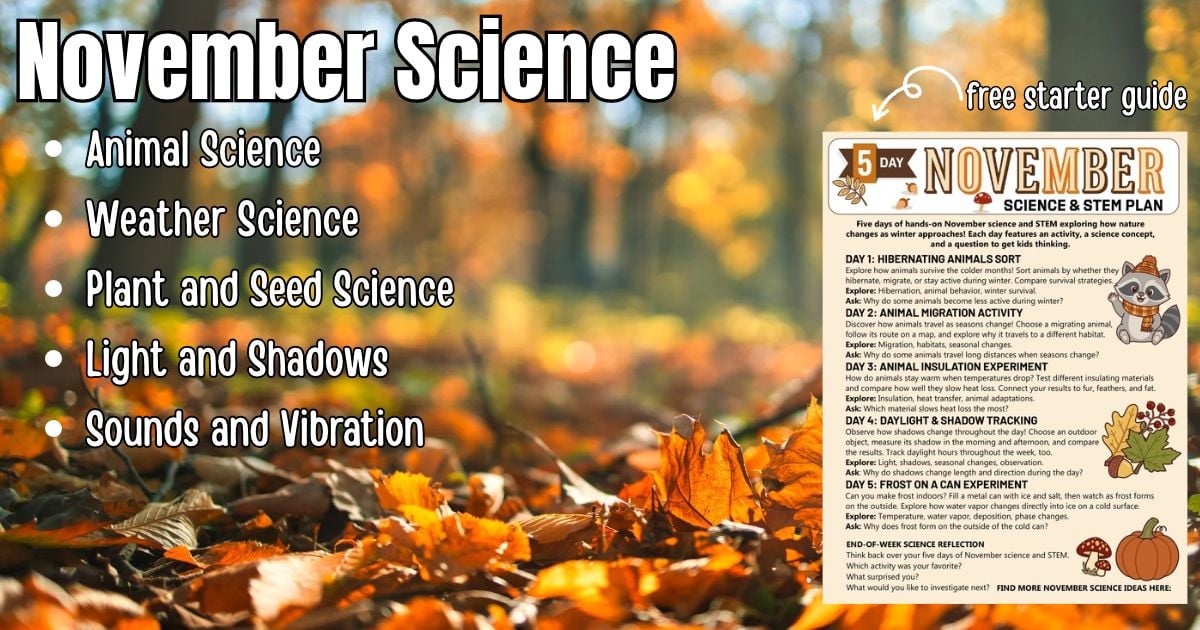
Free 5-Day November Science Plan
Need an easy week of science activities? Our free 5-Day November Science Plan brings together five activities that explore how animals and the environment change as winter approaches.
Plus, use the November Nature Observations page to encourage kids to notice changes happening right outside their classroom or home.
👉 Grab the November Science Guide here.
Animal Science Activities for November
As temperatures drop and daylight hours shorten, animals begin responding to seasonal changes. Some hibernate, others migrate, and many remain active by relying on special adaptations to survive. These animal science activities are a great place to begin your November investigations!
Hibernating Animals Activities
Why do some animals become less active when winter approaches? Explore how animals conserve energy during colder months with our free printable Hibernating Animals Activities.
🔎 Kids can learn about true hibernation, torpor, and other winter survival strategies while comparing different animals and their habitats.
Explore: Hibernation, torpor, dormancy, animal behavior.
Ask: Why do some animals become less active when food is harder to find?
👉 Explore Hibernating Animals + Free Printables

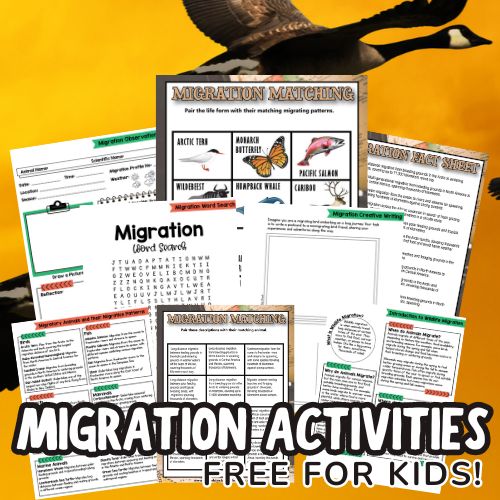
Animal Migration Activities
Why do some birds fly south when the seasons change? Discover how birds, butterflies, and other animals travel to find food, reproduce, or reach suitable habitats.
💡 Our free Animal Migration Activities include a migration guide, a matching activity, an observation log, and a creative migration postcard project.
Explore: Migration, seasonal behavior, habitats, animal survival.
Ask: Why do some animals travel long distances while others stay in one place?
👉 Explore Animal Migration + Free Printables.
Winter Animal Adaptations Experiment
How do animals survive freezing temperatures? Our hands-on Winter Animal Adaptations Experiment explores how different materials mimic insulating features such as fur, feathers, and fat.
🔎 Kids can compare materials and discover why insulation is an important adaptation for animals living in cold climates.
Explore: Animal adaptations, insulation, heat transfer, survival.
Ask: How do fur, feathers, and fat help animals stay warm?
👉 Try the Winter Animal Adaptations Experiment

Build an Animal Shelter STEM Challenge
Where do animals find shelter when temperatures drop? Challenge kids to design and build a small animal shelter using natural materials, cardboard, or recycled supplies.
💡 Choose an animal, consider its basic needs, and test how well the shelter protects it from the elements.
Explore: Habitats, animal needs, engineering, seasonal adaptations.
Ask: What features would help an animal shelter provide protection from cold or wet weather?
👉 Try the Animal Shelter STEM Challenge.
Leaves, Seeds, and Plant Science
Even as the growing season ends, there are plenty of opportunities to investigate leaves, seeds, and plant changes.
Why Do Leaves Change Color?
Why do leaves turn yellow, orange, and red before falling from trees? Explore the role of sunlight, chlorophyll, and plant pigments with our Why Leaves Change Color science lesson.
🔎 Kids can learn how deciduous trees respond to shorter days and use the free printable lapbook to explore the science of fall leaves.
Explore: Chlorophyll, plant pigments, photosynthesis, seasonal changes.
Ask: What happens to chlorophyll as daylight decreases?
👉 Explore Why Leaves Change Color + Free Lapbook.
Leaf Chromatography Experiment
Can you discover the hidden colors inside a leaf? This Leaf Chromatography Experiment uses rubbing alcohol and coffee filters to separate pigments found in leaves.
🔎 Compare green and colorful leaves to investigate the pigments that contribute to their appearance. Adult supervision is needed when using rubbing alcohol.
Explore: Plant pigments, mixtures, chromatography, observation.
Ask: What colors can you discover inside a green leaf?
👉 Try Leaf Chromatography + Free Printable.
Seed Dispersal Investigation
How do plants spread their seeds to new places? Explore how seeds travel by wind, water, gravity, and animals.
🔎 Our Seed Dispersal Experiment encourages kids to investigate seed structures and how they help plants reproduce and spread.
Explore: Plant reproduction, seed dispersal, adaptations, movement.
Ask: How can a seed travel away from its parent plant?
👉 Explore Seed Dispersal Activities.
Pumpkin Decomposition Experiment
What happens to pumpkins and other plant materials as they break down? Use a leftover pumpkin to investigate decomposition over several days or weeks. Kids can record changes in color, texture, shape, and appearance as decomposers help break down the pumpkin.
Explore: Decomposition, microorganisms, environmental changes, observation.
Ask: What happens to plant materials as they decompose?
👉 Try the Pumpkin Decomposition Experiment.
November Weather and Temperature Science
November is a great time to investigate changes in weather and temperature. These hands-on experiments help kids collect data, make predictions, and discover how temperature affects materials and the environment.
Fall Temperature Investigation
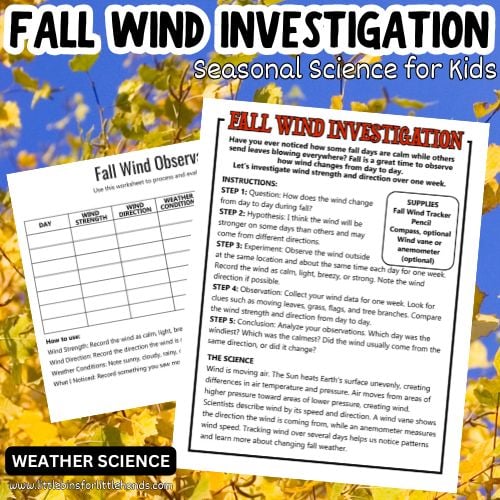
Are November mornings colder than afternoons? Track temperatures at different times of day using a thermometer and our Fall Temperature Investigation.
🔎 Kids can collect data, compare measurements, and look for patterns in daily temperatures.
Explore: Temperature, weather, measurement, graphing, observation.
Ask: How does the temperature change throughout the day?
👉 Try the Fall Temperature Investigation or the Fall Wind Investigation
Pine Cone Weather Station
Can a pine cone help you investigate moisture in the air? Make a simple Pine Cone Weather Station and observe how pine cone scales respond to wet and dry conditions.
💡 This easy nature investigation connects plant structures to environmental changes.
Explore: Humidity, moisture, plant structures, observation.
Ask: What happens to a pine cone when it gets wet or dries out?
👉 Make a Pine Cone Weather Station.

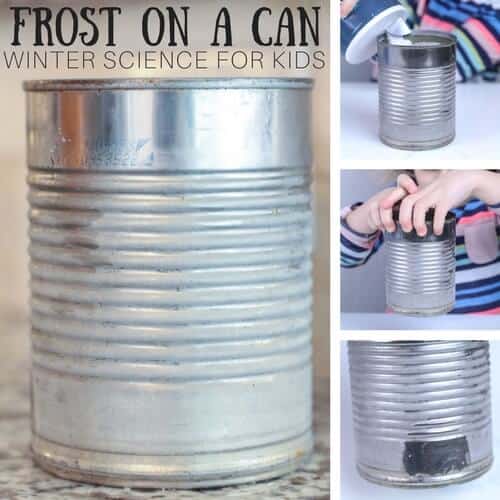
Frost on a Can Experiment
Can you make frost indoors even when it’s not freezing outside? Use ice, salt, and a metal can to investigate how frost forms on cold surfaces.
🔎 Our Frost on a Can Experiment introduces kids to temperature, water vapor, and changes in states of matter.
Explore: Temperature, water vapor, deposition, phase changes.
Ask: How can frost form on the outside of a cold can?
👉 Try the Frost on a Can Experiment.
Insulation Science Experiment
Which everyday materials are best at slowing heat loss? Compare wool, cotton, foil, and other materials with our Insulation Science Experiment.
🔎 Kids can measure temperature changes and explore why insulation helps people and animals.
Explore: Heat transfer, insulation, temperature, fair testing.
Ask: Which material helps warm water stay warm the longest?
👉 Try the Insulation Science Experiment.
Light and Shadow Science Activities
Have you noticed how early it gets dark during November? In the Northern Hemisphere, daylight hours become shorter as winter approaches. This makes November a great time to investigate sunlight, shadows, and seasonal changes.
Track Changing Daylight Hours
Why are the days getting shorter? Record sunrise and sunset times over several days or weeks. Compare daylight hours and look for patterns.
💡 Connect the investigation to Earth’s tilt and how the seasons change throughout the year.
Explore: Daylight, Earth’s tilt, seasonal changes, data collection.
Ask: Why does the amount of daylight change throughout the year?
👉 Explore Seasons and Seasonal Changes.
👉 Day and Night for Early Elementary
Shadow Tracking Investigation
Do shadows stay the same length throughout the day? Choose an outdoor object and observe its shadow in the morning, around midday, and later in the afternoon.
🔎 Use chalk or a measuring tape to record the shadow’s position and length. Then compare the results.
Explore: Light, shadows, Earth’s rotation, observation, measurement.
Ask: Why do shadows change direction and length throughout the day?
👉 Explore Light and Shadow Experiments.

Sound and Vibrations Science
November is also a great time to explore sound science! These simple investigations help kids discover how vibrations produce the sounds we hear.
Turkey Call Sound Science Experiment
Can you make a turkey gobble using a paper cup and string?
Kids explore how vibrations and friction produce sound. Kids can make their own gobbling turkey call, experiment with different sounds, and learn how real turkeys communicate.
Explore: Sound, vibrations, friction, animal communication.
Ask: How can a paper cup and string make a sound like a turkey gobbling?
👉 Make a Turkey Call + Free Printable.
5-Day November Science Plan
Want to make November science planning even easier? Use these five activities for a week of hands-on investigations that explore how animals and the environment change as winter approaches.
| Day | Activity | Science Focus |
|---|---|---|
| Monday | Hibernating Animals Sort | Hibernation and winter survival |
| Tuesday | Animal Migration Activity | Migration and seasonal behavior |
| Wednesday | Animal Insulation Experiment | Adaptations and heat transfer |
| Thursday | Daylight and Shadow Tracking | Light and seasonal changes |
| Friday | Frost on a Can Experiment | Temperature and phase changes |
💡 Teacher Tip: Most activities can be completed in a short science block. Continue observations throughout the week to give students opportunities to notice patterns and changes over time.
Bonus: November Nature Observation Challenge
Take science outdoors with a simple November nature observation challenge!
Encourage kids to look for:
- Leaves changing color or falling from trees
- Birds, squirrels, or other animals preparing for colder weather
- Changes in temperature, wind, or cloud cover
- Seeds, pine cones, and other natural materials
- Shorter daylight hours and changing shadows
Use a notebook or sheet of paper to record observations with drawings, measurements, questions, or photographs.
💡 Ask: What is one change you noticed outside this week? What might have caused it?
November Science Activities FAQ
What are good science activities for November? Hibernation, animal migration, insulation, changing leaves, weather tracking, and light experiments are all excellent November science topics. These activities connect naturally to seasonal changes and work well for elementary students.
What science topics can I teach in November besides Thanksgiving? November is a great month for life science topics like animal adaptations, migration, and hibernation. You can also explore Earth science through weather and seasonal changes or physical science through light, shadows, insulation, and temperature.
What are easy November science activities for kindergarten? Try sorting hibernating animals, observing pine cones, collecting and comparing leaves, tracking daily weather, or making shadows with a flashlight. These activities emphasize observation, prediction, and comparison using simple materials.
How can I adapt these activities for older students? Students in grades 3–5 can measure and graph temperature changes, research animal migration routes, investigate insulation materials, and compare daylight hours. Encourage them to make predictions, collect data, and use evidence to explain their results.
Can I teach November science without a holiday theme? Absolutely! November is a great time to explore what happens in nature as seasons change. Animals preparing for winter, changing daylight, weather, and plant investigations offer plenty of science learning without a holiday focus.
Looking for Thanksgiving Science Activities?
Want to add a few Thanksgiving-themed investigations to your November lessons? Explore our Thanksgiving Science Activities for easy experiments using cranberries, corn, and other seasonal materials.
You’ll also find fun turkey-themed projects, including sound science, life cycles, and hands-on STEM challenges.
Printable Winter Science Labs Pack
Ready to continue exploring as winter approaches?
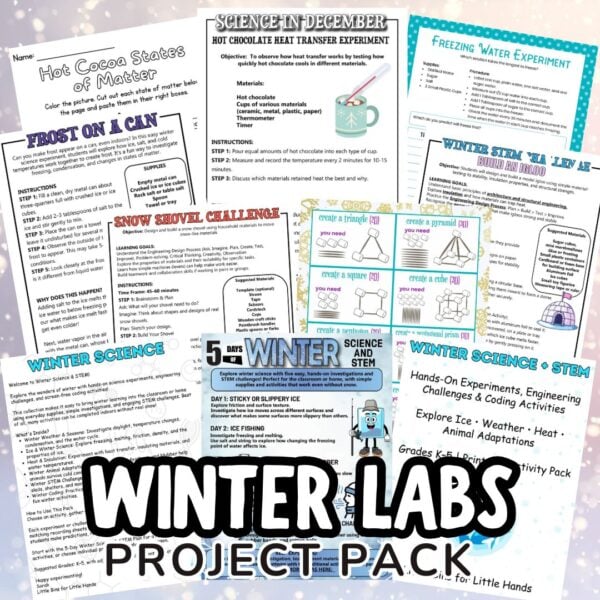
Our Winter Science Labs Pack makes it easy to investigate ice, frost, temperature, and other winter science concepts with hands-on experiments and printable recording pages.
Perfect for elementary classrooms and homeschool lessons, these ready-to-use activities help kids observe, test, compare, and record their discoveries throughout the winter season.
More to Explore
Fall Science Experiments | Fall Life Science Activities | Fall Weather Science | Animal Adaptations | Winter Science Experiments